Microsoft embraces Google -- releases Office for Android
Two months ago, Microsoft released a version of Office for iPhone. While it was eagerly anticipated by many wishful Apple users, Office Mobile for Office 365 Subscribers was met with some dissatisfaction due to apparent limitations. Despite these shortcomings, many Android users were still saddened to be left out of the party. Today they can finally try it for themselves as Microsoft announces Office Mobile for Android phones.
While this is great news, the app has inevitable limitations. According to Microsoft, "...you will not be able to download and install Office Mobile for Android phones on an Android tablet from the Google Play store. If you have an Android tablet, we recommend using the Office Web Apps which provide the best Office experience on a tablet". In other words, Office for Android will not run on larger screen devices -- just like Office for iPhone is not available for iPad. However, unlike iOS, Android can side-load applications. If someone was to leak the .apk file, there is a good chance it could be made to run on a tablet.

Most Windows Phone 8 users should say good-bye to Gmail calendar and contacts sync
Starting tomorrow, most Windows Phone 8 devices will be unable to sync Gmail calendar and contacts entries though new connections, as Google officially drops support for Exchange ActiveSync in its consumer-oriented email service. The search giant initially revealed that EAS would be ditched after January 30, but decided to give Microsoft a six-month reprieve, which ends today, to give the company time to implement CalDAV and CardDAV (the two protocols required for calendar and contacts sync, respectively) support in its tiled smartphone operating system, before finally pulling the plug.
New handsets, like the Nokia Lumia 925 and Lumia 1020, already ship with the Windows Phone 8 version (known as GDR2) which adds CalDAV and CardDAV support. However, the necessary update has yet to be rolled-out to the majority of older smartphones, like my Lumia 920 for instance (according to user reports, it is available on the unbranded HTC Windows Phone 8X), a delay which potentially affects most Windows Phone 8 users, if device market share is of any indication.

Spybot promises better performance, smoother installation
Safer Networking has announced the release of Spybot -- Search & Destroy 2.1 SR2, a minor update to its popular malware-cleaning tool. Spybot S&D comes into two flavors -- a free-for-personal use edition that concentrates on anti-spyware protection, or various paid-for versions that come with extra anti-virus protection plus additional tools.
Version 2.1 SR2 comes with few visible changes and no new features, but it does respond to user feedback in tweaking the default Internet Protection settings to provide better performance, although what security compromises have been made to achieve this aren’t made clear.

Newspapers in a digital age: moving with the times and charging for it
For most of us the digital revolution started some time ago. Working in journalism for nearly 15 years means that I have seen things change enormously, but even back in the late 1990s it was clear that the web was where it was at -- or where it was going to be. Newspapers and magazines have had to adapt to fight for ever-decreasing audiences in a changing market. But not everyone has been moving at the same pace, or has quite the same idea about how things should work.
The ease of self-publishing and the low overheads associated with running a website, in conjunction with the always-on, instant updateability of the internet has seen the sales of newspapers and magazines dropping off. Most titles have gone with the flow and have developed an online presence, but the need for publishers to make money is at odds with the widely held belief that everything online should be free.

Cost, complexity and security concerns hold back mobile enterprise apps
Enterprise application and data security company Mobile Helix has announced the results of an independent survey of CIOs. It shows a large percentage of businesses delaying the roll out of enterprise apps on mobile devices thanks to concerns over security, costs and complexity.
Highlights of the survey, conducted among 300 CIOs in the US and UK, are that companies on average had over 400 applications within their organization but that only 22 percent of them could be accessed from mobile devices despite clear demand from employees for mobile access. Major barriers to adoption are development and support costs along with security.
Surface's failure casts yet more doubt on Microsoft's Windows 8 vision
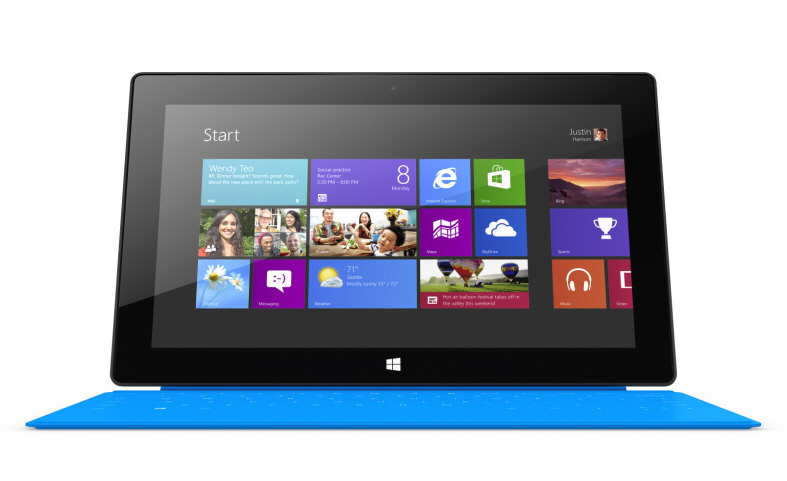
Yesterday a striking fact regarding Surface was revealed in a SEC filing from Microsoft. The software giant's tablet lineup brought in revenue of $853 million in the company's fiscal year 2013 -- just under the embarrassing $900 million Surface-related write off Microsoft declared two weeks ago.
$853 million might sound like quite a lot of money, but what it actually means is the tablet line is a flop, with Microsoft selling just slightly more Surface PCs in a year than Apple shifts iPads in a week.

Google Drive makes setup easier for new users, adds new shortcuts
Google has released Google Drive 1.11 for Windows and Mac, a minor update to its desktop tool for accessing and synchronizing data with the online Google Drive service. The new build adds shortcuts for conveniently creating new documents, plus allows new users to choose an arbitrary name for their sync directory.
The update also comes with a number of bug fixes, including two particular issues that have plagued Mac users.
Google puts us in a spin with 360-degree Views
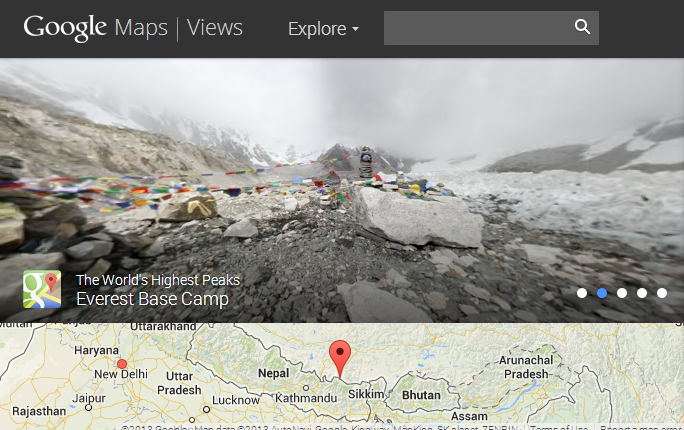
Google is touting its new Views community as the latest way to add Photo Spheres to Google Maps. These 360-degree photos can be captured with Android 4.2 devices and help to give an immersive online experience of a location -- think Street View but with a personal twist.
Views gives users a new way to share their photos so they are not just left forgotten on an SD card. The site can be used to work with any panoramic shots you've taken, or you can import them from your Google+ account.

NSS Labs unveils new threat modeling and forecasting services
Information security research specialist NSS Labs uses a workshop at the BlackHat USA conference today to announce new threat modeling and forecasting services to help clients better understand how they're at risk.
These new services use data from NSS's research and from its BaitNET real-time monitoring technology to deliver information about exploit and malware trends.

The origins of DefCon
This week we have the DefCon 20 and Black Hat computer security conferences in Las Vegas -- reasons enough for me to do 2-3 columns about computer security. These columns will be heading in a direction I don’t think you expect, but first please indulge my look back at the origin of these two conferences, which were started by the same guy, Jeff Moss, known 20 years ago as The Dark Tangent. Computer criminals and vigilantes today topple companies and governments, but 20 years ago it was just kids, or seemed to be. I should know, because I was there -- the only reporter to attend Def Con 1.
In those days there were no independent computer security research organizations. There were hackers, or more appropriately crackers, as they were known.

CHM Decoder quickly converts CHM help files to HTML
It’s been around since 1997, but Microsoft’s Compiled HTML Help (CHM) format is still often used for application help files, e-books and more. If you’re working on a PC then that’s no problem -- the files are easy to read -- but if you need to browse them on other platforms, then you might like to try CHM Decoder.
Point this small, free and portable tool at a CHM file, and it will quickly convert this into the original HTML. Open the root page and you’ll be able to browse it just like the original file. Only now it’s in a format which you can access almost anywhere.
XSearch: a small, simple and surprisingly capable search tool
We’re always happy to try out desktop search tools, but at first glance XSearch didn’t seem promising. It doesn’t use indexing, for instance, so you know performance will take a major hit. And the authors talk about how some prefer search as it was back in Windows 98/2000, which might lead you to think the program is going to be very basic indeed.
But then we downloaded it, took a closer look, and were very pleasantly surprised. XSearch may not have all the conveniences you’d like in a modern search tool (or even most of them), but there’s still plenty of flexibility here, and it could be a useful addition to your portable toolkit.

Facebook sends friend request to mobile game developers
Facebook and the gaming community have a tumultuous relationship. Hardcore gamers look down on the social media giant for offering casual games like Farmville. However, Facebook has proven to be a great way to link gamers together. For instance, I am a big fan of Candy Crush Saga and Words With Friends for Android. Facebook allows me to discover other people also playing those games. In addition, PlayStation 3 can be linked to Facebook to share achievements.
In keeping with this gaming trend, Facebook today announces Mobile Games Publishing. The social media giant describes the service as "...a new pilot program to help small and medium-sized developers take their mobile games global. Through the program, we will work with select game developers and provide promotional support for their games in placements across our mobile apps".
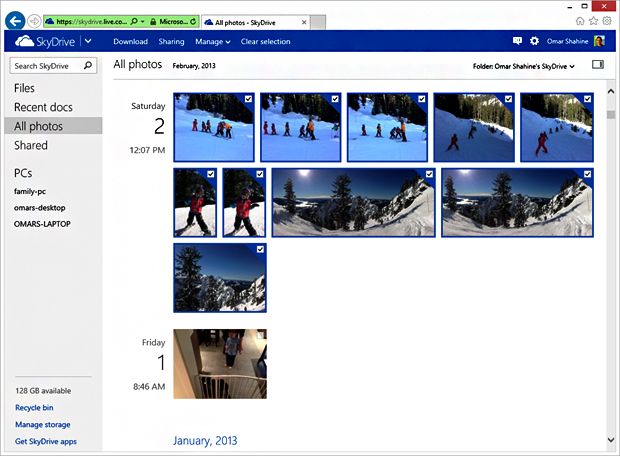
Microsoft rolls out better SkyDrive options for photos and sharing
Microsoft introduced its SkyDrive cloud storage service to the world back in 2007, almost six years ago to the day, in fact. The service may have started slow, but with Windows 8 and Office 2013 the momentum has increased, with better integration. Now the software maker rolls out even more options to the storage site.
The company wishes to support the new HD and Retina displays contained within today's devices, and has added such support directly into its latest iteration of the cloud service. Microsoft's Omar Shahine announces that SkyDrive supports these high DPI displays by "measuring the DPI scale of your device. When your screen supports it, we show higher resolution photos and thumbnails. So you see more of your real photo instead of a thumbnail that gets up-scaled (note: not all browsers support high DPI yet)". This illustrates the service's ability to process such photos as those captured in RAW format.

Microsoft releases Windows 8.1 Enterprise Preview -- available to download now
Microsoft rolled out Windows 8.1 Preview for developers and consumers last month, and now the software giant has followed it up with an enterprise edition.
This differs from the standard Preview release in a number of ways, including introducing additional advanced features such as Windows To Go, Start Screen Control and DirectAccess.