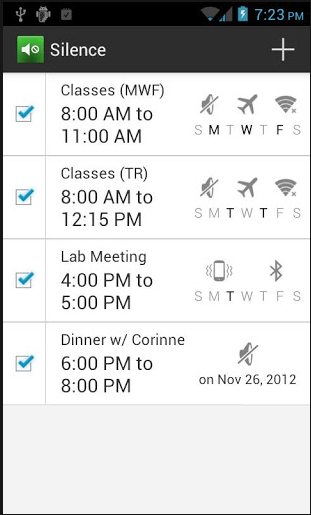
Schedule actions on your Android device with Silence
Even though mobile devices play an ever-increasing role in our digital lives, on more than one occasion they can act counterproductive, delivering noisy notifications or consuming too much battery life. With Silence, however, Android users can take control of their devices, scheduling the usage of built-in functionality like vibrate or airplane mode.
Silence basically allows users to enable or disable commonly used connectivity options such as airplane mode, Bluetooth and Wi-Fi, as well as set the ringer to silent, vibrate or normal, all within an established period of time. Each of the available options can be individually controlled, meaning that airplane mode can be enabled at night to preserve battery life, or silent mode can be activated during working hours so as to not disturb co-workers.

Samsung teases us with 'something new' coming next month
The South Korean tech giant has released a short YouTube teaser promising a new product which will be revealed on January 8-11 2013, presumably at the International CES in Las Vegas.
"The world awaits" the video says at the beginning before quickly flashing up words like "Innovation", "Ideas", "Design", "Technology", "Dreams", "Wonder", and "Future". It's obviously just an attempt to drum up interest in the forthcoming product and get the Samsung faithful speculating, as there are no other clues as to what the product might be. There are already plenty of guesses in the comments under the video, of course.

Samsung unveils Premium Suite for the Galaxy S III
Little more than six months into the Galaxy S III's lifespan, Samsung has announced a software upgrade for the popular Android smartphone. Dubbed Premium Suite, it delivers a number of new features borrowed from the Galaxy S III's bigger brother, the Galaxy Note II.
Some of the most noteworthy improvements include Multi Window, which lets users view two apps concurrently, Page Buddy, for contextual actions (like opening the music player after headphones are plugged in), and Best Face and Low Light Shot, that allow users to select the best out of five pictures, and improve photography under bad lighting, respectively.

Richard Stallman: Ubuntu contains spyware, shouldn’t be installed or recommended
In a lengthy new blog post, Richard Stallman, founder and president of the Free Software Foundation, criticizes Canonical for its decision to add surveillance software to the latest version of its Ubuntu operating system, calling on users to give it a wide berth.
The "Home Lens" universal search feature built into Ubuntu 12.10’s Unity Dash, sends off details of users’ search requests to Canonical's servers. This information is used to integrate relevant Amazon search results. Stallman doesn’t have a problem with the adverts themselves, more the spying aspect. "Canonical says it does not tell Amazon who searched for what. However, it is just as bad for Canonical to collect your personal information as it would have been for Amazon to collect it," he explains.
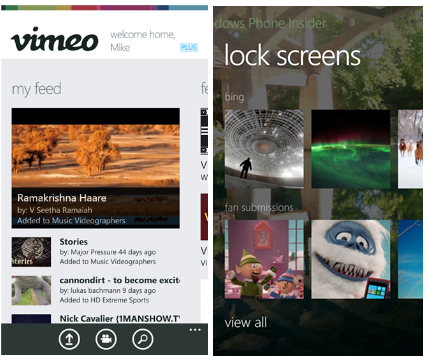
Vimeo and Insider now available for Windows Phone 8
While many of you wring your hands over the whole iPhone versus Android thing, Microsoft is quietly building a mobile platform that has also caused some hand-wringing -- late release, no upgrade path for previous users... not a great start. There has been a lot written about Windows Phone 8 since it was released. With some people saying it's good and others that it's a failure. The truth is, in my opinion, it's just really too early to tell. However, one thing is certain, the Windows Phone Store is growing quickly, with new apps being added all the time.
Today, two prominent new apps appeared in the Store that many of you may want to add to your new handset -- Vimeo and Insider.
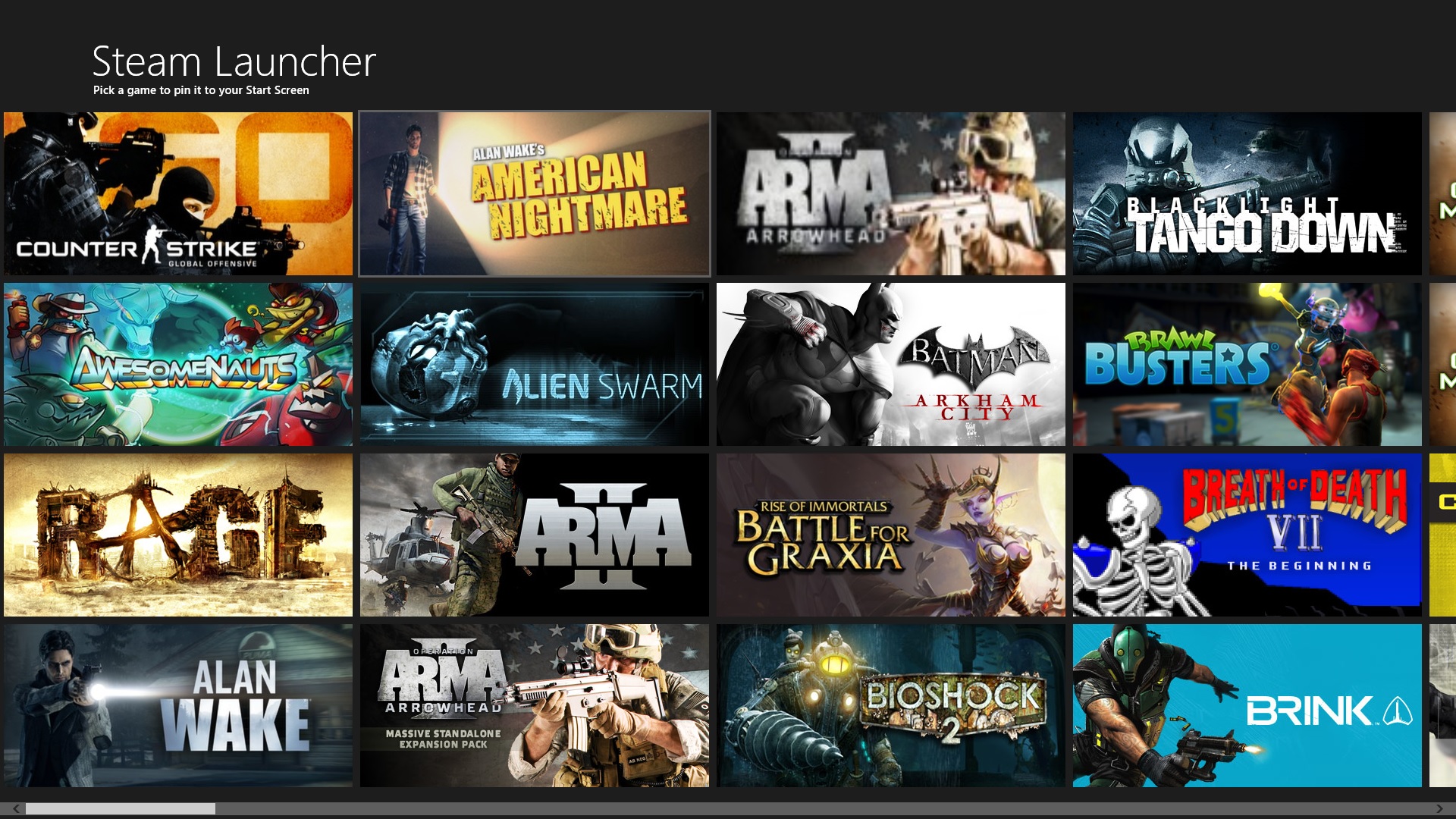
Best Windows 8 apps this week
Sixth in a series. Every seven days we look at some of the best new app releases for Windows 8. This week's releases include Amazon and Nascar official applications, as well as a selection of mostly media-orientated offerings.
Microsoft has added a top-paid category to select localized stores that displays top-rated paid applications. It is likely that this will be rolled out eventually to all stores.
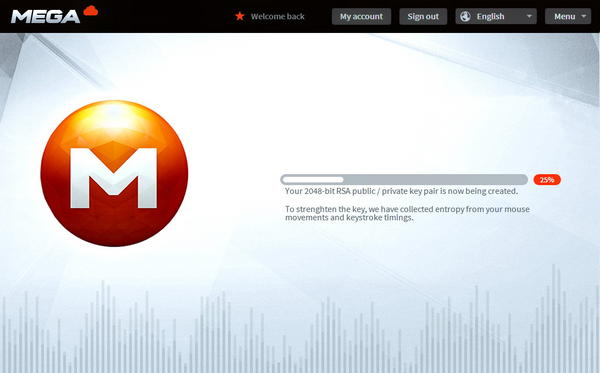
Kim Dotcom reveals new Mega screenshots
New Zealand millionaire and owner of the defunct MegaUpload site, Kim Dotcom, has been active on Twitter on a number of topics lately. When he isn't busy disparaging the United States government, he is promoting his new and improved Mega site, which is set to launch in January.
Today, Dotcom took to his social media platform once again, this time to unveil the first screenshots of the new Mega. In all, three images were posted with little detail -- not that 140 characters allows for much detail in any case.

Enloop replaces business plan consultants with cloud-based service
Business plans and marketing plans present a unique challenge because they contain both qualitative and quantitative data that mingle in the same document. Unlike a spreadsheet, where different cells can be set up to affect each other, a business plan's text summaries of numerical data often have to be updated by hand whenever figures are changed. It can be quite a time-consuming process, and small business owners often do not have the time nor the financial resources to devote to this task. This is why Enloop exists.
Enloop offers, to use the silly "aaS" nomenclature, Business Plans-as-a-Service. It has different subscription tiers ranging from free to $39.99 per month which give its users access to its exclusive business plan creation technologies.

SafeIP delivers quick and easy anonymous browsing
If you’re looking to preserve your privacy online then there are already a host of free tools and services queuing up to offer you a new IP address, so discovering yet another, in the shape of SafeIP, didn’t exactly fill us with excitement.
The program doesn’t stop there, though. It also claims to block cookies, conceal your referrer and browser agent, block ads and prevent you from accessing known dangerous sites. And all for free, no adware or similar catches. Perhaps SafeIP was worth a look, after all.

Google graduates 3 Labs projects to Gmail
Google Labs used to be a destination within Google where users could find new and experimental applications the search company was creating. Today, Labs are quietly woven into the Settings menu of several Google properties, including Gmail and Reader.
This is the place where you can find the app's experimental features. Like the old Google Labs, there is no guarantee that any project will succeed -- in fact, it is just as likely to disappear. However, sometimes a feature works well enough, and becomes popular enough, that it "graduates" to become a full-fledged part of the app.

RIP: Free Google Apps for Business
Google has announced that one of its cloud-based services, Apps for Business, will no longer offer a free tier. The Mountain View, Calif.-based search leader now asks customers to pay a yearly fee for the service, which includes Google's popular Gmail, Drive, Docs, and Calendar specially designed for private enterprise deployment.
Citing growing business needs, such as requests for "24/7 customer support and larger inboxes", Google considers the premium Apps for Business version is a better option, and as a result eliminated the free variant from its portfolio.
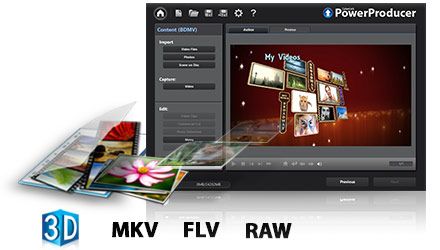
CyberLink PowerProducer 6 adds animated menu templates, widens file format support
CyberLink has released PowerProducer 6 Ultra, the latest version of its DVD authoring tool, and while the changes aren’t revolutionary there’s plenty to explore.
The program now includes 14 animated 3D-like menu templates, for instance. Some aren’t so great, but others are very good indeed, and on balance they’re an excellent extension to the program’s abilities.
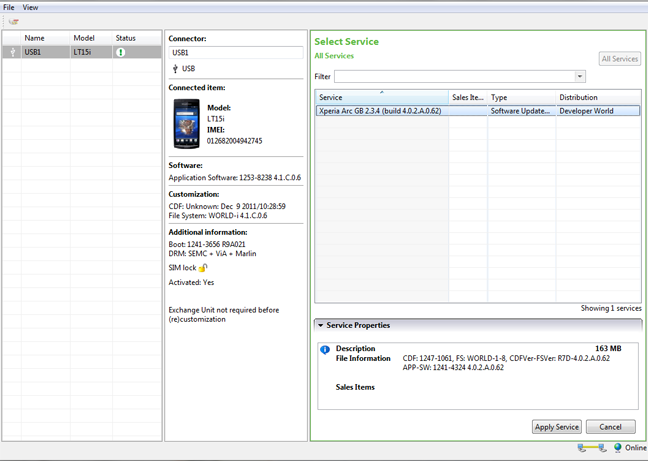
Sony releases tool to restore factory software on Xperia smartphones, and the modding community likes it
Japanese manufacturer Sony has announced the release of a beta tool that can be used to restore factory software on a number of Xperia smartphones. The program targets green droid modders that wish to go back to stock, after running custom distributions such as CyanogenMod 10.
Sony says that the beta tool is released at the request of the Android community and currently works for the Xperia S, Xperia arc and Xperia arc S, with plans to increase the number of supported devices. At the moment users only have the ability to restore to a single software variant on each smartphone, but the Japanese manufacturer says it intends to include a wider version selection in the future.
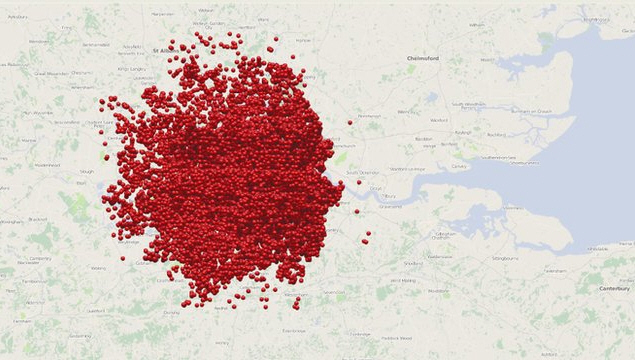
Interactive map of the Blitz unveiled
An interactive online map showing the location of bombs dropped on London during World War II proved so popular when first launched earlier today, that the site immediately went down under the barrage of visitors. Like the survivors of that infamous moment in history, the site picked itself up, dusted itself off, kept calm, and carried on once more, but is still going offline periodically.
The Bomb Sight project was created by a team from the University of Portsmouth using London WWII bomb census data (taken between October 1940 and June 1941) supplied by The National Archives, and shows visitors where the bombs fell during the Blitz, and what type they were.
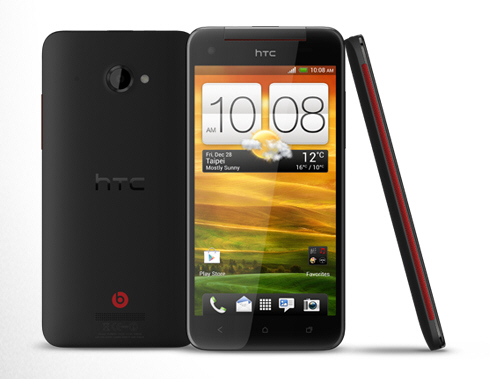
HTC announces Butterfly -- 5-inch 1080p display and quad-core power
Nearly two months ago HTC teased Android enthusiasts with the J Butterfly, but sadly the handset was only for the Japanese market. On Friday, the Taiwanese manufacturer introduces the global variant, simply dubbed Butterfly, sporting similar specifications.
The Butterfly features a 5.0-inch SuperLCD 3 display with a 1920 x 1080 resolution. Power comes from a 1.5GHz quad-core Qualcomm Snapdragon S4 processor paired with an Adreno 320 video card and 2GB of RAM. On top of the 16GB of internal storage, the Butterfly has a microSD card slot which can extend the capacity by an additional 32GB. HTC is, however, evasive when it comes to the operating system, but it's fair to assume that it ships with Android 4.1 Jelly Bean, similar to the Droid DNA and J Butterfly.