
Remap your keyboard with SharpKeys 3.5
One of the most overlooked components when choosing your next Windows PC is its keyboard. You get so caught up in making sure it’s fast enough, feature-packed enough and with enough storage to forget that something as fundamental as the keyboard could make it practically unusable.
Often it’s not the keyboard itself that’s the problem, but rather the way certain keys are laid out. If you find yourself accidentally hitting one key when you mean to hit another, or find the Caps Lock keeps mysteriously coming on, then SharpKeys 3.5 is for you.
7 things I really don't want to see at CES
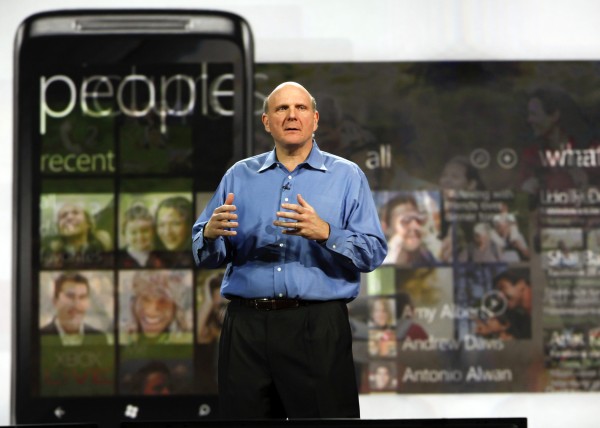
Next week, the biggest trade show of the year opens in Las Vegas. Tens of thousands of people will make the annual pilgrimage to Las Vegas for the Consumer Electronics Show. My inbox already bursts with press releases, and it can only get worse. I hate CES. Trade shows like this one are anachronisms. Microsoft is right to bow out after this year. There's too much noise and too many vendors trying to yell louder than the next one. Logistically, from a reporter's perspective, it's a nightmare to coordinate. There's too much to cover and not enough time.
So in that spirit, I've come to spit on CES and offer a list that juxtaposes colleague Tim Conneally's. Earlier this week, he posted: "10 things I genuinely want to see at CES 2012". Tim offers an excellent list of want-to-sees. I'm taking a different tact: Things I don't want to see -- or hear about -- during CES 2012.
Explore global television with TVNations
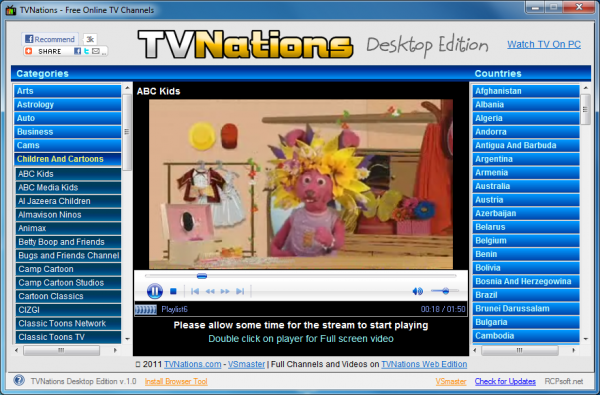
There are plenty of TV stations all across the world that stream at least some of their content online. And a quick Google search will deliver plenty of interesting possibilities. Or you could just install TVNations, a tiny tool which makes many of them directly available from your Windows desktop.
Like many similar applications, the program organizes its channels by both genre and location. So you can click Movies, Music or News in the left-hand pane to find offerings of a particular type, for instance, or just choose your preferred location in the right-hand pane to see everything from that country.
Chrome 17 beta can load pages faster than you can type the address
Almost a month after releasing Google Chrome 16 Final, Google has finally pushed Google Chrome Beta to version 17. This latest build concentrates on delivering speed and security enhancements with background preloading of web pages and downloading screening functionality added.
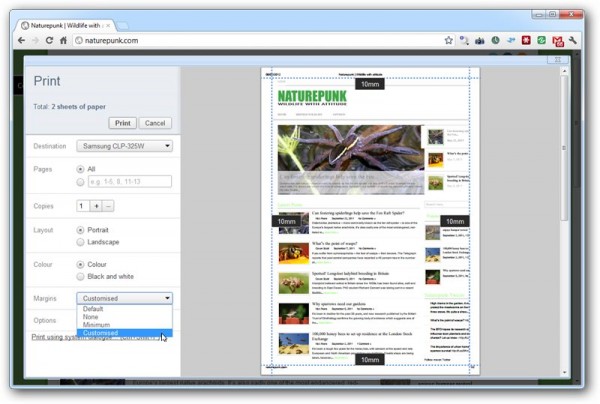
A number of other, more minor changes and the usual slew of bug fixes are also included, including adjustable margins in Print Preview and a prompt to confirm the cancellation of incomplete downloads when the user closes the last window of an incognito profile.
January 6 giveaway: Auslogics Registry Defrag
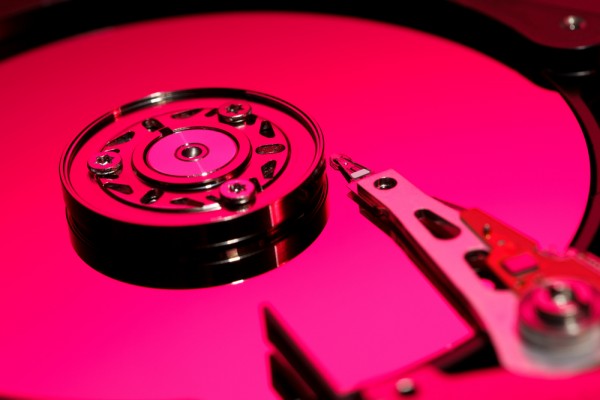
It is important to keep your computer in good shape if you are going to get years of use from it and there are various techniques that can be used to ensure that you are getting the best possible performance from your hardware. While it is fairly easy to use the various tools that are built into Windows to keep your hard drive optimized, when it comes to the registry it is something of a different story. Windows includes a tool that can be used to edit the registry, but nothing that enables you to optimize it. This is precisely where Auslogics Registry Defrag can help and today we’re giving you a free copy of this powerful app worth $19.95.
Auslogics has a great reputation for producing powerful maintenance tools, and Registry Defrag falls very neatly into this category. The registry is an area of Windows that many people do not feel comfortable tampering with -- and with good reason, as any incorrect changes could have disastrous consequences for your computer. But just like your hard drive, your registry is prone to fragmentation as software installation and uninstallations leading to bloating and an increase in size that impacts negatively on performance.
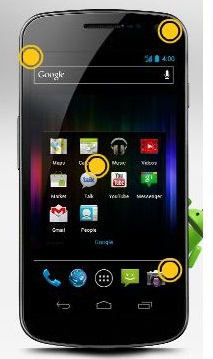
Whoa, Galaxy Nexus is coming to Sprint
That's the gist of an advertisement running at CNET right now. It's the "first 4G LTE phone from Sprint", according to the banner advert, on the carrier's, ah, coming-sometime-really-soon LTE network. I dunno if the ad spills a pending CES 2012 announcement or what. But leaks don't get much funnier than this.
On the other hand, Sprint held a little event late this afternoon announcing big, splashy LTE network deployment. I suppose the carrier could offer Galaxy Nexus with LTE capability ahead of the bigger pipes. But the handsome smartphone may look a little old in the tooth when quad-core beauties start selling around the time Sprint offers LTE.

AT&T lights up 4G LTE service in 11 more cities and mine is one of them
AT&T LTE is now available in San Diego, which means I'll soon conduct speed test comparisons around the city against Verizon's 4G network. It will be the Wilcox household network speed test face-off, the wife's Samsung Galaxy S II Skyrocket against my Galaxy Nexus.
San Diego joins 10 other cities, which LTE service AT&T announced today. They are: Austin, Texas; Chapel Hill, N.C.; New York City metro area; Los Angeles; Oakland; Orlando, Phoenix; Raleigh, N.C.; San Diego; San Francisco; and San Jose. They join 15 others: Athens, Ga.; Atlanta; Baltimore; Boston; Charlotte, N.C.; Chicago; Dallas-Fort Worth; Houston; Indianapolis; Kansas City; Las Vegas; Oklahoma City; San Antonio; San Juan, Puerto Rico; and Washington, DC. AT&T claims its LTE network reaches 74 million people; Verizon, 200 million.

Box rolls out big feature upgrade to Android app
Cloud storage and collaboration service Box has rolled out the 1.5 update to its Android application on Thursday, adding three big new features to the mobile app which take advantage of Android's unique capabilities.
First, the application now includes a homescreen widget that shows whenever a file is updated by a collaborator, and it launches files direcly without having to take the additional step of launching the Box app.

Broadcom debuts next WiFi standard at CES 2012
Broadcom says it is using the platform of the Consumer Electronics Show next week to debut fifth generation wireless networking technology, dubbed 802.11ac. The wireless standard promises speeds of up to 1.3Gbps, which would make 802.11ac about three times as fast as 802.11n. It will also be about six times as power efficient, perfect for portable devices.
802.11ac promises greater range than its predecessors. While like previous technologies, top speeds are only attainable less than 10 meters from the transmitter. However, due to the speed bump alone 802.11n speeds are still theoretically attainable 60 meters away. This obviously makes wireless networking more viable in larger spaces.
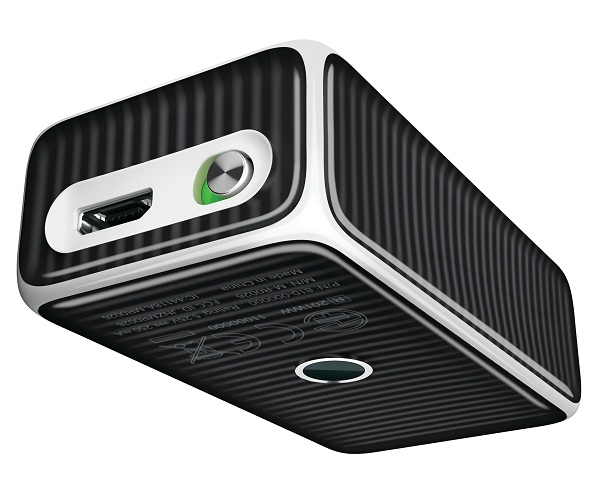
Logitech Cube might be CES 2012's ugliest product
In a move that looks more like a clever ploy to attract bloggers and journalists to their booth at next week's Consumer Electronics Show than a product with any actual hope of success in the marketplace, Logitech on Thursday introduced the Cube. The rectangular shaped device is a mouse primarily, although it doubles as a presenter.
The square shape sure will take some getting used to, especially considering the design of the mouse has all but been unchanged in its three decades of existence. Why? Because it works. Remember Apple's circular mice that came with the original iMacs? They were derided for one reason -- ergonomics -- and the Cube seems destined for a similar fate.
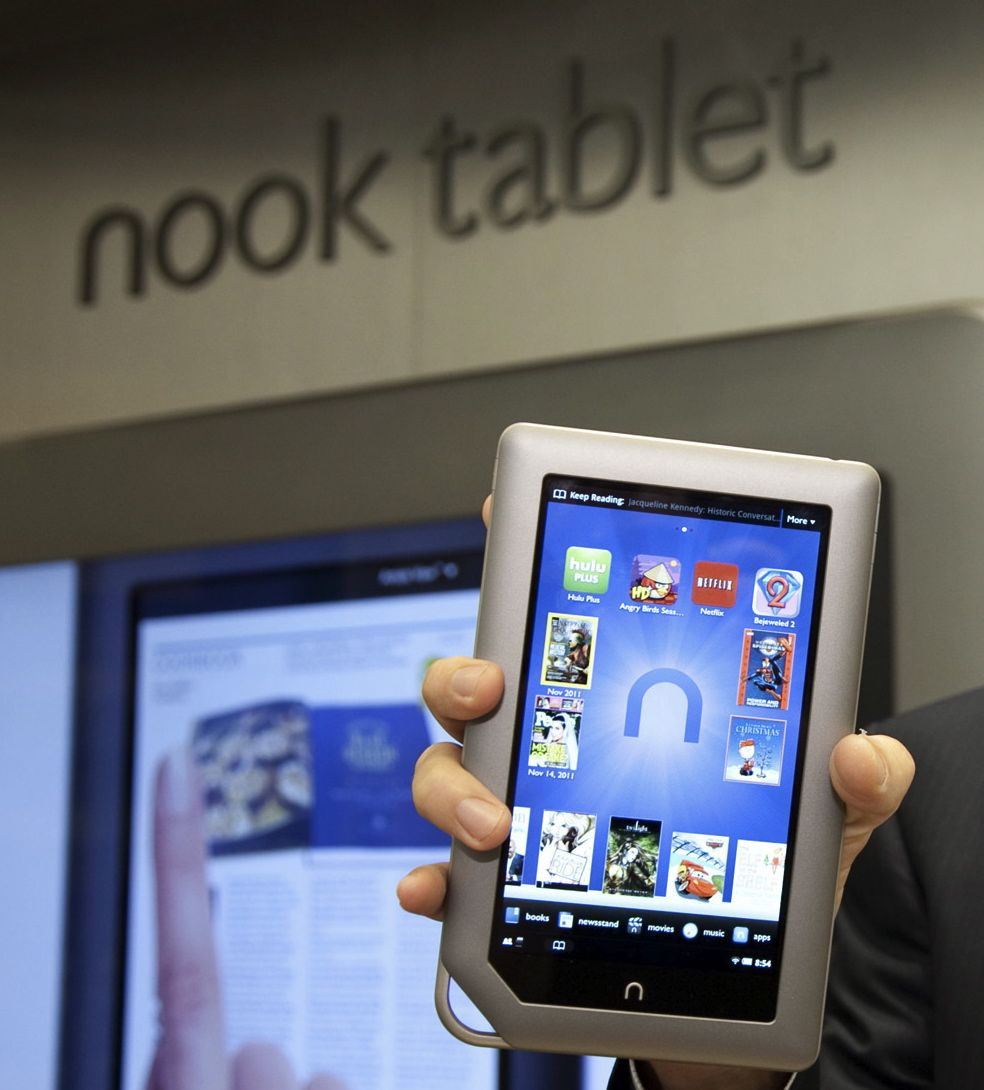
Barnes and Noble: Nook is doing so well that it can be spun off
National bookstore chain Barnes and Noble announced on Thursday that is considering a spin-off of its digital content business surrounding the Nook e-book software platform and its related hardware. The company says the Nook digital business is expanding so strongly that it could be separated from Barnes and Noble's other business units and operate on its own.
"We see substantial value in what we’ve built with our NOOK business in only two years, and we believe it’s the right time to investigate our options to unlock that value,” William Lynch, Chief Executive Officer of Barnes & Noble said in a statement on Thursday. “In Nook, we’ve established one of the world’s best retail platforms for the sale of digital copyright content. We have a large and growing installed base of millions of satisfied customers buying digital content from us, and we have a NOOK business that’s growing rapidly year-over-year and should be approximately $1.5 billion in comparable sales this fiscal year. Between continued projected growth in the U.S., and the opportunity for NOOK internationally in the next 12 months, we expect the business to continue to scale rapidly for the foreseeable future.”
Get Linux lets you find and download more than 100 distros
If you want to download a particular Linux distribution you could go online, run a quick search or two, and you’ll probably turn up the necessary links fairly quickly. But a portable Windows tool called Get Linux aims to offer an even simpler solution.
Launch this small program and you’ll see a list of more than 100 Linux distros. Enter the name you need in the Search box, choose whether you’d like the 32 or 64-bit build, click Download, then just wait while Get Linux grabs the necessary ISO for you.
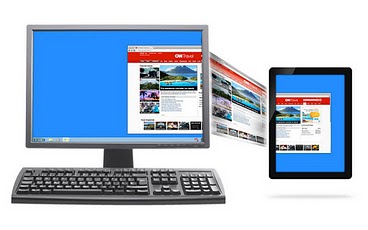
Turn your Android into a second PC monitor
Anyone who has worked with a dual monitor setup will be aware of just what a productivity boost the extra screen space can be. The ability to have more than one application visible in full screen mode enables you to view more information at any one time is incredibly useful and it something that everyone should try. But whether you have a couple of monitors sitting on your desk or not, ScreenSlider enables you to gain a little extra space using your Android device.
The app can be used with either tablets or phones, and while both are useful options, tablet owners undoubtedly get a better deal thanks to their larger screens. ScreenSlider simply requires that you install the free app on your Android device as well as the desktop software on your PC and the software will then automatically detect your phone or tablet over your wireless network from your computer. You can drop any program window onto the display and take advantage of it whilst sat at your desk or move further afield --providing you stay within range of your network.
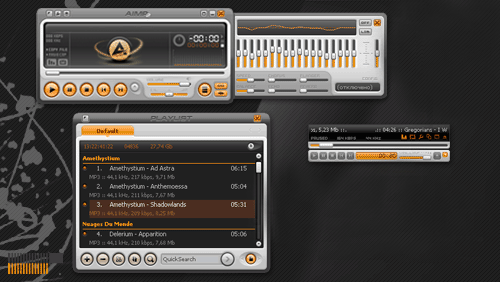
AIMP 3 adds own sound engine, 7.1-surround sound support
First released back in 2006, AIMP’s lengthy feature list has helped to make it a popular free audio player. It has been out of the news for a while as the developers worked on the latest release, but they’ve finally finished, and now we can all sample AIMP 3′s new features for ourselves.
Top of the list has to be the introduction of the program’s own sound engine, which allows you to output using ASIO, WASAPI or DirectSound (click Preferences > Playback to control this).
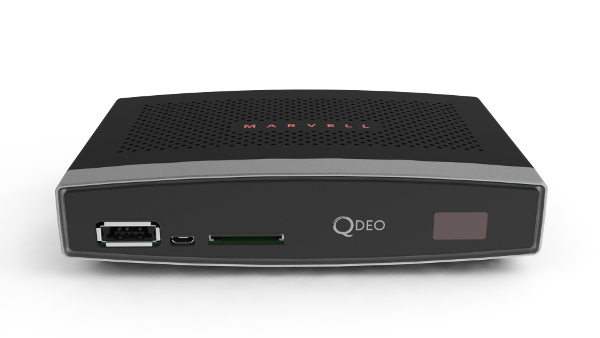
Google will debut new Google TV at CES 2012
Semiconductor company Marvell announced on Thursday that the next generation of Google TV will be powered by the Marvell Foresight Platform and its Armada 1500 HD Media system-on-a-chip, and that we'll be getting a first look at it next week at the 2012 International Consumer Electronics Show in Las Vegas, Nevada.
Marvell has teamed up with Google and effectively picked up where Intel left off when it quit its short run with Google TV, and moving its Digital Home Group engineers over to Ultrabooks, tablets, and smartphones.