


Google removes Android malware so you don't have to
Android handsets infected with malware are getting a cleaning job from Google. On March 2nd, Google removed 21 apps from the Android Marketplace that contained malicious code (the number of infected apps is now 58). Now Google is "remotely removing the malicious applications from affected devices" and "pushing an Android Market security update to all affected devices that undoes the exploits to prevent the attacker(s) from accessing any more information from affected devices," according to a blog post by Rich Cannings, Android security lead.
Whoa. That's scary reassuring: Knowing Google can reach down to Android handsets to swat malicious code and undo its impact and simply that Google can reach down into devices at all. I mean whoa. "This remote application removal feature is one of many security controls the Android team," Cannings writes. Last year he defended the remote removal feature after Google nixed some applications. "This remote removal functionality -- along with Android's unique Application Sandbox and Permissions model, over-the-air update system, centralized Market, developer registrations, user-submitted ratings, and application flagging --provides a powerful security advantage to help protect Android users in our open environment."
5 lessons tablet competitors should learn from iPad 2
Last week's iPad 2 debut offered few surprises, other than Apple's new tablet not living up to out-of-control rumors -- and still there is endless cacophony on the InterWebs. By measure of noise, there is seemingly no other tablet worth purchasing. But, of course, that's not the case. Perception isn't always reality. But from iPad 2 hype and perceptions, there are five lessons competitors can learn.
I present them in no particular order of importance with recommendations competitors should consider adopting.

I don't see the value in cybersecurity treaties
Bruce Schneier and other very respectable experts think we should be talking treaties with China and others about cyberattacks, even if the treaties are unenforceable. But they're not just unenforceable, they're unverifiable.
Go watch the excellent interview on searchsecurity.com with Bruce Schneier. It's less than 7 minutes. Schneier is a top guy in cryptography and has broader interests and expertise. In his blog he often takes on the real world security measures we all deal with, like surveillance cameras and ID card standards.
12 reasons why developers should favor Android tablets over iPad
OK, maybe Steve Jobs' reality distortion field is wearing off a bit, and I might feel differently in a week when I get my iPad 2, but after playing with my Motorola XOOM a lot more tonight and seeing just what "no apps" looks like, I got something to say to developers:
You should build for Android. Before you build for iPad. Here's why.

How much will one count of 'conspiracy to commit software piracy' cost you?
Two thousand dollars ($2,000) and two years of probation…after five years of investigation by U.S. Immigration and Customs Enforcement's (ICE) Homeland Security Investigations (HSI) division and three years of litigation in the Connecticut District Court.
That was the sentence for Michael Uszakow, 46, of Houston Texas, in the U.S. District Court of Connecticut this week. His "Conspiracy to Commit Criminal Copyright Infringement" took place when he participated in the cracking/warez scene.
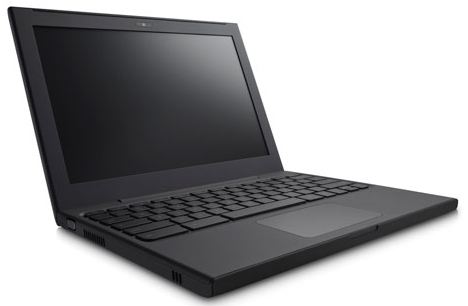
Chrome OS update makes Google Cr-48 worthy cloud PC alternative
This week, I unexpectedly started using Google's Cr-48 notebook running Chrome OS as my production system. On Monday, my 11.6-inch MacBook Air fatally crashed, leaving no real alternative since a friend has my Windows laptop. So I fired up the Cr-48, which I reviewed in December in seven parts. It has been a great week that got better after installing yesterday's Chrome OS update -- "0.10.156.46 (Official Build caa798a8)."
I started using the Cr-48 full time a second time with sense of urgency. I couldn't fall back to MacBook Air. It was sink or swim. Treading water wouldn't be good enough. Swim I did: As a work replacement PC, the Cr-48 has proved its worthiness, with Chrome OS obviously being major reason; Google synchronization is another. This second week's use also has me reconsidering the merits of the browser as a user-interface motif.
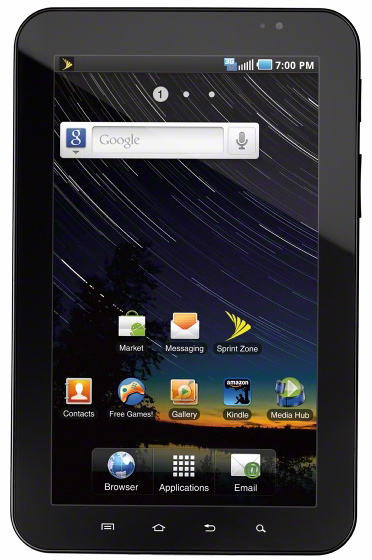
Blindsided by iPad 2, Samsung reconsiders Galaxy Tab strategy
Wednesday's announcement of the iPad 2 has seemingly caught Apple's biggest competitor off guard, and Samsung is apparently reevaluating its next moves. In comments to Korea-based Yonhap News Agency, Samsung's mobile head Lee Don-joo said that the next iPad's sleek new design and competitive price are challenges.
The Korean electronics manufacturer's Galaxy Tab tablet is widely considered the biggest threat to the iPad's dominance in the sector. About two million have sold since its debut last September, making it the best selling tablet next to the iPad.

Report: Apple negotiating for unlimited music downloads
MobileMe's expected refresh was notably absent from Apple's event Wednesday announcing the debut of the iPad 2, however Cupertino may be working behind the scenes to make a revamp of the cloud service part of a larger push towards streaming content.
Sources have told Bloomberg that Apple is currently in negotiations with several record labels including Universal, Sony, Warner, and EMI with hopes that an agreement could be reached by midyear. Apple wants the labels to allow unlimited access to their content across multiple devices.

After a decade, It's time to say goodbye to Internet Explorer 6 (again)
Internet Explorer 6 was released a decade ago, and as of February 2011, 12% of the world accessing the Web still used it. On Friday, Microsoft officially stated that it wants that fragment of the population to just let it go already.
It did this by launching an official "death clock" for IE6 at ie6countdown.com. The website is dedicated to watching IE6 usage drop down to less than 1% worldwide. Microsoft is not kidding around this time, saying it wants website developers to stop supporting Internet Explorer 6. The company is giving site developers the option to embed a banner in their site that lets users know they're using a browser that lacks support for modern web standards.

Review: Avast! Free Antivirus 6.0 delivers robust protection
Updates to stand-alone antivirus tools generally aren't anything to get excited about. The interface might have changed color, or maybe relocated a few buttons, and of course you'll get the standard promises about improved accuracy, or better performance, but otherwise it's often business as usual.
Avast! Free Antivirus 6.0 is an exception, though, thanks to a host of interesting and highly visible new features: automatic sandboxing, website reputation reporting, improved real-time protection, and many more. And so the end result is a package that looks rather more like a security suite than a simple antivirus engine. But is the new functionality really as effective as it looks? We put the program through some real-life tests in an effort to find out.

MAGIX releases free Photo Designer 7 and Photo Manager 10
German multimedia specialist MAGIX has released two free photo management and editing packages, each designed to help you get more from your digital images.
MAGIX Photo Manager 10 lets you navigate your photo collection with its thumbnail browser. Automated tools allow you to quickly organise your images into categories, while a "find similar photos" option can search your entire hard drive to locate shots from the same photo session.
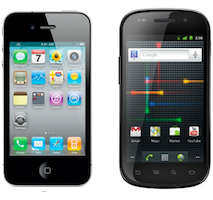
Yawn, Android beats iPhone and BlackBerry again
I know that yesterday Apple CEO Steve Jobs proudly proclaimed 100 million iPhone shipments, which is a darn big number. But iPhone isn't winning the smartphone wars, a story that's getting tired to write (Apple could still win the mobile platform wars). Today, ComScore and Nielsen separately released new US smartphone data that puts Android ahead of Research in Motion's BlackBerry and Apple's iPhone. It's quickly becoming an old story.
In January, Android handsets accounted for 31.2 percent of the US smartphone market, up from 7.1 percent a year earlier, according to ComScore. BlackBerry held the second position, after a devastating, steady decline -- 30.4 percent down from about 44 percent in January 2010. Meanwhile iPhone share remained flat, in the 25 percent range, for all of last year. US market share was 24.7 percent in January 2011.

SuperSync merges, shares multiple iTunes libraries
Owning an iOS device is meant to make it easy to access the music you have stored on your computer -- plug in and synchronize the latest tracks ready for listening to on the move. However, in practice, many of us regularly work with more than one computer, be it an office and home computer, or a laptop and desktop machine. Each of these computers may have a different selection of music on the hard drive. There is a simpler way. SuperSync can be used to centralize your collection and ensure that everything you want is available by providing you with a single, constantly updated music library.
Using the app you can easily compare two iTunes libraries and decide which tracks need to be copied between them -- synchronization is a breeze and beats having to manually transfer tracks individually. This in itself is a useful feature, but SuperSync also provides an all-important backup option.

BackupGoo: Affordable safety net protects your Gmail data
Few people give a second thought to files and data stored in the cloud, but just like local data, it is important to backup online information. The recent problems suffered by Google Gmail highlights the importance of ensuring that your online data is safeguarded, and BackupGoo provides a quick and easy way to back up your Google account in its entirety.
After providing your Google username and password, the application is able to access your account and can then be used to download your emails, documents, calendars, contacts and more. If you do not use all of Google's services -- not everyone has a need for Google Docs, for instance -- you can select precisely what you would like to backup and where the files should be stored on your hard drive.

FCC suggests subsidized broadband for poor, instead of telephones
At Thursday's open meeting of the Federal Communications Commission (FCC), a set of reforms to the Lifeline/Link-Up program was proposed, aiming at "modernizing and driving tougher accountability" for the program that provides discounts for telecommunications service and installation for lower-income consumers.
The existing program is part of the Universal Services Fund (USF), which is paid into by the major telecommunications companies and their subscribers. It offers discounts of up to $10 per customer for monthly bills and one half (up to $30) of installation fees for basic services. To be eligible for the program, consumers must be at, or less than 135% of, the federal poverty line (which has been set at $10,890/year per individual for 2011.)



