


Sparrow takes flight for Gmail
Sparrow, the minimalist mail application for Mac, has left beta and been officially released through the Mac App Store for an introductory price of $9.99. It offers a streamlined user interface through a window that pops up from the program's Dock icon, cutting out the clutter and delivering an unfussed experience to collecting, reading and sending mail.
Version 1.0 currently only supports Gmail accounts -- support for other mobile providers, including Mobile Me, AOL and Yahoo!, along with general IMAP accounts is promised for version 1.1, which is about to undergo private beta testing.
BBC iPlayer comes to iPad, but for UK only
After much anticipation, the BBC has released a dedicated app for accessing its iPlayer service. A dedicated app has been promised for some time and the iPad version closely resembles the desktop version of the software. Using the BBC iPlayer app it is possible to access live television and radio broadcasts as well as programs from the last seven days.
Video quality is very high, and it is perhaps for this reason that BBC iPlayer can only be used over a WiFi connection. The lack of 3G support may also be down to the fact that there is not an iPhone version of the app available, but bearing in mind the file sizes involved, the connectivity issue may be a good thing for anyone using a limit data tariff.
Can IE9 stop Microsoft's steady browser decline?
Especially in retrospect, Internet Explorer really did used to suck. Even though browsers were all about standards from the beginning, Microsoft used to think of it purely as a vehicle for pushing proprietary features. Not anymore. IE9 Release Candidate is available, today, and things really are different.
Microsoft's public relations and technical docs for IE9 are all about high performance, security and safety and a high level of standards compliance. It's too early to tell if it really is as good at these characteristics as they say it is, but they are at the very least saying the right things.

Yahoo follows News Corp, announces Livestand 'magazine' for tablets
Yahoo on Thursday announced that it will soon debut a new magazine-style method of digital content delivery especially aimed at touchscreen mobile devices like tablets and smartphones called Livestand.
"Publishers and advertisers must expand their content to [phones and tablets] to stay in front of consumers," said Blake Irving, Executive Vice President and Chief Product officer at Yahoo. "We see an opportunity to provide publishers and advertisers with a pipeline for fresh and active content and to help them reach and engage their most valuable audiences."
Google introduces 2-step account verification, but is it too much to ask of users?
Google today announced 2-step verification for account holders. The new security feature is rolling out gradually; I haven't received the update and so couldn't test the new feature. I like the concept but wonder how many people will bother to set it up or will cringe at the steps required to use it.
Like so many other cloud services, Google requires a username and password to login @gmail.com. The new mechanism adds a verification code received by cell phone. Additionally, there are 16-digit app-specific codes for e-mail clients and other applications. The extra layer of security is compelling, but is in some ways daunting.
Internet Explorer 9 Release Candidate now available
It's been just about five months since Microsoft put out the first beta of Internet Explorer 9, and on Thursday, it officially reached Release Candidate (RC) status, and is now just about feature-complete.
The hallmarks of Internet Explorer 9 RC are: its support for new Web technologies based on HTML5, its treatment of sites like apps with pinnable shortcuts that can send dock notifications, improved privacy and tracking protection, and the ability for users to set filters for ActiveX elements on the Web.

Verizon iPhone launch is a bust, as hordes of Apple Store employees wait for no one to come
So much for the big Verizon iPhone launch: The lines are simply astonishing, as in so small you need a magnifying glass to see them. Don't blink as you walk by the local Apple or Verizon store. You might miss the people waiting to buy a CDMA iPhone 4.
Perhaps it's all those preorders.

Tip: Take the PC breaks you need with Workrave
For those of us who spend far too much time in front of the computer, it's easy to forget about the dangers of gluing yourself to your desk. There's the dreaded RSI acronym, as your hands and wrists succumb after all those hours of typing and mouse clicking. What about your eyes? We all blink less when staring at the screen, which isn't good news either. And then there's the lack of exercise as you sit hunched over the keyboard ignoring the strains your body are going under.
The solution already exists: take regular mini breaks from your computer, try stretching and walking about and tear your eyes away from the screen long enough for them to regain such much needed moisture. But while the theory is good, putting it into practice is more difficult -- how will you remind yourself to take those all-important breaks? The answer for Linux and Windows users lies with Workrave.

Outpost Security Suite FREE 7.1 bulks up with second malware engine
Agnitum has released version 7.1 of its flagship product, Outpost Security Suite FREE. It's a maintenance upgrade for the most part, with under-the-hood bug fixes and minor tweaks, but there are some notable exceptions.
Top of the list is the inclusion of a second anti-malware engine. The suite now includes one antivirus engine, and a second focused on spyware, adware and trojans. The company claimed in a blog post that this offers "double the protection" and "more targeted security for Windows users"; there are no related controls or options exposed in the interface, though, so you can continue to use Outpost Security Suite as you always have.
Gartner: Android smartphone sales surged 888.8% in 2010
In an unexpected turn, Android did better by Gartner's measure than other talliers' reckonings, and the numbers have more punch. Unlike other analyst firms, which measure shipments to carriers and dealers -- what's sometimes called "sales-in" -- Gartner measures "sales-out" to buyers. Manufacturers shipped 67.2 million Android smartphones last year, up from 6.8 million in 2009. That works out to an average 184,000 Android smartphones sold per day. By comparison, Apple sold an average 127,000 iOS smartphones a day, or 46.6 million for the year.
Android's smartphone OS market share rose to 22.7 percent, putting it in second place, up from 3.9 percent in 2009. Android benefitted from strong manufacturer support. Among the top 10 global handset manufacturers, seven ship Android phones -- second-ranked Samsung and third-ranked LG among them. However, Samsung and LG both lost global handset market share for all 2010.

FCC crackdown on Cellular/GPS jammers starts today
Today, the FCC's Enforcement Bureau announced it is clamping down on the marketing, sale, and use of illegal cellphone and GPS jamming devices because they can very easily jam signals used by the public safety and law enforcement sectors.
Cell jammers have become pretty popular items. At CTIA 2010 last year, we saw quite a few companies offering low-power jamming solutions for prisons, board rooms, movie theaters, and really anywhere else that privacy and radio silence is important.

Adobe aims to cut power consumption with Flash 10.2
Aiming to make Flash more nimble and less power-consuming, Adobe on Wednesday introduced Stage Video as part of an overall larger update to the multimedia platform. The technology takes advantage of hardware acceleration which in turn uses less processing power and thus less battery power.
With an increasing amount of Flash content being played back on mobile devices, it has become necessary for Adobe to deal with the power-intensive playback of content. The company said 1080p video playback was now possible with only 1-15% CPU usage, up to 34 times more efficient than earlier versions.
Windows 7 SP1 coming Feb 22, new Windows Thin PC coming Q1
Contrary to reports which said they were released in January Microsoft today announced that Windows 7 SP1 and Windows Server 2008 R2 SP1 were released to OEM partners today, and the updates will be available to consumers on February 22.
As we've known since back in June when the first beta invites went out for SP1, this is a very minor release. However, the RemoteFX and Dynamic Memory virtualization features in Windows Server are especially noteworthy this time around.
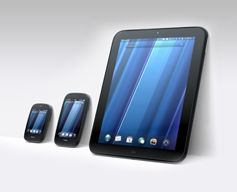
HP launches WebOS Tablet, new Pre, and new mini-phone
Since Palm Inc. was acquired by Hewlett-Packard ten months ago, the tech world has been expecting a WebOS-powered slate, while simultaneously wondering what would happen to Palm's critically acclaimed line of WebOS smartphones.
Wednesday, HP answered all questions, by unveiling the TouchPad tablet, the Pre 3, and a new WebOS phone called Veer.

Satya Nadella replaces Bob Muglia as president of Microsoft's Server and Tools Business
Today, Microsoft began the big, rumored management shakeup with the appointment of Satya Nadella as president of the Server and Tools Business. Supposedly, Microsoft CEO Steve Ballmer is putting more engineering-focused employees in key, management positions. Nadella replaces Bob Muglia, who essentially was fired last month by Ballmer; Muglia will remain during a transition period through summer.
Like Muglia, Nadella is a long-time Microsoft employee, since 1992, and he more recently oversaw engineering efforts within Microsoft's perennially, money-losing Online Services Business unit. It's an interesting move, to sack the leader who helped build up the highly successful and profitable Server and Tools Business unit and replace him with someone working, since 2007, in a flailing group. OSB has been flapping like a chicken trying to fly above Google for years. Microsoft lags far behind its rival in search share, and the Online Services Business loses money quarter after quarter. It's a money pit.



