


What Windows 8 perhaps should be: Microsoft's multi-kernel OS project
Perhaps you've read an article this week purporting to offer new details on "Windows 8," or whatever Microsoft's next client operating system will be called, only to be perturbed at discovering at the end that you were the one being asked to supply the details. The expectation among many observers is that Windows 8 will be a lot like Windows 7, maybe something less than the great leap forward that a "point-oh" release typically implies.
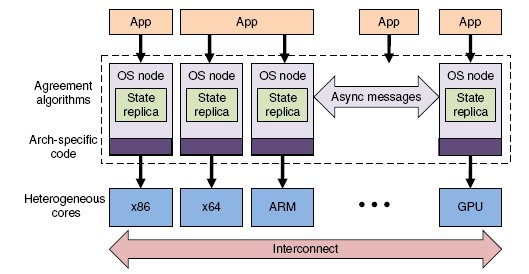
But that doesn't mean there aren't folks at Microsoft (or at least, folks being funded by Microsoft) who are unaware that such a significant advance may be necessary within the next few years. Granted, simply because a project is being undertaken at Microsoft Research is no guarantee that anything that culminates from it will ever be put to use (case in point: HTTP-NG). On the other hand, to paraphrase a slogan formerly used by PBS, if Microsoft doesn't do it, who will?

MMS for iPhone goes live, thousands stop complaining
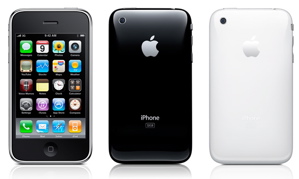
As AT&T promised, iPhone 3G and 3G S users today gained the ability to send Multimedia Messaging Service (MMS) messages.
To enable MMS, users must first have iPhone OS 3.1 installed, and then the AT&T carrier update v5.5 which is installed through iTunes. Once the update is in place, phones must be rebooted, and then the Messages app will feature a camera icon in the lower left corner, which triggers multimedia messages to be sent.

Top 10 Windows Server 2008 R2 Features #9: Processor core parking
When you think of kids on the playground playing Star Trek make-believe, you see the guy who plays Scotty inevitably being shouted at to increase or decrease the power, and then the guy putting on his best (or worst) Scottish accent and complaining back to the captain about how it canna be done, she can't take this abuse much longer or we're all genna bloe! Powering up and powering down is the most common task that amateurs think of when they consider the role of an engineer running a big machine.
And yet up until very recently, servers have existed in a perpetual "on/off" state -- they're either turned on and consuming the energy they've been designed to consume, or they're off and your data center is offline. Only in the last few years, with the introduction of the multicore era coupled with the sudden ubiquity of virtualization, has there been the notion that you can move the entire serving job at any one time to the most efficient processor available. New CPU technologies like Intel SpeedStep have created the opportunity for administrators to eliminate the problem of processor latency by turning off entire cores when they're not in use.

Is the Palm Pre still coming to Verizon?
A report from an unnamed source published on TheStreet.com last night claimed that the Palm Pre, despite all reports to the contrary, would not be coming to Verizon.
Previous statements from Verizon Wireless President and CEO Lowell McAdam somewhat spoiled Sprint's launch of the Pre, saying that Verizon would be bringing the Pre to Verizon within six months.

Let's start the hundred million Wii countdown!
While the Xbox 360 and PlayStation 3 have gradually had their prices whittled down, and their product SKUs have shuffled no fewer than eight times each, Nintendo's Wii has remained the exact same price with the exact same specs the whole time.
From November 2006 to this very day, Nintendo's never changed the Wii's $249 pricetag.

EC's evidence shows Intel paid HP for 95% exclusivity
When the European Commission delivered its first evidence against Intel last May, in papers that were only released this week (PDF available here), it argued that Dell Computer's belief that Intel could penalize it for purchasing AMD's CPUs was as good as Intel actually making the threat. But other evidence later in the 517-page document collected from both Intel and Hewlett-Packard suggests that HP was under the clear impression from the very beginning of its agreement with Intel that if it were to purchase more than 5% of its CPUs from AMD, HP would not only disentitle itself to Intel rebates but also possibly forfeit rebates it would have already received.
But the evidence also shows that HP may not have been under any coercion to agree to these terms. In fact, HP may have been instrumental in stipulating the nature of the rebates, in an effort to streamline its purchasing costs following its just-completed merger with Compaq.

Patent logic in Lucent case may benefit Microsoft in its Word appeal
Two weeks ago, the Federal Circuit Appeals court struck down a huge jury verdict against Microsoft, on the basis that the jury didn't appear to use a real-world formula for determining infringement damages. If it had, it might not have come up with $357,693,056.18, the judges there stated. In the same appeals court this morning but in a different case, as reported separately by Reuters and by Bloomberg, Microsoft's lawyers were all prepared to argue that they could not have infringed upon a patent for XML tag storage, as former partner i4i alleged, because no one in the company had actually seen the patent.
But they may as well have come to court stone-cold silent, as the issue Judge Kimberly Moore raised, according to both reports, was whether i4i's experts came up with a real-world formula for calculating damages. Citing the very same case that these same judges would cite in overturning the Alcatel-Lucent ruling, i4i argued that its expert figured that a company that borrows a patented invention generally owes the inventor about one fourth of its profits.
As i4i's citation explicitly read, "When an inventor allows someone else to use [his] invention, [he'll] keep 25 percent of the profits from the sale of that infringing product."

Intel keeps fighting for widget-augmented TV
At the Intel Developer Forum in San Francisco this week, Intel has devoted a considerable amount of time to a variety of products -- not just netbooks -- that run on Intel Atom processors. Today, the company officially debuted its first Atom-based system-on-a-chip for consumer electronics products such as TVs, set-top boxes, and optical media players.
The 45nm CE4100 system on a chip (formerly codenamed "Sodaville") is backwards compatible with the Intel Media Processor CE3100 (a.k.a., "Canmore") that debuted at IDF last year. That product found its way into a number of HDTVs this year, including Samsung's "Internet@TV" enhanced models. But Intel has been pushing the widget-enhanced Internet TV experience for nearly six years, and it still hasn't caught on. As with its continued advocacy of the Mobile Internet Device (MID) form factor, Intel keeps pushing but few seem to notice.

Microsoft's Windows 7 House Party prep video is a real party pooper
Sometimes buzz is the last thing a company should want.
Microsoft's lame Windows House Party prep video is the rage of the Web right now -- and that's not good. I refrained from blogging yesterday but have been called to action. This morning, Interpret's Michael Gartenberg tweeted: "How have you not weighed in on the House Party videos? Are you just laughing too hard... We need some JW analysis here please." OK. OK. I'll break my silence.

Microsoft takes a second swing at the Web apps 'ecosystem'
Download Microsoft Web Platform Installer 2.0 from Fileforum now.
Back in 1990, Microsoft made a genuine attempt to build what is now referred to as an "ecosystem" around applications for Windows, including advising its competitors as to how to write for the system, and even funding smaller groups that needed a leg up to become viable players in the market. As things turned out, however, there ended up being one word processor, one spreadsheet, one presentation manager, and one organizer that each commanded more than 90% of the market, compelling many to wonder aloud why the metaphors comparing Microsoft to something out of a certain old Dutch fairy tale weren't taken more literally.
The smartphone popularity contest: Palm Pre crashes iPhone 3G S' party
Market research firm Interpret, LLC issued a report today that examines the public's mindshare of the market's leading smartphones (iPhone 3G, iPhone 3G S, Palm Pre, Android G1, BlackBerry Storm, BlackBerry Curve). In other words, it gauges the public's perception of particular devices and how "popular" they are outside of actual sales figures.
While observing popularity often just serves to reiterate what many people think they already know about a product, Interpret's report propounds that it is no longer enough for smartphones to just perform advanced tasks, but they must also project certain qualities about their owners. The qualities that people most wanted to say about themselves through their phone were: "hip/cool," "smart," and "productive."

My father's laptop: A humble machine's simple lesson
As laptops go, it's nothing out of the ordinary. An average brand -- Compaq -- running an average operating system -- Vista -- used for the ordinary, average sort of things, like Web browsing and messaging. With its 17-inch screen, built-in webcam, and a hard drive with enough capacity to store everything I've ever written, it's the kind of machine that pretty much defines mainstream computing.
The difference is this was my father's machine. And after getting a middle-of-the-night call yesterday from my mom saying he had passed away, just like that, it was the first thing I saw after I got to their house and walked into the living room.
3G wireless eReader from Irex aims to tackle Amazon's Kindle
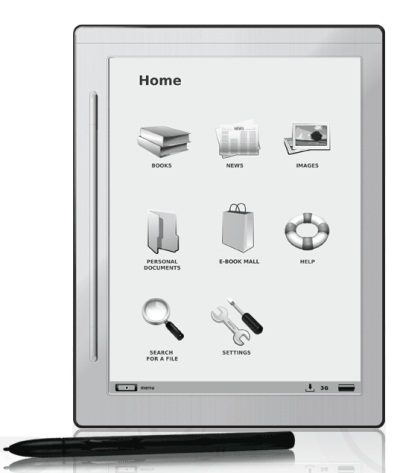
Through new partnerships with Verizon Wireless, Barnes & Noble, Best Buy, and other major US firms, the European-based Philips spin-off hopes to at least hobble the Amazon giant in North America. Set for release next month, Irex's 8.1-inch touch screen eReader will be better than the Kindle in almost countless ways, officials contended during a press conference today in New York City.
Unlike the Kindle, which is dedicated to sales from Amazon.com, the Irex DR800SG will support Barnes & Noble's eBookstore and ultimately other e-comm sites, magazines, and newspapers, too, said Hans Brons, CEO and founder of Irex. Based in the Netherlands, Irex has been carefully eying the US e-reader marketplace for more than a year now, according to Brons.

Senate Republicans suspend opposition to FCC net neutrality regulation
As first reported in the Washington Post this afternoon, and as has been independently verified by two other Washington news sources, Sen. Kay Bailey Hutchison (R - Texas) has agreed to withdraw her amendment to an Interior Dept. spending bill that would have cut off funding to any Federal Communications Commission effort to regulate "net neutrality." This as aides to FCC Chairman Julius Genachowski, as reported by Congressional Quarterly, approached Sen. Hutchison seeking her withdrawal, at least until the Chairman can put forth a complete proposal.
On Monday, Chairman Genachowski made a public policy speech outlining a framework for new FCC regulations that would prohibit service providers from disabling certain Internet services on behalf of customers, as well as more transparently specify for customers what allowed measures they are taking to regulate traffic on their networks. The implication of these "Fifth" and "Sixth Principles," as they're being called, is that the FCC would in turn prohibit ISPs from being able to provide better bandwidth to certain classes of content providers willing to pay a premium.
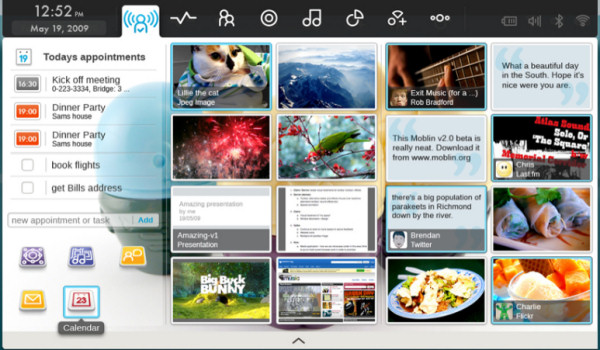
Intel's Moblin platform takes big steps
While Linux-based operating systems have been well-received for netbook form factors, some of the highest-profile distributions have not yet taken a strong hold there, especially when competing against desktop operating systems like Windows XP. One of those not-yet-a-hits is Moblin, an Intel-endorsed open source platform designed especially for Atom-powered devices.
Today, however, Moblin received a couple of big boosts as a result of the Intel Developer Forum going on this week, helping to grow the project's scope considerably.



