Digital banking, biometric payments and more regulation -- fintech predictions for 2023
Like any other industry, the financial services sector is undergoing digital transformation. While banking and finance have historically been quite traditional, pressure from more agile startups has led larger companies to look to tech to stay competitive.
The effect of the COVID-19 pandemic has driven more people to do their banking online too. Here are the key trends that experts expect to see in the fintech sector in 2023.

Identity fraud doubles in crypto and banking sectors
The crypto and banking sectors both experienced a nearly two-fold increase in identity fraud in 2022, according to a new report from verification platform Sumsub.
The report also finds that over half of all fraud cases happened in just five countries: Bangladesh (22 percent), Pakistan (15.2 percent), Vietnam (8.1 percent), Nigeria (5.4 percent) and the USA (5.1 percent).
Three quarters of Americans would ditch traditional banks for fintechs
A new survey shows that 74 percent of Americans would be willing to switch from their bank to safe and more cost-effective fintech services. The same research also finds that half believe their bank fees are too high, while one in five thinks banks are slow innovators.
The survey of over 1,100 people by the Money Transfer Comparison website finds 39 percent of Americans would switch for innovative low-rate credit cards, 35 percent for personal or car loans, 30 percent for home loans, 25 percent for savings accounts, 22 percent for budgeting apps, 15 percent for share trading and 13 percent for international money transfers.

How fake data can help to combat breaches [Q&A]
September this year marked five years since the notorious Equifax data breach which exposed the social security numbers, birthdates, credit card details, and more of millions of customers.
But how much has the industry learned from this breach? And what measures can be used to help avoid similar issues in the future? We spoke to Ian Coe, co-founder at Tonic.ai to find out why fake data might be the answer.
PayPal backs down over Free Speech Union account
The latest development in the ongoing 'PayPal-gate' story is that the fintech giant has now reversed its decision and apologized for closing the Free Speech Union's account.
The FSU tweeted news of the decision yesterday evening following several days of people closing down their accounts and the stirring up of a political storm with questions asked in the UK parliament.
How the banking and financial industries are gearing up against phishing
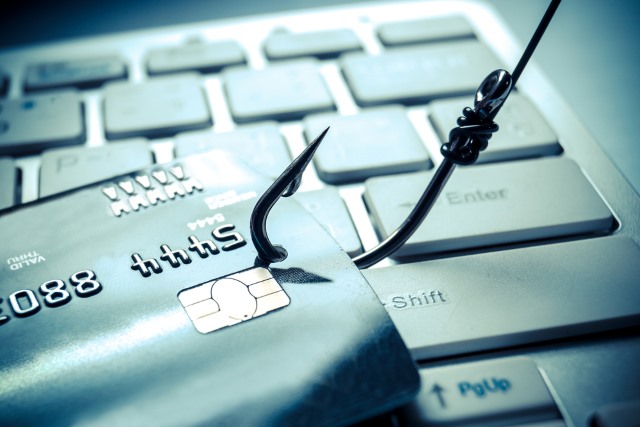
Phishing has become a matter of grave concern for banks and financial institutions, as attacks on the industry have increased in recent years. Finance is the most impersonated industry in phishing campaigns. Some 35 percent of fake websites and emails claim to be from financial institutions, according to the American Bankers Association.
This should come as no surprise, considering the industry's role in the global economy. Given that financial organizations facilitate the flow of money it makes sense that their networks, employees, and customers are prime targets for digital fraud and theft. In response, central banks and regulators have been directing financial institutions to improve their security.

Improved data privacy equals improved revenues
According to a new survey, 94 percent of chief data officers (CDOs) from healthcare organizations and financial services firms say that deploying data privacy technology that enforces existing privacy regulations would result in increased revenues for their organizations.
The study from privacy technology specialist TripleBlind finds 37 percent of respondents estimate improved collaboration would increase revenues as much as 20 percent. In addition, 46 percent say increased data collaboration would give their organization a competitive advantage over others.
Banks choose to build their own tech solutions
While banks are investing in technology solutions to meet increasing demands, a new study shows that 61 percent prefer to build their own technology stack, rather than buy technology solutions from a third party.
The study from IT services company NTT DATA surveyed 900 senior banking respondents across 12 countries and examines the state of corporate banking following the COVID-19 pandemic.

Financial services leaders struggle to keep up with AI developments
Research released today shows that 78 percent of financial services enterprise leaders are finding it a challenge to keep up with the speed of AI model and data growth.
The UK research, based on survey of 125 financial services leaders, from SambaNova Systems reveals that the top challenges to deploying enterprise AI include finding or customizing the models/algorithms for their needs (67 percent), setting up infrastructure (33 percent) and preparing data (38 percent).

How Banking-as-a-Service is shaking up the fintech ecosystem
Today, consumers are faced with more choice than ever when it comes to their financial affairs. From contemporary offerings like Buy Now, Pay Later (BNPL) and embedded finance platforms, to more traditional products like credit and debit cards, institutions and retailers alike are being called upon to deliver more seamless, quick and flexible solutions to their customers.
Crucially, businesses launching new financial products often require the complex underlying infrastructure of a bank to bring their offerings to market -- this is, of course, with the obvious exception of certain BNPL products like Klarna, which can operate without full regulation. Likewise, incumbent banks themselves, who already have the full regulatory permissions required to operate, may need to adopt core banking platforms to modernize their legacy systems in order to develop truly competitive offerings to meet the needs of their customers. This is where Banking-as-a-Service (BaaS) and Platform-as-a-Service come in to disrupt the fintech landscape.

Majority of Americans fear some form of cyberwarfare
The war in Ukraine has highlighted the role that the cyber world has to play in modern conflict and a new survey from NordVPN finds that 93 percent of Americans believe that another country could launch cyberwarfare against the US.
What's more, of over 1,000 consumers surveyed only 19 percent feel 100 percent confident in the government's ability to protect them, despite the fact that 70 percent rank the US as the most secure country for cyber war attacks.
Fintech sector will struggle with global talent shortage
The first quarter of this year has seen a massive 182 percent growth in tech roles within fintech, three times the pace of general market.
Figures from recruitment firm Robert Walters show that one in three new hires within fintech companies around the globe are software engineers and developers. Also the top eight fintech 'mega-hubs' account for over 90 percent of all new fintech jobs advertised around the globe.

Cybercriminals are increasingly targeting the financial industry
Cybercrime tends to follow the money when it comes to selecting targets, so it’s perhaps not too surprising to learn that 63 percent of financial institutions admit experiencing an increase in destructive attacks.
The latest Modern Bank Heists report from VMWare surveyed the financial industry's top CISOs and security leaders on the changing behavior of cybercriminal cartels and the defensive shift in the sector.

Financial fraud attempts up over 200 percent in two years
A new study into financial fraud from Feedzai finds that fraud attempts globally are up by 233 percent over the last two years.
Over the same period there has also been a whopping 794 percent increase in fraud on digital entertainment transactions. The effects of the pandemic are evident too with a 65 percent increase in online transactions and a 75 percent drop in US cash withdrawals.

How PSD2 is changing open banking [Q&A]
Compliance with the EU Payments Services Directive (PSD2) is the next key milestone in the continued evolution of open banking. This evolution involves a new set of rules that will change how we confirm our identity when making purchases online.
The implementation of strong customer authentication (SCA), on top of existing open banking capabilities, will require merchants and payment service providers (PSPs) to work together with technology suppliers, card schemes and many others to deliver SCA in a way which works well for customers.