

After switching to ARM, expect Apple to buy TSMC too


Readers have been asking me to comment on Apple’s decision, announced at last week’s World Wide Developers’ Conference, to start switching to Apple-designed ARM processors for its Macintosh computers. I usually don’t like to do second-day (or, in the case, second-week) stories unless I can add something new to the discussion. Oddly, I usually can and that’s the case here, where Apple’s move to ARM has a big-picture strategy component that is absolutely vital to the company’s continued success. It also doesn’t seem to be covered yet anywhere but here.
Forget all the talk about Apple moving to ARM because the chips are better than Intel’s or consume less power. You can even forget the idea that using its own chips allows Apple to be more secretive. While these points are all true, Apple would still be moving to ARM even if they weren’t. The switch is all about money, which comes down to Apple’s cost of goods on one hand and Apple’s market capitalization on the other.
Jeff Bezos can't lose

Big technology companies have been recently coming under increased scrutiny from federal regulators. Several tech companies are reportedly under investigation, but this column is only about Amazon, which seems to be in regulatory crosshairs in part because President Trump doesn’t like Amazon founder and CEO Jeff Bezos, who also owns one of Trump’s least-favorite newspapers, the Washington Post. Ironically, Trump’s goal of breaking-up Amazon would only make Jeff Bezos at least $35 billion richer.
It’s simple: Amazon is worth a lot more in pieces than it is as a single company.
Not just the end of IT, the end of IT contractors

Yesterday, I predicted the demise of conventional IT caused by the wide adoption of SD-WAN and SASE, accelerated by the emergency demands of everyone working from home. Now that Congress has passed a $2.2 trillion COVID-19 bail-out, let’s throw-in the implications of that legislation to see what effect it is all likely to have on what used to be IT. The short version is to expect an even bigger bloodbath as IT employees at all levels are let go forever. Please understand that some version of this bloodbath was going to happen anyway. What matters right now is how we respond to it.
While my previous column was generally about turning lower-level IT nerds into Uber drivers, this one goes a little further up the food chain to include IT contractors and consultants. Yes, I’ll be using IBM as an example, not because Big Blue is anything like a bellwether anymore, but because I just know it so well.
COVID-19 will kill a ton of startups (or so it will seem)
Yes, I’m still predicting-away, though the pandemic is having some impact on the direction in which this narrative is going. Today’s column on startups and venture capital, for example, wasn’t even on my original list of predictions. Just as the financial markets will use this catastrophe for a reset, so, too, will Sand Hill Road, which has pretty much stopped investing and is now deciding, instead, who to kill?
The psychology of venture capital doesn’t work the way most people think. That’s because it is an industry based on failure: most startups -- the vast majority -- fail. That means most VC investment decisions are wrong. There is simply no way of getting around this fact. You can’t call yourself a VC if you don’t make investment decisions and you can’t make investment decisions without being wrong most of the time. So succeeding as a VC is not just a matter of finding good companies, but also avoiding bad companies and managing your portfolio for the greatest possible perceived total value.
2020 brings the death of IT
IT -- Information Technology -- grew out of something we called MIS -- Management Information Systems -- but both meant a kid in a white shirt who brought you a new keyboard when yours broke. Well, the kid is now gone, sent home with everyone else, and that kid isn’t coming back… ever. IT is near death, fading by the day. But don’t blame COVID-19 because the death of IT was inevitable. This novel coronavirus just made it happen a little quicker.
I mentioned the switch from MIS to IT because that name change presaged the events I am describing here. Management Information Systems was an artifact of big business, where corporate life was managed rather than lived. Information Technology happened when MIS escaped into the wild. MIS meant office buildings and Local Area Networks while IT includes home workers in their pajamas which, frankly, describes me at this precise moment.
My first prediction for 2020 -- IBM
For 20+ years I’ve been writing predictions every January and I guess I’m doing another set now. But this time will be different for several reasons. For one, January is over, so it has sloughed over into February. For another, I always start by going back to the year before and grading my previous year’s predictions. I’m the only guy in this business who does that. But this year I am going to bury the score a bit because I need to start with a prediction simply because it's immediate and really can’t wait. So I’ll do the scoring later, but today I have my first 2020 prediction to get out of the way.
And, finally, there is one more difference between this year and every other: this year I’ll not just say what I think is going to happen, I’ll also say what I think should happen. I’m old and cranky and there are only a couple of these so just bear with me.
Not dead yet! What Bob Cringely has been up to…

A few days ago I tweeted something and a reader reacted, saying about Cringely, "I thought he was dead!" Not dead yet, but I should probably explain my disappearance a few months ago from life in print. I’ve just been too busy working for a living. How does a 67-year-old hack with three minor children recover from going blind, losing his home and business in a horrible fire (like 2,000 others, we are still fighting with insurance companies), while appeasing an angry crowd of Kickstarter supporters armed with pitchforks and shovels? In my case, I went looking for venture money to recapitalize MineServer and I simultaneously started a satellite launch company to fund my eventual retirement.
I am not making this up.
The future of television

How is a television like a fax machine? They are both obsolete.
Remember a time when nobody had a fax machine? Then suddenly everybody had a fax machine. And now nobody again has a fax machine. What would have previously come by fax today is a PDF attachment to an e-mail or text or to one of a number of messaging services. Well the same transformation is happening to traditional television and for generally similar reasons. And just as fax machines seemed to disappear in just a few years, I’ll be surprised if broadcast TV in the U.S. survives another decade.
Prediction #5 -- Drones become Pizza-to-the-Neighborhood (PTTN)

I’ve already written one prediction about autonomous cars -- that they’ll be far later to the market than most pundits and autonomous car inventors are suggesting. Today’s prediction is about a tangentially-related technology -- aerial delivery drones. These drones are definitely coming just as fast as regulators will allow them, but I don’t think they’ll be implemented in the way people expect. What we’ll see, I predict, is something I call Pizza-to-the-Neighborhood or PTTN.
Aerial drones are a new type of distribution network operating in a new kind of ether. They don’t travel on roads and neither do they travel in what we conventionally think of as airspace. Flying over cities, which is where these delivery drones are going to be used, airplanes are legally restricted from operating below 1000 feet unless they are actively taking-off or landing. Helicopters get to break this rule a bit because they can claim to be taking-off or landing almost anywhere, but fixed-wing aircraft have to stay above 1000 feet, making below 1000 feet the emerging realm of autonomous drones.
Prediction #4 -- Self-driving cars won't happen this year no matter what Elon Musk says
We all know people who seem to not like anything. There are very successful people who sometimes seem to have reached that success entirely through saying "no." I’m not that kind of person. I’m an optimist. I’m even a bit of a risk-taker. But I can’t say that we’re going to see anything beyond more beta tests of self-driving cars in 2019. So my Prediction #4 is that self-driving cars won’t hit the retail market in any fashion this year. We simply aren’t ready and probably won’t be for years to come.
The problem with self-driving cars isn’t the technology. Heck, we’ve had the technology pretty much whipped for the past decade. Throw-in all the more recent data collected by Google and -- especially -- all those Teslas on Autopilot and nearly all the kinks have been worked out of having cars drive themselves. Still, it won’t be allowed to happen because people are going to die, mainly because of idiot drivers.
2019 predictions #2 and #3 -- A Virtual Private Cloud (VPC) shakeout and legal trouble for AWS
Prediction #2 -- And then there were only 3.5 VPC Cloud players. Cloud computing will continue to grow in 2019 with the key term being not Public Cloud, Private Cloud or Hybrid Cloud -- which are all so 2018 -- but Virtual Private Cloud (VPC). Virtual Private Cloud is an Amazon Web Services (AWS) invention but all the AWS competitors seem to be embracing the idea.
What has developed is that the VPC solution based on Open Source using Linux will change the Internet-as-a-Service (IaaS) Cloudscape to VPC-only during 2019.
2019 prediction #1 -- Apple under Tim Cook emulates GE under Jack Welch
People -- well, investors and financial analysts -- seem to worry a lot about Apple. They tend to see Apple as either wonderful or terrible, bound for further greatness or doomed. What Apple actually is is huge -- a super tanker of a company. And, like a super tanker, it’s hard to quickly change Apple’s direction or to make it go appreciably faster or slower. Those who see Apple as doomed, especially, should remember they are worrying about the most profitable enterprise in the modern history of business. Those who see Apple as immortal should remember that’s impossible.
The worry about Apple in 2019 seems to be that the smart phone market may have peaked, or maybe that Apple has made the mistake of building its products so well that they last too long. Then there’s the concern that Steve Jobs is gone and why isn’t Apple reinventing itself and the world yet again through another new product category?
My predictions for 2019 -- The year when everything changes… forever
Now, finally, to my predictions for 2019. This is, I believe, my 22nd and possibly last year of looking ahead, so I want to do something different and potentially bigger. Our old format works fine but I’ve been pondering this and I really think we’re at a sea-change in technology. It’s not just that new tech is coming but we as consumers of that tech are in major transitions of our own. It has as much to do with demographics as technology. So while I’ll be looking ahead all this week, coming up with the usual 10 predictions, I want to make sure we all understand that this isn’t business as usual. This time it really IS different.
I’ve been thinking about 50 year cycles. The year 1968, which was 50 years ago when I started writing this column back in November, saw a huge social and political upheaval with student riots all over the world, the rise of the hippy movement in the USA, the Summer of Love and the founding of Intel. Most of the technical progress we have seen since 1968 has been driven by microprocessors, which were largely the work of Intel. And it took 50 years, but we’re now approaching the Internet of Things, where processors will be in everything and everything will be linked or monitored, which is either good or bad depending who you are.
Looking back at my 2018 predictions, I was somehow 70 percent correct
I can’t put this off any longer, so here are the tech predictions I made a year ago for 2018. We have to see how well or poorly I did before we can move on to my predictions for 2019 and beyond. These old predictions have been edited for length, but not to avoid embarrassment. I try to never avoid embarrassment.
One thing I’ve noticed over the years is that my predictions get longer and longer (this column, alone, is 4329 words -- my second longest, ever) as they have drifted from new products to explaining new strategies. This sometimes works against the prediction since it is often easier to claim success if your goal is vague, but I see it more as a tribute to my readers. Many of you have been with me for decades and the very fact that we are both still here has as much to do with the work as with its results. How the future fits together is just as important as where it is heading.
Apple knows 5G is about infrastructure, NOT mobile phones
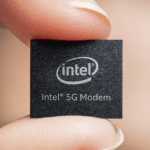
With Apple shares down more than 20 percent from their all-time highs of only a few weeks ago, writers are piling-on about what’s wrong in Cupertino. But sometimes writers looking for a story don’t fully understand what they are talking about. And that seems to me to be the case with complaints that Apple is too far behind in adopting 5G networking technology in future iPhones. For all the legitimate stories about how Apple should have done this or that, 5G doesn’t belong on the list. And that’s because 5G isn’t really about mobile phones at all.
Just to get this out of the way, I see Apple shares currently presenting a huge buying opportunity. A good Christmas quarter will regain that lost 20 percent, and I don’t see any reason why Apple shouldn’t have a good Christmas quarter.
Robert X.'s Bio
Robert Cringely has worked in and around the PC business for more than 30 years. His work has appeared in The New York Times, Newsweek, Forbes, Upside, Success, Worth, and many other magazines and newspapers. Most recently, Cringely was the host and writer of the Maryland Public Television documentary “The Tranformation Age: Surviving a Technology Revolution with Robert X. Cringely.”
© 1998-2024 BetaNews, Inc. All Rights Reserved. Privacy Policy - Cookie Policy.