

Protecting Windows Remote Desktop Protocol (RDP) from attack
The pandemic forced many employees into remote work, and cybercriminals are looking to exploit the situation by directly attacking remote desktop services as they become publicly available. Microsoft’s Remote Desktop Protocol (RDP) has become a prime target. According to a study released by the cybersecurity firm ESET, attacks against RDP have increased a stunning 768 percent over the course of 2020. Malware packages like Trickbot now include RDP scanners to search for open RDP ports, and distributed denial-of-service (DDoS) attacks have begun using RDP as a way to magnify their impact.
This is not to say that RDP or Windows are inherently bad. RDP is an extremely useful, complex, and functionally rich protocol for remote access. The open source project I work on, Apache Guacamole, leverages RDP internally as one of its supported protocols.

Digital first census raises security concerns
This year for the first time the UK's ten yearly census -- used to collect information to determine future government policy and spending -- is 'digital first' with people encouraged to fill in their returns online rather than use a paper form.
But research conducted by YouGov for security analytics and automation company Exabeam finds that many people are worried about how the data will be stored and used.

Fix your Windows 10 printing problems with this PowerShell script
If the recent printing problems caused by a string of Windows 10 updates weren't so disruptive -- and if the poor quality of updates from Microsoft hadn't been an issue for so long -- the situation would almost be funny.
As it is, however, those who have been affected by the bug-riddled updates find themselves extraordinarily frustrated and losing trust in Microsoft's ability to deliver reliable software. With so many updates, patches, bug fixes and workarounds having been released in the last couple of weeks, keeping on top of problems has been difficult. This PowerShell script should get things sorted once and for all.

Slack rolls back controversial messaging feature within hours of its introduction
Messaging platform Slack yesterday rolled out a new feature called Connect DM that made it possible to send direct messages to anyone using the service -- regardless of whether they are part of the same company or workspace.
We say "made it possible" in the past tense because Slack was very quickly forced into something of an embarrassing partial u-turn. The company somehow failed to notice the potential for such a feature to be abused, and it was down to users and media outlets to point this out. Within hours, a key change was introduced to Connect DM to help eliminate spam and abuse.
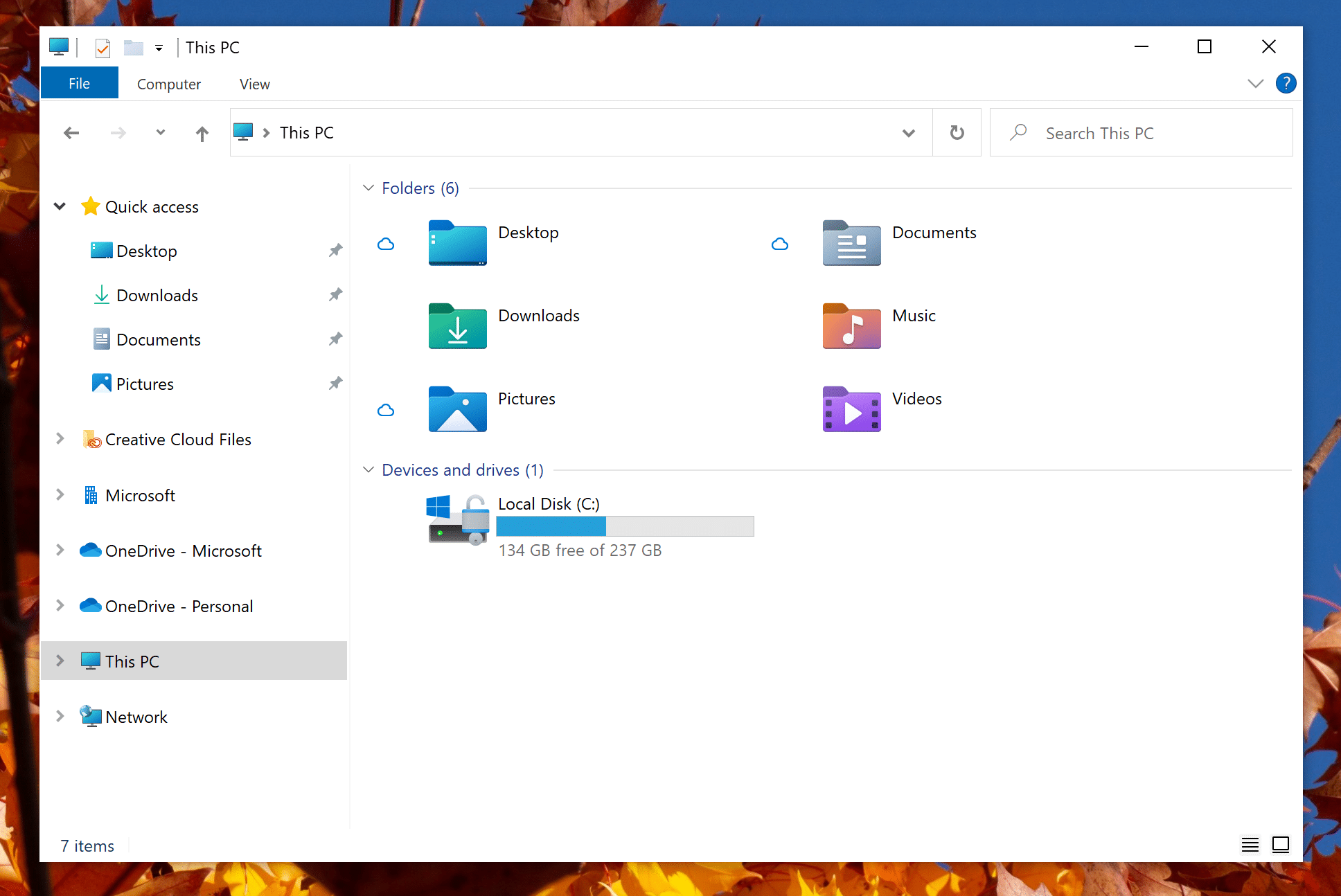
Microsoft releases Windows 10 Build 21343 with a new look for File Explorer
Microsoft is planning on giving Windows 10 a major design overhaul later in the year as part of its 'Sun Valley' refresh, and you can get a good idea of what it will look like here.
At the moment, new design tweaks are beginning to trickle through in Dev Channel Insider builds, and today, Microsoft gives us a look at how File Explorer will benefit from its design update.
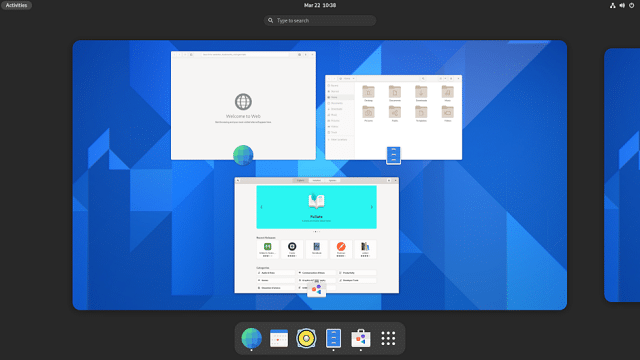
GNOME 40 Linux desktop environment is here
Just yesterday, we told you that Fedora 34 Beta was released, and it was notable for using the upcoming GNOME 40 desktop environment. Well, I have great news Linux fans -- today GNOME 40 is officially released, and yes, it will be used in the eventual stable version of Fedora 34.
But yo, wait, hold on, why is the newest version of GNOME being designated as 40? Wasn't the previous version 3.38? Yeah, that is factual, but no, the developers haven't gone crazy. Actually, as we told you last year, GNOME has a new versioning scheme. It is, understandably, a bit confusing to jump from 3.x to 40, but that's what it is, folks! You know what though? Who cares what it's called as long as it remains great. And once again, it looks to be.

Developer teams are innovating too slowly say developers
Development teams are being prevented from deploying code more often, according to 84 percent of respondents to a new survey.
The research from code development platform Rollbar finds 25 percent say that they only deploy code into production every month or two. Nearly as many (22 percent) say they deploy every two weeks, while six percent deploy only twice yearly.

Security and privacy knowledge is good but bad habits persist
New research from NordVPN finds that people around the world generally have good security and privacy knowledge, but still indulge in bad habits.
NordVPN ranked 21 countries by their performance, placing Germans at the top and -- perhaps surprisingly -- the Japanese at the bottom.

New solution helps enterprise developers track code changes
Enterprise software teams often struggle to navigate and make changes across increasingly large and complex codebases.
To help them handle changes, code search specialist Sourcegraph is launching Batch Changes, a solution that allows businesses to automate and track large-scale code changes across all their repositories and code hosts.

Get 'Get Career Fit: Healthcheck Your Career and Leap Into Your Future, 2nd Edition' ($9.99 value) FREE for a limited time
Gone are the days of slowly making your way up the corporate ladder to retirement. Now, with the rise of freelancing and the gig economy, the workplace is becoming more flexible and independent -- which can leave hardworking people scrambling to find a way to stay relevant.
Author Michelle Gibbings addresses your worries and gives you a way forward. Get Career Fit sheds light on what you can do to reignite, reshape and liberate your career and offers a fool-proof plan for getting your career back on track.

Google Chrome 90 to use HTTPS by default
With privacy and security being so important nowadays, you would think internet users would demand that all websites use the encrypted HTTPS protocol rather than "regular" HTTP. But as usual, humans are often ignorant or lazy when it comes to their own online safety. Ultimately, it is up to corporations to protect us. After all, we can't depend on the government for such oversight (nor would we want to).
Once again, Google is stepping in to better protect its users. This time, the wildly popular Chrome web browser is getting more secure thanks to a simple tweak. You see, in the upcoming version 90 of the browser, the search giant is making HTTPS default when typing in an address in the URL bar. In other words, you will now see https:// instead of http:// unless you specifically type in the latter.

Download Manjaro Linux 21 Ornara with GNOME, Xfce, and KDE Plasma now!
One of the most popular Linux-based desktop operating systems these days is the Arch-based Manjaro. Following a short testing period, version 21 of that distribution is now available for download. Code-named "Ornara," Manjaro 21 uses the fairly new Linux kernel 5.10 LTS.
Manjaro Linux 21 can be had with your choice of three desktop environments -- GNOME 3.38, KDE Plasma 5.21, and Xfce 4.16. All three are great, but unfortunately, GNOME 40 has still not been finalized, so it is (obviously) not included here. If you do want to try an early version of the upcoming GNOME 40, you can download the recently released Fedora 34 Beta.

Fedora Linux 34 Beta with GNOME 40 is here
Oh my. Today is officially the day many of us have been waiting for. Yes, Fedora Linux 34 has officially achieved Beta status, and you can download it immediately. For many Linux users, Fedora is considered the best overall operating system to be based on that open source kernel, and I happen to agree. The distro focuses on truly free and open source software -- a pure Linux experience. It is also fairly bleeding edge, but at the same time, it remains stable for everyday use. Hell, even the inventor of Linux, Linus Torvalds, uses Fedora.
But what is so exciting about Fedora 34 Beta? Well, this pre-release version of the upcoming operating system uses GNOME 40 as its default desktop environment, and version 40 is the most electrifying version of GNOME in years. GNOME 40 is notable for having a horizontal workspace switcher and having the Dash (favorites launcher) moved to the bottom of the screen.

What your fraud risk service provider may not want you to know
Since the advent of B2C eCommerce in earnest about twenty years ago, an "armed conflict" has been raging between the merchants and financial services providers on one side of the equation, and the fraudsters attempting to take advantage of vulnerabilities in the ecosystem on the other side. A typical metaphor for this conflict is the reference to the "Whack-A-Mole" game. The implication is that immediately after a vulnerability is quashed by the implementation of technologies targeted to detect and block it, new technologies and tactics are introduced by fraudsters to perpetuate successful fraud. And so the battle rages on… until now.
One key consideration in preventing fraud is the use of technologies to determine whether the purchaser at the other end of an Internet session is actually the person they represent themselves to be. Some would say that the first major breakthroughs in identifying "Who is there?" on the purchaser side was the use of IP intelligence, and associated technologies like proxy piercing detection. Additional enhancements to complement the first fraud detection technologies have included the addition of more sophisticated "inference-dependent" technologies categorized as Artificial Intelligence and Behavioral Biometrics. All of the services delivered in this category use the combination of various dynamic and static inputs or "signals" to infer the probability that there is indeed a person at the other end of an Internet session, and that it is indeed the person is actually who they represent themselves to be. In other words, implying "Who is there?"

Delivering resilience for IT operations in 2021
Enterprise operations leaders today are facing a challenge: Support the rapidly growing and evolving needs of the business without losing control of the complex infrastructure that is needed to do so.
In recent years, and especially in the accelerated digital transformation spurred on by the pandemic, it’s become common practice to increase productivity by siloing development, with multiple teams working autonomously to rapidly deploy code. In simpler times, in organizations running on a handful or applications, it was possible to operate according to a linear, predictable blueprint of development. The dev team was able to identify and de-bug code to keep their applications, and therefore the business, running smoothly.



