



YouTube brings TrueView mobile ads
To monetize the ever increasing mobile traffic from smartphones and tablets, YouTube has announced the launch of TrueView in-stream video ads for mobile devices. YouTube content creators can now increase their revenues based on the video sharing website's mobile visits, which means that YouTube does away with an ad-free mobile viewing experience. It was bound to happen at one point or another.
In 2011 mobile traffic accounted for 20 percent of global YouTube views and its growth has been "phenomenal", according to Phil Farhi, YouTube group product manager. More than a trillion views marked 2011 for YouTube, meaning in excess of 200 billion mobile views were not monetized coming from the then 350 million mobile devices. According to YouTube, TrueView in-stream video ads are preferred to the standard video advertisements, since increased revenue can be generated from it. Responding to the announcement on YouTube one user stated that 1.3 million visits each month, accounting for 72.8 percent of his views, come from mobile devices, which is "lost" revenue.
VMware releases Workstation 9, Fusion 5 and Player 5
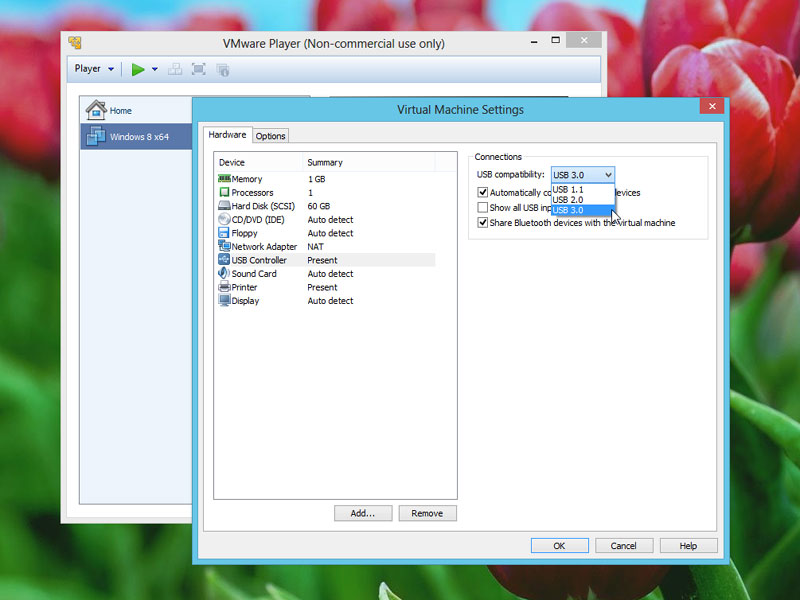
Leading virtualization developer VMware has announced three major new releases across its range of consumer products.VMware Workstation 9.0, VMware Fusion 5.0 for Mac and free cut-down VMware Player 5.0 (Windows only) have all been launched, boasting a number of major new features, improvements and the all-important raft of bug fixes.
Changes include support for the latest versions of Windows and OS X where applicable, plus redesigned user interfaces, virtual hardware improvements and a large number of minor tweaks, improvements and new features.
Chrome for iOS adds Facebook, Google+ sharing
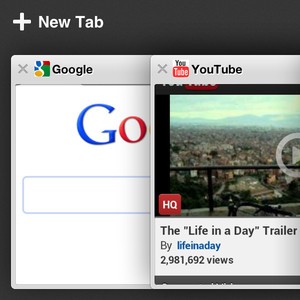
Just like Firefox, Chrome rockets through version numbers as though it is going out of fashion. Although Google’s foray into the world of web browsers for iPhone and iPad is fairly recent, Chrome for iOS already is version 21. The latest release is a relatively minor one, but there is still one feature that brings the browser in line with other more socially aware apps.
The big news in this release: addition of new sharing options. Found a website that you think your friends will love? There is no need to copy and paste the URL into an email as there are now new sharing options built directly into the app. A new popup menu lets you share pages through Google+, Facebook, Twitter or via email.

Competitors call Everything Everywhere 4G LTE license unfair
Everything Everywhere has been granted the right to utilize the 1800MHz spectrum for 4G connectivity by UK communications regulator Ofcom. According to Ofcom, the license was awarded following market demand that, according to a European Commision decision, forces United Kingdom to grant a 4G license for 900MHz and 1800MHz spectrum, the latter being used by Everything Everywhere.
Since Everything Everywhere is the first UK carrier that is allowed by Ofcom to deploy 4G LTE, the communications regulator promptly tried to insure that its decision had solid ground, stating that any delay would be detrimental to consumers and "there is no material risk that those benefits will be outweighed by a distortion of competition". The 2011/251/EU Decision of the European Commision combined with the required market demand created the situation where the UK carrier can deploy 4G LTE starting September 11, 2012.
Microsoft Slashes Xbox 360 Kinect price
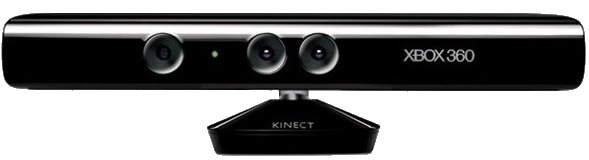
If you live in the right region, the game controller now costs $109.99 US, Microsoft revealed today. Say, didn't Kinect sell for $149.99 yesterday? That's a helluva discount out of season.
Microsoft's Larry Hyrb describes this as a "permanently reduced price". Well, it is for some -- North America, Latin America and Asia Pacific now and Australia and New Zealand on October 4. Europe, Middle East, Asia and Japan won't see permanent price cuts.

FBI shuts down third-party Android app stores for piracy
The Federal Bureau of Investigation and Department of Justice Intellectual Property Task Force announced on Tuesday that they had for the first time shut down third-party Android app stores for piracy: applanet.net, appbucket.net, and snappzmarket.com. The three domains are now in the custody of the U.S. government and in their places are FBI shutdown notices.
In the last twelve months, the FBI has seized hundreds of domains related to various illicit activities, including "carding" (selling stolen credit card information), the sale of counterfeit merchandise, wire and bank fraud via botnet, and, in the case of Megaupload organized crime.

MVPs, Microsoft wants your video tips
Microsoft loves its MVPs -- most valued professionals -- and for good reasons. The company sells few products direct, relying instead on the skills of third-parties to promote and service solutions. MVPs receive special status and act, among other things, as crucial evangelists.
In case you missed it (I did being on vacation August 2), Microsoft is holding a contest for its MVPs through October 3. They submit "video tips" for which they can receive ongoing drawings for Microsoft points or grand prize, which varies by country. For example: Samsung Series 5 laptop in Canada and Dell Vostro in the United States.
Nikon releases Android-powered CoolPix S800c
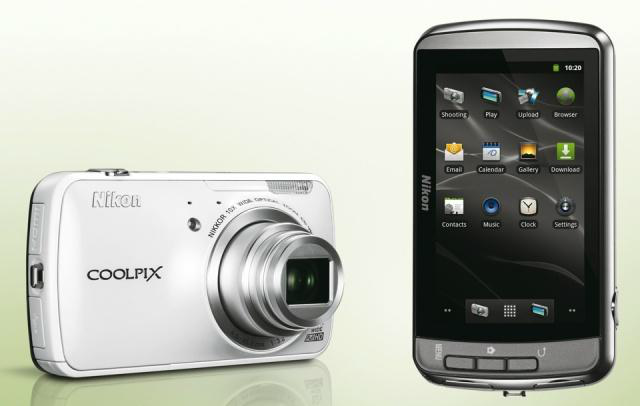
Android cameras are not a new concept, but for Nikon they are. The company today announced release of its first Android-powered camera, the CoolPix S800c. Rather than Jelly Bean, the shooter relies on much older Android 2.3 Gingerbread. So Polaroid got there faster, but that didn't stop Nikon from releasing the $349.95 camera.
It's a rather unusual package and you might wonder how Nikon manages to make the best out of Android when it doesn't have cellular connectivity. The CoolPix S800c makes due with Wi-Fi 802.11 b/g/n to share the photos or movies to cloud services. Because it's running Android, Google Play is open for those seeking to install third party applications within the 680MB of space reserved for it.

Cash Killers: PayPal coming to over 7 million US stores next year
Wednesday, eBay's online payment subsidiary PayPal announced it had partnered with credit company Discover to bring PayPal payments to an estimated seven million merchant locations across the United States. Beginning in the second quarter of 2013, consumers will be able to make payments with their PayPal accounts at the registers of these merchants.
Merchants looking to accept PayPal payments will have to upgrade their point of sale hardware or software, and PayPal's digital wallet technologies will be accepted. eBay on Wednesday did not go into significant detail about the mechanics of how payments will be administered, but it falls in line with the company's previous announcements about PayPal moving offline and Discover simultaneously improving its online presence.

Bad passwords are worse than you think
I spend a lot of time defending educational as opposed to purely technical solutions to security. Not that I don’t believe in the usefulness of technical solutions. However, there are many people in the security business who believe that education is a waste of time because it isn’t 100-percent effective. Unfortunately, you can make the very same argument against any technological solution. Randy Abrams and I discussed that conflict of ideas at some length in a paper for AVAR: see People Patching: Is User Education Of Any Use At All? And Robert Slade made some excellent points more recently in post Security unawareness.
Static passwords are a pretty good example of a technology that’s proved to be less than 100-percent effective time and time again, yet is considered effective enough to remain the authentication mainstay of many a web service. Well, I could argue that it’s not so much about effectiveness, as a trade-off between effectiveness in terms of privacy, and the cost of implementing better authentication mechanisms. But that’s a discussion for another time.

Tony Scott: Apple flogs old movies and profits from a man’s suicide
When film director Tony Scott committed suicide, Apple quickly put up a tribute to him on the iTunes store. Except the page is less of a tribute and more of a shop window. Underneath a picture of Scott, and a brief biography, are links to all of his movies available to rent or buy from Apple. It doesn’t mention his death, at all, just lumps all of his films together into a collection that’s prominently listed on the front Films screen.
When I first encountered the so-called tribute page, I was a little dismayed. When someone dies, the proper etiquette is to mourn them, and to reflect on their lives and on their achievements. It isn’t, generally, to try and make a quick buck from their passing. But that’s exactly what Apple has done here -- and it's not the first time.
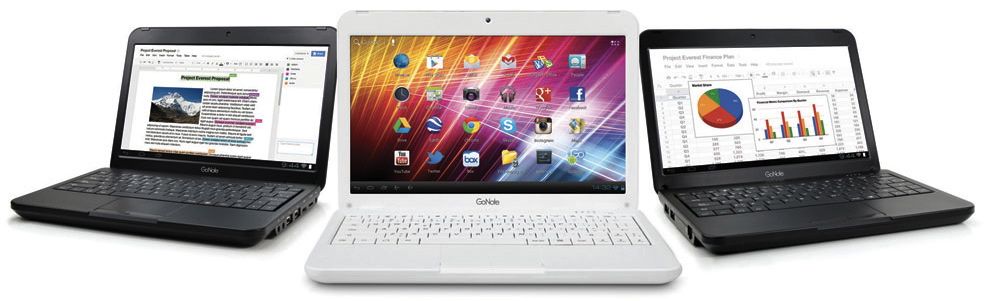
GoNote: Will this Android-powered touchscreen netbook appeal to UK kids?
UK company Ergo Electronics on Wednesday officially launched GoNote, a 10-inch touchscreen netbook powered by Android 4.0 Ice Cream Sandwich. While there have been numerous low-cost Android netbooks over the years, Ergo Electronics claims to have created a new category with the GoNote, the "hybrid touchscreen netbook."
The price is a reasonable GBP 149.99, and it will be available with a black or white chassis starting in September 2012. For this price, buyers will get a 10-inch 16:9 LED backlit screen with a 1024x600 resolution, powered by a 1.2GHz ARM Rockchip RK2918 CPU (based on the ARM Cortex A8 architecture,) aided by 1GB of RAM and 8GB of internal storage. A microSD card slot is available, allowing users to extend the storage capacity by 32GB for a total of 40GB. It comes with four USB 2.0 ports, a mini HDMI 1.3 port, 3.5mm jack for audio output and microphone and a VGA forward-facing camera is thrown as well into the mix. In terms of Internet connectivity, the GoNote comes with an Ethernet port and Wi-Fi 802.11 b/g/n. The 9000mAh battery provides a quoted battery life of 6 hours for video playback and roughly a week of standby.

Benchmarking tool AIDA64 now supports Windows 8
Want to know the specifications of a computer? You could look at the manufacturer’s website, but you’ll probably find that there is a limit to the level of detail provided. Similarly, if you want to know how fast your machine is, there is little point relying on figures quoted by the manufacturer, if you want to know how it performs in the scenarios you are using it in. AIDA64 is one of the most advanced benchmarking and diagnostic tools available and the release of version 2.60 sees the addition of support for Windows 8 as well as the latest hardware.
Benchmarks are a great way to see how one system compares to another, and they also provide a means of checking exactly what difference, if any, tweaks and hardware upgrades make to the performance of your computer. There is support for a massive range of hardware, so whether you are using an aging machine, or something more cutting edge, you should be able to find out everything you need to know.

Can't play a song or video? Try MediaInfo Lite 0.7.59
One of the most frustrating aspects of dealing with media files is that seemingly identical files are anything but. Why is it you’re able to play one AVI video file, but not another? How come that .MP4 video plays flawlessly, but this one just won’t open?
The problem is that the three-letter file extension is just part of the makeup of a video file. You need to identify the actual codecs used to render the audio and video, which can be tricky without third-party help. Thankfully, there’s a free tool that can identify those codecs for you in the form of MediaInfo Lite.
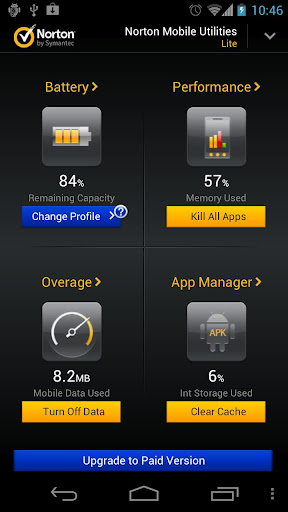
Norton Mobile Utilities Lite for Android packs premium, paid upgrade
Symantec is a company with many strings to its bow but is most often associated with security software. Those with long memories will remember Norton Utilities, a tweaking tool for Windows that Symantec bought. The Norton name lives on and Norton Mobile Utilities revives the Utilities genre for Android users. The tool is designed to help your Android device more efficiently, and the release of version 2.0 of the app sees it splitting into two branches -- free, and paid-for premium versions.
The free version of the app, now referred to as Norton Mobile Utilities Lite, gives users greater control over memory usage, making it easy to terminate apps to free up resources. There are a number of informational components to the app, and these will tell you everything from how much battery life you have left, details of the hardware you are using and how much storage space you have available.