
Google pays record $22.5 million for Safari cookies
The rumors were true. Today, the US Federal Trade Commission fined Google $22.5 million for putting its hand in the Safari cookie jar. Technically, the amount is a settlement, but effectively a fine. The search and information giant circumvented Apple browser privacy controls to mine personal data.
Google isn't the only company accused of bypassing Safari privacy controls, but it is most answerable to regulators. The search company already is under 20-year oversight for violating the FTC Act. In October 2011, Google agreed not to misinterpret its consumer privacy practices.

If the manufacturers can't do it, modders can: Jelly Bean for your smartphone
Android smartphones aren’t known for timely updates, even if they bear the Nexus name, but when the very first Android smartphone gets Jelly Bean, you know something interesting is happening.
Thanks to Android modder jcarrz1 from XDA forums, even the 3 year old HTC Dream (or T-Mobile G1 as it’s known in the United States) can now get Android 4.1 Jelly Bean. The modding community is bringing Jelly Bean to older devices faster than HTC can offer it on their own flagship smartphones available now. But it’s not just the three-year old devices, as the Samsung Galaxy S III and HTC One X also receive a dose of Jelly Bean, before manufacturers release the updates.

State-sponsored 'Gauss' cyber-weapon targeted Lebanon, says Kaspersky
Security company Kaspersky Lab on Thursday announced it had discovered a malware called Gauss which ran from September 2011 to July 2012, and was similar in design to the notorious Flame worm. The company believes Gauss to have been another state-sponsored cyberweapon.
Kaspersky said Gauss was discovered because of the increased efforts to identify and halt international cyber-weapons in the wake of Flame, Stuxnet, Duqu, and other military-grade security threats.

Heat up August with one of these software bargains
The Downloadcrew Software Store is a great place if you’re looking for a software bargain, but with so much to choose from, it can be difficult to know just where to begin. Security and tweaking is a very good place to begin, and you can save 77 percent off the MSRP when you buy AVG Premium Security Complete Bundle for just $29.95. This exclusive deal gives you everything you need to keep yourself safe online and include four great AVG products.
Everyone wants to get the best possible performance from their computer and this is something that AVG PC Tuneup 2012 [1-PC, 1-Year] could help with. For just $8.95 -- saving your 78 percent off the MSRP -- you cn tweak and optimize your system in next to no time, and there’s an even better deal availbale if you want to take care of multiple computers. AVG PC Tuneup 2012 [3-PC, 1-Year] gives you the same great tuneup options, but it can be installed on up to three computers. This could be yours for just $10.95, saving you 78 percent. AVG Internet Security 2012 Plus Bundle is another great selection of four AVG products that could be your for just $29,95 -- saving you a massive 80 percen off the usual MSRP of $149.

Net Guard keeps an eye on your Internet connection
Whether you’re worried about security, hoping to optimize download speeds, or just trying to save money, keeping an eye on how your Internet connection is being used can be very helpful. Windows doesn’t provide many tools to help in this area, unfortunately, but there are plenty of third-party alternatives available -- and Net Guard is a great example.
The program opens with a tiny toolbar that just displays the upload and download speeds for any currently open connections. And so you’ll have an immediate indicator that lets you know that a process has gone online.

Samsung brings VoLTE to the Galaxy S III, but they’re not the first as they claim
The Galaxy S III is currently Samsung’s flagship smartphone and one of the best Android devices on the market today. To top it off, the Korean manufacturer has announced that the Galaxy S III will get VoLTE (Voice over LTE) starting August 2012 in Korea, which will be followed by "availability in global LTE markets" according to an announcement from the company on Thursday.
If the buyers of the Samsung Galaxy S III LTE model haven’t got the same quad-core processor or video card to play with (unless they’re in Korea), they now have VoLTE to play with which is exclusive to the LTE model.

New Google trial includes Gmail in search results
Google is always trying out new ideas, and its latest experiment will allow users to locate personal Gmail messages through Google Search. Once enabled you just type what you’re looking for into the search box, and if there are any matching emails stored in your Gmail account they’ll be pulled out and displayed in a sidebar on the right of the results page. You can also search for contacts at the same time and, as a bonus, get updated information and statuses for any flights mentioned in Gmail messages.
At first glance this latest innovation might not seem a particularly useful feature, but it will allow you to find important messages without having to go into Gmail, simply by typing what you’re looking for into your browser’s search field. Obviously the results will only be visible to you and not to other users.

Steve Wozniak is right -- users are going to eventually be burned if they rely solely on cloud backup
Apple co-founder Steve Wozniak this week warned of the perils of depending too much on cloud storage and the general press reacted like this was: A) news, and; B) evidence of some inherent failure in cloud architecture. In fact it is not news (Woz never claimed it was) and mainly represents something we used to call “common sense”.
However secure you think your cloud storage is, why solely rely on it when keeping an extra backup can cost from very little to nothing at all?

Don't download, make a Mountain Lion install disk
Like its predecessor, Apple’s most recent version of OS X, Mountain Lion, has been made available in the app store. From Apple’s point of view this helps to dramatically reduce production costs, and these saving can then be passed to customers who reap the benefits of cheap upgrades. But what the online installer model fails to take into account is that many people have to work within monthly download limits put in place by their ISP -- this is something that Lion DiskMaker can help with.
Whether you have a single computer to upgrade, or want to bring your entire fleet of Macs up to date with Mountain Lion, it is quite possible that downloading a large installer could push you over your monthly limit, possibly resulting in hefty charges. If you have more than one computer you would ordinary have to download the installer separately for each machine. You might think that you could simply copy the installer but this is not easily achieved.

Microsoft Attack Surface Analyzer 1.0 sniffs out security weakness
After more than 18 months in beta, Microsoft released version 1.0 of its free Attack Surface Analyzer, a tool which aims to highlight security weaknesses that have been introduced by the installation of any given application on a Windows 7 PC.
And as with the previous builds, the program is very easy to use. You run a baseline scan to capture your setup now, install an application, run another scan, and the Analyzer tells what’s changed: new processes, services, loaded modules, network connections and a whole lot more.

Microsoft's Essentials 2012 drops Live branding, Vista support and pumps up Windows 8
Microsoft has released Windows Essentials 2012 for Windows 7 and 8 users, but drops support for Vista. The new version drops “Live” branding and features notable new capabilities and improvements to its multimedia tools, Photo Gallery and Movie Maker.
The suite also drops Windows Live Mesh for the SkyDrive file-syncing tool. In addition, it includes Mail, Messenger, Writer, Family Safety and Outlook Connector Park, all of which feature in previous releases.

Microsoft launches the Windows Phone Development Center
Microsoft on Wednesday announced the opening of the Windows Phone Development Center. This is good news for Windows Phone Apps developers because they now have one location where they can submit apps and get SDKs. Since Microsoft has been engaged in the development of Windows Phone apps, the one area that may have been holding them back is a unified location to make the app development process easily available.
The new site is an evolution of the previous App Hub developer portal. The new site provides everything developers need to build, publish, and manage apps for Windows Phones around the world. After engaging in planning and attention along with developer feedback, it has new features to help make Windows Phone app development faster and more profitable.

10 interesting things we’ve learned from the Apple vs. Samsung trial (so far)
We’re only into the second week of the "patent trial of the century" but we’ve already been granted an unprecedented peek behind the curtain into the notoriously secretive world of Apple Inc. Here, in no particular order, are ten of the most fascinating reveals from the trial to date.
Steve Jobs was open to the idea of a seven inch iPad
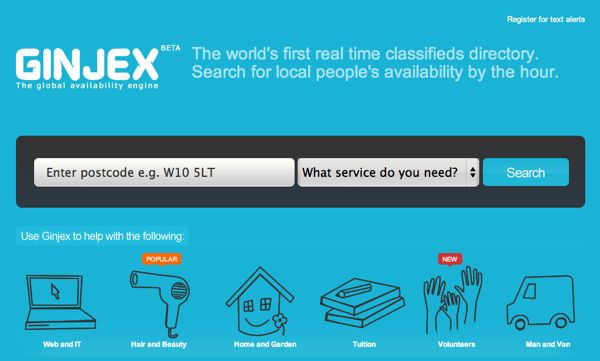
Potential game changer: Real-time commerce engine Ginjex launches in beta
London-based startup Ginjex launched its "real-time availability engine" in Beta on Wednesday, providing small and independent businesses a place to list their availability live so customers can get the services they need exactly when they need them.
Bringing goods from website to consumer has become a mind-bending race to see who can get there the fastest. Zappos set a standard for speed with its common next-day delivery upgrades, and Amazon Prime offers subscribers next- and second day shipments on all purchases for just a couple of dollars, where just a few years ago, such rapid delivery used to tack on a significant extra cost.

Oracle and Google ordered to come forward with names of paid journalists
Despite proceedings being almost over, the Oracle v. Google trial took an unexpected turn yesterday, on August 7. U.S. District Judge William Alsup ordered both parties to come forward with the names of the people they paid that could make public comments related to the case in point, according to a court order released yesterday.
Judge William Alsup gave an order of disclosure for financial relationships concerning the involvement of commentators on case-related issues. The court order includes print and Internet authors, bloggers, commentators and journalists that have published, or may in the future publish comments related to the issues in this case.