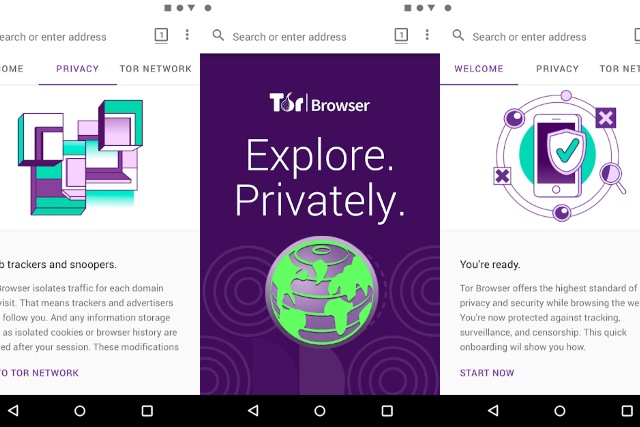
Tor for Android brings secure, anonymous internet browsing to your mobile phone
It seems like mere moments since an updated version of Tor for the desktop was released, and now there's great news for owners of Android smartphones. The Tor Project has released an Android version of the Tor browser, and it's available to download either directly from its website, or from Google Play.
Currently in alpha -- so expect there to be a few issues -- this is the only mobile Tor browser that's supported by the Tor Project, and the developers promise that it will block trackers, protect against surveillance and ensure privacy.

Mac app Adware Doctor caught stealing users' browsing histories
A highly popular anti-adware tool in the Mac App Store "surreptitiously steals your browsing history", alleges a security researcher. "All your data are belong to China!", as he puts it.
Patrick Wardle conducted research into Adware Doctor -- one of the most popular paid-for apps in the App Store -- after concerns were raised by another security researcher. His research "uncovered blatant violations of user privacy and complete disregard of Apple's App Store Guidelines", including the theft and sharing of browsing history with a Chinese server.

Mozilla to boost Firefox privacy by automatically blocking all tracking
Mozilla has announced some of its plans for Firefox, and there's a strong focus on privacy. At an as-yet unspecified point in the "near future" the browser will block all tracking by default, although it is being trialed this month.
In addition to this -- which is a change from the current Do Not Track option -- Firefox will include a new set of options which Mozilla says will give users greater control over the information they share with websites. As well as helping to improve privacy, Mozilla is also hoping to improve the performance of its web browser with a new set of controls that it says will empower users and give them a voice.
Google is able to track your offline purchases thanks to a secret deal with Mastercard
It's no secret that Google -- and other companies -- track your online purchases; it's one of the reasons you see the ads you do, for instance. But a secret deal between Google and Mastercard means that it is also possible for the internet giant to track your offline purchases.
Google offers a service called Store Sales Measurement that makes it possible for advertisers to determine whether their online ads results in offline sales. A report from Bloomberg reveals that this was all made possible because of the deal between Google and Mastercard in the US-- one that raises serious privacy questions.

Developers must give their apps a privacy policy or Apple will kick them out of the App Store
Apple has announced that all apps submitted to the App Store must have a privacy policy, including those apps which are undergoing beta testing.
The change is due to come into force on October 3, and after this date any app lacking a privacy policy that lets users know how their data is being used faces ejection from the App Store.

CCleaner update offers improved privacy controls, renames elements to stop users freaking out, adds bundleware
It’s fair to say, CCleaner has experienced a lot of problems since Avast acquired it last year. We’ve seen issues with malware, bundled software, and popup ads, and most recently the company was embroiled in a privacy controversy, which led to it pulling the last update.
Today, Avast rolls out a new update to CCleaner which adds a number of privacy settings, and sees certain monitoring features being renamed. Avast also takes the opportunity to once again try to install its antivirus software on your PC. Yes, seriously.

Privacy: Yahoo still scans your emails... and wants to sell data to advertisers
Oath -- the owner of Yahoo -- is in talks with advertisers, promoting a service that scans the content of emails and provides a wealth of information about users.
The service would give advertisers access to data contained in over 200 million Yahoo Mail inboxes. Email scanning would also apply to AOL Mail inboxes, also owned by Oath. As noted by the Wall Street Journal, Oath is now the only major US email provider than scans emails in this way -- and the way to opt out is well-hidden.

Does your website risk leaking personal data?
Recent scandals surrounding the use of personal data, such as the Cambridge Analytica scandal, plus the large fines that can be levied under GDPR, have focused minds on the protection of information.
But is your website at risk of exposing your visitors' data? Auditing and monitoring specialist DataTrue has produced an infographic looking at the risks site tags may pose to privacy.

Facebook VPN Onavo Protect disappears from App Store for violating Apple's data collection and privacy rules
Facebook bought Onavo and its VPN tool back in 2013, and ever since there have been concerns about how the social network uses the tool to gather data -- even when it is disabled.
Now Apple -- itself not a stranger to allegations of privacy violations -- has taken objections to the way Facebook sucks up data from its users through the Ovano Protect VPN app. The iPhone-maker warned Facebook that it was violating its rules on data collection and suggested that the company might want to voluntarily pull the app before it was forcibly removed from the App Store.

Google confirms it misleadingly tracks your location even with Location History disabled -- but it's not changing that
Call it bad wording, call it blatant lying, call it what you like -- Google was recently found to have been misleading people about what disabling Location History on their phones actually meant. Many people understandably thought that turning off this setting would prevent Google from tracking and recording their location. They were wrong
But despite the upset caused by this revelation, Google is not backing down. Rather than changing the behavior of the setting so it did what people would expect it to do, the company has instead chosen to simply update its help pages to make it clear how misleading it is being.
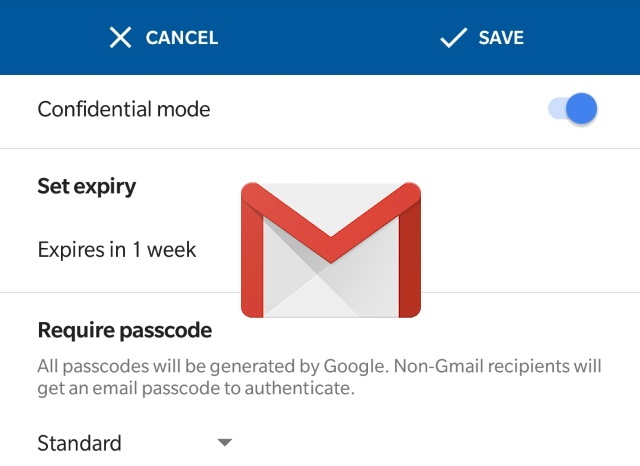
Now you can send auto-expiring emails from Gmail on your mobile
With the recent update to Gmail, Google added a number of features to its email service. One of the new features is Confidential Mode which allows for the sending of auto-expiring messages -- although, as we have previously noted, it's not perfect by any means.
Available on the web version of Gmail for a number of weeks now, the feature is finally rolling out to iOS and Android users.

If you want to record calls in Android 9 Pie, you'll need to root your phone
Recording phone calls is dodgy territory legally speaking, but whether you choose to do it depends on where you are in the world, and whether you're concerned about complying with the law. Since Marshmallow, Google has made it difficult to record calls on Android phones by killing the recording API, but this has not stopped third party developers finding ways around it.
But with Android 9 Pie, Google has made it impossible for apps such as Call Recorder - ACR and BoldBeast Android Call Recorder to be used to record calls. Unless, that is, you're willing -- or able -- to root your handset.
Google is tracking your location even when you tell it not to
An investigation by the Associated Press has found that Google is tracking the location of Android and iPhone users even when privacy settings supposedly explicitly stop this from happening.
The AP concedes that "for the most part, Google is upfront about asking permission to use your location information", but its investigation -- the findings of which were confirmed by researchers from Princeton -- showed that Google services recorded user data even when Location History was disabled.

Privacy: Apple denies listening in on iPhone conversations and sharing recorded audio with third parties
In response to questions from Congress, Apple has written a letter in which it denies recording iPhone users' phone calls. The letter stresses Apple's stance on privacy after the House Committee on Energy and Commerce asked both Tim Cook and Alphabet's Larry Page about their respective companies' attitude to the privacy of user data.
Apple says very firmly that its business model "does not depend on collecting vast amounts of personally identifiable information to enrich targeted profiles marketed to advertisers". The letter also adds that Apple "doesn't provide third-party app developers with access to Siri utterances".
Americans value their personal data above their wallets
When asked which items would concern them most if stolen, 55 percent of Americans responding to a new survey named personal data, compared to 23 percent their wallet, 10 percent their car, and just six percent each their phone or house keys.
The study by cyber security and application delivery company Radware surveyed over 3,000 US adults finds that social security numbers are the data people value most with 54 percent saying they would be most concerned if this was stolen.