Leaked Windows 10 build 10537 includes new context menus, icons, and more
After the official release of Windows 10, the stream of Insider builds has slowed to a trickle. It is a few weeks since build 10532 was released to preview testers, and it seems that a follow up could be just around the corner. There's no official word from Microsoft yet, but build 10537 has now leaked online.
Renowned leaker Wzor posted screenshots of the newer build -- specifically 10537.th2_release.150829-0745_CLIENTPRO-CORE_OEMRET -- to Twitter, with the promise of ISOs to follow. Of course it didn’t take long for the build to make its way online, and it shows that Microsoft has listened to feedback about context menus in the previous build. There are also a couple of other visual changes to enjoy.

New solution improves access control for hybrid clouds
The growth of cloud and hybrid environments brings challenges for security professionals when it comes to control, monitoring, and management of access to critical systems by privileged users and third-party vendors.
A new solution from secure access specialist Bomgar allows companies to quickly enable controlled system access and defend against cyber attacks without requiring complex process changes.
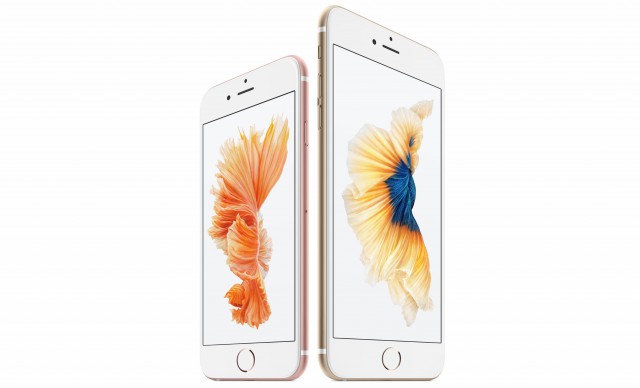
Apple's new iPhone 6s has 2 GB of RAM, iPad Pro gets 4 GB
Apple does not like to dive much into the technical side of things when it talks about how its new products perform. So, when it unveiled the new iPhone 6s, iPhone 6s Plus last week, Apple focused on how its processor stacks up against the previous generation instead of detailing its clock speed, number of cores, manufacturing process or even how much RAM is inside. The new iPad Pro was no exception.
Those things are important, of course, but they do not mean much to the average consumer, who likely has no idea what RAM actually is or whether a 1.3 GHz dual-core processor is actually faster than a 2.3 GHz quad-core solution. But they can more easily understand that, for instance, 50 percent faster in some area is actually better. However, us enthusiasts, still want to know what's inside. Ahead of a teardown, we now know how much RAM the new A9 chip packs.
The state of Android security [Q&A]
In recent times Android has come under increasing threat from malware which has led to more people looking to install security software on their phones and tablets.
Mobile security specialist 360 Security recently announced that it had gained 11 places on the Android download charts in August, indicating a renewed interest in protecting devices.
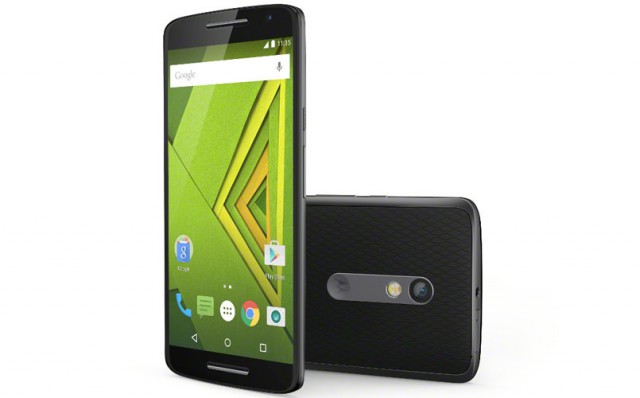
Moto X Play with FHD display launches in India starting at Rs 18,499 ($275)
Motorola today launches the Moto X Play in India. The highlights of the handset are its high-end specifications and an equally interesting price point starting at Rs 18,499 ($275) for the 16GB storage variant.
As for other specifications, the Moto X Play sports a 5.5-inch FHD (1920 x 1080) display offering 403ppi pixel density and Corning Gorilla Glass protecting the screen from scratches. It is powered by a Qualcomm Snapdragon 615 octal core processor clocked at 1.7GHz coupled with an Adreno 405 GPU and 2GB of RAM.
Could Bitcoin-powered micro-payments help reduce piracy and ensure artists get paid?
The likes of Adam Ant and Billy Bragg are among the names backing the Free At What Cost? project. Launched by British composer Hélène Muddiman, the idea behind the campaign is to ensure that artists and content creators get a fair deal by charging for online views and listens.
The basic idea is to protect content against free viewing in an extension of the idea of simple DRM. While the logistics are still to be fully detailed, one of the proposals is to use a Bitcoin-like payment system to enables people to pay artists directly for access to their content.
Tor gains extra security as .onion becomes Special-Use Domain Name
Tor -- The Onion Router -- is used as a way of browsing the web (more) anonymously. Most well-known for providing access to what has become known as the Dark Web, Tor has faced competition from other secure browsing systems such as HORNET. But now it is set to benefit from key changes that will improve security and have further implications.
Engineering Task Force (IETF) along with Internet Assigned Numbers Authority, part of ICANN, has granted formal recognition to the .onion domain, adding it to the list of Special-Use Domain Names. Previously known as a psdeuo-TLD it was technically possible for the .onion domain to be used on the regular web -- now it is limited to Tor. There is also the possibility of site-specific encryption and the use of security certificates.
Hey Google, I ordered my first-ever iPhone -- here's why
My smartphone journey began with Palm. I started with a Treo 650, then a 680, 700p and 755p. From there, I bought a BlackBerry Storm, opting not to get an iPhone for some insane reason. Finally, I settled into Android, with a bunch of models since then.
This is about to change. You see, on Saturday morning, I ordered an iPhone 6s Plus. This will be my first-ever Apple smartphone. While I still like Android, the flawed security and update model has driven me away from using the operating system full-time. As a Microsoft user, iOS is a great choice too.
You guys realize the iPad Pro will fail, right?
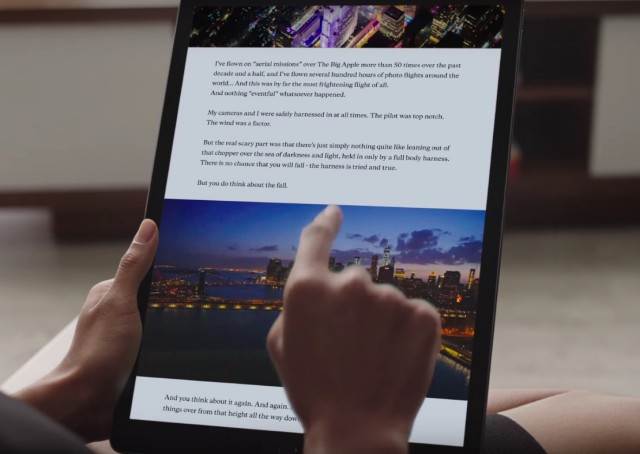
At its media event on September 9, Apple unveiled the iPad Pro, a 12.9-inch tablet. Touted as a productivity device, the company hopes that the iPad Pro will be the future of computing. Need a tablet? Use the iPad Pro. Need a laptop? Plug-in the $169 keyboard accessory and begin typing. The problem, however, is that at its current state, the iPad Pro is an awfully large tablet and iOS mobile operating system, which the device runs, isn't good enough to replace your desktop operating system.
After talking to a number of people -- both tech enthusiasts as well as average Joes -- one thing was pretty clear to me: nobody finds the iPad Pro exciting. A couple of people are actually looking forward to the iPad mini 4, which is the successor to the iPad mini 3, and largely carries the same hardware as the last year's iPad Air 2.
Apple spends just $234 making each iPhone 6s
Analysis by Bank of America Merrill Lynch estimates that the components part of the iPhone 6s cost Apple $234 -- only a very slight increase from the iPhone 6. With the 64GB model selling for $749, Apple is pulling in $515 from each sale before the costs of manufacturing and distribution is factored in.
The biggest cost is for semiconductor parts, accounting for $127 of cost. The 64-bit A9 processor costs just $25, while various sensors add up to around $22. The estimates suggest that the screen of the iPhone 6s is the most expensive part, coming in at around $50 on its own.

Another 9/11 anniversary passes quietly
I’ve been quiet lately, I know. My sons’ Kickstarter campaign has taken a toll on their Venture Capitalist… me. I never before appreciated the physical effort that goes into managing what is, for me, a significant investment. They do the work but I pay for a lot of it and that brings with it the need to oversee -- something I’ve never been very good at doing. You’ll see the result, hopefully, next week.
While I’ve been so preoccupied a lot has happened in the technology world. Apple introduced a slew of new products and Alex Gibney released his Steve Jobs documentary. I’ll comment on both of these shortly. Yahoo was denied its tax-free Alibaba spinoff and so has to go to Plan B. I have such a Plan B (or C or D) for Yahoo, myself and will explain it soon. There are some new technologies you ought to know about, too. There are always those.
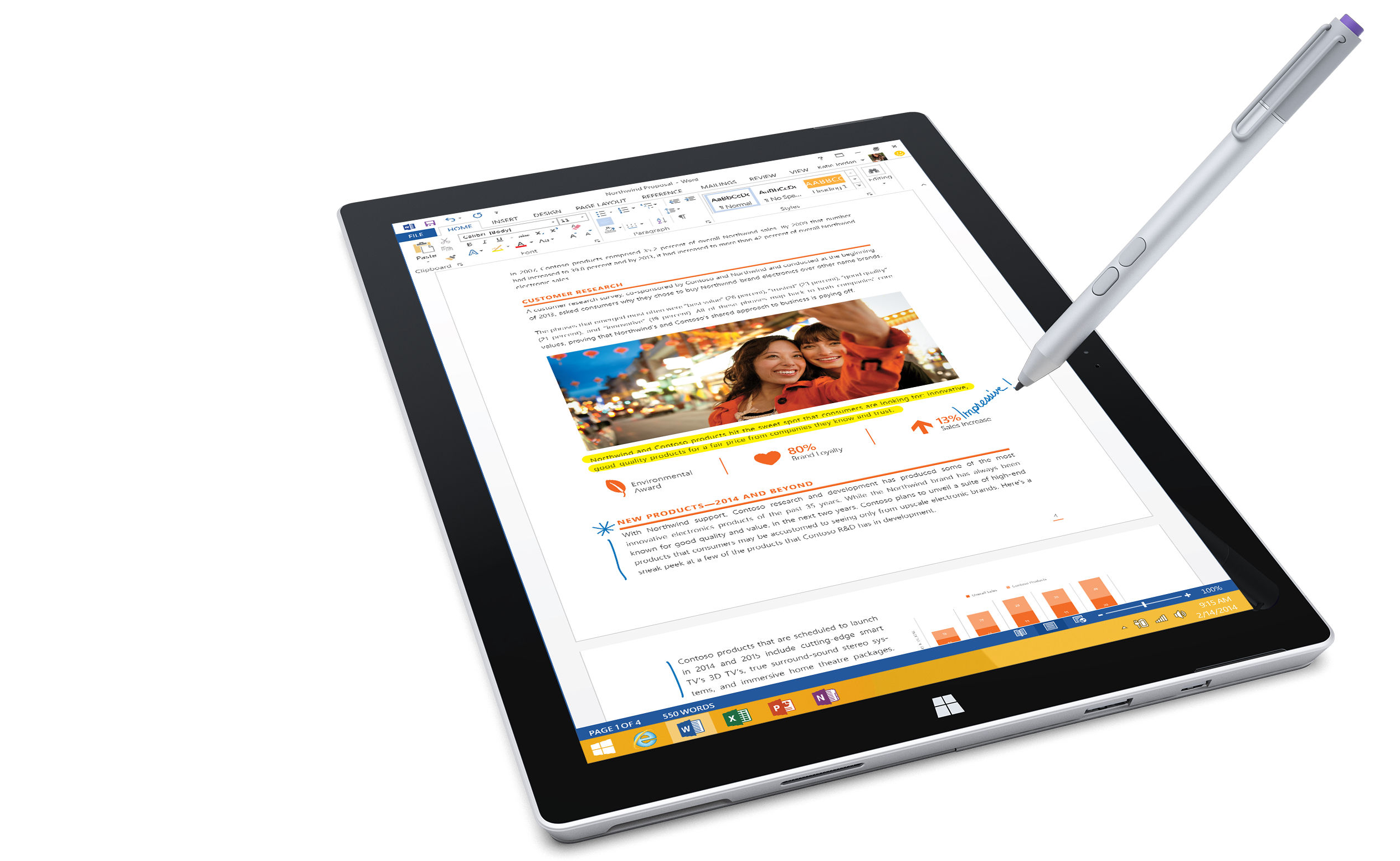
Your next PC will look like Microsoft Surface
The days of the traditional “clamshell” laptop are numbered. With every major hardware vendor (even Apple) now embracing the detachable keyboard format of Microsoft’s Surface device, the writing is on the wall -- or more accurately, on the digitized, pen-enabled screen.
With all of this newfound Surface love it’s hard to believe that, just a few months ago, Microsoft’s attempt to set a qualitative (and aesthetic) example for its hardware OEMs to follow was mocked and openly dismissed by its suddenly hostile partners. The Dells and HPs of the world were too busy experimenting with awkward tablet-like PC device designs that bent, folded or clicked into equally awkward base units, and they certainly didn’t appreciate Microsoft jumping into the market with its own, competing devices.

Millions of Ashley Madison passwords cracked
The fallout from the Ashley Madison hack continues. After the passwords of millions of users were stolen in a huge security breach, the encrypted database has now been cracked. A cracking group called CynoSure Prime eschewed a time-consuming brute force approach to breaking into the database, and instead exploited information revealed by a change the infidelity site made to the way it stored data.
This change effectively rendered pointless the bcrypt encryption that had been used to protect data. It was possible to dramatically speed up the cracking process so data was accessible in a matter of days rather than years. So should users of Ashley Madison be worried?
AppleCare+ price increases 30 percent
I haven't paid much attention to Apple's newest price-gouging tactics. But it's after Midnight here on the West Coast and preorders are now underway for iPhone 6s and 6s Plus. So I decided to take a progress peak. A year ago, I rushed to get the 6. This upgrade cycle, my interest is zero.
I am not mooning over 3D Touch, although I would gladly moon Apple for such nonsense. Synchronization was the connected device age's first killer app. Touch was second. But the finger is an anachronism compared to voice. Touchless is the next big thing. While Apple brew hoos about smarter Siri, touch gets greater emphasis for this release cycle. I can't blame Apple in a way. Siri still sucks.
Microsoft shows increased interest in Android by buying Echo Notification Lockscreen
For a company with its own mobile operating system to worry about (yes, there is a new build of Windows 10 Mobile on the way soon) Microsoft shows an awful lot of interest in the competition. After making an appearance at Apple's iPad Pro and iPhone 6s launch event, Microsoft has made an Android-related acquisition.
The newly-purchased Echo Notification Lockscreen is the second Android lockscreen app that the company now has to its name; Echo Notification Lockscreen joins Microsoft Next. The company says it is about taking "productivity to the next level" and improving users' experience.