

How could Steve Ballmer screw up Microsoft's HP partnership?
Somewhere, in an alternate universe, Microsoft did the right thing: Bought Palm instead of cut a deal with Nokia. But in this reality, Microsoft screwed up, not just by letting Palm go but clearing way for HP to make the acquisition. Now HP, Microsoft's strongest OEM partner, is turncoat, planning to put WebOS on every HP PC by 2012. It's simply unthinkable.
Just 11 months ago, HP revealed plans to buy Palm for $1.2 billion -- a pittance if just to get WebOS. Four months earlier I gave "10 reasons why Microsoft should buy Palm now." But Microsoft CEO Steve Ballmer and his top executives let Palm get away. (Hey, I gave good advice -- for free!) Ballmer was willing to spend $44 billion for Yahoo just a few years ago, and Nokia will reportedly receive $1 billion from Microsoft as part of the Windows Phone OS distribution deal. Palm was a garage sale, by comparison.

Ubuntu shedding dated 'desktop' and 'netbook' edition names
Canonical Inc. on Wednesday announced that there is really no longer a need to have a separate edition of Ubuntu specifically for netbooks and for desktops, and development of the Linux distributions will be folded into a single version of Ubuntu, known simply as "Ubuntu" for Version 11.04.
"We are going back to our roots," Canonical's Gerry Karr said on Wednesday. "From 11.04 the core product that you run on your PC will be simply, Ubuntu. Therefore the next release will be Ubuntu 11.04 and you can run that, my friend, on anything you like from a netbook to a notebook to a desktop. Ubuntu Server will be maintained as a separate product of course and named simply, Ubuntu Server 11.04."
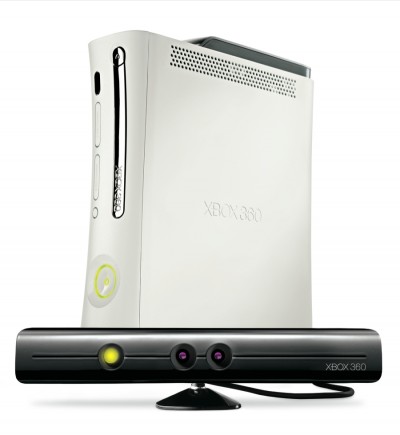
Microsoft's Xbox Kinect sells 10 million, breaks record
Move over iPad and iPhone -- the fastest selling consumer electronics device is not made by Apple. Microsoft said Wednesday that its Kinect motion-sensing controller has sold 10 million units since its launch last November. In the first 60 days alone, the company said eight million Kinects were sold.
Guinness World Records has dubbed the device the "fastest selling consumer electronics device ever," with an average daily sell-through of 133,333 units per day from the period of November 4, 2010 through January 3, 2011. Those rates are far above that of either the iPod or the iPad, which Apple has been keen to boast as the 'fastest ever' in the past.

Share images online with Hyperdesktop
Whether you want to post a picture on a web forum, show a diagram to work colleagues, or just let family and friends everywhere see your holiday snaps, an online image sharing service can help.
And it doesn't have to take long to set up. In fact, if you download and run Hyperdesktop then it won't take any time at all, as the program will upload your screen grabs or images to the popular Imgur service without requiring any other configuration whatsoever.

Apple rolls out iOS 4.3 for iPhone, iPad, iPod Touch, updates Apple TV
As expected, Apple's mobile operating system received an update on Wednesday, which includes a faster Safari mobile browser thanks to an upgraded Nitro JavaScript engine; iTunes Home Sharing; enhancements to AirPlay; the ability to use the iPad side switch to either lock screen rotation or mute the audio; and the Personal Hotspot for iPhone 4.
Apple first announced these features when it introduced the iPad 2 last week, but most of the new functions were made public when the CDMA iPhone 4 launched back in January.

Government program puts tablets, netbooks in hands of 35,000 kids
Wednesday, the FCC announced the 20 E-rate schools that will be included in the next round of "Learning on the Go" pilot programs, where public schools test how mobile wireless devices such as tablets and notebooks with mobile broadband can be employed inside and outside the classroom.
A large part of the Federal Communications Commission's National Broadband Plan is dedicated to using improved broadband connectivity to improve American education, updating the Industrial Age public school system to one suited for the Information Age. Since technology has already moved into the wireless age, the Commission began testing "Learning On-the-Go" situations last year, exploring how the E-rate program can help schools and libraries offer off-premises wireless access to the Internet.

Chrome 10 seeds Google's Cloud OS ambitions
Google is preparing anyone using Chrome 10, which released yesterday, for launch of Chrome OS. The new standalone browser has reached feature parity -- for business, consumer or IT pro evaluator users, anyway -- with Chrome OS browser front-end running on Google Cr-48 laptops. Chrome 10 is a much bigger browser release than even Google's boasting -- "speedier, simpler, safer" -- lets on. Google is beginning its biggest push yet to the cloud, and Chrome OS is quickly, and I do mean quickly, approaching v1 release. Apple and Microsoft had best watch out, because among major platform developers they have the most to lose should Google's cloud ambitions succeed.
Chrome 10's standout features, at least for cloud computing, all begin with "s": sandbox, search, services, simplicity, security, settings, speed, stability and synchronization. Many of these attributes interrelate or aren't new to this browser release -- they're improved for cloud readiness.
HP will put WebOS on every computer it sells by 2012
In a bold move likely aimed at bolstering its software business, HP CEO Leo Apotheker revealed in an interview with BusinessWeek published Wednesday that its WebOS operating system will make it on to every HP PC by 2012. Apotheker's comments confirm earlier ones made at the launch of the TouchPad last month.
At the time, the company said it planned to expand WebOS beyond its current home on tablet and smartphone devices. The move would signal a shift in strategy for HP, which currently only sees about two percent of revenues come from software. Compare this to its hardware business, which makes up about 70 percent of all sales.

Microsoft hints at Internet Explorer 10 previews for MIX11 in April
Microsoft on Wednesday confirmed that it will be releasing the complete build of Internet Explorer 9 on Monday, March 14 at 9pm Pacific (Midnight EST), using the South by Southwest Festival as a platform for the browser's worldwide introduction.
Shortly after the first release candidate of Microsoft's new browser came out on February 10th, the company sent out invitations to a SXSW event on March 14th, inviting attendees to "come celebrate the beauty of the Web." Naturally, this caused everyone to predict the 14th would be the browser's launch date.
Google releases stable build of Chrome 10 browser
In mid-February, Google released the first public beta of Chrome 10, which showed off the browser's updated V8 JavaScript engine known as "Crankshaft," it revised the settings interface, and a handful of other features. Tuesday, Google released the first stable version of Chrome 10.
"With today's stable release, even your most complex web apps will run more quickly and responsively in the browser. (For the curious, this boost corresponds to a 66% improvement in JavaScript performance on the V8 benchmark suite,)" Google software engineer Tim Steele said today.
Are mobile developers violating open-source licenses?
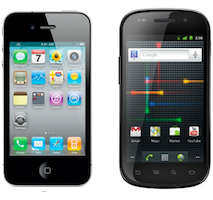
Yes. That's the conclusion OpenLogic reached after scanning 635 representative popular paid and free mobile applications, 66 of which contained open-source code. Among them, 71 percent of Android and iOS apps failed to meet open-source license requirements, by varying degrees. The most egregious violators placed copyrights where they shouldn't be. But the most surprising results came from Android apps, where GPL/LGPL license compliance was 0 percent. You're not misreading -- 0 percent.
Kim Weins, OpenLogic senior vice president of products and marketing, is presenting the results later this afternoon at AnDevCon -- the Android Developer Conference -- in San Francisco. OpenLogic evaluated compliance with GPL/LGPL and Apache open-source licenses, using four, basic criteria. For GPL/LGPL: "provide source code or an offer to get the source code" and "provide a copy of the license." For Apache: "provide a copy of the licenses" and "provide notices/attributions."
Opera's device-agnostic app store could have widest reach of all
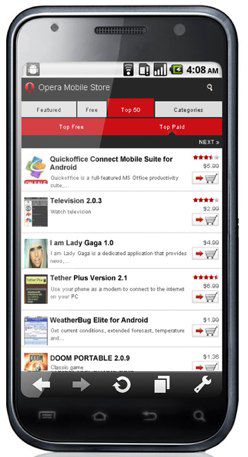
Opera Software on Tuesday launched its browser-based app store which carries applications for all of the mobile platforms that Opera Mobile and Mini support, with the exception of Apple's iOS.
Mobilestore.opera.com was built on Appia's white-label app store plaform (formerly known as PocketGear) and can be accessed by any browser on any platform.
Adobe releases Flash-to-HTML5 conversion tool to developers
Some may see it as capitulation to Apple's longstanding position on Flash, others as acceptance of trends in digital media. Either way, Adobe has apparently decided to insulate itself from the threat of HTML5 by releasing a Flash-to-HTML5 converter codenamed "Wallaby." The free application is built on its Adobe AIR platform.
Adobe says that the application will be able to convert most Flash files by simply dragging and dropping into the Wallaby interface. The release of the tool is especially significant for iOS users -- meaning developers will now have an easier way of making their Flash sites compatible with the iPhone and iPad devices.
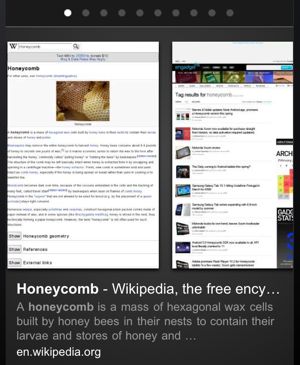
Google Instant Preview comes to Android 2.2 and iOS 4+
Last year, Google unveiled Instant Preview a feature which lets users view a full-page preview of search results without actually navigating away from Google's results page. Today, Google has made this feature available on mobile devices running Android 2.2+ and iOS 4.0+.
Instant Preview pops up a thumbnail view of search results on the main Google results page. It works quite well in full-sized desktop browser situations, but would not work on screens between 3.5" and 4" in size.

Facebook moves into movie rentals with Warner Bros. deal
In a move that highlights Facebook's ever increasing presence in our daily digital lives, the social networking site announced with Warner Bros. that it would begin offering streaming movie rentals. The first movie to be offered would be The Dark Knight, available to those who liked the movie's page.
The title would be available for 30 Facebook credits or $3 USD, and the movie would be available for immediate viewing following purchase. Warner said that it plans to offer additional titles in the coming months, although it did not specify which movies would be sold.



