



Canada curious about Google Buzz, EPIC accuses Google of deception
The office of Canada's Privacy Commissioner, Jennifer Stoddart, confirmed to Betanews this afternoon that she has contacted Google officials by telephone, in an informal inquiry regarding its Google Buzz social networking service. Although Comm. Stoddart's office acknowledges the changes the company has already made, and is continuing to make, since Buzz's rollout last February 9, she says she asked a conference of Google officials why they released Buzz service to Canada without any advance notification to government regulators there.
Stoddart's office has not reported the nature of Google officials' response, or whether they responded at all. The phone call does not appear to be, at least at this point, the full-scale investigation implied by a CBC News report yesterday. But a statement issued by Stoddart's office in response to Betanews' inquiry this morning indicates that she may have told Google that, had they consulted with her first, she might have noticed the potential for privacy issues, enabling them to make changes prior to launch.
Internet Explorer 9 demos set for March MIX conference
It could possibly be at least as significant a technology upgrade as Windows 7 itself: the replacement of Microsoft's current Web browser -- and with it, its rendering engine for dynamic text -- with entirely new code for Internet Explorer 9. With both Microsoft's forthcoming Office Web Apps and now its Windows Phone 7 Series dependent on dynamic rendering (as ascertained from demos at MWC last Tuesday), as well as JavaScript performance, the judgment of the company's mobile applications performance could depend entirely on the capability of its new Web browser.
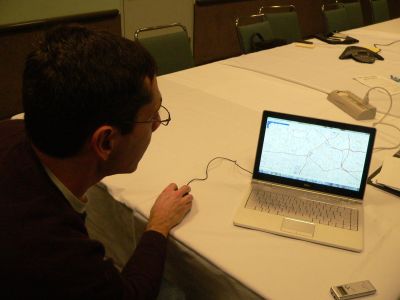
After Microsoft's latest refresh of its conference schedule for MIX 10 in Las Vegas in four weeks, a non-committal statement on its conference blog, under the heading, "Internet Explorer 9 at Mix 10" reads, "After all, what would our premier web conference be without a browser update!?" Although the time and date for this "update" have yet to be set, the notice appears beside a picture of Dean Hachamovitch, Microsoft's IE General Manager and one of MIX' most popular speakers each year.

First signs of Broadband Plan scale-back include subtle dig at FCC predecessor
The need for an American national broadband deployment plan, focused at the time on extending broadband access to rural areas, was not initiated by current Federal Communications Commission Commissioner Julius Genachowski. It was proposed last May by his immediate predecessor, then-Acting Chariman Michael Copps, who remains a commissioner today. Copps' proposition likened the deployment of a national broadband strategy to the historically successful construction of the interstate highway system -- Pres. Dwight D. Eisenhower's crowning achievement after D-Day (PDF available here).
Comm. Copps invoked that analogy in order to emphasize not only the tremendous public works effort that would be required, in his view, to deploy truly fast broadband Internet service cross-country, but also a massive public/private partnership that relied on corporate investment, and faith in an eventual supreme payoff for all of American industry.

RIM debuts free BlackBerry Enterprise Server for small businesses
Today, Canadian enterprise smartphone leader Research in Motion announced it has released BlackBerry Enterprise Server Express, a new server software solution for small BlackBerry deployments that incur no additional software or user license fees.
Starting in March, small to medium-sized businesses (SMBs) will be able to download BlackBerry Enterprise Server Express for free. With it, small deployments of BlackBerry smartphones will be able to wirelessly sync e-mail, calendar, contacts, notes and tasks; remotely manage e-mail folders and search through the mail server; book meetings and appointments; check availability and forward calendar attachments; set out-of-office replies; edit Microsoft Word, Excel and PowerPoint files using Documents To Go; and access files stored on the company network or business systems behind the company firewall.
A BlackBerry browser with a 100% Acid3 score: RIM finally picks up the Torch
It turns out Microsoft isn't the only mobile platform producer resetting its ecosystem this week. In a lower-key move that could actually affect millions more customers than Microsoft's reboot of Windows Phones yesterday, Research In Motion today took over control of Mobile World Congress' side-show, called "App Planet," with a series of developer-focused seminars whose intention appears to be resituating developers on the new purpose of the BlackBerry platform.
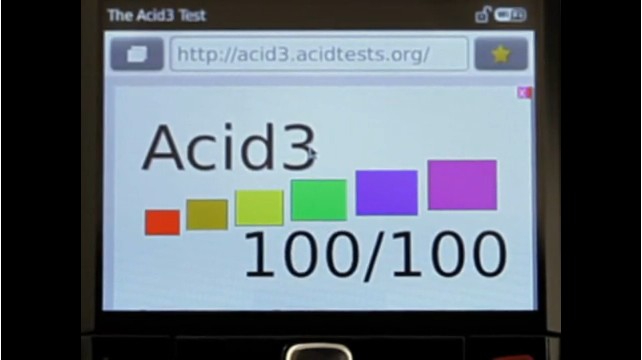
While BlackBerry has never been much for eye-candy, what passes for such took center stage during a demo by CEO Mike Lazaridis this morning. Making good on the promises inherent in RIM's acquisition of browser maker Torch Mobile last August (taking it out of the Windows Mobile picture for good), the company presented the first public demonstration of a real Web browser for BlackBerry. Perhaps the last mobile platform to have a built-in browser built for standards higher than 1997, the new BlackBerry browser produced accurate Web pages, zoomed into and out of pages with reasonable speed (not exactly an iPhone-like rush, but not thumb-twiddling either), and scored a 100% on the Web Standards Project's Acid3 test.

Game changer: Verizon Wireless okays unlimited Skype over 3G
At a joint press conference at Mobile World Congress in Barcelona today, Verizon Wireless and Skype announced that Verizon's smartphone customers will be allowed to place and receive unlimited Skype-to-Skype voice calls. The voice-over-IP chat client is one of the world's most popular ways of connecting, especially for the purposes of international voice and video conferencing.
When the service opens in March, nine phones will support unlimited Skype-to-Skype voice calls, instant messaging, and international calls at Skype Out rates. These will include: BlackBerry Storm, Storm2, Curve 8330, 8530, 8830 World Edition and Tour 9630, Motorola Droid and Devour, and the HTC Droid Eris.

T-Mobile rushes ahead with HSPA+, announces first USB modem
Even though T-Mobile's HSPA+ deployment consists of only one city right now (Philadelphia), the mobile operator today unveiled its first piece of consumer equipment that will be able to handle the 21 Mbps HSPA+ network, and indeed the first HSPA+ modem available in the US, the WebConnect Rocket.
The Rocket is sort of a sequel to the WebConnect Jet 3G modem which launched last year. The main difference here is that T-Mobile was actually the last United States wireless carrier to offer a 3G USB modem, and it could be the first to offer a next-generation (some consider HSPA+ to be 3.5G or 3.75G) USB modem commercially.
LG introduces beta of 'Air Sync' for featurephones
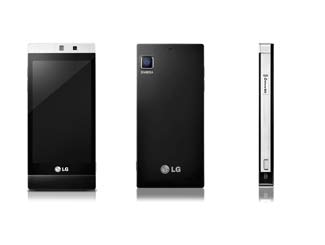
Today, South Korean consumer electronics maker LG debuted a full-touch featurephone called the Mini, which would have otherwise been unremarkable had it not been tied into a still-in-beta service called LG Air Sync which also was announced today.
LG Air Sync is a three-way sync service for feature phones (currently only works on the Mini) that syncs contacts, calendar data, memos, and photos and Web browser information with the user's PC and his related Air Sync Web account.
HTC introduces multitouch Sense UI
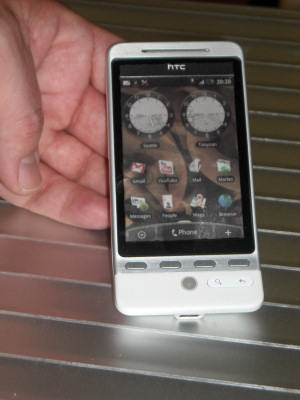
To welcome the launch of the new multitouch Android 2.1 devices named Legend and Desire, HTC announced an upgrade to its trademark Sense user interface today.
The upgrade includes a new view called Leap which is essentially a zoomed-out version of the phone's home screens. With a pinch-to-zoom gesture, the view backs out and shows seven thumbnails, one for each home screen. This feature actually leaked out in a custom ROM for the HTC Hero in mid-January, so this should already be familiar to HTC Android fans.
Tight window for developers of Windows Phone 7 Series before Q3
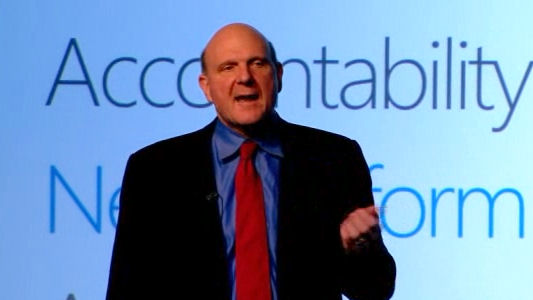
Microsoft CEO Steve Ballmer closed this morning's preview of Windows Phone 7 Series at Mobile World Congress in Barcelona by saying he wanted to diffuse some of the buzz that would inevitably be generated. This after the company intimated to reporters during last January's CES that Windows Mobile 7 would be introduced this week, then later urging them to issue a correction on the name.
But he left developers in a bit of a quandary, many of whom are now thinking, what do we do now? The Windows Mobile 6 and 6.5 SDKs are still being actively distributed, even though WP7S will run applications through an entirely different model. In the end, the new system may end up being more about the Xbox, Bing, Zune, and Office brands than even Windows, which is represented now almost in name only. Windows Phone 7 Series is not, as Chief Software Architect Ray Ozzie once suggested, Windows on a different scale.
Vodafone debuts the cheapest mobile phone ever
While Mobile World Congress is mostly about the most powerful handsets, the most dazzling mobile operating systems, and the next generations of wireless technology, it's fundamentally about communications.
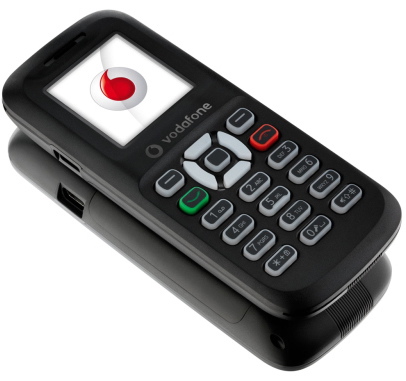
And today, international mobile carrier Vodafone introduced what is a big advancement in the connection of developing nations, the first new mobile phone with a price tag of less than $15, the Vodafone 150.
Wireless operators want their own open app store
Today, a group of the most prominent wireless operators in the world announced its intent to form an "open app store," that is capable of vending applications to all mobile phone users.
Calling itself the "Wholesale Applications Community," the group is made up of 24 of the biggest mobile network operators including China Mobile, Deutsche Telekom, Vodafone, NTT DoCoMo, Telefonica, SK Telecom, Sprint, AT&T, Verizon Wireless, and hardware manufacturers LG, Samsung, and Sony Ericsson.
Linux shakeout merges Maemo with Moblin, while Symbian^3 awaits its future
Before today, if you had asked, which mobile phone company is the one that intends to split itself into two pieces, you might have gotten the answer: Motorola. Today, Nokia is the company taking two directions, both of which are a little startling, and both of which appear uncertain.
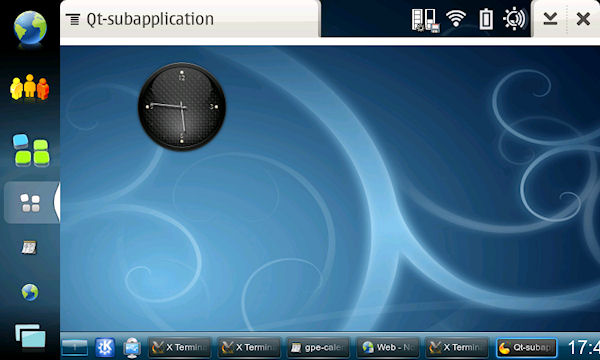
First, it's made a decision to merge its open source mobile Linux project, maemo, into Intel's Moblin project, with the result being MeeGo -- a product that, at least at first glance, bears more resemblance to parent Intel than parent Nokia. Second, Symbian proponents are still awaiting word about a future Nokia phone, the N87, believed to be the launch pad for the now-fully-open-source Symbian^3 operating system. But they're waiting in the backseat, it would appear, as Windows Phone 7 Series and MeeGo get the lion's share of attention, on this first day of Mobile World Congress in Barcelona.
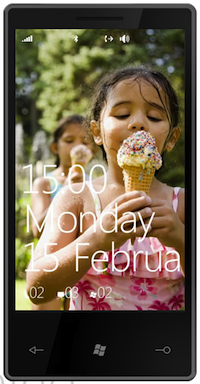
Windows Phone 7 Series: The good, the bad and the ugly
Earlier today, Microsoft CEO Steve Ballmer announced Windows Phone 7 Series at Mobile World Congress in Barcelona, Spain. The new operating system is a bold move for Microsoft, which is looking to reinvigorate its mobile strategy. But how bold is Windows Phone 7 Series in context of other mobile platforms? That's the question this post seeks to answer.
Because I'm miserably sick with the flu today, I'll limit this post to three areas: Windows Phone 7 Series as Microsoft's mobile Manhattan Project, mobile applications competition and garnering developer interest.

Google's next attempt at a more secure Buzz may take a few more days
A Google spokesperson confirmed to Betanews this afternoon that a second round of privacy changes, the nature of which was revealed last Saturday evening, is still being developed, and may yet go live "in the next couple of days."
Among those changes will be a more obvious way to turn Buzz off (no pun intended), a feature that remained obscure after the service's first round of privacy changes last Thursday. At that time, Google chose to un-hide an option that new customers may easily have ignored: to not only build a list of followers from existing Gmail contacts, but to publicize that list on the Buzz user's public profile. Depending on what other Google services the customer may have been using, that profile could possibly have been visible to anyone, including non-Buzz users.