

Big spend on enterprise AI doesn't always deliver big returns
New research from Digitate reveals that while 92 percent of European organisations have implemented AI and automation, many lack a strategic approach to maximise the impact.
The study, based on a survey of 900 IT decision-makers in enterprises across Europe, finds that organisations have invested on average, €103.4M ($108M) in AI and automation over the last two years, with over half (59 percent) spending up to €295M ($309M). These investments have yielded significant returns, with 86 percent of organizations reporting a ROI averaging €154.7M ($162.4M).

European Commission says Bluesky is breaking European rules
Social media darling Bluesky is wooing users and drawing many away from X. But while the platform is enjoying a meteoric rise in popularity, the European Commission is unimpressed with its failure to disclose information.
The commission points out that all social media platforms operating within the European Union must clearly publish key pieces of information, including how many EU users there are. Bluesky does not do this, nor reveal where the company is legally established.
Google is making YouTube and other services delightfully free of political ads... in Europe
The nature of modern-day politics means that parties of all colors, all leanings, spend millions on advertising -- it is something that was painfully apparent during the run-up to the US presidential election. Technology firms and social media platforms are under a lot of pressure to take steps to prevent election interference, and to increase transparency.
This is something that has been playing out in Europe with regulation on Transparency and Targeting of Political Advertising (TTPA) due to come into force in the EU. With concerns about the, “operational challenges and legal uncertainties” this could lead to, Google has announced that it will not only will stop serving political advertising in the European Union, but will do so before the TTPA comes into force.
Compliance with NIS2 comes at a cost
With the EU's NIS2 directive now starting to roll out, aiming to achieve a high level of cybersecurity across member states, a new survey commissioned by Veeam shows the significant impact implementation is having on businesses.
The study, carried out by Censuswide, reveals that while 68 percent of companies report receiving the necessary additional budget for NIS2 compliance, 20 percent identify budget as being a significant barrier to achieving compliance.

Public sector and infrastructure come under attack as malicious web requests rise
The number of malicious web requests rose by 53.2 percent in the first half of 2024, compared to the same period last year according to a new study.
The report from German cybersecurity company Myra finds that for the first quarter of 2024, the number of malicious requests on websites, online portals and web APIs increased by 29.8 percent compared to 2023. In the second quarter, the growth was even more pronounced at 80 percent.
How organizations can master incident reporting obligations under NIS2
The new NIS2 directive is designed to strengthen the cyber resilience of over 160,000 companies that operate in the EU -- either directly or indirectly. Coming into force by 17th October, NIS2 regulations will outline how these essential entities can combat increasingly sophisticated and frequent cyber attacks.
Notwithstanding delays in the implementation of local legislation, the NIS2 directive provides an indication of the compliance obligations affecting those organizations which fall within the scope of the new rules. Ultimately, NIS2 aims to reduce inconsistencies in cyber security resilience by being the “single source of truth” for regulatory bodies to oversee how organizations implement increasingly stringent cybersecurity frameworks. As we have seen in recent weeks, these are crucial, especially during large-scale cybersecurity incidents or crises.

Microsoft releases KB5041587 update for Windows 11, improving Windows Share, Narrator and Voice Access, but failing to address Linux dual boot issues
Microsoft has a released a preview of next month's update for Windows 11. The release of the KB5041587 update introduces the ability to share content to an Android device from the Windows Share window assuming the handset has been paired with Windows 11.
For some users there are security improvements to the Widgets Board, while everyone is getting updated and improved Voice Access and Narrator features. What the release fails to do, however, is fix the problems users started to face with dual-booting Linux after installing the August security updates.
European Commission says Apple breaks competition rules and charges too much
Apple's practices with its App Store and the policies relating to it means that the company is in breach of European Union laws. The European Commission says that Apple fails to comply with the Digital Markets Act (DMA).
The iPhone-maker has been criticized following an investigation by the Commission, and the findings say that App Store rules "prevent app developers from freely steering consumers to alternatives channels for offers and content".
Microsoft is still facing EU antitrust charges despite unbundling Teams from Office
It seems that Microsoft’s attempts to sidestep anticompetition legal action over its Teams software has failed. Although Teams has been -- begrudgingly -- unbundled from Office, the European Commission is believed to be forging ahead with antitrust charges.
Many rivals to Teams, including the likes of Slack, have expressed concern about what they believe to be anticompetitive behavior by Microsoft. Despite Microsoft decoupling Teams from Office and other software, EU officials are of the opinion that the company has not gone far enough to level the playing field.

Companies not ready for new European accessibility regulations
In 2025, a new European Accessibility Act comes into force with the aim of ensuring equal access to digital products and services across the EU.
This will apply to all businesses that wish to trade in Europe, but a new report from testing specialist Applause shows that while a third of global companies are on track to comply with the EAA, over third of European companies are trailing behind.
Microsoft releases KB5035845 update for Windows 10, with security fixes, new Windows share features and more
Windows 10 users have a new security update to install in the form of the KB5035845 update. In addition to addressing a number of security issues, this mandatory update also kills the Windows Backup app for many people and introduces various other changes.
One of the most interesting additions to be found in the KB5035845 update are improvements to Windows share. There are also fixes for various issues in Windows 10 including Windows Hello problems.
Meta adds a new label to show whether third-party WhatsApp chats are secure
New rules in Europe means that WhatsApp will have to offer interoperability with other messaging apps and platforms. This is something that Meta has already been talking about, having published its preference for third parties to use the Signal Protocol as the foundation for these E2EE communications.
Use of the Signal Protocol will not be a requirement for interoperability, but whatever protocol is used by a third-party messaging app or platform, it will need to show they offer "the same security guarantees as Signal". To communicate security to users, WhatsApp is introducing a new "end-to-end encrypted" label that will be added to secure chats.
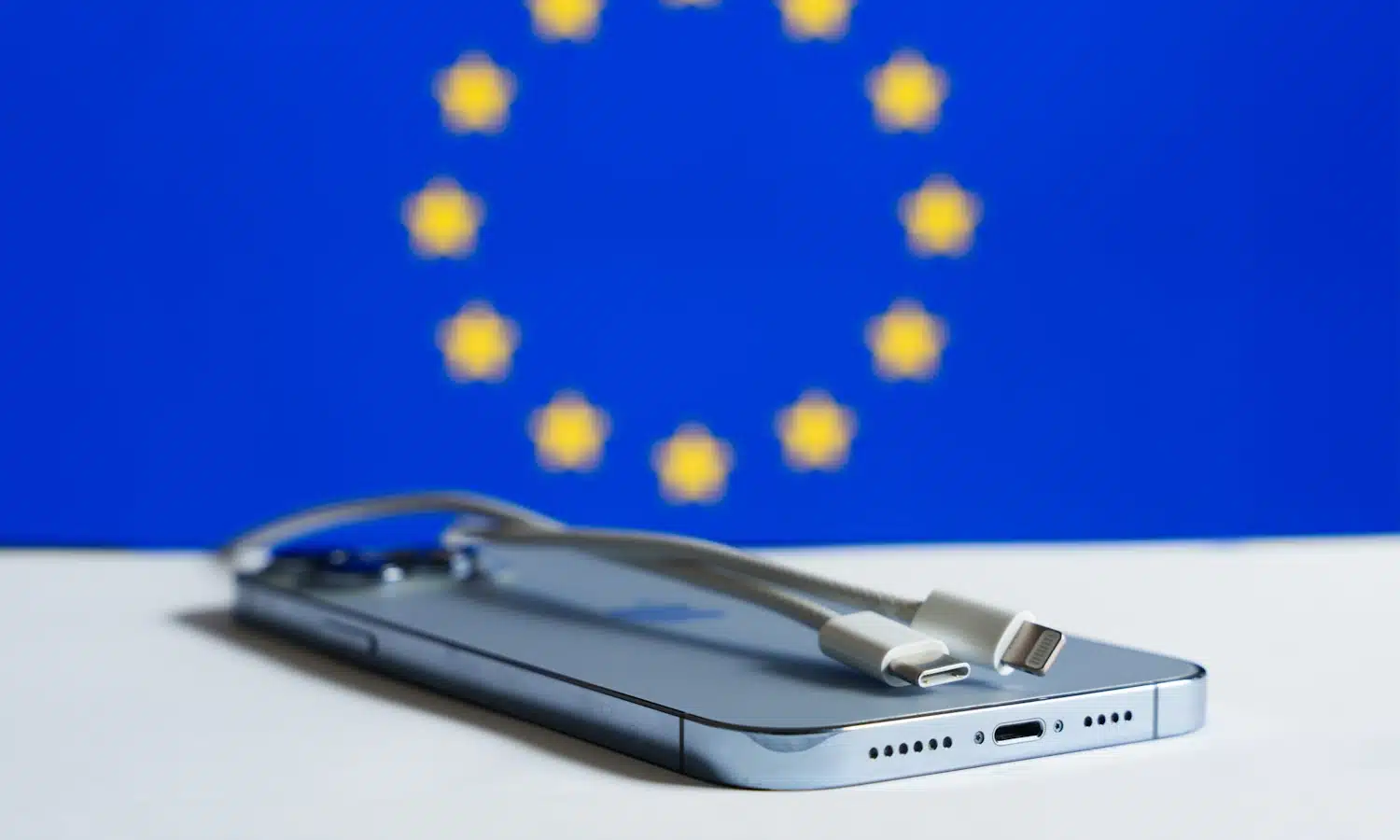
Europe now has a better version of iOS than the rest of the world
Apple has released iOS 17.4, with the company pointing to the arrival of podcast transcripts as the highlight. There are also new emoji, improvements to CarPlay, and a number of bug fixes, but things are rather more interesting for users in the European Union.
With the EU's Digital Market Act coming into force today, March 6, Apple has delivered different versions of iOS 17.4 to this market compared to the rest of the world. And by different, we mean better.

TikTok under investigation for failing to protect minors and using algorithms that promote addiction
The latest online service to find itself facing scrutiny from the European Commission is TikTok. The Chinese-owned, video-based social media platform faces a probe from the Commission after an initial investigation into whether the company had breached the Digital Services Act (DSA).
Particular areas interest are TikTok's use of algorithms to surface content, with investigators worried about whether they create a "rabbit hole effect" and encourage addictive behavior. TikTok also faces criticisms for various failures to protect younger users, but there are concerns about the overall transparency of the platform, but especially in relation to advertising.

The EU's AI Act: Good regulation, bad regulation or somewhere in between?
History is littered with knee-jerk legislation, enacted with good intentions and often in response to genuine public fear. If you have ever traveled to the USA, you may be familiar with the I-94W Nonimmigrant Visa Waiver form that must be completed before entry. Among a number of questions asked, one is ‘Have you ever been or are you now involved in espionage or sabotage; or in terrorist activities -- Yes or No’. I’m sure many have often wondered whether those actually involved in such activities would be inclined to tick the ‘Yes’ box. This example effectively illustrates the challenges that all regulators and legislators should ask themselves at the outset, namely:
Are we doing this to address the problem or is it just a knee-jerk reaction to placate journalists and voters? (Remember that line from BBC political comedy Yes Minister -- “He’s suffering from Politician’s Logic. Something must be done, this is something, therefore we must do it.”)



