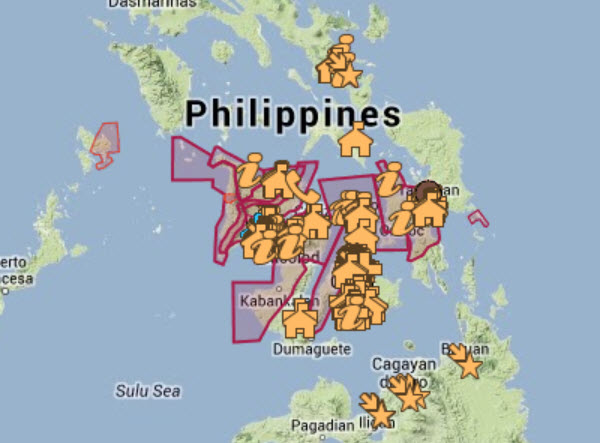
Google launches tools to help with Philippines typhoon aftermath
To help with the emergency in the Philippines after Typhoon Yolanda (Haiyan) struck, Google launches a series of tools to assist those affected by the disaster. The website can be used by anyone looking for friends or relatives who have been lost, as well as by those who have information about the whereabouts of individuals. With information very hard to get hold off in the area, this is a valuable service to those hunting for loved ones.
It is possible to visit the site and perform a search for anyone using their full name, or just part of it. Where possible, details about whether the individual has been located alive and well are provided, although there is the disclaimer that "Google does not review or verify the accuracy of this data". To help keep the people database up to date, anyone with information is invited to share information about people they know to be alive.
Gmail gains more quick actions buttons to speed up common email tasks
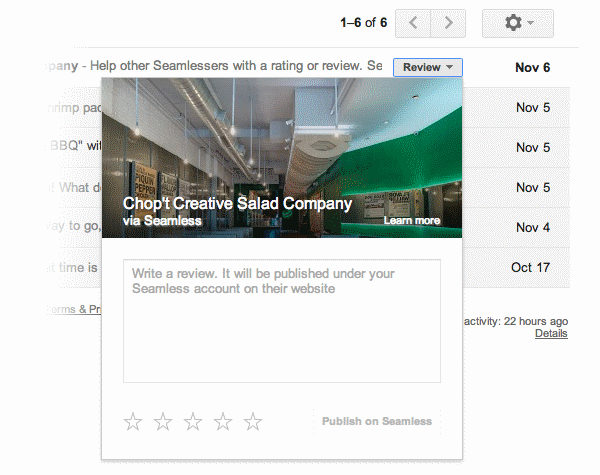
Google continues to make changes and improvements to Gmail, and the latest addition is a raft of new quick action buttons to help speed up common email tasks. The idea of quick action buttons is not completely new; if you make use of Google Calendar, you have probably noticed that it's possible to indicate whether or not you'll be attending an event you are invited to by making a selection from a drop down menu that appears in the subject line.
Now Google is extending the number of quick action buttons that are available so it is possible to do even more without even having to open an email. The idea behind the buttons -- as you'd probably guess from the name -- is to save time. There are some emails which do not really require you to read them, they simply require some form of response. When you receive a calendar invitation you can probably tell what your response is going to be from the subject line -- so the RSVP quick action button enables you to accept or decline the invitation with a couple of clicks.

The most popular stories on BetaNews this past week -- November 3-8
Another busy week with more news than you could shake a stick at. Following the release of KitKat, Google was riding high as figures revealed that Jelly Bean is now installed on more than half of Android devices. It’s a similar story for Microsoft. Its previous operating system, Windows 7, is still the most popular while growth for Windows 8 and 8.1 remains slow. It was better news for Windows Phone which is making serious inroads into Android and iOS's share of the mobile market in Europe, and even managed to overtake Apple in Italy.
It seems that more people want to be able to use the latest and greatest version of Android, and following the announcement that the Galaxy Nexus would not receive a KitKat update, a petition was quickly launched to try to change Google's mind. Showing that the march of progress will always leave casualties, Google announced that Internet Explorer 9 will no longer be supported by Google Apps, and Windows 7 users gained Internet Explorer 11. To push the launch, Microsoft unveiled a new Anime ad campaign focusing on the browser's improved security.

Google takes control of Chrome extensions: Chrome Web Store a must for Windows
The days of some third party extensions for Chrome may be numbered. While most people will head to the Chrome Web Store as their first port of call for downloading extensions to add new features to the browser, this is far from the only means of obtaining add-ons.
But at the start of the new year, all of this is set to change. If you stick with the stable or beta channel of the browser, you'll be limited to installing extensions from the official repository only.

Google faces user backlash over the new YouTube comments system
When Google announced it was changing the comments system for YouTube, users should have been thrilled, after all that aspect of the site has been in need of an overhaul for a very long time. The update Google created adds "smarter" sorting, and "meaningful" conversations, allows comments to be moderated, and for the most part the change just makes things look tidier.
The problem with the new system is you need to have a Google+ account to post a comment, and YouTube users aren’t happy with that. An inevitable petition calling for Google to change the comment settings on YouTube back to their original form was duly launched and has received over 40,000 signatures in 24 hours.
Google Hangouts 2 for Android adds SMS and MMS support, location sharing
Google has updated its messaging tool for Android users with the release of Google Hangouts 2.0. The tool, which replaced Google Talk and Google+ Messenger as the de facto messaging service for Google users, gains support for SMS and -- on Android 4.0 and up -- MMS messaging, along with animated GIFs, location and mood status sharing.
The service, also available on iOS and computer via a Chrome browser extension, supports group video and voice calls as well as more traditional text-based chats and offline messaging. Version 2.0′s features were first mooted weeks ago, but have only now become publicly available to Android users for the first time.

Should you trust Google with your identity?
I tell BetaNews writers that when assessing anything ask: Who benefits? Then: Who benefits first? Both questions are top of mind as I absorb yesterday's stunning YouTube changes: Integration with Google+ comments.
Commenting is an ongoing debate in our newsroom. I have long advocated that we eliminate anonymous responses to stories. I'm identified. Why shouldn't commenters claiming I "pull ideas out of a monkey's ass" also be identified? I stand naked in the light, while they cower in darkness. But in wake of whistleblower Edward Snowden's stunning disclosures about NSA spying and corporate giants seeking more information about us -- yes, I wash both hands after peeing, thank you very much -- my views about anonymity are changing. I can't control the NSA but can exercise limited restraint with Google. I begin by asking about YouTube identified commenting: Who benefits first?
Google Opinion Rewards lets you earn money by completing surveys
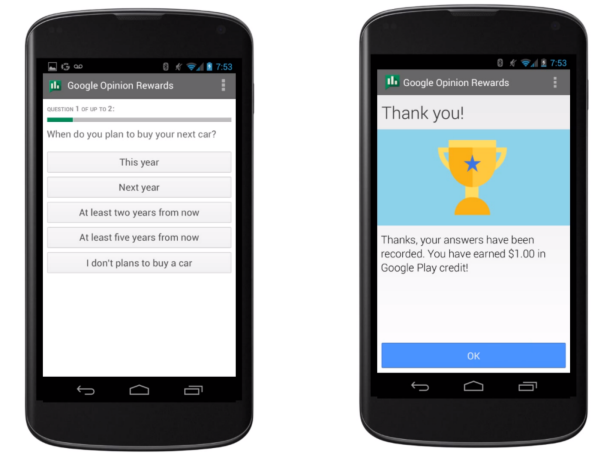
If you had to put money on what type of app Google would release next, you probably wouldn't have wagered much on this. Forget searching, maps, and cloud storage, Google Opinion Rewards is an app that you can use to earn credit that can be spent at Google Play. Sounds good? Well, you have to be willing to do a little work. What's the catch? The clue's in the name of the app: you'll have to spend time completing surveys.
The free Android app is available in the US only (for the moment, at least) and once you have created a basic profile you will be notified whenever a new survey is ready to be completed. Unlike other paid surveys, it looks as though there is going to be a limit on how many are announced. The frequency is described as being "about once a week".

Apple joins the party and reveals details of government data requests
It's becoming a familiar story. A big name company decides to reveal figures about the number of requests for data that have been received from the government, apologizing straight away for the lack of detail it can provide. Microsoft has already done it, as has LinkedIn and Google. The latest figures come from Apple, and they make for interesting reading.
The report starts off by stating that Apple is revealing as much information as it is legally allowed to, and then immediately goes on the defensive:

Google planning to use your Google+ profile image for caller ID
Google is going to start displaying Google+ Photos as caller ID images from early 2014. The new feature will be enabled by default for anyone who has a verified phone number associated with their Google account.
This means that should you get a call from someone you have circled on Google+, but have not added to your phone's address book, you will still be able to see who they are -- or at least be able to see whatever their most recent Google+ profile image is.
Internet Explorer 9 is no longer welcome in Google Apps
Microsoft, while not innovating at Mozilla-Google rate, has been stepping up development of Internet Explorer -- thankfully moving on from the dim, dark days of IE6. Windows 8.1 comes with the shiny new Internet Explorer 11, and with that release Google implements plans to begin phasing out version 9 of the browser.
Don't panic yet -- this move is for Google Apps, a service used more in the business realm than the home. It really should not come as a surprise, as the search giant holds firm to a policy of support for current and previous browser versions -- in other words IE 10 and 11 now.

Microsoft is at it again! New campaign targets Google's email scanning
Microsoft is no stranger to trying to stick the knife into the competition, and the company's latest campaign, Keep Your Email Private, is no different. This is not just an ad campaign, but rather an entire microsite that has been set up to demonstrate how much better Outlook.com is than Gmail. The reason? There is only really one put forward for consideration -- Google's scanning of emails.
This in itself is nothing new. We have known for a long time that Google scans the content of emails with a view to delivering targeted ads. It’s not something that everyone is happy with, but we know all about it, and if you don’t like it, you're free to move away from Gmail. But Microsoft is now exploiting this fact in a bid to attract people to Outlook.com.

Google+ makes my world smaller
Four months ago, I embarked on a grand adventure. I boarded train Google+ and departed from station RSS. I left behind Feedly and my list of carefully curated subscriptions. Google Reader's demise set this new travel plan into motion. The search and information giant's social network would be my major -- really only -- source of news. Hey, other people rely on Twitter! I put Plus first.
I live the Google lifestyle, as many of us do everyday, but more than most people, by using Androids and Chromebook Pixel as my computing devices. But strange thing happened during my travels. Rather than find a broad, eclectic group of people, I increasingly encountered Google fanboys, which I am not. Rather than expand my horizons, Google+ shrinks them.

Dear Sundar Pichai -- there's a petition demanding Android 4.4 on Galaxy Nexus
Samsung and Google jointly released the Galaxy Nexus just over two years ago, in October 2011. The handset is no longer shiny and new, but that doesn't mean there aren't still customers using the device -- it's still for sale at retail locations like Amazon. And Nexus owners could be considered the hardcore Android fans or, in other words, the very ones who know about, and want, version 4.4 of the mobile operating system.
However, Google sticks to a rigid 18-month lifespan for devices, and this means the Galaxy Nexus will not be updated to Android 4.4. Despite the perception that the search giant isn't known for changing its mind, a sampling of the handset's owners are attempting to petition the company to do exactly that.
Google launches new Hangouts-inspired assistance service, Helpouts
As promised back in August, Google launches Helpouts, an online video help service based on the idea of Hangouts. Or as Google puts it, "real help from real people in real time". There are numerous online help repositories -- Yahoo Answers et al -- but the thinking behind Helpouts is to make things live and instantaneous.
If you have a sudden yearning to make a soufflé, forget hunting through score of recipes sites for the best method, get someone to show you step by step.