
Google is going to help you improve your privacy in Chrome with Privacy Guide
Google is rolling out a new feature to Chrome users which it says will help to protect privacy while online.
Although the Privacy Guide does not add any new privacy options, it serves as a step-by-step guide that will enable users to implement the settings that are most appropriate. As well as providing guidance through what can be a confusing sea of settings, the new addition also offers up explanations about different options.
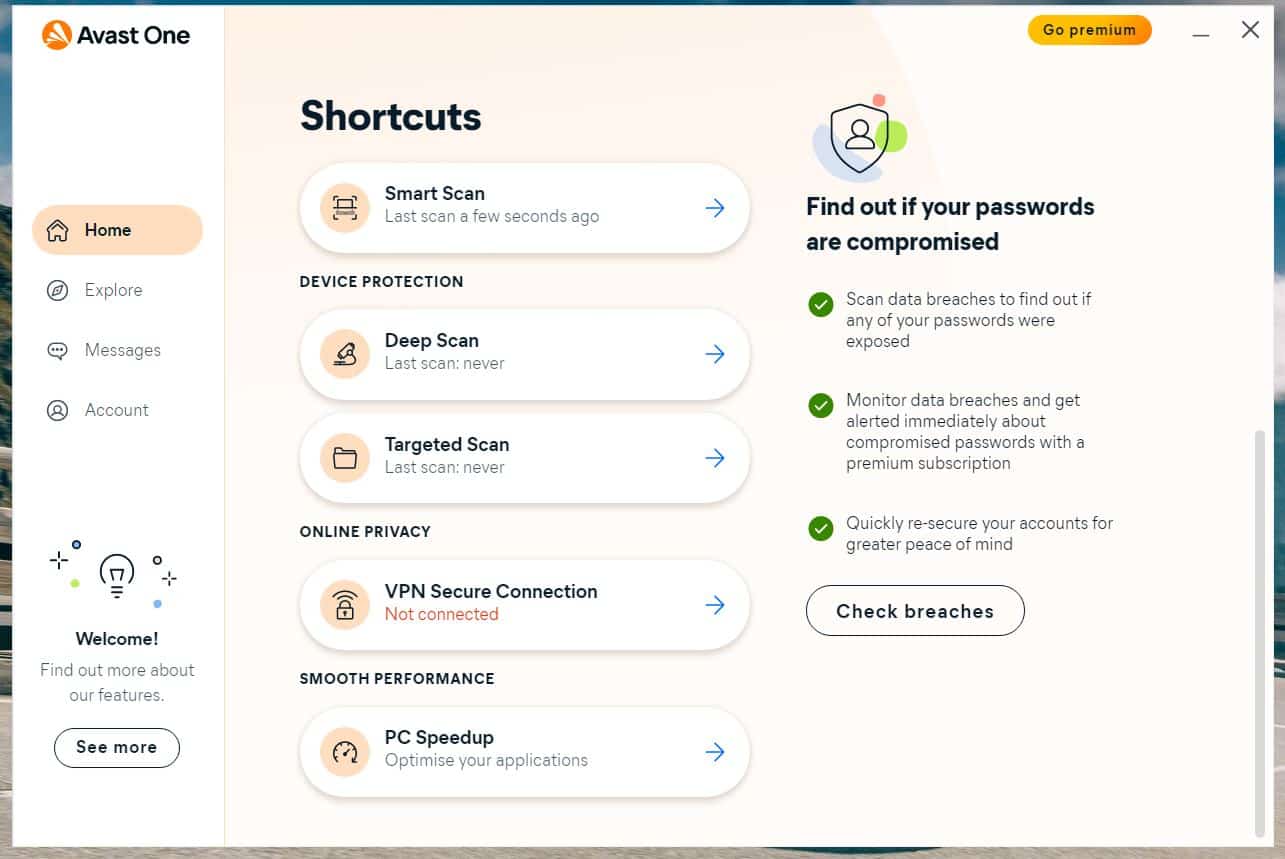
Avast One receives a major makeover to improve protection
Launched last year, Avast One aimed to offer a comprehensive protection suite with both free and paid for editions.
The company has now announced significant enhancements to the product, with new features designed to protect people from online scams, fraud, and other personal privacy threats.

Privacy-focused Linux distro Tails 5 Beta now available for download with many critical security bug fixes
If you’re worried about your privacy, there’s plenty you can do to secure it. Tails, The Amnesiac Incognito Live System, is a live Linux-based operating system that you can boot into on any computer. Once running it can be used to encrypt your files, emails and instant messaging chats.
Today, the developers release a beta version of Tails 5.0, and this is the first version of the distro based on Debian 11 (Bullseye). It offers new versions of most of the software included in Tails, as well as some important usability improvements.

Data privacy is the top metaverse challenge say developers
Ever since Facebook rebranded itself as Meta at the tail end of last year the metaverse has been creating a buzz in the tech world -- though not so much outside it.
Real-time engagement API specialist Agora has carried out a study that looking at how developers feel about the current state and evolution of the metaverse, which finds that data privacy is the biggest concern.

Get 'Privacy, Regulations, and Cybersecurity' ($27 value) FREE for a limited time
Privacy, Regulations, and Cybersecurity: The Essential Business Guide is your guide to understanding what "privacy" really means in a corporate environment: how privacy is different from cybersecurity, why privacy is essential for your business, and how to build privacy protections into your overall cybersecurity plan.
First, author Chris Moschovitis walks you through our evolving definitions of privacy, from the ancient world all the way to the General Law on Data Protection (GDPR). He then explains -- in friendly, accessible language -- how to orient your preexisting cybersecurity program toward privacy, and how to make sure your systems are compliant with current regulations.

Over half of data security incidents caused by insider threats
A new study commissioned by Imperva from Forrester Research finds 58 percent of sensitive data security incidents are caused by insider threats.
And yet 31 percent of firms don't believe insiders are a substantial threat. Indeed only 37 percent of participants report having dedicated insider threat teams, and 70 percent of organizations in the EMEA region don't have a strategy for stopping insider threats.

Businesses not ready to give up third-party cookies
Third-party cookies are already blocked by Firefox and Safari and will also be blocked by Google Chrome by the end of 2023. But new research from Twilio shows 81 percent of companies still rely on them, while 85 percent of consumers want brands to use only first-party data.
The change is likely to bring more issues for brands that rely on such cookies to identify and track visitors to their websites. More than half (55 percent) of companies say they are not fully prepared for a cookieless world, and 42 percent predict that the impending changes will lead to lower returns on their marketing spend.

Android Messages and Dialer apps sent data to Google without consent
In a paper published by Douglas J Leith of Trinity College Dublin, it is claimed that the Messages and Dialer apps found in Android have been sending data back to Google. The paper, entitled "What Data Do The Google Dialer and Messages Apps On Android Send to Google?" says that data is sent without user knowledge or consent.
In what could be a breach of GDPR legislation, it is claimed that there is also no way to opt out of the data sharing. Among the data said to be shared with Google are phone numbers, call duration, hashes of messages and more.

Google finally gives Android users a privacy feature iOS has had for months
Google and privacy are not really happy bedfellows, but from time to time the company does make a nod in that direction. One example of this is the option to delete the last 15 minutes of your search history which iOS users have enjoyed access to since the middle of last year.
The feature is a handy way to cover your tracks should you forget to enable incognito mode and don't fancy the idea of trawling through your search history to manually remove anything you'd rather keep private. Now, some nine months after treating iOS users to this, Google has finally brought it to users of its own mobile operating system.

Most people are willing to share their data if it leads to better experiences
Almost 60 percent of people believe it's worth allowing companies to access their personal data if it means a better user experience, according to a new survey from API management company Axway.
There's an interesting geographic split, 75 percent of Brazilians and 59 percent of US citizens say it is worth giving companies access to their personal data if it means a better user experience.
Meta will warn you if someone screengrabs your encrypted Messenger chats
Meta is adding a new warning to encrypted chats in Messenger so that users will know if another participant has taken a screenshot of the conversation.
The company formerly known as Facebook has already implemented this same feature into messages sent when the app's Vanish Mode is activated. While Messenger has not been updated to prevent screenshots from being taken in in E2E encrypted chats or Vanish Mode conversations, the appearance of the warning should serve as a deterrent against secret screen grabbing.
Data Privacy Day aims to raise awareness of how we collect and use data
Today is Data Privacy Day -- or Data Protection Day, depending on who you talk to -- a day dedicated to an international effort to raise awareness about how data is collected, used and stored.
So, what do the luminaries of the IT world have to say about the day and about data privacy/protection in general? We've rounded up some of their thoughts.

Guess which government doesn't want you to use end-to-end encryption
From a privacy point of view, there is much to love about end-to-end encryption, as employed by the likes of WhatsApp. But while users may delight in the knowledge that their communication is free from surveillance, there are some groups that have a different opinion.
Law enforcement agencies have long-complained that E2E encryption stands in the way of investigations, and serves to complicate evidence gathering. Many governments are of the same mind, and it's not just those that are traditionally regarded as totalitarian by other countries. Governments from ostensibly democratic countries are opposed to E2E encryption, and some are using underhand tactics in negative PR campaigns.

Microsoft reveals 'powerdir' macOS vulnerability that allows unauthorized user data access
Microsoft has revealed details of a security vulnerability in macOS that could be exploited to gain unathorized access to user data.
The vulnerability, which has been named 'powerdir' and is being tracked as CVE-2021-30970, involves a logic issue in the Transparency, Consent and Control (TCC) security framework. The security and privacy problem was discovered by the Microsoft 365 Defender Research Team and was reported to Apple is mid-July last year.

European watchdog orders Europol to delete 4 petabytes of illegally collected personal data
The European Data Protection Supervisor (EDPS) has ordered Europol to delete huge quantities of personal data about hundreds of thousands of people. The European Union's police agency has been found to have illegally collected billions of pieces of data about criminals, suspected terrorists and innocent citizens.
The colossal stash of information has been dubbed a "big data ark" by privacy experts, and it includes data gathered by hacking encrypted services and NSA-style grabs. The data store was collected over a period of six years, and the EDPS ruling means that Europol must delete data that has been stored for over six months. The agency also has a year to determine what of the remaining data it may legally continue to hold.



