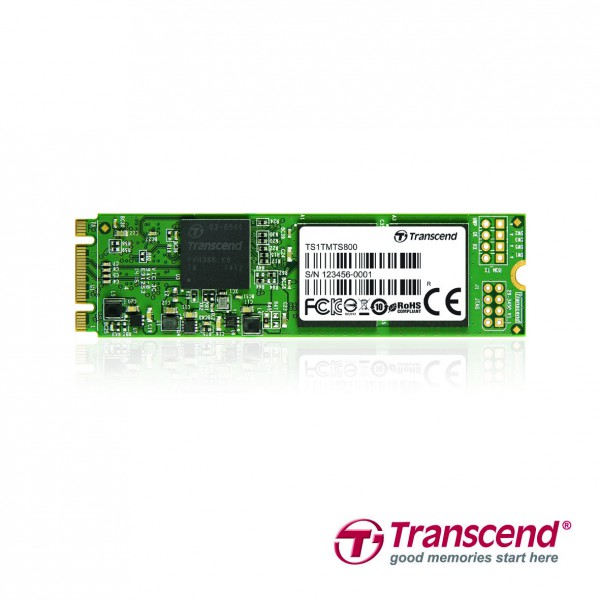
Transcend unveils MTS800 1TB M.2 SATA SSD
When it comes to computers, thin is in. With every passing year, it seems laptops, tablets and other devices become more svelte. Some people decry this design direction, saying what we have is "thin enough", and yeah, I get that, but manufacturers should never become complacent. As long as the thin nature doesn't compromise the overall experience, I'm all for it.
Today, Transcend announces a super-thin 1TB M.2 SSD that is designed with a focus on Ultrabooks. Remember folks, PC manufacturers need to source thin and light components in order to keep pushing the envelope. A thin high-capacity drive such as this, while not super-fast, can definitely find a home in some future computers. This all-new 1TB variant joins the existing capacities of 32GB-512GB.
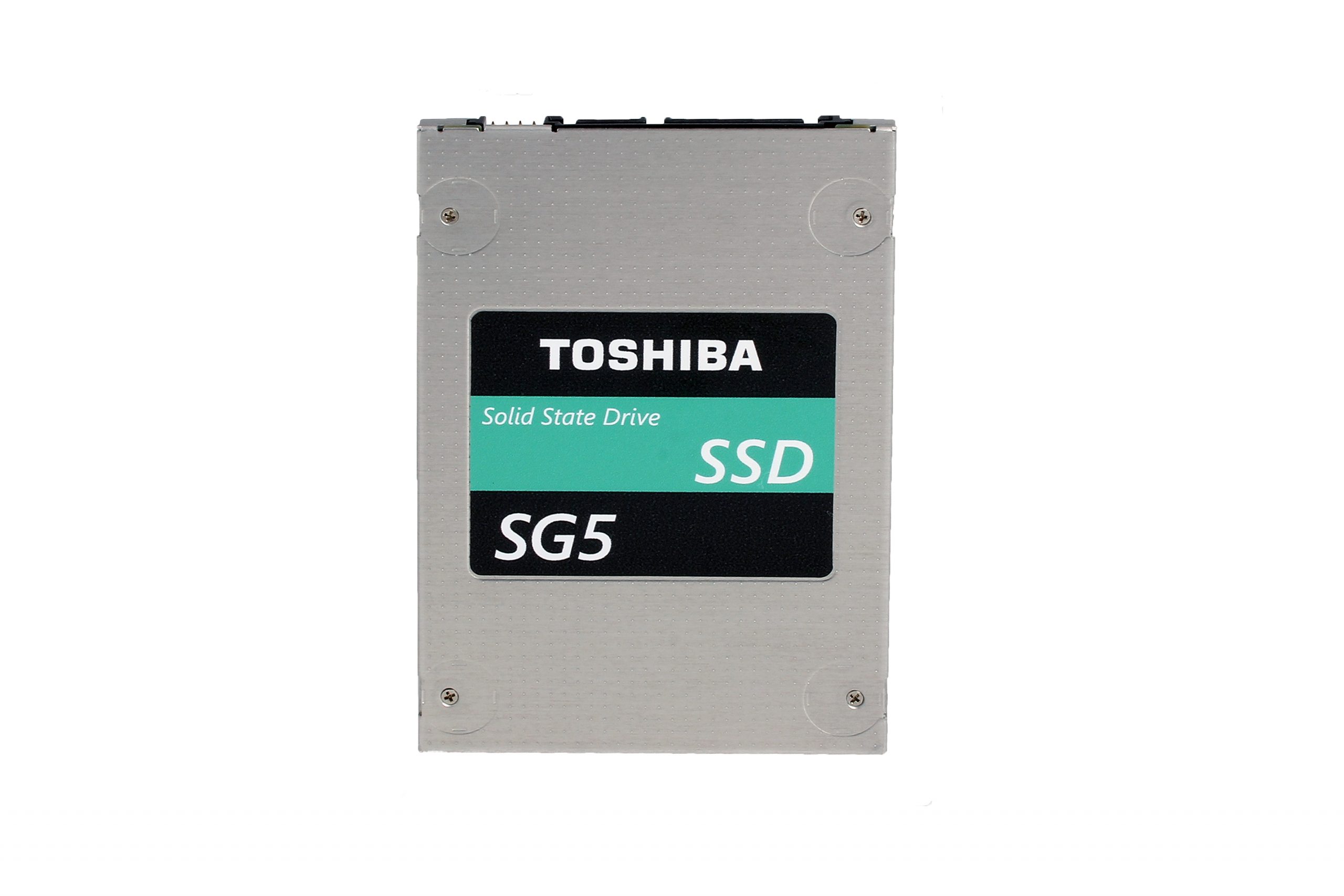
Toshiba 15nm TLC SG5 SSD has up to 1TB capacity and either 2.5 inch or M.2 form factor
If your desktop or laptop doesn't have an SSD, you are missing out on something wonderful. If you think your mechanical hard disk drive is "good enough", please know that a solid state upgrade can reduce noise, increase battery life, and most importantly, dramatically improve performance. Even if you are adverse to spending money, there are plenty of affordable drives nowadays.
Today, Toshiba announces a new series of SSD with the 'SG5' designation. These solid state drives have capacities up to 1TB and feature 15nm fabricated TLC nand chips. To meet the needs of most consumers, the drives will come in either 2.5 inch or M.2 form factors. Unfortunately, the drives -- including the M.2 variant -- utilize the SATA interface, so speeds will not be mind-blowing like a PCIe SSD.
Intel may soon launch 10TB SSDs
Intel’s SSDs may soon see a significant increase in their capacity and speed as a result of Micron’s latest chips, which could also be used to create competitive SSDs that are as small as flash drives.
Micron is responsible for producing the flash which is used in Intel’s SSDs and now it has begun manufacturing and distributing its 3D NAND flash in large quantities. The company’s 3D flash chips would allow tiny SSDs to reach a capacity of 3.5TB, and 2.5 inch SSDs could possibly hold even more than 10TB of storage.
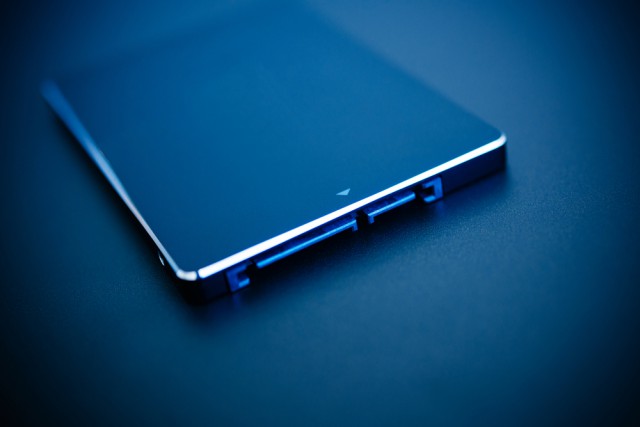
2016 is the year when SSDs will truly take off
It seems as 2016 will be the year of the SSD (solid-state drive), with more and more IT decision makers saying they’re looking to use the advanced storage technology within their organizations.
This is according to a Spiceworks Voice of IT survey, done by Crucial, which asked 306 IT decision-makers in Europe and North America about their storage plans.
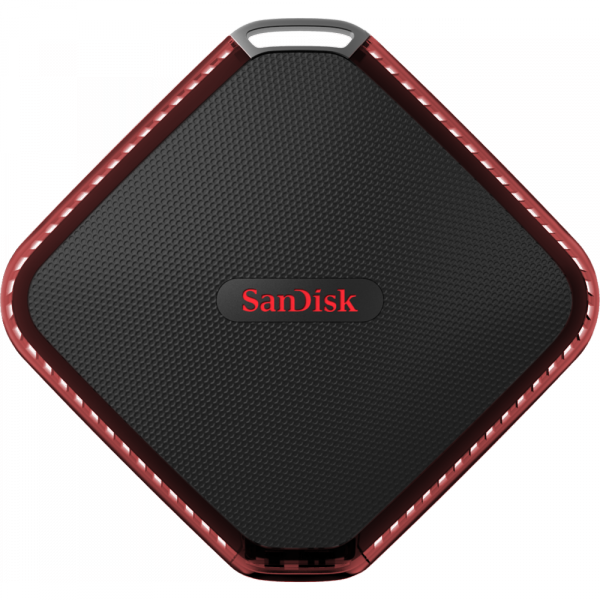
SanDisk Extreme 510 Portable SSD is a hardcore water-resistant USB storage drive
Hey, bro -- ready to do some extreme sports? Yeah, me too. I'm about to do some naked skydiving and then surf during a hurricane. Of course, I will capture all of my gnarly adventures with my camera, so I can show-off how extreme my life is on social media, bro.
Obviously, I am joking, dear BetaNews readers. As you know by now, the most extreme I get is getting a venti blonde roast from Starbucks rather than a tall. Still, despite my boring life, I like rugged technology. This is especially true when it comes to backing up files. My family photos are precious to me -- the more durable the storage drive, the better. Today, Sandisk announces such a hardcore external drive -- the Extreme 510 Portable SSD.
Can you use SMART tools with SSDs?
S.M.A.R.T. which stands for Self-Monitoring Analysis and Reporting Technology is a fantastic tool for anticipating hardware errors on hard disk drives. The utility can test for bad sectors and some software can even test for temperature, core speed and system fan speed anomalies. When S.M.A.R.T. software indicates an imminent hard drive failure, the user is notified so that data can be backed up and data loss avoided. Diagnostic programs are widely used on mechanical hard disk drives and RAID, but how reliable are they on solid state drives SSDs?
Checks include electrical and mechanical performance and read/write error rates. Electrical tests include RAM and read/write circuitry. Mechanical tests seek servo information on data tracks, scanning for bad sectors across the entire disk surface. However solid state drives are constructed very differently, although flash media does develop errors over time -- normally bad flash blocks in the NAND memory chips. Just like traditional hard disk drives, the controller manages these bad blocks and re-maps them to ‘extra’ blocks. Eventually the drive will run out of ‘extra’ blocks and S.M.A.R.T. is quick to identify this.
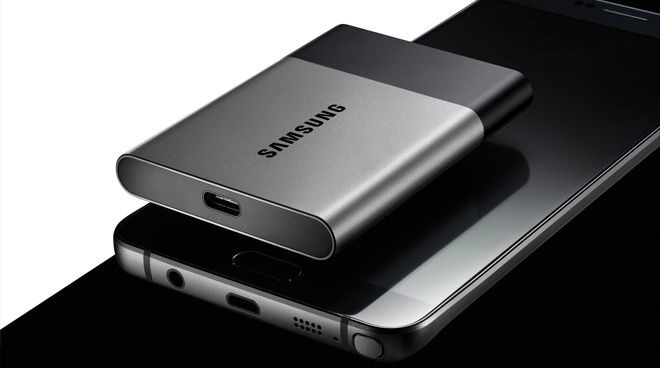
Samsung Portable SSD T3 features USB 3.1 Type C and up to 2TB capacity
Portable external storage is hardly newsworthy nowadays. If you go on Amazon or Newegg, you will find countless products that should meet your needs. The problem, however, is that not all drives are created equally. There are differences in capacity, reliability, and durability. If you are putting important files on the drive, you want to stick to a reputable brand known for quality.
One such trustworthy company is Samsung, and today, it announces the new Portable SSD T3. This fast external SSD features USB 3.1 Type C, meaning it is compatible with the newest such connector. Don't have a Type C connector yet? Don't worry, you can totally leverage an adapter so it can work on an older machine too.
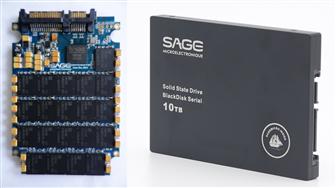
Sage Microelectronics announces world's first 10TB 2.5-inch SSD
A little-known Chinese manufacturer, Sage Microelectronics, has managed to out-gun its much bigger rivals (Kingston, Sandisk and Samsung to name a few) by bringing to market the world’s first 10TB 2.5-inch (9.5mm) SSD.
The drive was first demonstrated last month at the China Data Summit 2015 in Beijing and comes months ahead of its previous launch target. Samsung is the only big SSD vendor that has announced an SSD larger than 10TB.
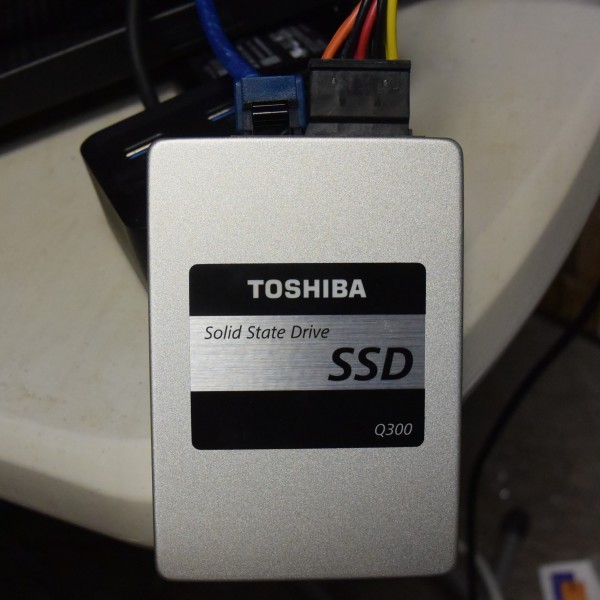
Toshiba Q300 480GB SATA SSD [Review]
If you are still running your operating system from a traditional hard drive, I want you to slap yourself in the face. Why? You are doing your computing wrong. Sure, a mechanical hard drive is great for storage, but your OS will absolutely fly with a solid state drive. While they used to be expensive, the prices have dropped so dramatically in recent years, there is no excuse not to upgrade. It has become a cliché, but an SSD is the best upgrade you can make.
Recently, I have been testing the Toshiba Q300 SSD. The particular model I have been using is 480GB. Keep in mind, capacity can impact performance, so your mileage may vary based on the size you pick. This is a SATA variant, so performance won't be mind-blowing, but with that said, SATA will remain the most-used connection type for the near future, and for folks upgrading older machines. Is the Q300 a smart choice?
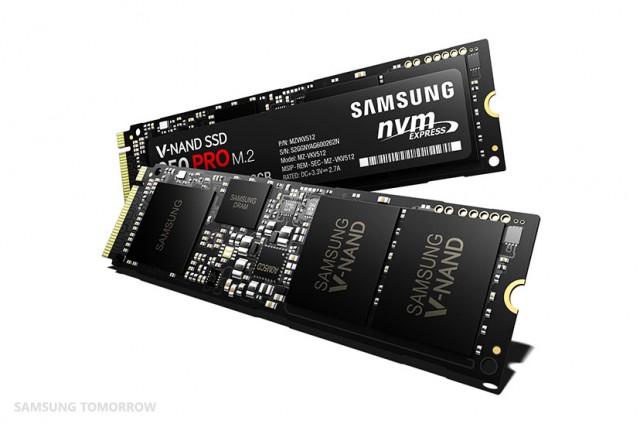
Samsung announces high-end 950 Pro SSD for demanding consumers and business users
The benefits provided by SSDs are not only appreciated by more-demanding consumers, but also by business users. Which is why, with its new premium SSD line called 950 Pro, Samsung is targeting both markets.
What makes Samsung's 950 Pro drives attention-worthy are, first and foremost, the insanely high transfer speeds, five-year warranty, and competitive price. The line has been designed with high-end laptops and PCs in mind, but, even so, the performance figures provided by Samsung seem surreal.

An SSD should be the first upgrade for your PC
If you are not happy with how your desktop PC or laptop performs, chances are it has a plain-old HDD inside. It is likely large enough to store all your files, but the old technology it is based on makes it extremely slow by modern standards -- apps and programs take a long time to load and transfer speeds are low. Basically, it is the reason why your device does not feel as fast as a new, high-end PC. Fortunately, you can give it a new lease on life.
The first upgrade that you should consider is an SSD. It is a huge improvement over virtually any HDD, as it will greatly improve load times and transfer speeds, making your device feel much more responsive, and reduce noise and power consumption. To show just big a difference it can make, I have tested an Emtec SSD Power Plus drive, in 120 GB trim, with an old HP Compaq 610 laptop.
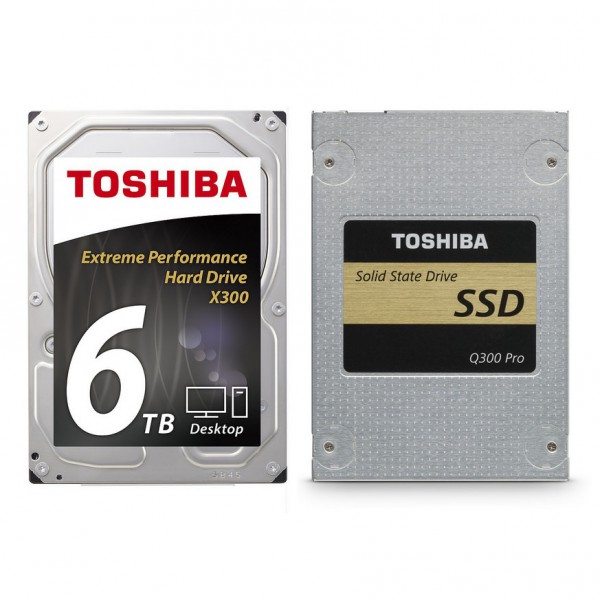
Toshiba releases impressive new SSDs and HDDs for gaming and more
While many consumers are starting to embrace solid state drives, mechanical hard drives are still the most cost effective for data storage. Ideally, you will want to use an SSD for your operating system, while storing files on an HDD.
Today, Toshiba announces new solid state and hard disk drives that are available now. Some of the models are marketed towards gamers, but they will of course work fine for other uses too. Actually, the company has a diverse offering to meet the needs of many.
Want to upgrade to a solid state drive? SanDisk SSD Concierge Service can help
Whether you have a laptop or desktop, switching to a solid state drive from a hard disk drive can be one of the best performance upgrades you can make. Your operating system should boot faster, and applications may open faster as well. Laptop users may experience improved battery life too.
Unfortunately, for many consumers, opening their computer for an upgrade can be a scary ordeal. If you have never done such a thing before, this is totally understandable. Luckily, SanDisk is aiming to make this easier for you. Today, the company announces its SSD Concierge Service, making an SSD upgrade far less scary.
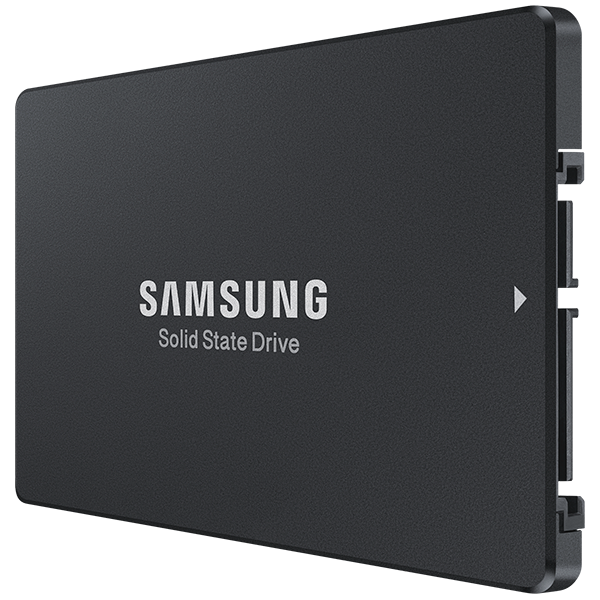
Samsung annouces PM863 and SM863 data center SSDs with up to 3.8TB of storage
The hard disk is not going away any time soon, but make no mistake -- it is on death row. Solid state drives, or SSDs, are becoming more reliable, getting less expensive, and gaining larger storage capacities. It is only a matter of time before mechanical spinning drives get the heave-ho.
While consumers will be the first to shun hard drives, data centers will likely be the holdouts. Why? Cost and capacity. Right now, gigabyte per dollar is far less expensive compared to SSD. More importantly, however, SSDs just don't have comparable capacities -- yet. Today, Samsung announces the PM863 and SM863 data center SSDs. The latter features a top capacity of 1.9TB, while the former maxes out at a mind-blowing 3.8TB!
Samsung launches 2TB 850 PRO and EVO SSDs
Solid state drives are the bee's knees as far as I am concerned -- the best upgrade any PC user can make. Even as prices come down, however, there is still a big issue -- limited capacities. Understandably, a user might be hesitant to replace a 1 or 2TB hard drive with a much smaller SSD.
Well, today this changes. Samsung -- a very reputable company -- launches the massive 2TB 850 PRO and EVO SSDs. While this is certainly reason for celebration (and drooling), the price tags may shock consumers.