

Prediction #3 -- 2018 foreign profit repatriation is a $591.8 BILLION taxpayer ripoff


When I started this series of 2018 predictions I said the recently passed U.S. tax law was going to have a profound impact on upcoming events. Having had a chance to look closer at the issue I am even more convinced that this seismic financial event is, as I wrote above, a $591.8 billion taxpayer ripoff. This is not to say there aren’t some possible public benefits from the repatriation, but it’s fairly clear that the public loses more than it will ever gain.
In case you don’t follow these things, multinational U.S. companies have, since 2005, squirreled away about $2.5 TRILLION in profits overseas because U.S. tax law allowed those profits to go untaxed until they are returned to the USA. Understand that this $2.5 trillion is more than just the profit made on overseas business: many companies changed their ways of doing business to divert what would have been U.S. domestic profits, sending them overseas for parking to await a business-friendly U.S. Administration that would cut them a sweetheart deal to bring back all that moolah. The amount of U.S. corporate income tax that went unpaid during this 12 year period was 35 percent of $2.5 trillion or about $875 BILLION. That’s taxes of $73 billion annually for 12 years that went unpaid -- about five percent of the federal budget for those 12 years.
Why do I do this to myself? Bob's first predictions for 2018
About 20 years ago, when I started publishing a list of annual technology predictions, it just made sense to look back to see how I had done the year before. Alas, I made that decision without looking to see that nobody else in my line of work actually does that. But I was stuck and have found since that by being deliberately vague and putting a fair amount of thought into this stuff I’ve been able to keep my long-term stats at about 70 percent correct. We’ll shortly see if that trend continues, but first I want to discuss how this year is so different from all those others.
Nothing seems the same, does it? Maybe it’s President Trump. Maybe it’s just time for a revolution in tech and the economy, but this year feels unlike any of those others. I don’t know if it will make my predictions more accurate or less, but I have to tell you that I believe the context matters this year more than any other. I’ll get to that in a moment but first let’s see how badly I did the last time. You can read both of last year’s prediction columns here and here.
Net Neutrality will die, so let's take the profit out of killing it

The U.S. Federal Communication Commission, under the leadership of chairman Ajit Pai, will next week set in motion the end of Net Neutrality in the USA. This is an unfortunate situation that will cause lots of news stories to be written in the days ahead, but I’m pretty sure the fix is in and this change is going to happen.
No matter how many protesters march on their local Verizon store, no matter how many impassioned editorials are written, it’s going to happen. The real question is what can be done in response to take the profit out of killing it? I have a plan.
Amazon is becoming the new Microsoft

My last column was about the recent tipping point signifying that cloud computing is guaranteed to replace personal computing over the next three years. This column is about the slugfest to determine what company’s public cloud is most likely to prevail. I reckon it is Amazon’s and I’ll go further to claim that Amazon will shortly be the new Microsoft.
What I mean by The New Microsoft is that Amazon is starting to act a lot like the old Microsoft of the 1990s. You remember -- the Bad Microsoft.
We've reached the cloud computing tipping point

Between technology waves there is always a tipping point. It’s not that moment when the new tech becomes dominant but the moment when that dominance becomes clearly inevitable. For cloud computing I think the tipping point arrived a month ago. That future is now.
This is a big deal. My count of technical waves in computing may not agree with yours but I see (1) batch computing giving way to (2) timesharing which gave way to (3) personal computers which gained (4) graphical user interfaces, then became (5) networked Internet computers and (6) mobile computers embodied in smartphones and tablets, and now we have (7) the cloud. This seventh generation of computing will, within 3-5 years, absorb the vast majority of the approximately $1 trillion we spend in the USA each year on IT.
The Google Lunar X-Prize wasn’t extended, it was ENDED

Google recently extended its Google Lunar X-Prize deadline to March 31, 2018, apparently giving the five remaining teams a little longer to vie for the $20 million top prize. But there’s a mystery here that suggests two vying reasons for the change -- one sincere and the other cynical. The final answer may turn out to be a combination of both.
The Google Lunar X-Prize was announced in 2007, giving teams five years to put their landers on the Moon and drive around, sending back live HD video of the action. Though 30 teams eventually signed-up, none of them made it to the Moon by 2012. Or 2013, 2014, 2015, 2016, or so far in 2017.
A nanotechnology overnight sensation 30 years in the making!

One of my favorite mad scientists sent me a link recently to a very important IEEE paper from Stanford. Scientists at the Stanford Linear Accelerator Center (SLAC) have managed to observe in real time the growth of nanocrystalline superlattices and report that they can grow impressively in only a few seconds rather than the days or weeks they were formerly thought to take. What this means for you and me is future manufacturing on an atomic scale with whole new types of materials we can’t even imagine today.
What’s strange about this is not that these developments are happening but that they took so long to be discovered because my mad scientist has been telling me for over a decade that it was coming.
Will Trump avoid military action against North Korean ICBMs?

We’re just a blind man and an 11 year-old boy, but Fallon and I have been learning a lot about North Korean ballistic missiles and the news is sobering for a world already in crisis. Not only does North Korea have missiles capable of reaching the U.S. mainland, that has been a well known fact in intelligence circles (not just at our house) since early 2016. The North Koreans probably have a 10-20 kiloton nuclear device of deliverable size and even if they don’t it’s easy to send a dirty bomb instead. Our capability for monitoring such activity from space isn’t as good as we’d like or even as good as we already claim. Oh, and we have a reckless President who likes to make threats and might see war as a useful distraction at this point in his Presidency.
Uh-oh.
The robots are coming!

Elon Musk thinks he can increase the speed of his Tesla production line in Fremont, California by 20X. I find this an astonishing concept, but Musk not only owns a car company, he also owns the company that makes the robots used in his car factory. So who am I to say he’s wrong? And if he’s right, well then the implications for everything from manufacturing to the economy to geopolitics to ICBM targeting to your retirement and mine are profound. We may be in trouble or maybe we’re not, but either way it’s going to be an interesting ride.
My friend Jerry Kew from the UK brought this article to my attention in which Elon Musk says he expects to increase the speed of his Tesla production line from the current five centimeters per second to one meter per second. Here’s Jerry’s back-of-the-envelope calculation of what this means:
Trump's 2016 Big Data political arms race
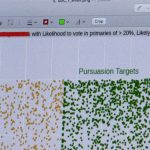
Events happen so quickly in the wacky whirlwind world of Donald Trump that it’s hard to react in anything close to real time, but there was an interesting story in the Guardian last weekend that I think deserves some technical context.
The Great British Brexit Robbery: How our Democracy was Hijacked is a breathless but well sourced story about how a U.S. billionaire harnessed Big Data to split up the European Union and steal a U.S. Presidential election. It’s an interesting read, but the point I want to make here is that the tale was entirely predictable and if one side hadn’t done it, the other would have. Next time they’ll all do it.
The cloud computing tidal wave

The title above is a play on the famous Bill Gates memo, The Internet Tidal Wave, written in May, 1995. Gates, on one of his reading weeks, realized that the Internet was the future of IT and Microsoft, through Gates’s own miscalculation, was then barely part of that future. So he wrote the memo, turned the company around, built Internet Explorer, and changed the course of business history.
That’s how people tend to read the memo, as a snapshot of technical brilliance and ambition. But the inspiration for the Gates memo was another document, The Final Days of Autodesk, written in 1991 by Autodesk CEO John Walker. Walker’s memo was not about how the future could be saved, but about how seemingly invincible market advantages could be quickly lost. If Autodesk, the Computer Aided Design pioneer, was ever going to die, this was how Walker figured it would happen. And Gates believed him. Now it’s about to happen again. Amazon Web Services -- the first and still largest public computing cloud -- is 11 years old, which is old enough for there not only to be some clear cloud computing winners (AWS, Microsoft Azure and a bunch of startups) but some obvious losers, too. This rising tide is not raising all ships. That’s why it’s time for the Cloud Computing Tidal Wave.
Can Amazon's Echo Dot make a good SIDS alarm?

It was 15 years ago this week that my son Chase Cringely died of Sudden Infant Death Syndrome (SIDS) at age 74 days. I wrote about it at the time and there was a great outpouring of support from readers. Back then, before the advent of social media, parents didn’t get a chance to grieve in print the way Mary Alyce and I did. We shed a light on SIDS and, for a couple years, even led to some progress in combating the condition, which still kills about 4,000 American babies each year.
When you lose a child, especially one who dies in your lap, as Chase did with me, you can just curl up and die yourself or you can try to fix the problem. With the help of readers all over the world I tried and failed to build a practical SIDS warning device with the idea of not curing SIDS, but avoiding it. You see the syndrome only lasts for about 11 months, from age 1 month to one year. And while events such as Chase’s can’t be made not to happen, with proper detection and the simplest of alarms the baby can be literally roused out of death.
Remembering Bob Taylor

Bob Taylor, who far more than Al Gore had a claim to being the Father of the Internet, died from complications of Parkinson’s Disease last Thursday at 85. Though I knew him for 30 years, I can’t say I knew Bob well but we always got along and I think he liked me. Certainly I respected him for being that rarity -- a non-technical person who could inspire and lead technical teams. He was in a way a kinder, gentler Steve Jobs.
Bob’s career seemed to have three phases -- DARPA, XEROX, and DEC -- and three technical eras -- mainframes, local area network (workgroup) computing, and the Internet.
How to get rich trading Bitcoin

As an observer of the Bitcoin market as long as this original cryptocurrency has existed, it never made much sense to me from an investment perspective. Bitcoin prices were too volatile and the volatility seemed too random. Volatility can be a good thing for traders, mind you, but only if you think you have an idea why the price goes up and down the way it does. Otherwise it is just a good way to lose all your money. But a couple of recent events have changed my view of Bitcoin. I now think I can explain its volatility and predict it well enough for profitable trading. And the best part is that it takes no rocket science at all. Your mother (and mine) can make a living trading Bitcoins.
For those who don’t know, Bitcoin is a stateless currency based on blockchain calculations. There will only ever be 21 million Bitcoins and only 16-odd million of those have so far been "mined." The present value of all mined Bitcoins is around $18 billion, which is amazing if you realize they came from nowhere and have no intrinsic value.
Wikileaks finds a business model

Within minutes of the electrons drying on my last column about the Wikileaks CIA document drop called Vault 7, Julian Assange came out with the novel idea that he and Wikileaks would assist big Internet companies with their technical responses to the obvious threats posed by all these government and third-party security hacks. After all, Wikileaks had so far published only documentation for the hacks, not the source code. There was still time! How noble of Assange and Wikileaks!
OR, Wikileaks has found a new business model. When organized crime offers assistance against a threat they effectively control it’s called a Protection Racket and is against the law pretty much everywhere.
Robert X.'s Bio
Robert Cringely has worked in and around the PC business for more than 30 years. His work has appeared in The New York Times, Newsweek, Forbes, Upside, Success, Worth, and many other magazines and newspapers. Most recently, Cringely was the host and writer of the Maryland Public Television documentary “The Tranformation Age: Surviving a Technology Revolution with Robert X. Cringely.”
© 1998-2025 BetaNews, Inc. All Rights Reserved. About Us - Privacy Policy - Cookie Policy - Sitemap.