TVAddons launches new GitHub Browser to deliver Kodi addons
TVAddons has previously promised to 'change how people access streaming media forever', and now it is delivering on the first phase of the Kodi addon revolution. The newly announced GitHub Browser makes it easier than ever to browse and install Kodi addons.
The browser makes it possible to install any Kodi addon directly from its developer's own GitHub repository. It's all part of a plan that will make the TVAddons community "more resilient and decentralized."

Facebook to roll out new privacy tools ahead of European GDPR laws
Facebook has faced numerous complaints and accusations when it comes to privacy, and nowhere has this been more obvious than in Europe. In response to European Union plans to change the laws concerning the privacy of personal data, the social network is on the verge of rolling out a new privacy center to users.
The upcoming General Data Protection Regulation (GDPR) is designed to give people more control over their personal data, and it is due to come into force in May. Facebook's response means that its millions of global users will all benefit from additional privacy controls.

Fewer than five percent of enterprise apps will move to the cloud in 2018
A new study of over 160 IT directors and chief technology officers at companies with more than 1,000 employees shows that while 78 percent are planning to upgrade their enterprise applications, the cloud doesn't feature in many plans.
The survey by digital experience platform Sapho reveals that fewer than five percent of enterprise apps will migrate to the cloud from on-premises in 2018, mainly because of security and compliance issues, but also because many of these apps are so ingrained in daily business processes, they can't be moved.

Crypto exchange bitFlyer lands in Europe
BitFlyer, one of the largest cryptocurrency exchanges in the world, is now available in Europe, after receiving a license to operate in the EU. The Japan-based company, which has a daily volume in excess of $260 million, claims that it's "the most compliant virtual currency exchange in the world," as a result.
BitFlyer first opened its doors to Japanese crypto enthusiasts and expanded in the US last year. In 2017, it reached a volume of over $250billion from cryptocurrency trades, mainly in Bitcoin.

State-sponsored attacks expected to dominate 2018 threat landscape
With 1.9 billion records stolen in the first six months, more than in the whole of 2016, 2017 proved a bumper year for cyber crime.
According to cyber security company Venafi, this trend is set to continue into 2018, with state-sponsored attacks to the fore.
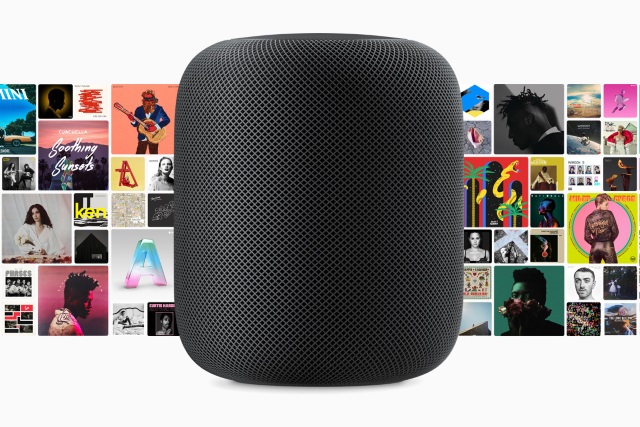
Apple's HomePod launches February 9 for $349
Pre-orders for Apple's eagerly anticipated smart speaker -- the HomePod -- start in just a few days' time. Today the iPhone-maker announces that the HomePod will launch on February 9, but you can pre-order from Friday January 26.
The smart speaker will be available in the US, UK and Australia first of all, and springtime will see it launch in France and Germany. The voice-controlled HomePod had been planned for 2017, but was delayed before Christmas. Now Apple is finally ready to offer a premium alternative to the likes of the Amazon Echo and Google Home, with the company placing a firm emphasis on not just the familiarity of Siri, but also audio quality.

Organizations could face up to $19 billion in losses if a cloud provider is hacked
If a hacker were to gain control of a cloud provider for over three days, businesses could face losses up to a whopping $19 billion, with SMBs carrying the largest economic and insurance losses, according to a new report.
In partnership with the American Institutes for Research (AIR), insurance market Lloyd's of London is unveiling a new report detailing the financial impact of a cyberattack on a US cloud provider.

Businesses need a risk-based approach to tackle vulnerabilities like Meltdown
The recent Spectre and Meltdown vulnerabilities have been well documented, but for businesses it can be difficult to know which fixes to prioritize.
Software management and security specialist Flexera is announcing a set of recommendations to provide a standardized, risk-based approach to managing this type of vulnerability.

Firefox Quantum 58 builds on performance gains, improves screenshots tool
Mozilla is rolling out Firefox Quantum 58.0 for desktop, along with Firefox for Android 58.0. It arrives over two months after the landmark release of Firefox Quantum 57.0.
The latest build focuses on performance and security, while an update to Firefox’s user profile feature means it’s no longer backwards compatible with previous versions. Android users also gain the ability to pin favorite websites to their home screen for use like native apps.

New solution delivers optimized remote monitoring and management
Remote offices and decentralization, plus outsourcing, often mean it isn't feasible to have a technician always on site to solve IT problems.
This means many organizations turn to remote management and monitoring of systems and a leader in this field Kaseya is launching its second generation solution aimed at managed service providers and mid-sized companies.

Android 8.1 Oreo shows the speed of public Wi-Fi before you connect
When out and about, you may well find that you use free public Wi-Fi connections. The chances are that you use more than one as you battle to find one that offers a decent speed. With Android 8.1 Oreo, Google has a new feature that will help to make your life easier.
As the company has been talking about for a little while, Oreo now lets you see the speed of a Wi-Fi connection before you decide if you want to connect or not.

HyperStore platform lets businesses unify cloud and in-house storage
The rise of the cloud has made for greater complexity in business IT environments, with data accumulating on different platforms and in different locations.
To address this problem, object storage company Cloudian is launching a new version of its HyperStore platform which integrates data management capabilities to bridge traditional and cloud native environments, as well as object and file storage types.

Rupert Murdoch suggests Facebook should pay 'trusted' publishers for news content
Facebook has been fighting something of a losing battle against the problem of fake news, but media mogul Rupert Murdoch thinks he has come up with a solution. He says that the social network should pay "trusted" publishers for the provision of news content.
Facebook recently said that it wants to promote content created by outlets deemed trustworthy by users, but Murdoch -- who controls Fox News -- is not impressed. He says that what Facebook has proposed so far is simply not enough, and he believes that the only solution is to start paying.

Intel tells customers to stop installing Meltdown/Spectre patches due to 'unpredictable' reboot issues
The fallout from the Meltdown and Spectre bugs continues to plague Intel. The company has been hit with lawsuits, users complained about performance drops, and some users found that their computers were rendered unbootable. For people with Broadwell and Haswell chips, there was a problem with random reboots, and as a result of this -- some two weeks down the line -- Intel is now advising people to stop installing its patches.
Executive vice president Navin Shenoy says that the company is close to determining the root cause of the problem, apologized for reboots and "unpredictable system behaviour," and warns that customers should stop deploying the current version of the patches until an update is produced.
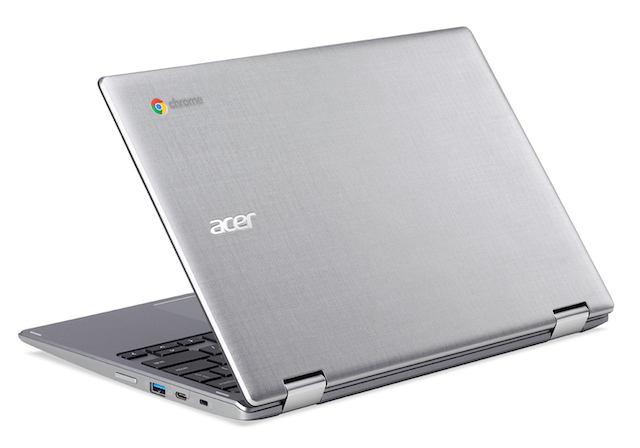
Acer unveils Chromebook 11 C732, Chromebook Spin 11, and Chromebox CXI3
When it comes to Chromebooks, Acer is one of the premier manufacturers. From the early days of Google's desktop OS, Acer has produced quality computers running the Linux-based Chrome OS. Best of all, Acer's Chromebooks and Chromeboxes are often quite affordable. This makes sense, since the company is largely a value-focused manufacturer. Quite frankly, Acer and Chrome OS are a match made in heaven.
Hot on the heels of announcing its all-new Chromebook 11, the company today unveils three new Chrome OS computers -- Chromebook 11 C732, Chromebook Spin 11, and Chromebox CXI3. While the Chromebooks will likely get much of the attention, I am quite smitten with the Chromebox. This diminutive desktop is absolutely gorgeous, and it is chock-full of useful ports. The Chromebook 11 C732 is also quite intriguing, thanks to its optional LTE connectivity!