
Apple discovers Safari bug from Consumer Reports' flawed MacBook Pro battery test
When Consumer Reports failed to recommend the MacBook Pro (2016) for poor battery life, many people raised an eyebrow. When the company suggested using Chrome instead of Safari for more consistent battery life, people's heads nearly exploded. Google's web browser has long been considered a battery hog, making many people -- including me -- doubt the findings by Consumer Reports. After all, my own MacBook Pro (2016) offers wonderfully consistent battery life.
Today we learn that Consumer Reports used flawed testing, which lead to the inconsistent and poor battery life on the computer. It used a hidden Safari developer setting which isn't normally used by consumers. With that obscure setting properly disabled, battery life is as it should be. So Apple is in the clear, right? Not so fast. As a byproduct of the flawed testing, Apple was able to discover a rare bug in Safari.
EU wants to increase privacy in WhatsApp, Gmail and iMessage by preventing unwanted tracking
Facebook, Apple and Google face a drop in ad revenue if EU proposals to apply the same rules to online messaging services that currently apply to telecoms companies go through. In a nutshell, the proposals suggest that the likes of WhatsApp, Gmail and iMessage should ask for explicit user permission to allow tracking with a view to delivering targeted ads.
Google and Microsoft have already faced criticism for scanning emails and using the contents to tailor advertising to the recipient. The EU wants online message services to be subject to the ePrivacy Directive to help improve confidentiality and security.

You can still upgrade to Windows 10 for free -- here's how
What, you thought that free upgrades to Windows 10 ended on July 29, 2016? That might be what Microsoft would like you to think, but actually you can upgrade to the new OS for free as easily now as you could before the 'official' free period ended.
There are a couple of ways to get Windows 10 for free, and if you haven’t already done so, then it’s worth doing as who knows when Microsoft will close these loopholes? Windows 10 is getting much, much better -- as evidenced by the latest Creators Update Insider Build -- and once you’ve upgraded you can always roll back your system to your current OS if you decide that Windows 10 really isn’t for you. Having performed the upgrade once, you’ll be able to reinstall Windows 10 for free at any point in the future.

Artificial intelligence grabs headlines, but the true impact of robotics is in the back office
The hype over machine learning masks the real changes happening in the workplace.
Looking back on 2016, it would be easy to think that this was the year that artificial intelligence arrived, borne in by an army of automated workers. Media outlets bombarded us with news on the future of AI and automation. The vision of a dystopian future where robots do all the work and humans are trapped in a jobless, meaningless existence drove headlines of all kind. In politics, this ranged from speculation around a universal basic income, to debates over whether Donald Trump can reverse decades of technological progress in US manufacturing. In AI, the latest tangential development from any tech giant was duly reported as headline news.

Apple is more environmentally-friendly than Facebook, Google and Microsoft
Greenpeace has crowned Apple the most environmentally-friendly tech company for the third year in a row. The Cupertino, Calif.-based giant is well ahead of most of the big players in the field, being one of just three companies to get an "A" grade from the NGO, alongside Facebook and Google.
With a score of 83 percent, Apple has the highest clear energy index, using little natural gas, coal and nuclear energy. Facebook comes second with 67 percent while Google takes the last place on the podium with a score of 56 percent. Both companies rely more on natural gas, coal and nuclear energy than Apple.
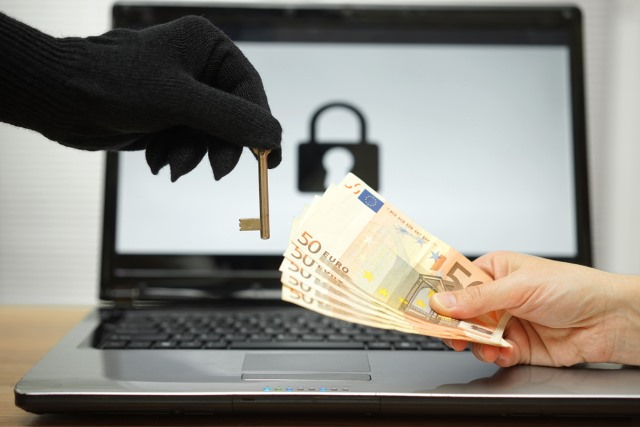
Ransom is the #1 motivation behind cyber attacks
A new report from cyber security and application delivery company Radware reveals that almost half of businesses (49 percent) say they’ve been the subject of a cyber-ransom campaign in 2016.
Ransom was the top motivation behind cyber-attacks they had experienced according to 41 percent, followed by insider threats (27 percent), political hacktivism (26 percent), and competition (26 percent).
Warning: Chrome, Opera and Safari's auto form fillers make it easy to steal personal data
We're all looking for ways to save time and effort, so it's hardly surprising that some web browsers offer a feature that automatically fills in online forms with commonly requested personal information. While incredibly useful, the feature can also be exploited to extract data a user might not want to share with a particular website.
Chrome, Opera and Safari all offer to save and automatically fill in details such as name, address, phone number, and so on, and users are ordinarily only aware of the data which is obviously filled in on their behalf. But a web developer shows how it is possible -- and very, very easy -- to use hidden fields to secretly gather all of the information saved in an autofill profile.

Snapchat thumbs its nose at Brexit, opens international HQ in UK
Brexit was supposed to terrify companies out of doing business in the UK, and in some instances this has been true. But Snapchat is bucking the trend, opting to set up its international headquarters not in Ireland (as many companies do to avoid huge tax bills), but in the UK.
Snap Inc, the company behind SnapChat, will open its London offices under the name Snap Group Limited. The company says it chose the UK capital because of its "strong creative industries", and the move will be seen by many as a something of a coup for post-EU referendum Britain.

How to take control of BYOD bandwidth use
The trend for increasing numbers of employees and customers bringing their own devices into a workplace can seriously impair a businesses’ access to the Internet.
The problem is that as more mobile devices connect to the network, a business can quickly discover that its cloud-based applications, payments systems, accounting, stock control, customer relationship management (CRM) and business applications have become hopelessly sluggish.

Snooper's charter attacked: Liberty mounts legal challenge to Investigatory Powers Act's 'assault on freedom'
The Investigatory Powers Act 2016 -- better known to many as the snooper's charter -- faced massive public criticism in the run-up to becoming law at the end of 2016 for the privacy-invading powers it affords the UK government to gather data about internet usage.
Towards the end of the year, the European Court of Justice ruled that the "general and indiscriminate retention" of internet data and communication is illegal, potentially threatening the Investigatory Powers Act. Now the human rights group Liberty is launching its own legal attack on the Act, asking for a High Court judicial review of the bulk surveillance powers that have been voted into law.

Get easy Wi-Fi discovery and surveying with NetSpot
NetSpot is a free tool for discovering local wireless devices and creating color-coded heatmaps.
Launch the program and it immediately detects all your local Wi-Fi devices, displaying their details in a table: SSID, BSSOD, Signal (current/ min/ max/ average), band, level, width, vendor, security, mode, and when it was last seen.
Insiders or outsiders, which is the greater threat?
Historically, the idea of a hacker has always conjured up images of the outsider trying to gain access to government or corporate systems.
But in recent years it's become clear that insiders can present just as big a threat, whether from malicious intent or just careless use of systems.
Yahoo is not changing its name to Altaba in Verizon sale!
Things are all change at Yahoo. The sale of the company to Verizon appears to be going ahead -- despite a series of setbacks along the way, including a high-profile data breach -- for $4.83 billion, and when the deal does go through, Marissa Mayer will step down from the board.
While many news reports today state that Yahoo is now called (or will be) Altaba, this is not strictly true. Verizon is not buying Yahoo in its entirety; a 15 percent stake in Alibaba and a 35.5 percent stake in Yahoo Japan will live on as an investment company going under the new name of Altaba Inc. Details of the changes are revealed in an SEC filing.

Wow! Massive Windows 10 Insider Preview Build 15002 arrives on Fast ring -- and it's a doozy!
The holidays are over, and so it’s time for a new Windows 10 Insider Preview build to hit the Fast ring.
While we’ve been waiting for Microsoft to find a build that’s considered safe, and stable enough for testers to try, there have been a couple of leaked releases -- 14997 and 15002. Installing either of those was not without its risks, but the big news is if you’re a good Insider and have been waiting patiently for an official build, the wait is over. And boy, has Microsoft got a treat for us with this release.
How to detect a hacker before they steal your company's data
With massive data breaches uncovered daily or weekly, it’s hard not to be a bit numb to the urgency and magnitude of the issue. For most organizations, the problem is far from solved. Apathy in place of outrage at this juncture could diminish any help before it gets started. At the same time, misguided efforts will result in continued failure.
A giant Python-esque foot has not yet come down to condemn the ludicrousness of such a broad catastrophe but losses and damage have been mounting. This year, cybercrime overtook physical crime in the UK, marking a profound changing of the times. The National Crime Agency estimates the annual loss to UK businesses of £1 billion in direct costs, although the more realistic number is far greater, particularly considering the cost of stolen intellectual property and business secrets and other loss and damage not typically reported.