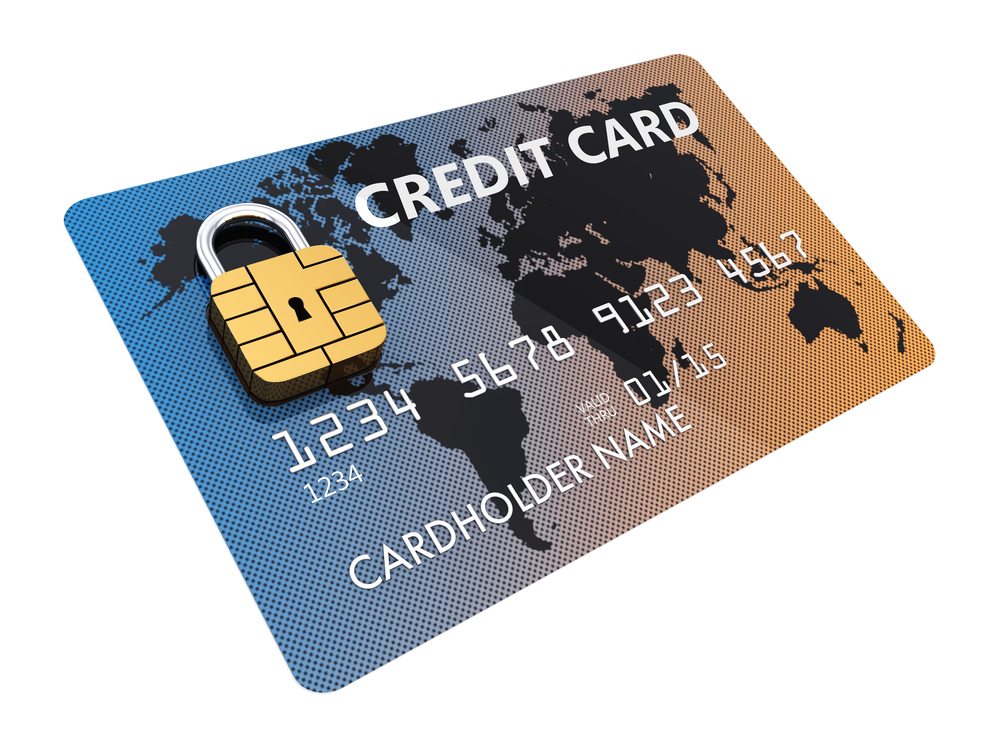
Card fraud in the US: How EMV technology will change everything
In recent months, the US has been at the root of the global EMV discussion (the name EMV comes from Europay, MasterCard and Visa). With adoption of the new standard slow-going, the US is one of the last major economies to make the transition. As a result, it has found itself on the receiving end of fraud migrating from mature EMV markets, exposing itself as a point of weakness for fraudsters.
In 2012, 20 US states reported an increase in ATM fraud via skimmed cards according to analytics vendor Fico. Meanwhile, EMV in the UK has seen overall card fraud decrease from $275 million in 2009 to just $68 million in 2012, according to Financial Fraud Action UK. Despite this, the UK is still plagued by skimmers, with attempts to steal card holder data from ATMs almost tripling, from 2,553 to 7,525 incidents over the past year. Fraudsters can use data from the mag-stripe, which remains on Chip-enabled cards, to then clone cards and use them where mag-stripe payments are still accepted. Therefore, as long as regions such the US continue to accept mag-stripe cards to withdraw cash, there will remain a global issue of fraud migration.

WordPress 3.7 brings automatic updates, smarter search results
The WordPress team has announced the release of WordPress 3.7 (code-named "Basie", for Count Basie), a notable upgrade with some worthwhile maintenance, security and usability tweaks.
Top of the list is automatic updates for maintenance and security updates. This should work just fine for most people, but if you’re out of luck then you’ll be informed after updating to 3.7, and instead you’ll get email alerts of new security releases.
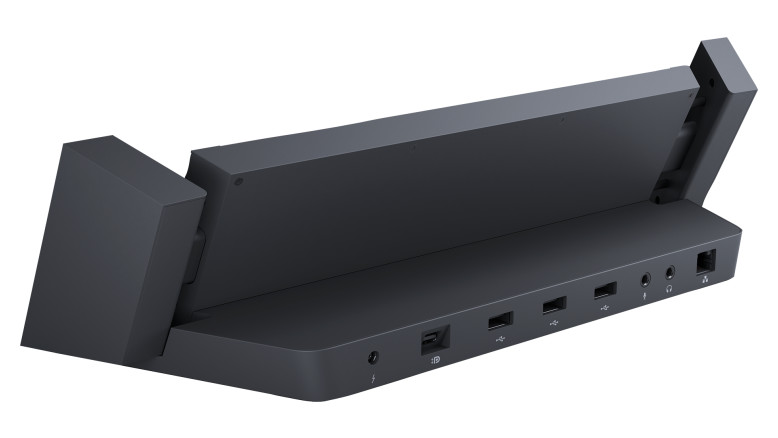
Surface Pro Docking Station makes an early surprise appearance [Update]
When I attended the Surface event in September, I was very impressed with the hardware -- the tablets and accessories. While I was most enamored with the Blade concept, I was also interested in the Surface Pro Docking Station. I had some hands-on experience with the accessory and found it to be well-built and fun to use. It felt very futuristic and simplistic -- you press the sides of the dock into the tablet. It felt like playing with Lego blocks.
While the Surface Pro 2 was released on October 22, the docking station was scheduled for next year, in 2014. This was a huge blow to business users especially, as it enables the device to act as both a tablet and a desktop (perfect for an on-the-go executive). However, out of the blue, the docking station becomes available today. Pull out that credit card.

Best Windows 8 apps this week (Anniversary edition)
Fifty-second in a series. Welcome to the one-year anniversary edition of Best Windows 8 apps of the week.
The overall application growth in the US Windows Store has picked up this week crossing the 1,000 apps mark for the first time in months. A total of 1,454 new apps were released to the store this week, and the overall count of apps in the US Store reached 87,625 as a consequence of this.

Sorry Microsoft, Surface sales are still not good enough
Surface is the tablet market's laughing stock. Microsoft has introduced the two-slate lineup in an attempt to steer consumers away from Apple's iPads and the myriad of Android tablets, by luring them with Windows and its services. In theory, the idea sounded great when the lineup was unveiled in June, last year, showing plenty of promise from the get-go but, as it turns out, most people only want Windows on their desktops and laptops, and not on tablets. The lineup has yet to make great strides in the business segment also.
The moment of truth was in mid-July when Microsoft revealed a $0.9 billion write-off related to Surface RT inventory adjustments. This has clearly shown that the software giant planned to sell a lot more units while the market had other plans, which involved (yes, you guessed it) iPads and Android tablets. Fast-forward a quarter later and Microsoft is now carefully choosing its words, saying that Surface sales have since more than doubled but without announcing an exact number of units that were shifted during the three months ending September 30. But, the $400 million in revenue that the lineup generated still points to a bleak quarter, despite a different picture being portrayed.
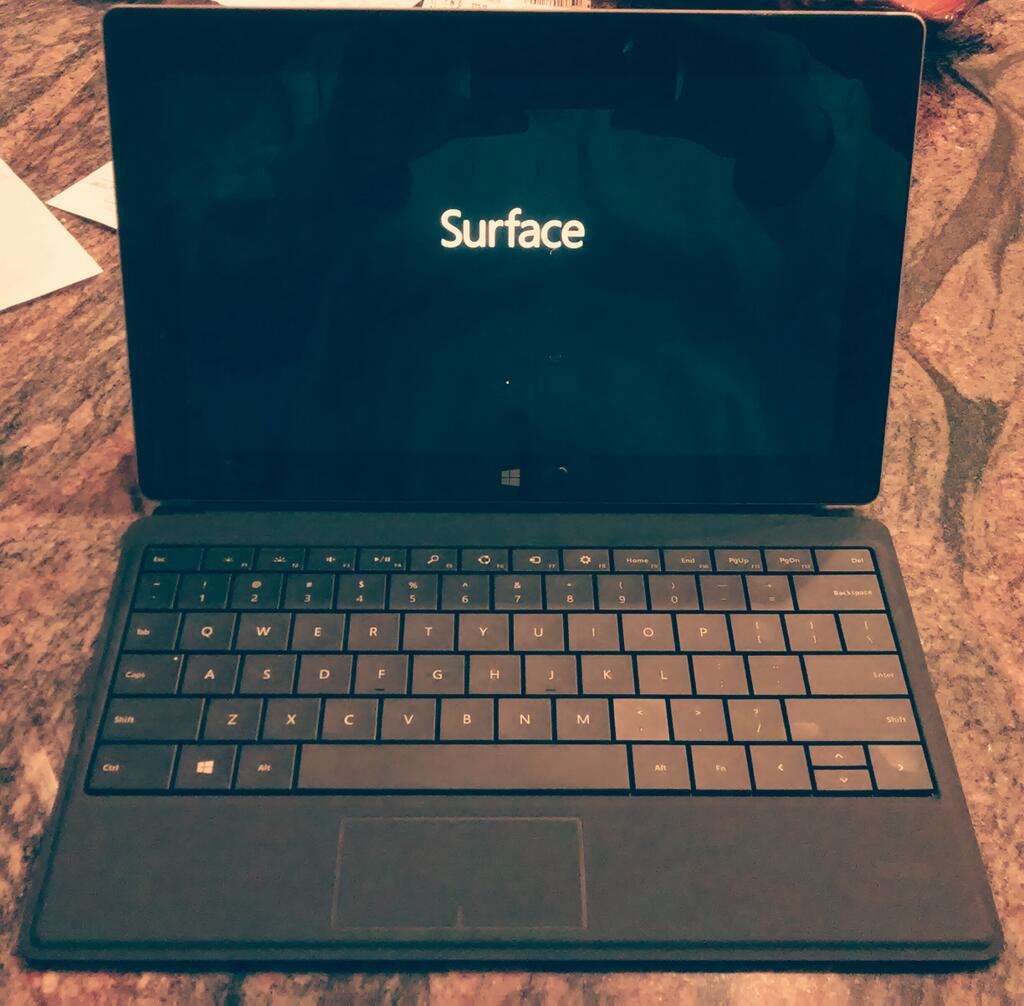
All-in with Microsoft, part 2 -- Surface 2 is my new favorite device
This past Tuesday, I announced my Microsoft-only experiment. My goal is to only use Microsoft devices for a week -- not easy for a Linux user -- and I have since followed through on that commitment. Armed with only a Surface 2 (Windows RT 8.1), Nokia Lumia 928 and a Windows 8.1 desktop, I managed to make the transition, although it was not all sunshine. More on that later.
As someone who writes a lot, a good keyboard is a must. Believe it or not, the Surface's on screen keyboard is simply brilliant. I can type better on it than the iPad or any Android keyboard. It is very responsive and the auto-correct feature works well. I even find the audio feedback to be oddly pleasing. On Android, I turn off the volume, as I find the clicking sound to be annoying, not here; it actually adds to the experience.
Bloomfire streamlines corporate knowledge sharing
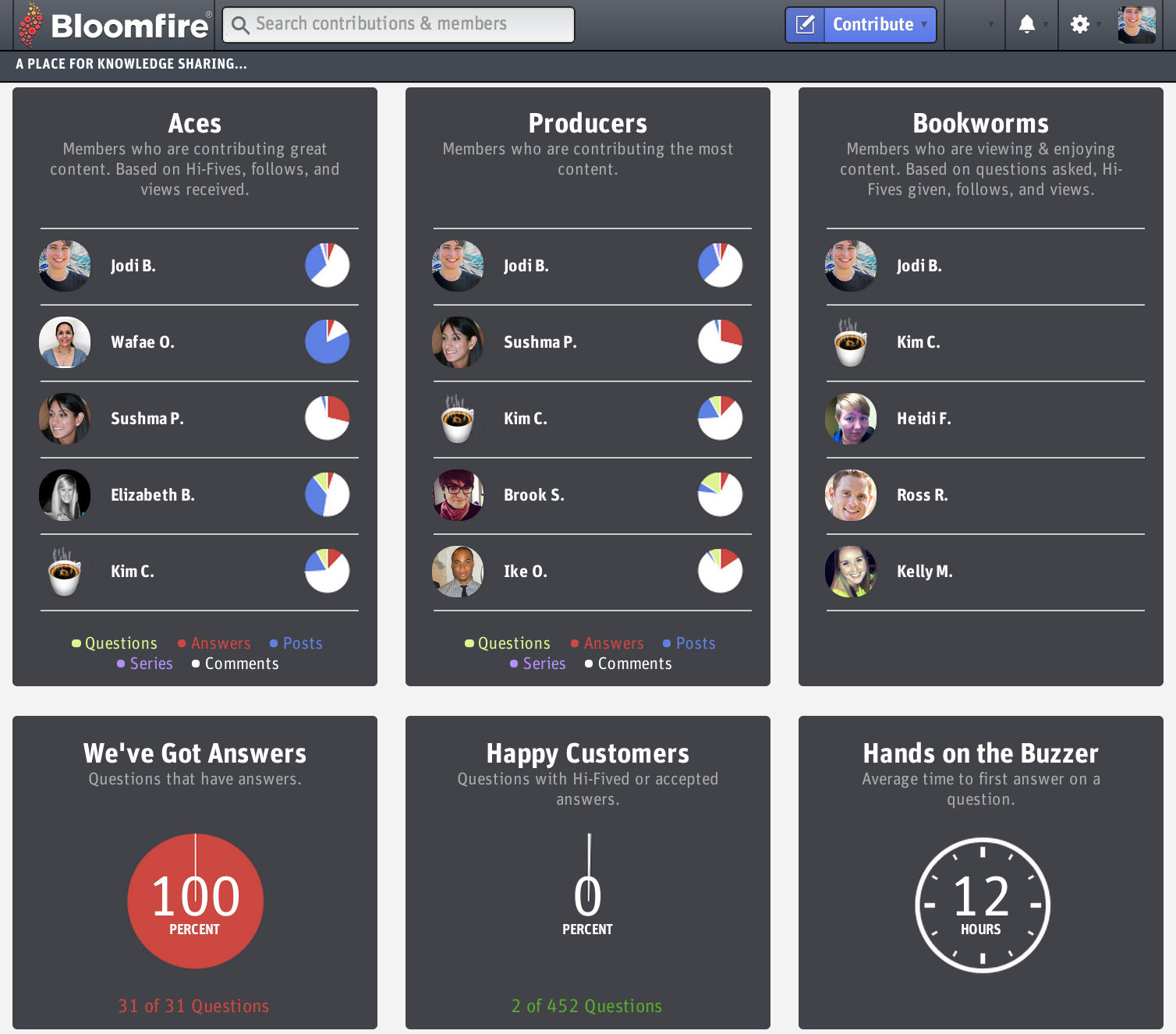
We've seen a raft of tools in recent months that seek to combine business intelligence with elements of social networking. Bloomfire's USP in this field is that it seeks to capture the knowledge that already exists within an enterprise and use it to deliver improved employee engagement and ultimately better customer service.
Bloomfire has a clean interface reminiscent of Google+ and it works by dividing content into "feeds". These are designed to deliver content that’s relevant to the individual whilst filtering out noise so that people can find the information they need to do their jobs. Notifications can also be customized so that relevant notifications and tags aren't missed. The result is more time spent on the actual task and less managing the system. In any case it's designed to be used by business people rather than technicians.

Most people still not doing enough to safeguard their personal data
I know a couple of people who have been victims of identity theft, and while they didn’t lose anything financially, there was a lot of work required afterwards to clear up the mess and put safeguards in place to ensure it didn’t happen again. What was amazing to me was that the thieves were able to do things like open store cards with information that was not only false, but incorrect (an entirely fictitious date of birth, for example).
A new infographic from Experian looks at the dangers of identity theft both on and offline, and provides statistics that show while most of us are aware of the risks, few of us actually do enough to properly safeguard our personal information. The findings probably won’t surprise you.
CCleaner adds Windows 8.1 support, ability to remove previous Windows installations
Piriform has released its regular monthly update to CCleaner with the release of CCleaner 4.07. Also available in portable form, version 4.07 adds official support for the recently released Windows 8.1 update, plus supports the Release Preview of IE11 for Windows 7.
The new build also adds a new option that enables users to free up drive space by clearing out old folders left behind by previous versions of Windows.

Microsoft says Surface 2 is better than iPad Air with iWork, but fails to convince
I am the sort of person who values a versatile device, that lends itself well both to productivity work and content consumption, in a portable package. In my opinion, Microsoft's Surface Pro 2 strikes the right balance and is definitely the tablet that I would buy if I were in the market for such a device. On the productivity side, it is an uncompromised machine that can run every piece of software that I want or need. Unquestionably, it puts Apple's new iPad Air to shame in this regard.
But the same cannot be said about the Surface 2, that ships with Windows RT 8.1. The tablet is not as good as the Surface Pro 2 when it comes to productivity work as it cannot run the same software nor is it as good as the iPad Air when it comes to content consumption, due to a still inferior app selection. But what happens when the Surface 2 is compared to the iPad Air, from a productivity standpoint?

Three in four UK homes now has access to superfast broadband
UK telecoms regulator Ofcom's annual Infrastructure Report update published today shows that 73 percent of premises are now able to receive superfast broadband, up from 65 percent last year.
Ofcom defines "superfast" as networks delivering download speeds of at least 30 Mbit/s, typically delivered using fiber optic cabling. Around 22 percent of connections now fall into this category with some 4.8 million consumers now having superfast connections, more than doubling last year's 2.1 million figure.

Protect your passwords from keyloggers with Oxynger KeyShield
Following good password policy is a key part of staying safe online. You should be using lengthy passwords, for example, with mixed case, numbers and special characters, as well as ensuring you use a different password on every site.
All of this will be entirely useless, of course, if your system has a keylogger which is recording everything you type. Your antivirus package should detect and block any attempt to install one, but if you’d like an extra layer of protection then Oxynger KeyShield could be very interesting.

Google breaks its promise and experiments with banner ads
Google's ad-supported model is one that we're now all familiar with. Spend any amount of time online and, unless you have installed some form of ad-blocker, you'll see text advertisements littering numerous websites you visit, including in your search results.
Sponsored search results are nothing new, but Google is now experimenting with large banner ads which show up when certain searches are performed.
Microsoft Surface Pro gets a new price cut
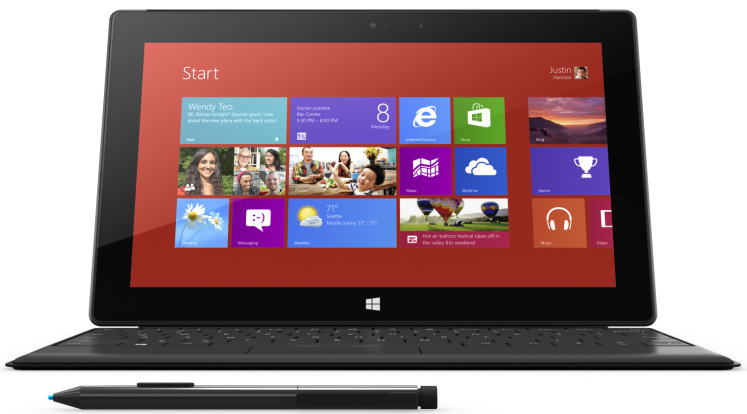
In early August, Surface Pro received a $100 price cut in an attempt to lure prospective buyers, following the less than stellar revenues generated by Microsoft's tablet lineup. The base model would run for a more accessible $799, with the flagship costing $899. Now, the software giant is at it again, slashing the price of its Surface Pro one more time.
The latest Surface Pro price-cut comes in response to the arrival of the new Surface Pro 2, that touts significantly better battery life and performance improvements and a price that kicks off at $899 for the base model. Unsurprisingly, Microsoft wants to give Surface Pro a real fighting chance at raking in more sales before pulling the plug.

Yahoo acquires image recognition startup LookFlow -- Flickr to benefit
One of Yahoo's most popular and successful products is Flickr. Adding to its list of acquisitions, the company is now taking LookFlow under its wing.
This California-based startup, which specializes in image recognition technology, is joining forces with Yahoo to "build a new deep learning group". It is likely that we'll see image based searching added to Flickr in the near future.