
LTE at one year: 19 networks, 6 smartphones, 7 tablets
This week, the Global Mobile Suppliers Association (GSA) and 4G Americas released ecosystem reports that illustrate the progress of the 4G network technology LTE a little more than one year after the first commercial networks went live in Norway and Sweden.
Currently, there are 19 LTE networks up and running out of the 173-180 that network operators have committed to, or just about 10% of its eventual worldwide footprint. These networks are run by 17 different operators in 12 different countries: Austria, Denmark, Estonia, Finland, Germany, Hong Kong, Japan, Norway, Poland, Sweden, USA, and Uzbekistan.
Unauthorized tetherers on AT&T being told to pay up
AT&T has begun cracking down on those subscribers who are tethering their laptops or other Wi-Fi enabled devices to their smart phones for Internet access. The company began sending texts and e-mails to those it suspects are doing so without subscribing to the carrier's $45 per month DataPro plan.
For an additional $20 above the standard 2GB smart phone data plan, subscribers are permitted to use their phones as hotspots to connect Wi-Fi devices to AT&T's 3G data network, and given an extra 2GB data allotment. Some have balked at the extra charge, opting instead to tinker with their phones to allow tethering without the necessary plan.
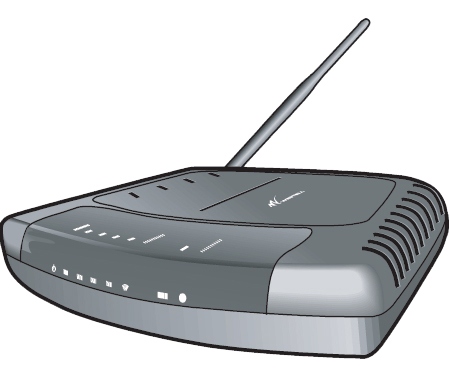
In light of new data caps, Netgear acquires AT&T's DSL equipment provider
Network hardware manufacturer Netgear on Friday announced it will be acquiring all the assets of Westell Technologies' customer broadband networking equipment division for $33.5 million in cash.
Netgear will acquire a "select" team of Westell employees (including the CNS engineering and testing team,) most of its customer base, 19 patents and patent applications, as well as all its products completed or in development.

IObit Smart Defrag 2.0 promises faster performance
IObit has released version 2 of its freeware defragmentation tool for Windows. Smart Defrag 2.0 includes one major new feature -- a boot-time defrag option -- as well as a redesigned user interface and numerous performance improvements to speed up the analysis and defrag processes.
Smart Defrag 2.0 is one of a growing number of free defrag tools that aim to replace the inadequate defragmentation tools built into Windows. By offering such options as automatic defrag, boot-time defrag and defragging on a schedule, Smart Defrag is able to keep a user's files from fragmenting, which noticeably slows performance and can also reduce the lifespan of a hard drive due to the extra work it has to perform in reading and writing to a fragmented drive.
Tip: Use CD or USB stick to clean up malware-infected PCs
Everyone should have layered protection when it comes to malware. Unfortunately, different antivirus and antispyware programs aren't designed to sit side-by-side and play nice with each other due to the always-on nature of their protection, but that doesn't mean you can't beef up your security with the help of some free scan-and-remove tools.
The only downside with this approach is that it helps to have these installed before you become infected. The nature of malware is to make it as difficult as possible to install any new software after infection, so what can you do if you've already been infected? If you have access to another, uninfected computer and a blank CD or USB flash drive, then read on for a potential solution.

Apple must stop iPad 2 scalpers NOW
One week ago today, iPad 2 went on sale. There are shortages, for which scalpers play no small part. Profiteers buying iPad 2s for resale on Craigslist, eBay or export to other countries are making it difficult for genuine buyers to get the tablets. It's time Apple put people who want to buy and use iPad 2 ahead of those who want to profit from shortages they help create. It's really simple: Put customers before profits.
From the profit perspective, a sale is a sale. Apple can let the scalpers buy up big chunks of tight inventory, knowing that genuine buyers will wait; there is no real tablet competition, so people will come back. That's more revenue, long term anyway, for Apple. From the customer service perspective, Apple would aggressively seek to deter scalping, while working even harder to make sure genuine buyers get their iPad 2s. Scalpers are technically customers, too, from the profit perspective. But the customers Apple should want more are those who buy iPad 2 now for personal or professional use and come back to buy more stuff later. These genuine buyers have potentially longer-term value to Apple than scalpers buying iPad 2s to ship to markets like China and Russia, where the tablet isn't yet available.
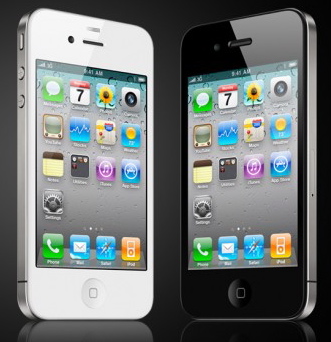
Apple, supporters claim iPhone browser test flawed
A study on the loading times of websites on both Android and the iPhone came under fire late Thursday, with Apple supporters calling its results flawed and the company behind the study defending its findings amid questions on the methods used to test the iPhone's performance.
Blaze Software, a website optimization company found that on average Android loaded web pages 52 percent faster than the iPhone 4. It also said that it saw no noticeable performance increase due to the optimizations of the JavaScript engine included in iOS 4.3.
Microsoft small business server software now widely available
Windows Small Business Server 2011 Standard Edition is now available through all Microsoft channels, including OEMs and volume licensing. The company announced all-channel availability earlier today. As the name implies, the server software is specifically intended for small businesses. There is a user account cap and prohibition against connecting to network domains (to prevent larger businesses from buying the lower-cost, integrated suite rather than separate products like Exchange and Windows Server).
Microsoft offers three SBS 2011 versions: Essentials, Standard and Premium Add-On. Essentials, which supports up to 25 user accounts, isn't yet available. Standard supports up to 75 user accounts, either people or devices. SBS 2011 Standard Edition retails for $1,096 with five client-access licenses (CALs). Additional five-packs are $361 -- or $1,447 for 20. Premium Add-On CAL packs retail for $457 for five or $1,831 for 20. Microsoft also provides a trial version of the software good for 90 days.

New York Times digital subscriptions & the impossible fight against free content
On March 28, the New York Times will put a new "freemium" subscription model in place for users accessing news on NYTimes.com. Every month, 20 articles are free, and all further articles are locked unless the user pays a subscription charge: $15 every four weeks for the website and a mobile app, $20 for Web access and an iPad-specific app, or $35 for all access.
In a letter to readers, New York Times Co. chairman Arthur Sulzberger Jr. said, "It's an important step that we hope you will see as an investment in The Times, one that will strengthen our ability to provide high-quality journalism to readers around the world and on any platform. The change will primarily affect those who are heavy consumers of the content on our Web site and on mobile applications."

Is Microsoft more ethical than Apple or Google?
Ethisphere has chosen its list of the 2011 Most Ethical Companies. Microsoft, which has a somewhat seedy reputation steaming from its European and U.S. antitrust cases, made the list of 110 companies. Many other successful tech companies -- Apple, Facebook and Google among them -- are absent. Of course, who would really expect Facebook to be regarded as ethical?
Microsoft joins the 36 companies new to Ethisphere's list. I'm not so surprised to see Microsoft on the list so much as not seeing it sooner -- at least since 2008 (that's how far back I looked). The company really cleaned up its corporate behavior during the new millennium and even has taken a leadership role among tech companies. It's what I heard Chairman Bill Gates pledge Microsoft would do when he testified in court in Spring 2002. I actually regard Microsoft to be a highly ethical company on many fronts. Then there is the shadow of the Bill and Melinda Gates Foundations' philanthropic work.
Microsoft cleans up in both U.S. search and video traffic
Online market research company comScore released its Video Metrix online video content ranking for the month of February. The rating tallies up the total online video audience for the U.S., determines how much it consumes per capita, and ranks the top video content providers.
February's total 170 million U.S. Internet users watched online video content for an average of 13.6 hours per viewer. The total U.S. Internet audience engaged in more than 5.0 billion viewing sessions in February.

Study says Android surfs the web faster than the iPhone
A new study released Thursday claims that Android loads webpages on average 52 percent faster than iPhone, while also throwing cold water on claims that enhancements to the JavaScript engines of either platform made web surfing faster.
The study from website optimization company Blaze involved an iPhone 4 running iOS 4.3 and a Nexus S running Android 2.3. Tests were performed over 45,000 times using Fortune 1000 websites, and 84 percent of the time the Nexus phone loaded the page faster. Median load time was 2.144 seconds for Android versus 3.254 seconds for the iPhone.

Opera 11.10 beta available, Opera Mini 6 preview coming to CTIA
Today, Opera released a public beta of its browser of the same name. Opera 11.10 beta, codenamed "Barracuda," features a much improved Speed Dial, more seamless experience loading certain required plug-ins and updated support for various web standards.
The standout among this list of changes is the improved Speed Dial feature, which now supports an unlimited number of dials thanks to a new button that allows the user to add new sites to the list, either by typing the address manually or by picking from a list of selections made by Opera. Existing entries can now also be edited to change the site address or display name.

Sprint outlines new features of CDMA Push-to-Talk service
Sprint has announced it will launch CDMA-based Push-to-Talk technology in the fourth quarter of this year, the network operator announced it would be phasing out its iDEN technology over the next two years, and the new service, called Sprint Direct Connect, is intended to be its replacement.
Sprint began discussing CDMA-based Push-to-Talk communications more than three years ago, and briefly attempted to replace Nextel's iDEN-based PTT with a service from Qualcomm called QChat. Ultimately, though, the carrier abandoned the technology and moved on.
Which is faster -- Copy Handler or FastCopy?
Copying files in Windows can be slow and inflexible, so it makes sense to look for a little third-party help. And as we found out recently, it can make a real difference: FastCopy was able to copy files up to 30 percent faster than Windows, in some situations.
There are plenty of similar tools around, though, and one of the oldest, Copy Handler, recently saw its first release of 2011. Could the experience behind this nine-year-old open source project improve on FastCopy's excellent performance? We went back to the benchmarks in an effort to find out.