
Red Hat launches OpenShift Enterprise for public, private, and hybrid cloud app development
Red Hat on Tuesday announced the general availability of OpenShift Enterprise, the company's Platform-as-a-Service offering first unveiled last May as a part of Red Hat's roadmap for 2013.
OpenShift Enterprise is a cloud application platform for enterprises that can handle public, private, or hybrid cloud environments. It is based upon the OpenShift Origin codebase which was used to power Red Hat's public cloud PaaS OpenShift Online. The platform offers developers a choice of languages (Java, PHP, Python, Ruby,) frameworks (Spring, Seam, Weld, CDI, Rails, Rack, Symfony, Zend Framework, Twisted, Django, Java EE), and application lifecycle tools.

Can't get to Vegas? Watch AWS re:Invent online
Today Amazon kicks off the first-ever AWS (Amazon Web Services) conference in Las Vegas. Sure, it is too late to get to AWS re:Invent now and the Technical Bootcamps are all sold out anyway, but that doesn't mean you need to miss everything. Some of the event will be live-streamed right to your computer. The show kicks off today and runs through November 29th.
This conference is tailor-made for those looking to integrate the Amazon cloud services into their business. There are workgroups surrounding the use of AWS in building web-scale apps, a talk given by Adrian Cockcroft, the Director of Cloud Architecture at Netflix, AWS cloud security and a whole lot more. In fact, there will be over 150 different sessions.
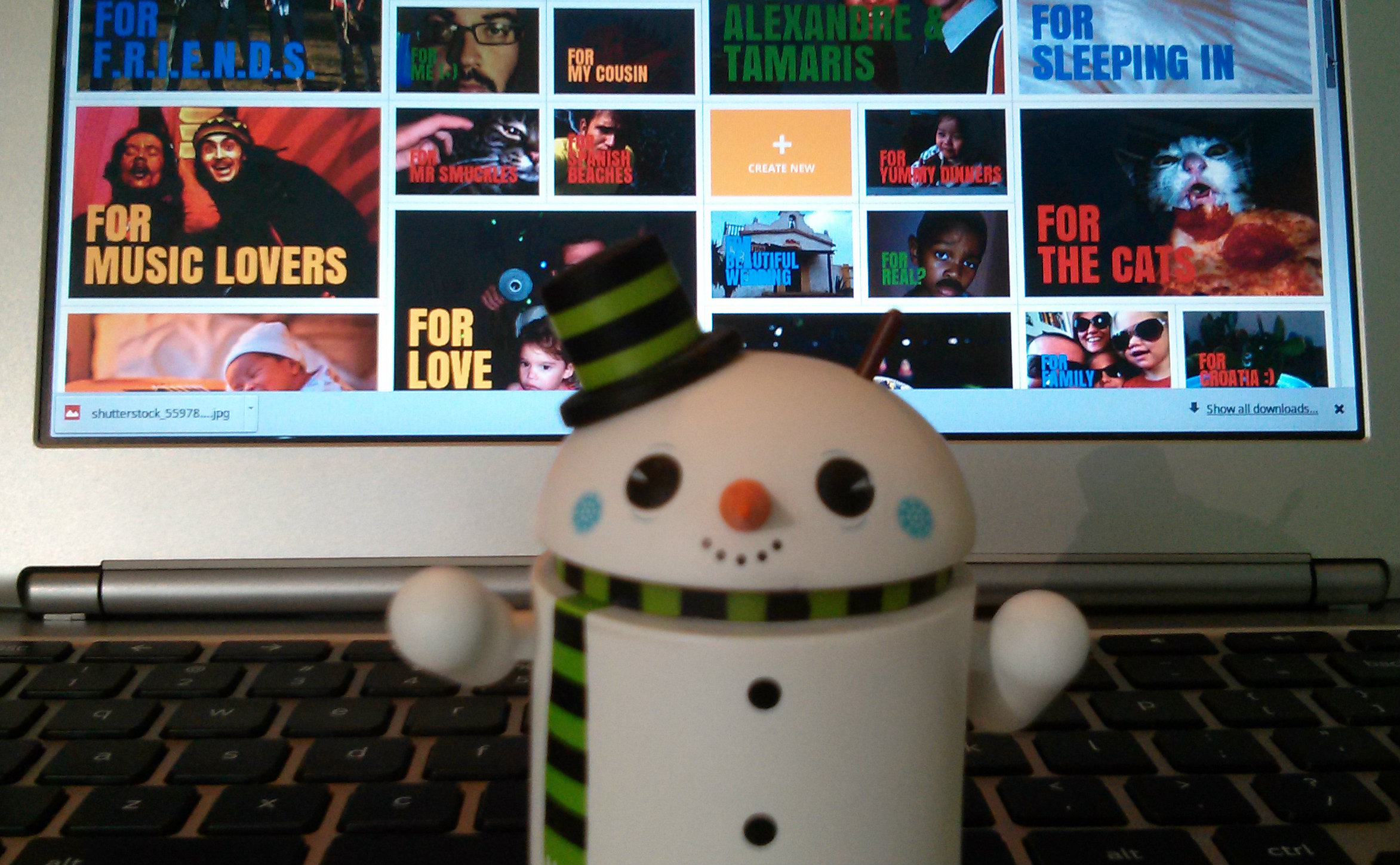
If Chromebook really is 'for everyone', is it for me?
Suddenly, I don't feel so special. But that's okay. For some time, I belonged to a small, elite group of Chromebook users. But new, lower-cost models and Google's aggressive "for everyone" marketing campaign moves the cloud computer into the mainstream market. On October 18, I started using the $249 model announced the same day. The question: Is 'for everyone' for me -- or even you?
I already had adopted the $449 Chromebook as my only PC. The question: Could the ARM model satisfy? Except for 40 hours back on the costlier Intel, for performance comparison, I've used the smaller Chromebook full time for more than a month. In trying to answer the question, I hoped to perhaps get one for people tempted by the newer model's lower price or that of the (gasp) $199 Acer. Samsung makes the other two.

Who don't you trust with your personal data?
About a month ago I posted "Whom do you trust with your personal?", containing two polls. The number of respondents is surprisingly low, so I'm back with them, using a slightly different approach. Perhaps the InterWebs will respond more to the negative trust question.
The results so far don't surprise me. Facebook is distrusted by a wide margin -- 57.42 percent of respondents. Microsoft and Google are most trusted (38.6 percent and 34.5 percent, respectively). But Google also is second-most distrusted (27.1 percent). Both polls provide just five major tech companies but opportunity for respondents to give their own answers. Nine percent trust no one.

I hate Cyber Monday but love good deals
Over the weekend, my daughter asked: "Have you heard of Cyber Monday?" I thought but didn't say: "Have you been living under a rock?" She's 18 and a shopaholic. How is it she only just learned about this dreadful day?
I despise the Monday after Thanksgiving, mostly because it's an artificial retail construct created during my adulthood. I'm too young for Black Friday. But I remember when suddenly the Amazons of the world added one more day to Black Friday weekend, and greedy analysts looking to sell clients new services promoted the concept. Supposedly, Shop.org coined the term eight years ago. Is that all? It seems so much longer.
Tired of hitting the F5 key? There's an easier way to check Google Nexus availability
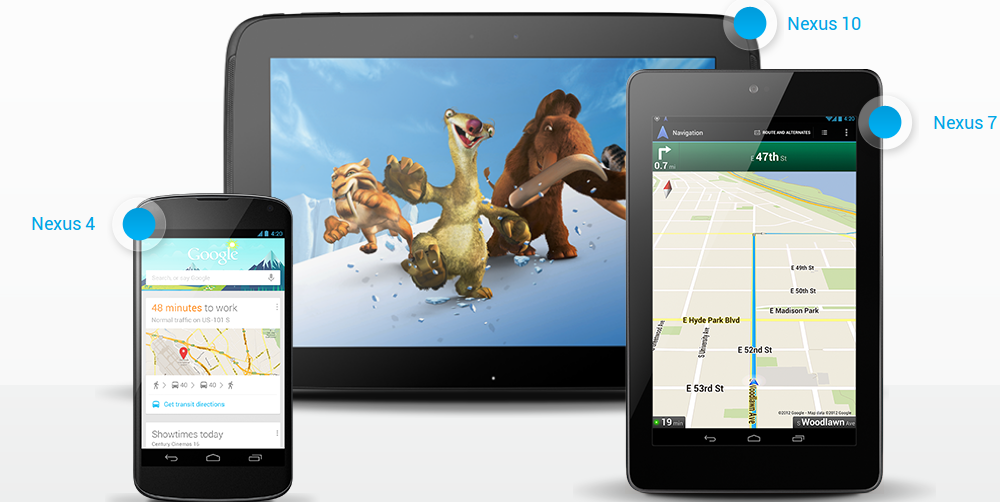
Google's attempt to sell the Nexus lineup on its own Play Store could be considered a failure. The company appears to be unable to keep up with the high demand, and as a result devices are mostly sold out all over the world. In order to prepare for that one moment when sufficient stock exists there is a website that checks global Play Stores for Nexus device availability.
Google Nexus Devices World Availability Checker keeps track of all Nexus 4 (including black bumper), 7 and 10 units sold in Australia, Canada, France, Germany, Japan, Spain, United Kingdom and United States. The website allows users to verify whether a particular device is available in stock at the local Play Store in the above mentioned locations. The advantage, over manually checking, is that prospective buyers are not limited to their regional online store, and can look up international availability, which comes in handy for those that want to shop abroad.
You can have iPhone 5, I'll take Google Nexus 4
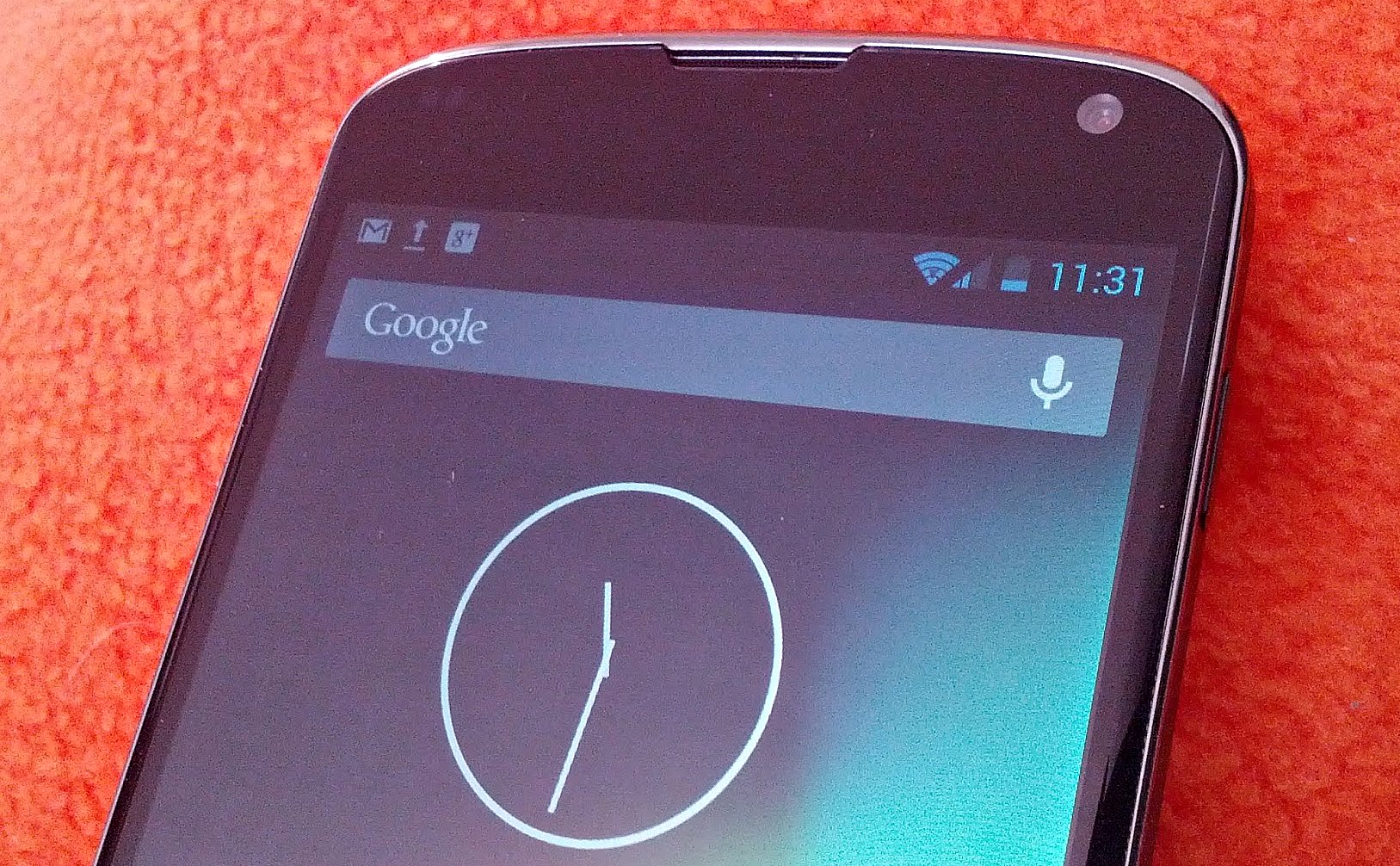
I can see only one good reason to choose iPhone 5 over Nexus 4: The LG-manufactured mobile is sold out, and you can't wait. For the patient, Google's fourth-generation stock Android delivers rewarding experience. The new Nexus is the smartphone to buy this holiday season -- if you can find one.
Two reasons stand in iPhone 5's favor, neither is good, just necessary for some people: Your carrier -- for example, Sprint and Verizon in the United States -- isn't supported (Nexus 4 is GSM/HSPA+), or you bought heap loads of apps from Apple and don't want to lose your investment. I feel your pain, but offer no pity. Nexus 4 is exceptional.
That was fast -- Dropbox 1.6.2 is available
“It happens to the best of us” was Dropbox’s explanation for this, the swift appearance of Dropbox 1.6.2 for desktop, less than a week after Dropbox 1.6.0 made its first appearance. ” You test a build but when you finally put it out there for tons of people to use it they find more bugs. So here we are with a quick bug fix release”.
Version 1.6.2 fixes four major bugs reported since version 1.6.0 first appeared, including install failures in older versions of Windows and blank selective sync windows in OS X after updating.
Eight things Google should be thankful for in 2012
US Thanksgiving is a time for reflection on the year behind, with plenty of time to ponder resolutions for January 1st. Yesterday, I posted about the things Microsoft should be grateful for in 2012. Today, I followed up with another, for Google. For consistency's sake, the list numbers eight, in line with Microsoft's, for which I chose to hat-tip Windows 8.
The list is by no means comprehensive, just some things that stand ahead of others -- and it is organized from least to most important. Google had a great year, perhaps the best ever. Few companies released more innovative products, affecting so many people and building such positive brand awareness.

Eight things Microsoft should be thankful for in 2012
Another Thanksgiving arrives here in the United States, and some people consider what they have to be grateful for. I celebrate by talking turkey, not just eating it, about the companies I cover. It's tradition, going back to 2006, that I present the things Microsoft should be grateful for.
Last year, 11 items made the list, keeping with the 2011 theme. For 2012, I reduce the list to eight; my hat tip of respect to Windows 8, which launched nearly a month ago. There are many more things Microsoft could be grateful for, but I chose some that might not readily come to mind. The list goes from least to most important.

Panorama9 adds Mac patch management to new cloud IT service
Cloud IT management platform Panorama9 on Tuesday introduced Mac patch management to its pay-as-you-go solution, unifying Windows and Mac OS patch deployment in its IT dashboard.
We first looked at Panorama9 in October when the company added Mac and Linux support to its contract-free asset and compliance management platform. The service itself is still very new, and is rapidly growing its functionality in the interest of providing small and medium sized businesses affordable cloud IT services.

Cisco buys 'Networking-as-a-Service' pioneer Meraki for mid-market growth
Networking leader Cisco announced on Sunday evening its intent to acquire San Francisco-based cloud networking company Meraki Inc. Cisco will pay approximately $1.2 billion in cash and incentives to acquire Meraki, and the deal is expected to close in the second quarter of 2013.
Meraki's portfolio of technologies includes a broad range of networking solutions, including mesh Wi-Fi, switching, security, and cloud-based mobile device management which currently target midmarket companies. In other words, companies with annual revenues between $100 million and $1 billion. In the United States, this market segment is made up of approximately 200,000 companies, and it is looked at as a growth market for tech infrastructure providers.
True Image Lite 2013 beta offers no-frill backups
Acronis International has released a beta version of True Image Lite 2013, a stripped-down version of its True Image backup tool.
The new release ditches disk, partition, email and file backup types, for instance (there’s non-stop backup and online backup only). There are no full or differential backups (just incremental). No scheduling, no backups to CDs, DVDs or Blu-ray, no option to create a bootable recovery disc, and of course none of the extensive settings you’ll find in the full True Image package.

The cloud ate my homework: Why I plan to use more physical backups instead of fewer
This week was big for consumer cloud storage services, Dropbox passed 100 million users, Box rolled out an overhauled Android app, while Microsoft's SkyDrive got new selective sync and simpler sharing functionality.
In addition to all of the news, I had one of those personal moments where cloud storage kind of saved my ass this week. But where the cloud helped me immensely, it didn't save everything.

Google TV's killer app is simply amazing
This week, Google brought a little something from ill-fated Nexus Q to Google TV. Even my non-techie wife is amazed, and that's the point. This little something is really big, because anyone can use it and get dramatic benefits.
The new YouTube for Android app installed on smartphone or tablet now acts as a remote control to Google TV, taking interaction far removed and clumsy and making it intimate, fun and easy. If Amazon and Netflix operated similarly -- and the set-top box got Hulu Plus -- I'd cancel AT&T U-verse, baby.