What's up with Google's Spring cleaning?
I sometimes wonder if Larry Page is a neatness freak. After all, throwing out stuff defines his nearly two years back as chief executive. He has chucked more Google products than junk I discard from our apartment -- there's no hording around here. Nor at Google. But the last 24 hours is simply unprecedented for changes that broadly affect customers and partners. This Spring cleaning is something to behold.
Let's start with today. Jeff Huber is out as head of Google Mapping and Commerce. He explains: "Finishing up my first decade at Google, and excited to return to my startup roots and begin the next one at Google X! Let me know what you'd like to see Google X do next". The Wall Street Journal says there's more: Google Maps will split from Commerce and become part of Search and the other folds into Advertising.

BlackBerry wants to fortify Android and iOS devices with Secure Work Space
On Thursday, Canadian smartphone maker BlackBerry announced plans to secure Android and iOS devices with Secure Work Space for BlackBerry Enterprise Service 10. The company cites evolving needs and "ever-growing variety of devices" that are used within the work space as the main reason for stepping up to fortify the security of the two mobile operating systems.
BlackBerry targets both smartphones and tablets running Android and iOS through data-at-rest and data-in-transit security capabilities. The company says that administrators will be able to create a "separate and secure work space" which contains corporate apps, calendar, contacts, web email and other features, and configure, interact, secure and wipe the new compatible devices.

Don't be scammed by fake Xbox 720 beta offers
I don't mean to sound paranoid, but...it seems potential danger lurks everywhere on the Internet and your inbox -- as criminals seek to infiltrate your computer or raid your bank account. That old saying that everyone is out to get you is basically true these days. Well, not everyone, but a surprisingly large number of people truly are out to get you.
And, to get you, they need a plausible scam. That usually means a "message from your bank" or one from PayPal -- I get the latter on a daily basis. But the underside of the web also utilizes other means -- virus scares and current events. It's the current -- or future -- events that attract the attention of Microsoft's Larry Hryb, better known as Major Nelson.

How pathetic Apple has become
Phil Schiller's preemptive attack against Samsung's Galaxy S IV, which launches later today, says everything you need to hear about the sorry state of Apple. I'm stunned, because the marketing chief sounds too much like Microsoft CEO Steve Ballmer in 2007, when he dismissed iPhone. Denial is the surest sign a company has lost its way, and I don't just mean some executive denying such-and-such product or competitor is any good as distracting marketing ploy. The worst, and Schiller gives it, is corporate denial -- the proverbial ostrich with head in the sand -- about the world around.
Last night, I saw Schiller quoted in the Wall Street Journal. This morning I see posts from Bloomberg and Reuters, too, and a raff of tech blogs and news stories -- largely quoting one of the more mainstream services. The Journal calls Schiller's Android attack a "rare interview". But I see something else: Desperation. Denial. What's missing means much more: The typical leaks and rumors about Apple's next thing that steals the thunder from a competitor. Apple has nothing to show, and the InterWebs are less embracing of rumors. How pathetic is that?

Failed update to blame for outage of Microsoft cloud services
There are plenty of benefits of living in the cloud, but some major downsides too. Nearly five months ago an Amazon Cloud outage took down BetaNews' group chat service, alongside Heroku, Flipboard, Foursquare and Reddit among others. And, two days ago, Microsoft users went through a similar ordeal which mostly affected Hotmail, Outlook.com and SkyDrive -- three of Microsoft's more essential cloud services.
Microsoft's vice president, Arthur de Haan, has chimed in on the matter in a blog post which links the outage to the upgrade process from Hotmail to the new out-of-beta email service Outlook.com. Since 13:35 PM PDT on March 12 until 5:43 AM PDT on March 13, de Haan says that "a small part of the SkyDrive service, but primarily Hotmail.com and Outlook.com" suffered from a service interruption caused by a firmware update which failed "in an unexpected way".
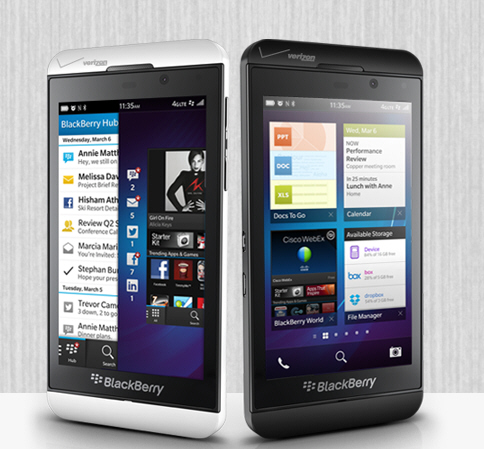
The BlackBerry Z10 is NOW available for pre-order on Verizon
Two days ago, US carrier AT&T introduced the BlackBerry Z10 into its portfolio, allowing users to pre-order the new smartphone for $199.99 on a two-year contract. And on Thursday, following AT&T's lead, rival mobile operator Verizon also made the BlackBerry Z10 available for pre-order.
The big red has chosen to offer the BlackBerry Z10 for the same price as AT&T -- $199.99 on a two-year contract. The smartphone will be available in two color options -- black and white -- and will hit the online and bricks and mortar Verizon stores starting from March 28, a mere two weeks from today.

JAlbum 11 adds support for video clips alongside photos
Web gallery creation tool JAlbum 11.0 has been released for Windows, Mac and Linux. Version 11.0 allows users to combine video with photos for the first time using the program. Features include support for over 160 video formats, tools for rotating and trimming clips, and preview image generation.
Version 11.0 also improves existing photo-editing tools, updates existing skins and includes a number of developer-friendly improvements, bug fixes and general tweaks.

Users rally against Google's plans to shut down Reader
Expressing his disappointment towards Google killing Reader from July 1, my colleague Alan Buckingham said in our newsroom, "I swear I am switching to Firefox, Bing and Outlook.com in protest!". Other users, however, have resorted to less extreme measures and instead chosen to show their non-acceptance through petitions.
Less than 24 hours since Google gave us the sad news, there are at least three petitions on change.org with more than 37,000 signatures combined demanding the search giant "Keep Google Reader Running" and "Do not remove Google Reader on July 1, 2013". One petitioner tried to appeal to Google's good side with "Please do not shut down Google Reader". The number of signatures may not appear to be high enough at the moment to reach the goal, but that will undoubtedly change in a matter of days, if not hours.

Think your broadband is too expensive? It costs $1,753 a month in Cuba
Uptime monitoring firm Pingdom analyzed the latest report from the International Telecommunication Union (ITU) to discover how much the world is paying for its broadband, and its findings show some incredible variations in global broadband costs.
While broadband in most of the world’s countries is generally available for between $5 and $60 per month, in Cuba it’s an eye watering $1,753 (the country additionally has no mobile-broadband services available). In Swaziland, the next most expensive country in the list, it’s a lot cheaper, but still comes in at a very hefty $875 per month.

Use YouTube Ratings Preview to find the best videos on YouTube
While YouTube’s vast choice of clips means there’s always something good to watch, tracking down the best videos can take a while. Especially if you’re clicking each clip in turn, checking the ratings, then returning to your search results to try something else.
Install YouTube Ratings Preview, though, and you don’t have to worry about that any more. This smart Firefox extension (also available for Chrome) highlights the best-rated videos immediately so you can spot them at a glance.
Twitter launches an official app for Windows 8 and RT
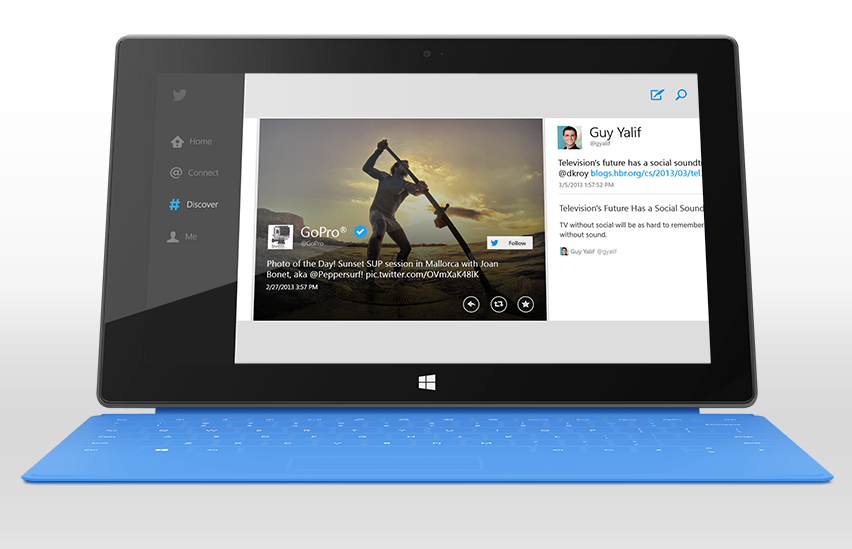
The lack of official apps for Windows 8 led to me describing the Windows Store as being like a Bangkok night market -- full of cheap knock offs. Well today Microsoft’s new OS got at least one big official app, with Twitter arriving for Windows 8 and RT.
It’s similar in design to Twitter’s web interface, and easy to use with Home, Connect, Discover, and Me tabs down the left hand side. Photos appear nice and large, and you can swipe to view multiple pictures. As you’d expect the app has a live tile, so you can see who’s replied to you, as well as view notifications for replies and direct messages.

Google plans to execute Reader, among other apps
I can live with iGoogle going away -- I never use the service anymore. But this one really hurts, though perhaps more to those of us who write about technology than those who read about it. However, statistics show that many of you also use the RSS feed to easily track your favorite sites. That is why today's execution notice from Google hits below the belt.
Reader, along with several others, have been rounded up, tried and found guilty of not being productive enough to warrant continued life. Reader will die July 1. Other Google services have varying dates -- some sooner, while others get a stay.

Android and iOS are neck-and-neck in two-horse tablet platform race
In December, I warned: "You can't trust IDC's 2016 tablet forecast, or any other". That's because the analysts revise predictions every couple months. Well, lookyloo. The firm dropped a new forecast late yesterday, and like every other Android gives iOS another beating. I say, "Perhaps".
The great soothsayers now see Android tablet shipment share rising above iOS for all 2013, a feat already claimed individually for third and fourth quarters. IDC sees the green robot at 48.8 percent share to 46 percent for the fruit-logo. Don't believe it. The market is too volatile and IDC, along with all its competitors, has yet to make accurate predictions. Anything can happen, including an unexpected surge of Windows tablets.
MediaPortal 1.3.0 supports Windows 8
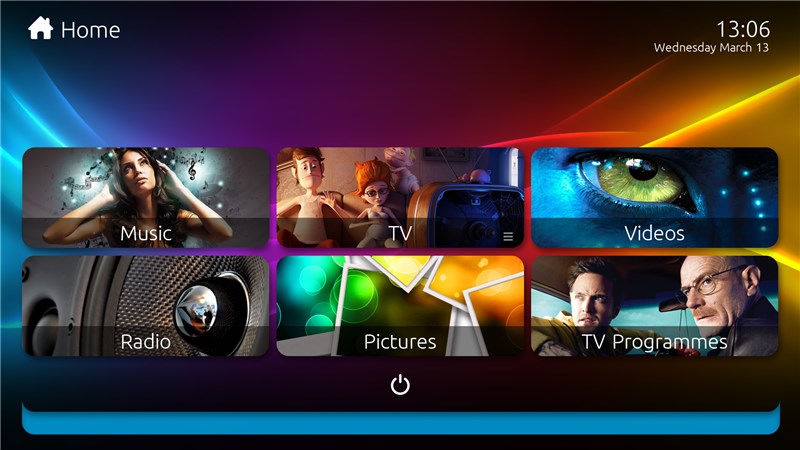
Open-source Windows media-center tool MediaPortal 1.3.0 has been released after an extended period in Release Candidate mode. Version 1.3.0 debuts a fresh new skin, optimized for widescreen full HD displays, and also adds support for unencrypted Blu-ray disc playback.
The new build also adds official support for Windows 8, improved settings dialog within MediaPortal itself and an option to install LAV filters, ensuring playback of most media formats.
Google CEO Larry Page's memo about Android leadership changes
This afternoon, in a rather shocking and unexpected move, father of Android Andy Rubin stepped down -- or was forced to -- in a leadership change sure to shift the direction of Google platform development. Sundar Pichai, senior vice president for Chrome and Apps, assumes responsibilities for Android.
Larry Page broke the news, offering praise alongside Google cofounder Sergey Brin for Rubin's enormous contribution. The follow memo follows.