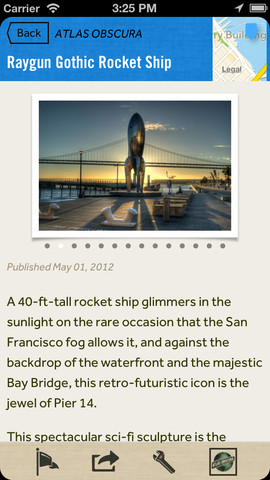
Google takes a Field Trip to visit iOS
Apple fans can breath a sigh of relief -- not only do they now have Google Maps again, but today they gained another Google travel app, Field Trip. The app quietly rolled to the iTunes Store today with no fanfare, nor even an announcement from the search giant, bringing with it all of the features that many Android users have grown to love.
Field Trip works in the background and is unseen the vast majority of the time. However, when the user is out and about, it can suddenly spring into action when a place of interest is detected nearby. These can include local history as well as the latest and best places to shop, eat and even have fun.
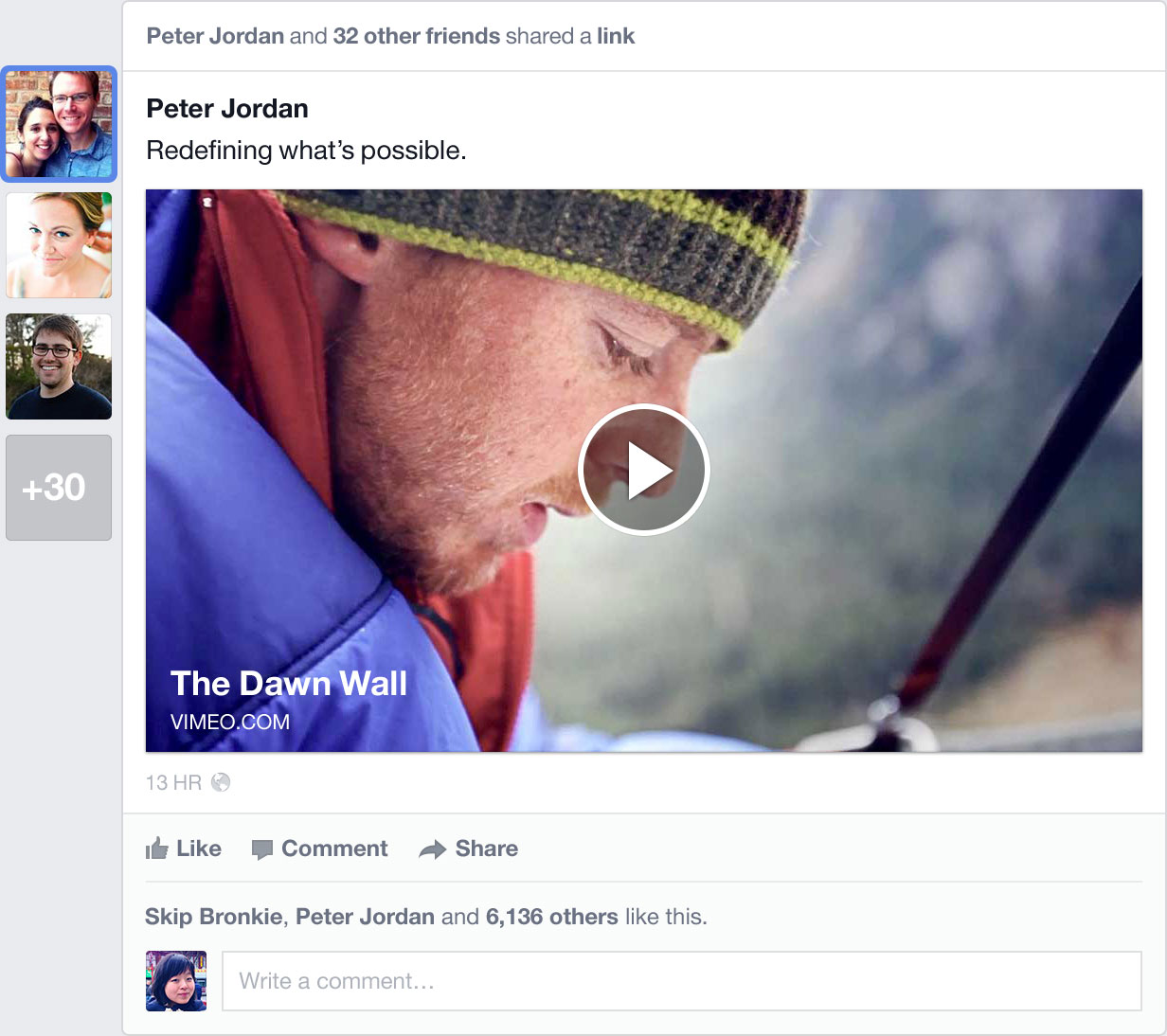
Suddenly, Facebook looks more like Google+, only better
Today, the world's largest social network announced a sweeping overhaul to major UI motif News Feed. Photos are bolder -- as are advertisements -- and white space more generous. But the big change is uniformity, as Facebook offers a fairly consistent visual experience across devices. That's a claim Google can't make.
Still, Facebook looks lots more like Google+ -- or will once changes roll out to everyone. That's a good thing. Clutter creep long defines the Facebook user experience, something its rival avoids. Well, so far. But the larger social network isn't copying Google+ so much as acting out of necessity. All that clutter in the browser overwhelms smaller device screens, particularly smartphones. To get similar UI across devices, something had to go -- and come, too.
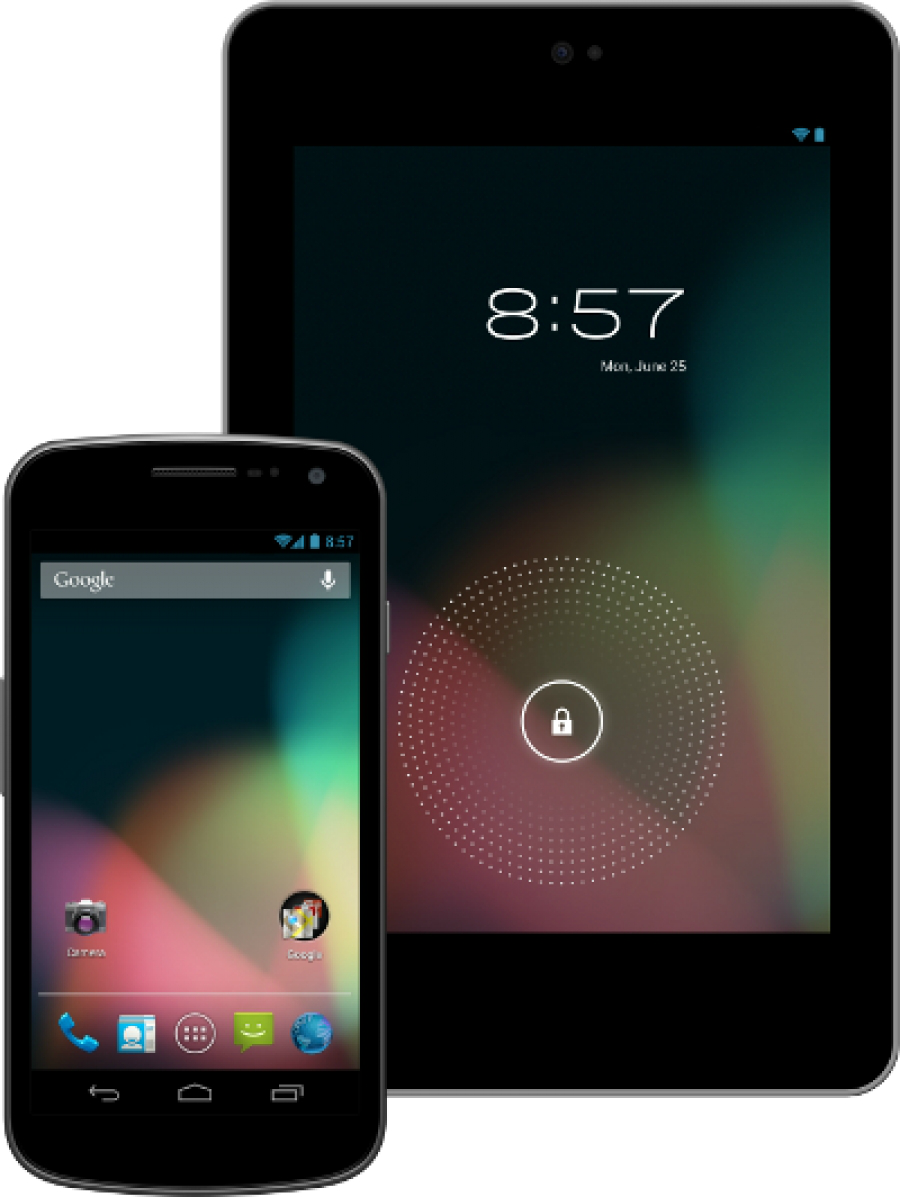
Is Android 4.2 killing your Nexus' battery life?
My joy at receiving Nexus 7 32GB HSPA as a day-after-Christmas present turned to deep disappointment just two weeks later. Google replaced the device, and a second runs down the battery in about 15 hours, whether sitting idle or actively used. Near as I can tell, and others share my problem, Android 4.2 is root problem. My woes with the replacement tablet started with the point-two update, while others suffering similar misery report troubles with 4.2.1. Google really needs to fix this problem. Fast.
I wasted many hours troubleshooting. The prescribed fix is restore and reset, which I've done about a half-dozen times. No change. Perhaps the cellular radio drains the battery fast. I removed the SIM. No change. Maybe one of my apps keeps Nexus 7 from going idle. I restored and set up with my wife's Google account. No change. The battery app consistently lists the "screen" as top consumer, which suggests something prevents the tablet from going idle. Last night, I charged up. Nine hours and thirty-minutes later, there is 45 percent charge. At that rate, I'll set a new record: 16 -- maybe even 17 -- hours to zero. What a lucky day this is.

Microsoft teases Skype integration with Outlook.com
Little over two weeks ago Microsoft took down the "opening soon" digital cardboard sign and officially introduced Outlook.com into the wild as a stable product. And if you're already a user or if you have seen the commercials, then you already know that the email service delivers Facebook, LinkedIn and Twitter integration, among other supported cloud services.
But there's one that is still missing, and a very important product integration at that -- Skype. In mid-May 2011 Microsoft purchased the popular voice, video and text chatting service for $8.5 billion, a not so small chunk of change by any means. Naturally, in the cloud-connected era, integration with the software giant's cloud products is the next logical step, especially in the midst of heavy competition from Google which, for instance, includes Google Talk integration with Gmail.
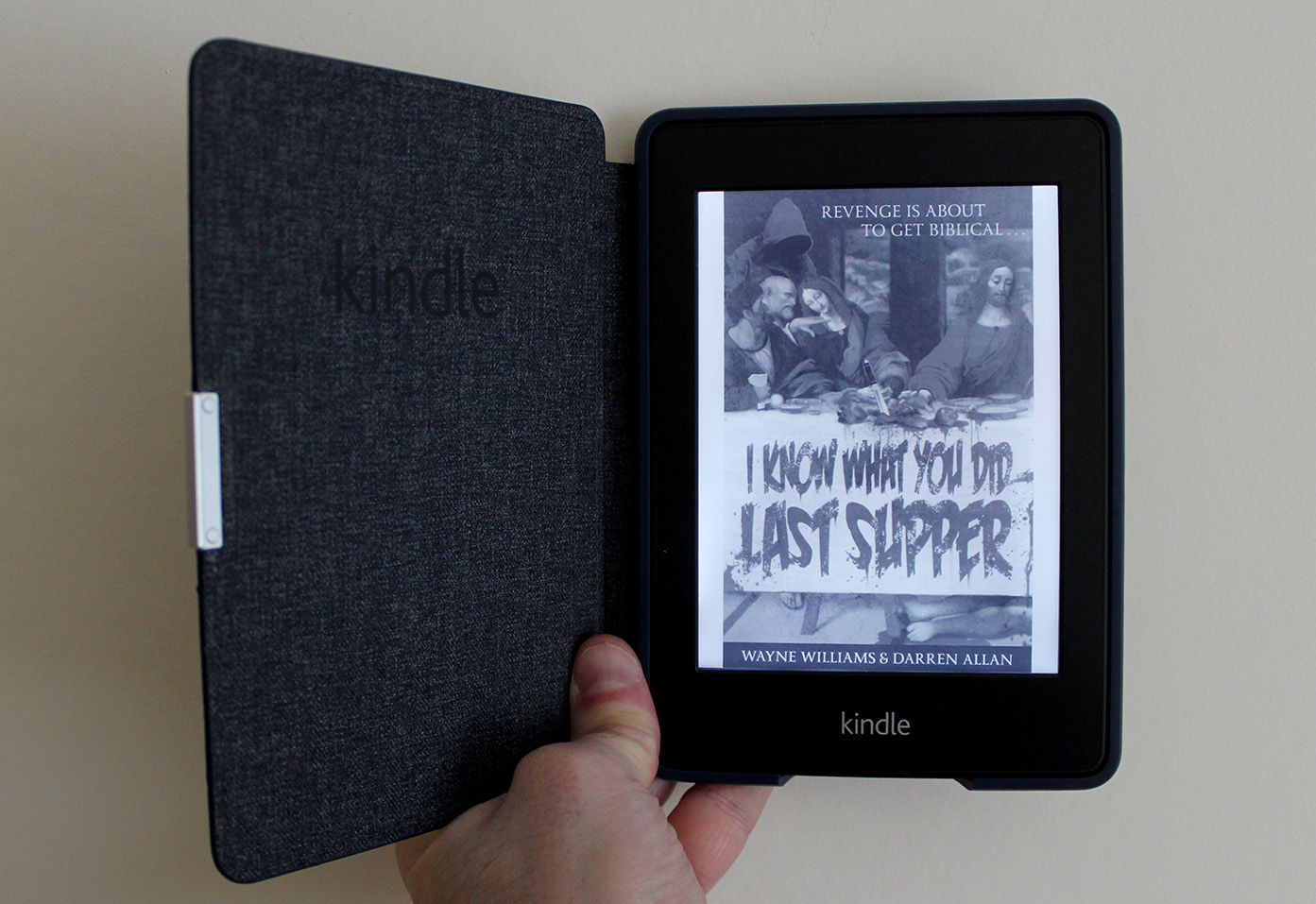
Kindle Paperwhite is my new favorite gadget [Review]
When I wrote Why I Love Kindle back in February I said I was intending to upgrade to a Kindle Paperwhite soon. Three weeks later, timed so I can buy a Kindle copy of my own book (my publisher only supplies free paperbacks), and that’s exactly what I’ve done.
The Kindle is one of those very rare devices that you don’t really need to upgrade. New features, an improved screen, touch support – it’s all well and good, but when you’re reading something you’re pretty oblivious to anything other than the words on the page. Or rather the screen. That said, moving to the Paperwhite from a second generation Kindle is a huge leap forward.

Google expands European Street View
Despite some setbacks in Germany a couple of years ago, Google is pushing ahead, today announcing a new expansion of its Street View service on the continent. Ulf Spitzer, Google's Street View Program Manager, today took the wraps off of a major update to the company's Maps offering in the old world.
For the first time, Google has added street level imagery for Bulgaria, adding the cities of Sofia, Plovdiv and Varna, Veliko Turnovo and Koprvishtitsa. Not stopping there, the search giant also covered the ski resorts of Borovets, Bansko and Pamporovo, as well as the Architectural and Museum Reserve Tsarevets and the popular tourist destination of the Black Sea coastline.
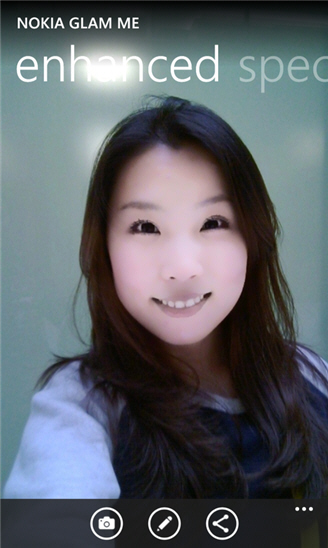
Nokia releases Glam Me app for narcissistic Windows Phone 8 Lumia users
Nokia targeted hipsters with #2InstaWithLove a couple of days ago, and now the Finnish smartphone manufacturer has shifted its focus onto narcissists. Nokia Glam Me allows users to take enhanced self-portraits for later adulation and, obviously, sharing across various social networks.
There's a catch though. In order to take advantage of the benefits that Nokia Glam Me touts, one has to own a compatible Lumia smartphone running Windows Phone 8. And, for the best results, users might want to look towards a higher-spec'd model in the front-facing camera department, like the Lumia 920 or the recently-introduced Lumia 720.
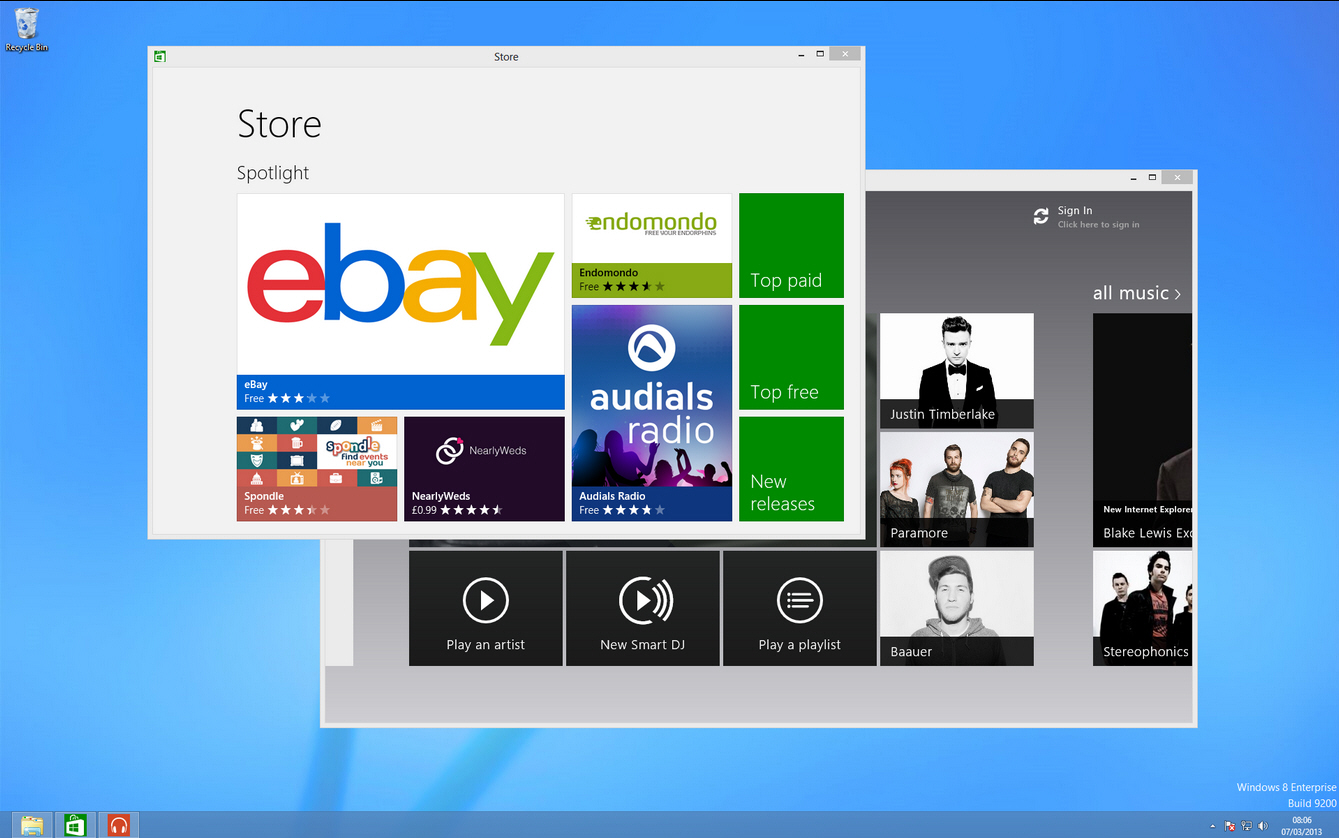
Run Windows 8 apps in a desktop window with ModernMix
Windows 8 has several annoyances, but perhaps one of the most notable is its requirement to run apps full screen, or in an ugly 2/3, 1/3 mode. When you’re used to being able to position and arrange application windows just as you like, this seems like a significant backward step: we have far less choice then we did before.
But ModernMix, the latest release from Stardock, changes all that. Because this simple $4.99 program allows you to run Windows 8 apps in a resizable window on your desktop, just like anything else.
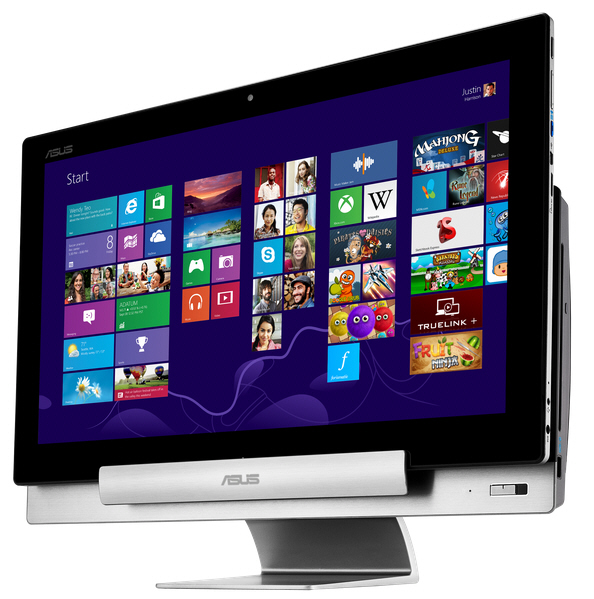
ASUS 'launches' the Transformer AiO for Android and Windows 8 lovers
If you're in the market for an all-in-one PC running Windows 8 but you also want an Android tablet to carry about inside the house, Taiwanese manufacturer ASUS has just the thing for you -- the new Transformer AiO. Designed as a niche of a niche product, the Transformer AiO appears to have it all figured out.
The all-in-one aims to give users the power of legacy and Modern UI Windows 8 apps, combined with the vast and mobile-oriented Android ecosystem. On the Windows 8 side, the Transformer AiO brings an 18.4-inch LED-backlit IPS display with 10-point multitouch and a resolution of 1920 by 1080. Power comes from a third generation Intel Core i3, i5 or i7 processor backed by an Nvidia GeForce GT 730M graphics card with 2GB of RAM. Like you'd expect it features the usual array of ports, including HDMI and USB 3.0 ones.
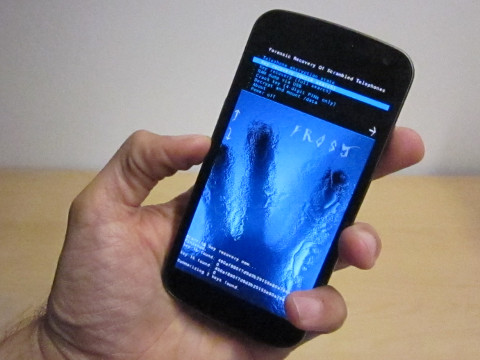
Android Ice Cream Sandwich encryption broken with the aid of a freezer
When Google released Android 4.0 (Ice Cream Sandwich) back in 2011, it introduced a new data scrambling system designed to protect sensitive user information from snoopers who successfully managed to bypass the lock screen.
It’s strong security, but a team of German researchers have managed to crack the encryption by freezing a Galaxy Nexus and using a toolset called FROST (Forensic Recovery Of Scrambled Telephones) to retrieve contact lists, browser histories, and photos (basically everything you’d want to keep private).

Hideman lets you watch foreign TV and bypass censorship restrictions
There are many reasons why you’d want to hide your internet IP address. The most common one is that you’re trying to access services or web sites restricted to a specific country or territory -- this might be to catch up with UK BBC TV’s shows via iPlayer or for more fundamental reasons, such as bypassing a country’s censorship restrictions.
Spoofing your IP address so you appear to come from another country than the one you’re residing in isn’t by itself a difficult task -- all you need is a decent VPN service. But when it comes to simplicity and decent performance, you can’t beat a service called Hideman, available on Windows and Mac via the free Hideman 2.0 tool, and Hideman VPN 1.9.7 for Android.
Quickly defrag the Windows Registry with Tweaking.com’s Registry Compressor
Launch Windows, open a folder or file, install, remove or run a program -- just about everything you do on a PC results in Windows writing to the Registry. And over time that means the Registry files will grow, as they contain more and more "slack space", gaps where old entries used to be.
This isn’t particularly harmful, but it does waste a little memory and hard drive space. And so you might like to try Tweaking.com’s Registry Compressor, a small and simple tool which can defragment your Registry, removing this slack space (nothing else -- this isn’t a Registry cleaner) and cutting the files down to size.
Happy anniversary! Banking malware targets Google Play
Today is the one-year anniversary of the Google Play store and the company celebrates with a big sale. However, things may not be all balloons and ribbons in Android land. Something darker lurks just beneath the surface of Google's Android marketplace.
Brian Krebs, a former Washington Post reporter who now writes a security blog, found a bit of information that could make your hair curl. Krebs makes a habit of hanging out on the seedy side of the web and he recently hit potential paydirt, encountering a new botkit that is making the rounds and leverages actual verified accounts from the marketplace to trick users into downloading phony banking applications. Krebs spotted a developer purchasing verified Google Play accounts for $100 each on an underground forum.

What Google Play's first birthday means to you
One year ago, March 6, 2012, Google renamed Android Market, and nothing is the same sense. The rebranded Google Play pushed forward a transition started in November 2011, with the broad expansion of content beyond apps. The name change also represented something bigger, shift in emphasis away from broader Android to the search giant's siloed services and brands. Google sought to imitate Apple while tackling wild Amazon.
On Play's first birthday, Google Android -- not the skinned software Amazon, HTC, LG, Samsung and others ship -- is a 98-pound weakling gone super steroids. The Mountain View, Calif.-based company sells apps, ebooks, gift cards, magazines, music, movies, TV shows and devices through the online store. There were no devices available a year ago, but now accessories, Chromebooks, smartphones and tablets. Three different computers are available, including the new and Google-branded Chromebook Pixel. Also: Two different Nexus 4 smartphones and Nexus 10 tablets and three Nexus 7 slates -- four if counting 32GB HSPA+ models twice, with different cellular SIMs.
Box updates Windows 8, WP8 cloud apps with new features
Cloud is one of today's biggest keywords and Box is one of the top services in the game. Now the company has rolled out a series of updates to its apps for both Windows 8 and Windows Phone 8 and added some rather cool new features for its customers on both platforms. Given that Box claims more than half a million downloads of its Windows 8 app, there is certainly a market for the service.
First off, there is a new Preview mode for documents that works without even opening the document -- a feature that was already included in the company's Android app, where Box's Simon Tan claims the service has an "average [of] more than 100,000 previews per day". The preview mode works with more than 75 file types, including Word, PowerPoint, AutoCAD, Adobe Illustrator and a lot more. This feature is coming to both platforms.