
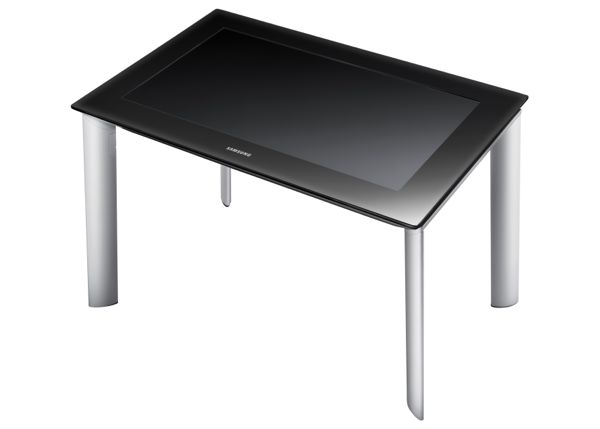
A 40" AMD-powered touchscreen device from Samsung? Must be Surface 2.0
Microsoft Surface, the touch interface for interactive advertisements and signage was given a massive technology overhaul and revealed at CES 2011. Instead of a huge, foot-thick table that utilized cameras to detect user touches, it shrunk down to just 4" in thickness, using "pixel sense" touch detection for 50 simultaneous points of contact.
Today, nearly a year after Surface 2.0 was revealed, Samsung's next generation Microsoft Surface device is finally up for sale.
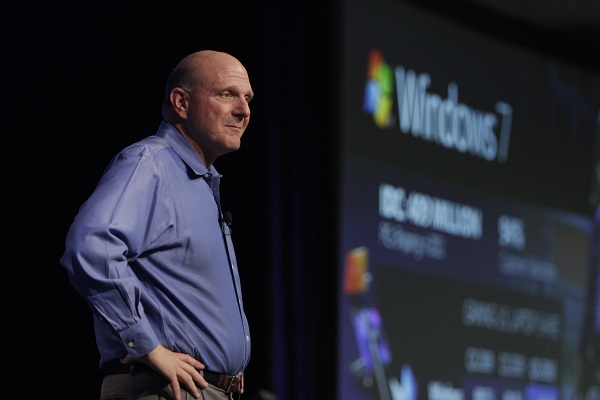
I'm sure Steve Ballmer is shaking in his boots
How else could he react to the stunning news that Macs now have 5 percent global PC market share. Surely the Windows monopoly is teetering on its foundations. OMG! It only took Apple 10 years to achieve this stunning milestone. Steve Jobs set the 5 percent goal a decade ago when launching the first Apple Store. Quick send the EMS team to Ballmer's office!
Needham analyst Charlie Wolf claims the 5 percent number, really 5.2 percent, globally, based on IDC third-quarter data on PC shipments. Apple Insider posted the numbers late yesterday. I haven't seen the report yet today. But who would make up something like this or stretch the numbers by X percent? So in a break from form I'm sourcing Apple Insider until the report reaches my bursting inbox. Usually, I wait on the original source.

BlitzBlank kills malware your security software can't
Malware removal is normally an entirely automatic process. Your PC encounters something unpleasant, your antivirus package deletes it, and you carry on as before: easy.
Sometimes, though, life isn’t quite as straightforward. In particular, if you’ve spotted a suspect process that your security suite doesn’t recognize yet, then you’ll probably want to remove it manually. And that can be a real challenge.
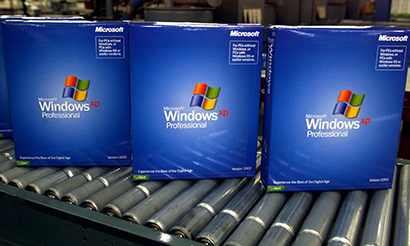
Five reasons to quit XP for Windows 7 [contest winners]
Last in a series. I've got a box full of Microsoft mice cluttering up the living room, and my wife begging please to get rid of them. So with that pressure, I must finally announce winners of our "Five Reasons to Quit Windows XP" contest. My apologies for the delay. Winner for the Windows Phone 7 contest will come quicker.
Before continuing, I offer heartfelt thanks to Microsoft's hardware PR team for providing the mice five lucky winners will receive. In appreciation, let's plug Microsoft's "The Art of Touch" contest. Click the link to create online art, which I can say from trying works better with some kind of touch device. According to Microsoft:
Adobe apps turn Android into artist's canvas
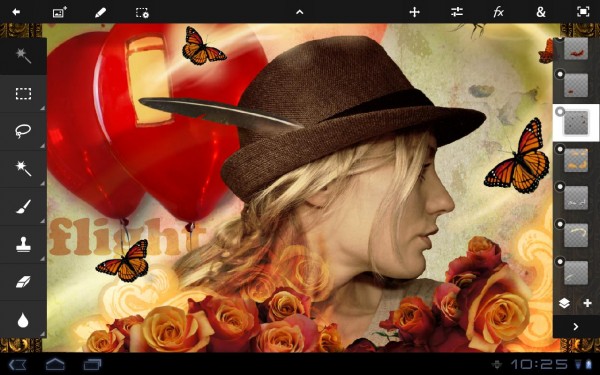
Adobe is a name associated with design tools, and it has long been associated with desktop software that can be used to create everything from websites and product designs to page layouts and perfect photos. But in recent years there has been a huge interest in mobile devices, and while handheld devices are a little limited when it comes to being used as design tools, the same cannot be said of tablets. The larger screens found on tablets have been put to great use in Adobe’s latest Android apps -- Adobe Photoshop Touch, Adobe Proto and Adobe Debut.
Adobe Photoshop Touch is, perhaps unsurprisingly, a touchscreen compatible version of the company’s flagship image editing tool. The selection tool has been redesigned to make it easier to control with just a fingertip, and the usual raft of filters and effects can be found here to help enhance images on the move. For most people, this app will be the one that appeals most from Adobe’s new range of Touch Apps.
Google Music launches -- 320Kbps MP3s, free plays from Google+ and artist direct sales
Late this afternoon, Google Music officially launched in the United States, ending a limited beta that started in May. The service differentiates from others by emphasizing mobile devices and by providing free full song or album plays when shared. Google will sell music from Android Market, where it also offers ebooks and movies. The search and information giant encodes tunes as 320Kbps MP3s, surpassing Apple's iTunes and other digital music sellers.
One million people participated in the invitation-only beta, streaming 2.5 hours of music every day. Google distributed 100 million free songs during the beta. Until today, Google Music was little more than a storage locker for tracks people already owned. Now users can buy tunes, too.
Boxee begins cord-cutting Live TV USB dongle preorders
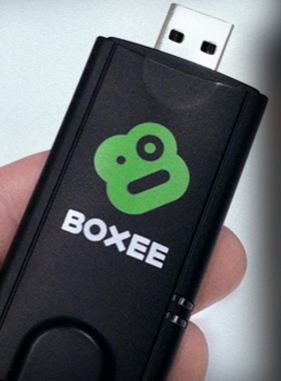
Boxee confirms it is working on an USB dongle add-on for its Boxee Box set-top box that allows an antenna to be connected to the device to recieve "over-the-air" HD television signals. Pre-ordering opens Wednesday in the United States and Canada for $49, and the dongle will ship in January.
Those with unenecrypted basic channel service -- called clearQAM -- would also be able to connect the cable to the Boxee Box device. Either way, the set-top box itself still requires an Internet connection in order to use the signature functions of the Boxee service.
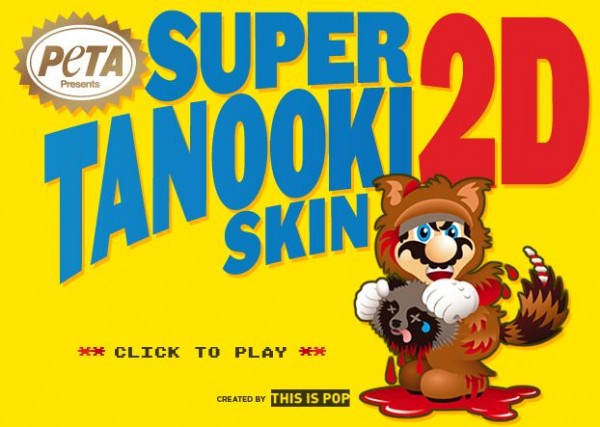
PETA's anti-fur campaign takes on Mario
Animal rights group People for the Ethical Treatment of Animals has a new enemy: Mario. Yes, that lovable overall wearing plumber of Nintendo fame. His crime? Wearing fur in Nintendo's latest Super Mario franchise title for the Nintendo 3DS, Super Mario 3D Land.
To point out Mario's sins, PETA launched a new online campaign called "Mario Kills Tanooki". The Tanooki is a Japanese raccoon dog, and during gameplay in 3D Land Mario dons the coat of a Tanooki, much like he did in Super Mario 3 for the original Nintendo system. The suit allows Mario to fly.
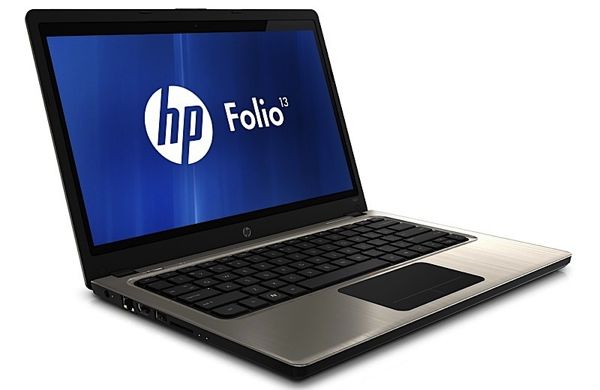
HP debuts thin and light Folio 13 ultrabook
The ultrabook. It's a weak name for a compelling notebook design class that has been gaining popularity for a little over two years.
On Wednesday, still-in-the-PC-business Hewlett-Packard announced its contribution to the ultrabook class will be a business-focused model called the HP Folio 13.
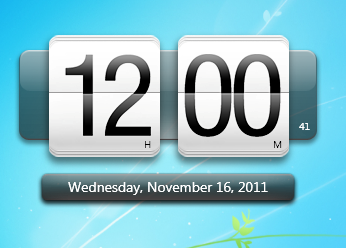
Tick Tock, here's a new Windows clock
Finding out what time it is need not mean relying on Windows’ built in clock, which is functional, but ultimately pretty ugly. Horloger, on the other hand, is a beautiful flip clock that will look great on any desktop. The look may appear familiar to mobile owners as widgets with a similar style are also available for the likes of Android, but this is a take on the genre that has been designed with Windows users in mind.
The stylish clock feels simultaneously old-fashioned and ultra-modern, and there are small and large versions available -- you can also choose from a few other skins, but the default is probably the best looking. Rather than being forced to keep your clock tethered to the lower right hand corner of the screen, Horloger can be placed anywhere on your desktop.
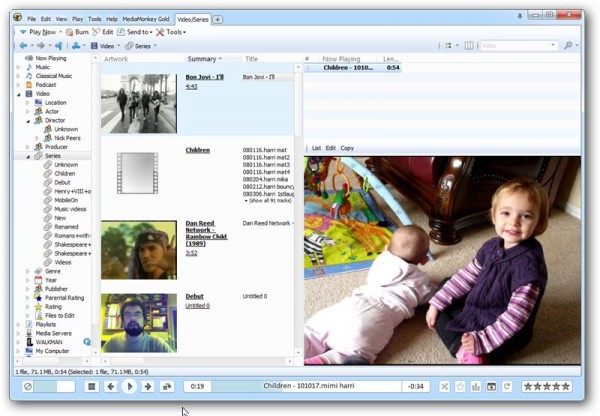
MediaMonkey 4 now supports video
Ventis Media has overhauled its music management tool to add full support for video. MediaMonkey 4.0, available in free and Gold editions, allows Windows users to manage and organize their media collection with a set of powerful tools.
Version 4.0 also adds support for library sharing to and from UPnP/DLNA devices, improves automatic synchronization capabilities with Android mobiles and introduces a new portable installation option, allowing MediaMonkey to be run from USB drives.

Capture passwords and pretty much anything else on your network with York
Network capture tools can be useful for all kinds of reasons: troubleshooting, security, system optimization, or just to keep a better record of your online activities.
Setting them up and making sense of their reports can often be tricky, of course, but it doesn’t have to be this way. York, while far from perfect, offers easier than usual setup and in-depth logging of your traffic, and so could be very useful as a first network capture tool.

W3C publishes first drafts of the 'do not track' Web standard
The World Wide Web Consortium (W3C) on Wednesday published its first two drafts for online privacy and tracking standards: the Tracking Preference Expression, which is a definition of the HTTP request header field "DNT" for expressing tracking on the Web; and Tracking Compliance and Scope, which defines the terminology of tracking preferences and scope in the DNT expression, and lays out ways that websites can comply with it.
These standards will let users set more universal preferences about whether or not their browsing data can be collected for tracking and advertising purposes. The W3C says this will help to re-establish trust between users and service providers in the marketplace.

Mozilla pleads: 'Protect the Internet' from Stop Online Piracy Act
This morning, as I write, the US House of Representatives is conducting a hearing on the Stop Online Piracy Act. Senate version of the bill is PROTECT IP. Either bill would dramatically change how Americans use the Internet, by granting power to shut down sites for many reasons -- in the case of SOPA simply for linking to another site or content that may be pirated.
I'll probably write a commentary about the bills, which their critics claim will undermine free speech that made the World Wide Web an enabler of communications, commerce and transparency. Many opponents of both bills express greater concern about the House version, SOPA, which was introduced in late October. Patrick Leahy (D-VT) introduced the Senate version, PROTECT IP, in May. The bills' motivations are simple: To extend copyright protections to the Internet.
Arthur Levinson replaces Steve Jobs as Apple Chairman
People die. There is a period of mourning. Business goes on. So it is that today, more than 45 days after Steve Jobs' death, Apple replaced him as chairman of the board. If there is a day to truly mark the end of the Steve Jobs era, this is it.
Arthur Levinson, an Apple board member since 2000 and co-lead director since 2005, is the new chairman. Jobs was chairman and CEO. His successor, Tim Cook is chief executive only.