


Security professionals say attackers are better at using AI than defenders
Over 30 percent of cybersecurity professionals think that malicious actors are more adept at using AI to attack their organization than they are at leveraging AI in-house for defense.
A new survey carried out by Wakefield Research for Devo Technology also shows how organizations are struggling to effectively implement AI to aid and augment cybersecurity efforts, with more than 50 percent having to undertake major changes, or reset and start again.

4 steps to convince a big brand to partner with you
Is it a partnership with Salesforce you dream about? Do you want to get involved with Nike? Innovative startups have never been in a better position to strike partnerships with big industry players. But there are a few things that can help you along the way.
It can seem like an impossible feat for small businesses to partner with household names when you aren't that well known yet. However, If you have built some brand recognition in their industry and audience, getting a big brand to notice you can be easier than you might think.
Microsoft offers advice for ditching Internet Explorer before it is retired next month
Next month, Microsoft is officially retiring Internet Explorer 11. In six short weeks -- June 15 to be precise -- the era of IE11 comes to an end, but Microsoft is keen for organizations to move away from the browser before the big day rolls around.
Acknowledging that many organizations are reliant on IE-dependent sites and may well have entered the final stages of preparation, Microsoft says there is no need to wait until retirement day, saying: "the best way to prepare for IE disablement after June 15, is to proactively retire IE in your organizations before June 15".
Microsoft's SMB security tool, Microsoft Defender for Business, hits general availability
Microsoft has announced that its security tool for small to medium-sized businesses is now generally available. The standalone version of Microsoft Defender for Business helps to protect against ransomware and other cyber threats bringing, Microsoft says, "enterprise-grade endpoint security to SMBs".
Highlighting the importance of its solution, the company says that nearly a quarter of SMBs have experienced a security breach in the last year, often because they do not have the staff and resources available to enterprises. To help with this and to simplify deployment, Defender for Business comes with built-in policies to get customers up and running quickly.
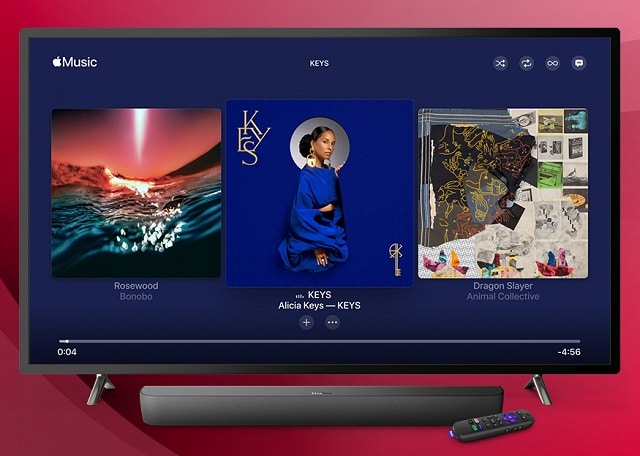
Apple Music comes to Roku
Apple Music is the best streaming music service. Yes, it is much better than Spotify. This is fact. I know this to be true, as I have used both and found Apple's offering to be superior. Apple Music isn't limited to the company's own devices like iPhone, iPad, or Apple TV either -- it can also be accessed on Android and the web, for instance.
Today, Apple Music comes to yet another platform -- Roku. Yes, whether you have a Roku media box or TV with Roku integrated, you can now access Apple Music with it. How cool is that?

Microsoft issues a fix for Windows 11 Safe Mode problems caused by KB5012643 update
When Microsoft released the KB5012643 update for Windows 11, there were complaints from a number of users about screen flicker when booting into Safe Mode.
Microsoft acknowledged the problem, and confirmed suspicions that it was related to Safe Mode with Networking. The company has now addressed the issue, fixing it with a relatively rare KIR (Known Issue Rollback).

Google SMTP service exploited to send spoof emails
Most of us don't think too much about the 'From' address field on our emails, it's filled in by your mail program or web service. At the recipient's end security tools can check this against the sending server to verify that the mail is legitimate.
But hold on a second, an SMTP relay server between the server and the inbox allows messages through even though the addresses don't match. This is how organizations send out mass mailings without them getting blocked.

Why networking technologies remain at the heart of online security [Q&A]
Networks and the internet are reliant on domain name servers, dynamic host control protocol, and IP address management. These three technologies -- grouped together as DDI (DNS, DHCP, IPAM) -- are central to the way things work but that also makes them a tempting target.
We spoke to Ronan David, chief of strategy at EfficientIP to find out why DDI is so vital to online security and how automation can help with defense.

Generation 4 Kubuntu Focus M2 Linux laptop now available with 12th gen Core i7
Can you buy a Windows laptop and replace Microsoft's operating system with a Linux distribution? Sure, but you shouldn't have to. Look, folks, in 2022 you should be supporting the open source community by purchasing computers with Linux pre-installed. Even if it costs you a few bucks more, it will be worth it for the community overall.
Today, the latest Linux laptop is released, and it looks like a beast. You see, the 4th generation Kubuntu Focus M2 Linux laptop is powered by a bleeding-edge 12th gen Intel Core i7 processor. The company claims this chip will increase performance by 20 percent compared to the 3rd generation of the notebook. And yes, it comes with the latest-and-greatest Kubuntu 22.04 LTS pre-loaded.

5G and the metaverse
The metaverse is a concept that has been around for decades and to many sounds like science fiction: a parallel, virtual universe in which we live our lives as if in a video game. However, recent advances in technology mean that this fiction is becoming a reality. Countless technological components that will make up the metaverse already exist today, and society is increasingly preconditioned to virtual and augmented experiences.
The creation of a parallel digital world opens the doors for organizations to create new experiences for businesses and consumers, and we can expect companies to provide virtual content and services from education to entertainment, medicine to fashion. The possibilities go on as network technologies continuously grow stronger, telecommunication providers offer more tailored offerings, and connectivity becomes interwoven in enterprise operations at all levels.

The race against hackers to secure EV cyber-grid
The electric vehicle (EV) revolution is here. After decades of hype, EVs are finally starting to get their day in the sun. In the last ten years, plug-in hybrid electric vehicles have grown from 16,000 to over 2 million vehicles, and auto executives expect over 50 percent of US vehicles to be all-electric by 2030.
It is not hard to see why experts make such an optimistic prediction. In addition to the growing fleet of EVs, the Bipartisan Infrastructure Deal signed earlier this year will include $7.5 billion to help plan and build an extensive network of EV charging stations across the country, a task critical to ensuring full adoption of the technology. It took decades for the current network of gas stations to stretch from one end of the U.S. to the other, and a similar process is now underway for EV charging stations. An infrastructure project of this size requires thorough planning and significant investment, after all.

How technology can inspire teamwork and collaboration
The way we work is always evolving, and it makes sense that where and how we work would also change. Office working isn't for everyone and there is a lot more to consider than only your morning commute.
Enter collaborative technologies and with them, a boom in users per day by the millions. Companies are becoming more flexible and accessible to their employees and partners. It has become clear that maintaining an enjoyable working environment is crucial, even when workers are not sat within reach of each other.

The best free alternatives to Zoom -- with no time limits
For a while, Zoom was the darling of the video conferencing world, but a series of privacy and security issues -- although ultimately resolved -- knocked confidence in the platform. Many users hung on, though, with the free tier proving particularly popular.
But Zoom's recent, quiet announcement that one-on-one meetings are going to be subject to a 40-minute limit from May 2 means that a new batch of users is looking to jump ship and is on the lookout for a replacement. To help out, we've collected together a list of the best free Zoom alternatives that do not have a time limit on meetings (or at least not one that will impact on most usage scenarios).
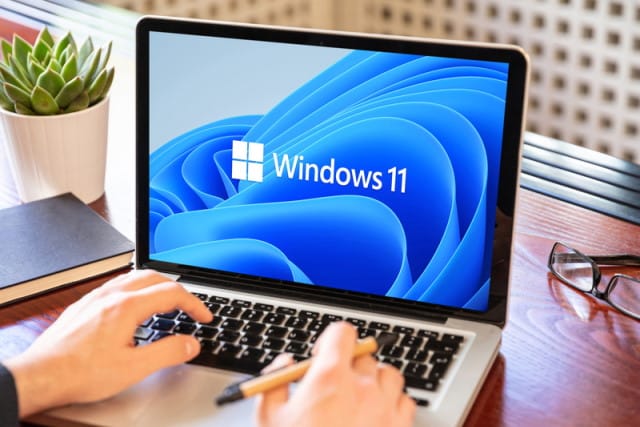
Microsoft releases Windows 11 Build 22610 with new group policies and loads of fixes
There was no new build for Windows Insiders in the Dev Channel last week, and it looked as if we might not get one this week either, but at the death Microsoft releases a new build in time for the weekend.
Build 22610 introduces some new group policies for IT administrators, an update to the Family Safety Widget, and a large number of new fixes. However, it also introduces two known issues to be aware of.

Steam snap now available for Linux gamers
Today we get some very exciting news for the Linux gaming community. And yes, smart aleck, people do play video games on Linux these days. What is the big news? Canonical has released an early-access snap version of Steam for Ubuntu and other compatible Linux-based operating systems!
What exactly does this mean? Well, Canonical is aiming to make it even easier to get Steam up-and-running on Linux. Gamers will be able to install Valve's software from the snap store for a more elegant experience.



