Adam Mosseri suggests highlighting ‘real media’ rather than AI content on social media
Instagram head Adam Mosseri has ended 2025 in a reflective mood, looking at the social media trends he sees being the hallmarks of the year ahead. Perhaps unsurprisingly, he sees the onslaught of AI continuing, and has some thoughts about what this means and how to handle it.
Mosseri makes a couple of statements that are difficult to disagree with: “Deepfakes are getting better and better”, and “AI is generating photographs and videos indistinguishable from captured media”. Interestingly, though, he does not necessarily see this as a problem.

Lemon Slice 2 turns any single image into a real time, talking AI avatar
Lemon Slice, a new research and product lab focused on interactive video technology, has released Lemon Slice 2. The latest model turns a single image into a real time conversational avatar. It works with a wide range of images and is available as both an API and an embeddable widget.
The company describes its new model as a zero shot system that produces a live video call from one input. The tool accepts many types of visuals, including portraits, illustrations, and stylized artwork. Once uploaded, the model generates a moving avatar that responds in real time during a conversation, as you can see in the video at the bottom of the page.
Jumping on the bandwagon, ‘Your Year with ChatGPT’ is now available
There can be few people who have not interacted with ChatGPT over the last year, and you may be wondering how you have used the artificial intelligence tool.
In line with so many other online tools and services, as we approach the end of the year, ChatGPT is giving users the chance to look back over the previous 12 months in a review of the year. The predictably named “Your Year with ChatGPT” is available now.

Wondershare adds Topaz Labs' AI video tools to UniConverter 17
Wondershare has announced a collaboration with Topaz Labs that adds the company's AI-based video cleanup and upscaling features to its creative software. UniConverter 17 is the first Wondershare product to include Topaz's model, offering creators a way to improve low-quality footage inside the program.
Topaz's Starlight model appears as a processing option in UniConverter V17 and it will be added to Filmora, SelfyzAI, and Repairit at some point too, although there's no word on exactly when that will happen.

Microsoft brings Ask Copilot and Agents to the Windows 11 taskbar for business users
Microsoft has released Windows 11 Insider Preview Build 26220.7523 (KB5072043) to the Dev and Beta Channels, bringing with it a number of important changes and additions. As is the case with so many updates to Windows 11 at the moment, this is heavy on the AI.
The difference this time is that Microsoft is starting to focus more on business users – starting by introducing Ask Copilot on the taskbar with Microsoft 365 Copilot. The taskbar is also now adorned with Agents, but not everything is related to artificial intelligence.
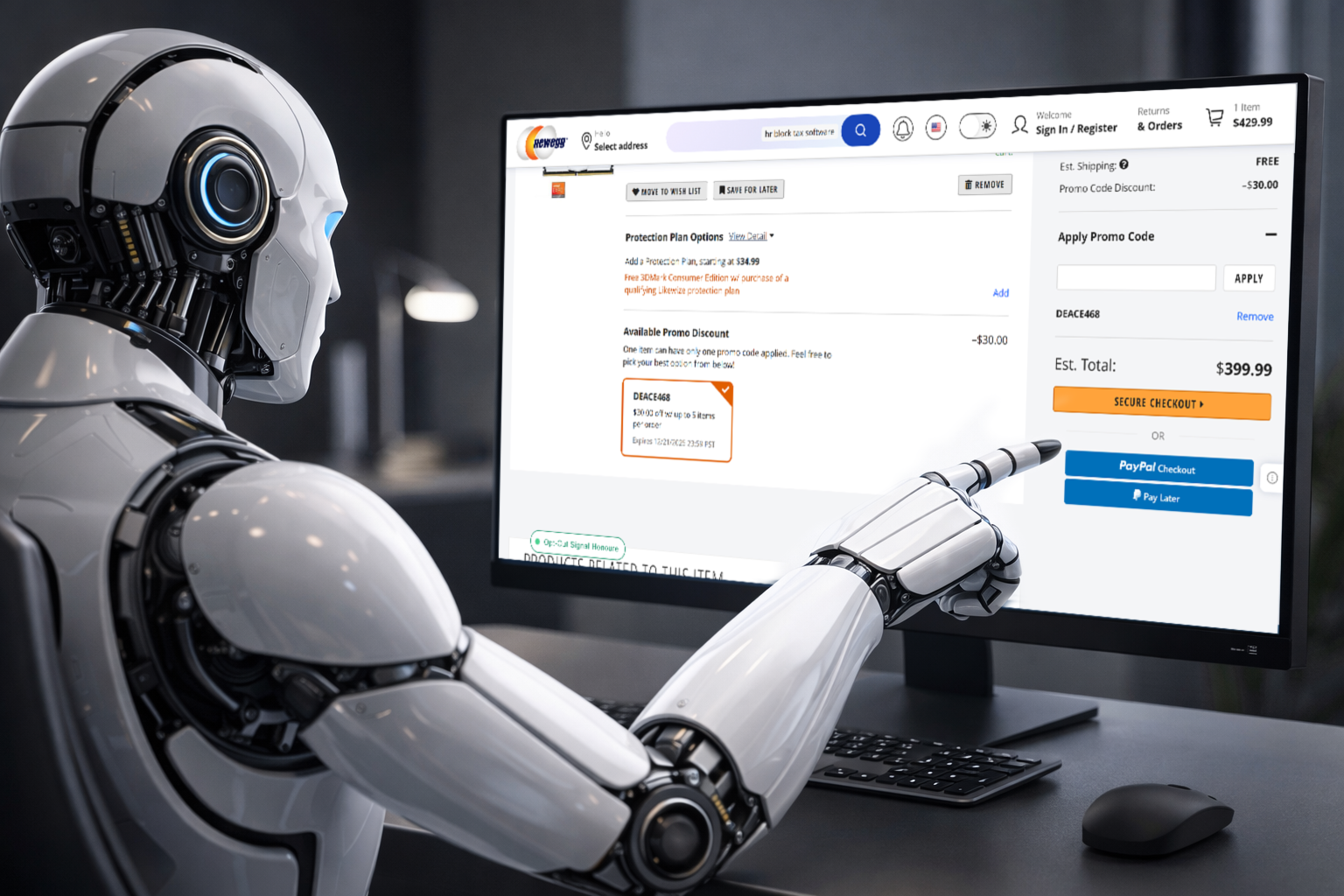
Visa says AI agents will complete shopping purchases for you in 2026
Visa says it has completed hundreds of real-world transactions initiated by AI agents, marking an early test of a (near) future where software can move from shopping recommendations to payment without a human needing to click through the checkout process.
The transactions were carried out with partners across Visa’s payments ecosystem and took place on live systems, rather than in demonstrations or simulations. According to the company, they show that AI-driven purchases can be completed securely using existing payment infrastructure, so long, that is, as the agent operates within predefined controls.
Google rolls out Gemini 3 Flash, a faster AI model for Search and beyond
Google has announced the arrival of Gemini 3 Flash, its latest AI model built to respond faster than earlier systems, while still tackling complex prompts when needed. The model is being introduced across Google Search and the Gemini app, with the goal of making everyday AI interactions feel nippier, without stripping away the AI's more advanced capabilities.
Gemini 3 Flash is the newest member of the Gemini 3 model family. It follows Gemini 3 Pro and Gemini 3 Deep Think, but is designed for a different role. Instead of treating every prompt as a complex problem, Flash adjusts how much effort it applies based on the task in front of it.

Mozilla has a new CEO and plans to make Firefox an AI browser
Mozilla now has a new CEO in Anthony Enzor-DeMeo, and this should be news enough. But the appointment has been accompanied by the announcement that the organization plans to transform Firefox into an AI Browser over the course of the next three years.
More than this, Firefox is set to evolve into something more than just a web browser. Details are scant at the moment, but the new CEO says that “Firefox will grow from a browser into a broader ecosystem of trusted software”.
Cloudflare report shows how AI bots, encryption, and growing attacks shaped the internet in 2025
Cloudflare has released its 2025 Radar Year in Review, the sixth annual report examining broad trends in internet traffic, security, and technology adoption across its global network over the past year. Using aggregated data from web requests, bots, and connectivity signals, the report shows how automation, encryption changes, and attacks shaped online services worldwide.
Internet traffic continued to rise across the year, with Cloudflare reporting overall growth of 19 percent. Levels stayed relatively steady through the first six months or so before accelerating from late summer onwards. For website operators, this trend reflects a steady increase in demand, although it also drives higher infrastructure costs and greater exposure to outages or attacks.
AI hype is leading investors to bet big on humanoid robotics but is it just another bubble?
The robots are coming, there’s no question about that, but many humanoid robotics startups backed by venture capital firms face deep problems related to cost, reliability, and general real-world usefulness, according to a new report from CB Insights.
Investors warn that enthusiasm driven by AI hype is outpacing commercial reality, creating concerns that parts of the sector are drifting toward speculation rather than reality.
Your earbuds can now translate over 70 languages in real time with Gemini AI
Google is expanding the translation features in Search and its Translate app with new systems built on the Gemini AI model. The update introduces improved text translation and a beta version of live speech translation in headphones, giving users clearer and more natural results and bringing the experience closer to a real-world Babel Fish from The Hitchhiker’s Guide to the Galaxy.
The new text translation system uses Gemini 3 to handle idioms, slang, and local expressions with more context awareness. This lets the app produce translations that are closer to natural speech rather than direct word swaps.

Most companies aren't measuring AI's environmental impact, new report shows
Companies are adopting AI quickly, but most still overlook the energy impact of the systems they use daily. New research suggests this gap is now large enough to affect electricity use in offices, data rooms and commercial buildings. Energy specialists say the problem could be turned into an opportunity -- if firms pay attention to how their AI tools work in practice.
The Thomson Reuters Foundation has published early findings from its AI Company Data Initiative, known as AICDI. The new study examines AI governance disclosures from 1,000 companies in 13 sectors. Built with UNESCO, it is described as the largest dataset that tracks how firms explain and oversee their use of AI.

GenAI lacks the creativity to make scientific discoveries [Q&A]
Generative AI is often praised for its ability to analyze data, summarize research and even propose scientific ideas, but new findings suggest its creative limits are more substantial than many of the exciting headlines imply.
Research led by Professor Amy Wenxuan Ding of emlyon business school and Professor Shibo Li of Indiana University found that while GenAI can imitate the process of science, it cannot yet produce the imaginative leaps that drive true discovery. In their study, which you can read here, a computer simulated experiment challenged ChatGPT-4 to solve a real genetics puzzle, asking it to propose hypotheses, design lab experiments and revise its thinking as results unfolded.
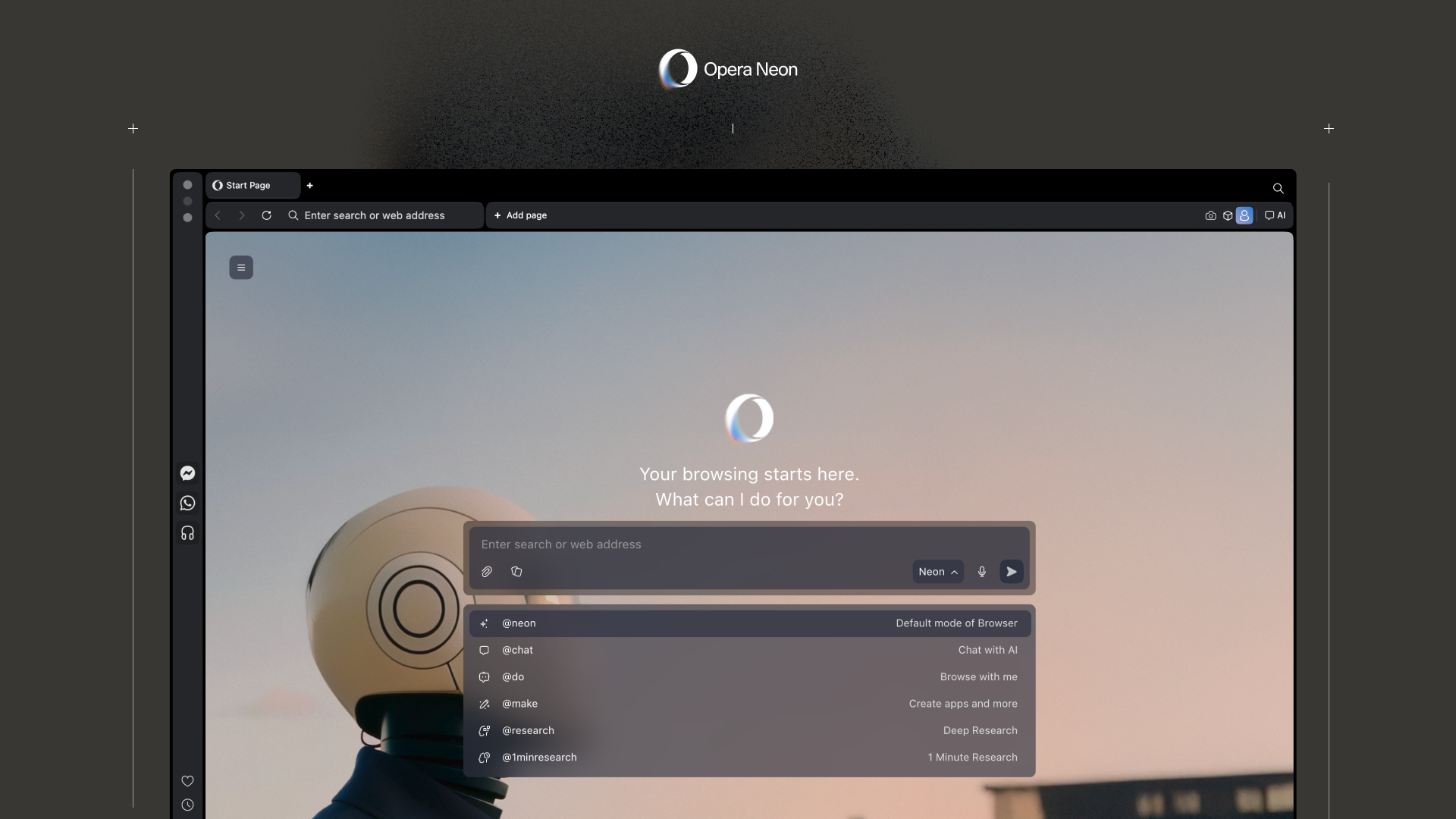
Opera Neon, Opera's experimental agentic AI browser, is now available to all
Two months after its invite-only debut, Opera’s experimental agentic browser, Opera Neon, is now available for anyone to download and try out. Neon is designed for people who want to work with emerging AI tools as soon as they become available.
The software has been in a closed "Founders phase" since early October, and the removal of the waitlist means anyone can now sign up to use it for $19.90 a month.

Cyber experts warn AI will accelerate attacks and overwhelm defenders in 2026
Cybersecurity experts are offering warnings about the year ahead, and while they come from different backgrounds and companies, their predictions all point to AI changing the nature of attacks, speeding up intrusions and forcing defenders to rethink how they work.
Most analysts expect 2026 to be the first time that AI-driven incidents outpace what the majority of teams can respond to manually, and some see the biggest changes coming from attackers who use fully autonomous systems.