
Wearable cloud tech makes users feel more self-confident, clever... and sexy?
A study by CAST in conjunction with Rackspace reveals that users of wearable technology -- such as the Nike+ FuelBand and Jawbone UP -- feel using such devices boost their intelligence levels. The study looks at residents of the UK and US, and finds the wearable tech users not only feel cleverer, but also more self-confident.
These are not the only benefits the study unearths. US participants were generally rather more impressed with the benefits of wearable technology -- 71 percent of American users felt their health and fitness had improved as a result of using such devices, compared to 63 percent of those in the UK. More than half (53 percent) of US users believe wearable tech helps to improve intelligence, compared to just 39 percent of UK users.

Pipe exits beta and lets Facebook users swap files up to 1GB in size
Facebook is great for sharing thoughts, links, complaints and pictures with your friends, family and colleagues but, until now, there has been no easy way to share files through the social network. Pipe is a Facebook app that has undergone private testing for some time, but is at last available for everyone to use. Once installed, Pipe will let you send files of up to 1GB in size to your Facebook friends.
The app works by setting up a P2P connection between you and anyone you decide to share a file with. Ordinarily, file transfers are carried out in real-time, but if you want to send a file to a friend who is not currently online, it will be securely stored until they are available. This reduces the size limit right down to 100MB but it is possible to send an unlimited number of files in this way.

Is your anti-malware software doing its job? AMTSO launches tools that may reveal all
The importance of having virus and malware protection installed is something that is drummed into every computer user. There are countless security tools to choose from these days, and numerous reviews to help you to decide between them. But how can you be sure that the software you have opted to use is doing its job properly?
AMTSO (the Anti-Malware Testing Standards Organization) has a series of tools that can help you to find out whether your computer really is protected. Does the fact that your system seems to be free from malware mean that your security software is offering suitable protection, or that you have just been lucky so far?
Lenovo Reaches for the clouds
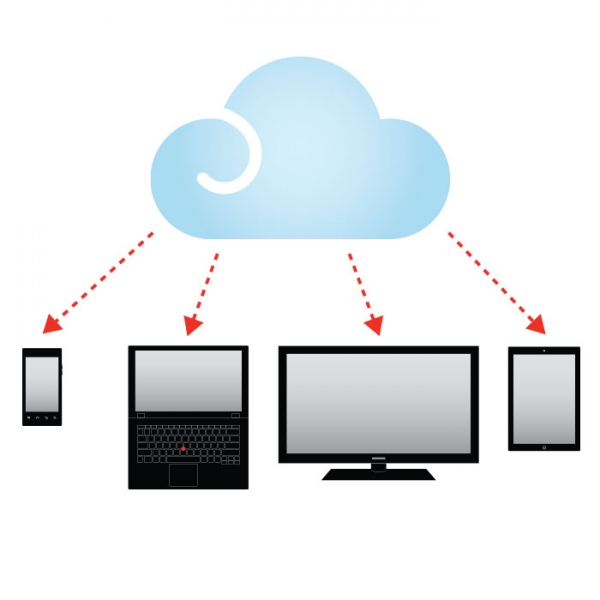
As the cloud computing gold rush continues, more and more companies are trying to lay their claim. Like it or not, the future of computing is the cloud. Make no mistake -- whoever controls the cloud will control the web and computing overall. With that said, major computer manufacturer, Lenovo, has decided to get into the ring with its newly announced cloud platform named Reach. It will work on both Lenovo and non-Lenovo computers.
The company says that Reach "…allows users to access social networks, favorite applications, as well as help them find files, photos and other digital media across your online storage accounts, no matter where users put them".

Microsoft targets developers and testers with new Windows Azure update
Windows Azure undergoes constant improvements as Microsoft continues to beef up the cloud platform with new features and enhancements. The software giant has released SDK 2.0 for .NET (Software Development Kit), introduced Hadoop, Dropbox and IaaS (Infrastructure as a Service) support, new VM (Virtual Machine) configurations and adopted a new pricing strategy, all within the past couple of months.
And, late-yesterday, Microsoft revealed a new update for Windows Azure, designed to enhance its development and testing credentials. There are two noteworthy changes aimed at minimizing cost: users are now billed by the minute when using the cloud platform's resources (instead of by the hour, prior to the update) and they are no longer charged for stopped VMs (the deployment state and configuration are both preserved).
Box adds extra security layer with CipherCloud
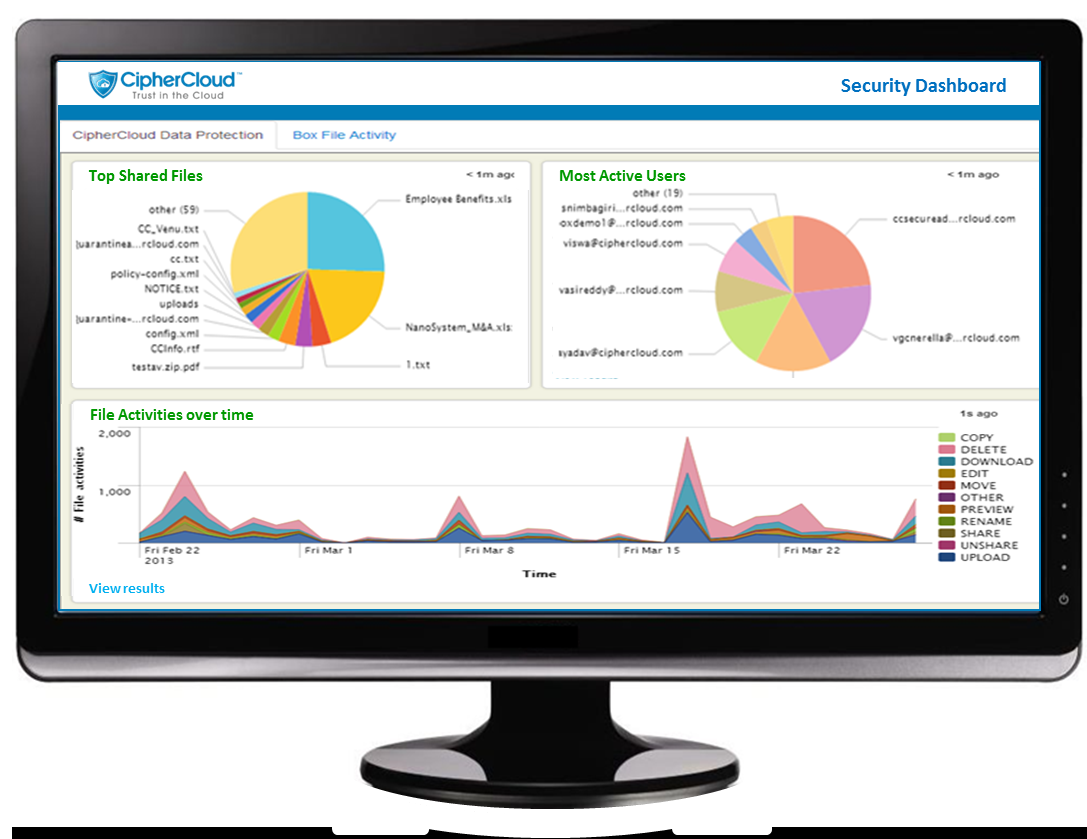
You are moving to the cloud, regardless if you want to or not. The world is just headed that way, and Box is one of the frontrunners in this race. To stay in front the company today announces new security measures, using CipherCloud. This is in response to a growing need to prevent malware in this burgeoning market.
Weisen Li of Box, tells us "I’m excited to announce the availability of CipherCloud Data Loss Prevention (DLP) for Box. CipherCloud DLP for Box helps admins apply corporate DLP policies on content in Box while keeping it simple for end users".

Shock survey: 37% of orgs plan to adopt Office 365 within 24 Months
The war for the hearts and minds of potential cloud email users at organizations worldwide is far from over. Both Microsoft and Google are winning small field skirmishes for their respective corners over the past few years. Most recently, Microsoft won huge contracts with the State of Texas and the City of Chicago moving to Office 365's vision for the cloud. Conversely, Google Apps chalked up big converts in the form of CBC Radio Canada and the US National Archives.
UK business technology website Computing.co.uk has published the results of a survey it ran across 160 IT decision makers from organizations of all shapes and sizes. While the survey sheds light on numerous opinions surrounding the major cloud email platforms, its most shocking finding is that a whopping 37 percent of organizations moving to the cloud for email are opting for Office 365 over all the major players. Other cloud vendors included in the survey results were Google Apps, Apple iWork, and QuickOffice.

Office 365 for Business: Cloud email (finally) ready for primetime [review]
Merely a half year ago, my thoughts on Office 365 were salty at best. Outages continuously plagued the service. Its treatment of browser-based users who wished to forego desktop versions of Outlook and Office disappointed. And spam filtering was bottom tier, proving to do little in stemming waves of junk mail. In the February 2013 release, Microsoft turned a new page and proved why it's a reliable comeback kid in the cloud.
If you don't believe Microsoft is transorming itself into a company solidly rooted in the cloud, you're clearly missing the writing on the wall. The company's past three years have been nothing short of a cloud-cluster of budding services while simultaneously sun-setting legacy on-premise products. Windows Small Business Server bid its farewell, while runaway hits like Azure sweep the Redmond, Wash. horizon. Yet even as Office 365 for consumers came out to relatively loud fanfare, the main attraction of the Office 365 product line is the business-oriented offerings.
Bing to be integrated into Windows 8.1 for web and local searches
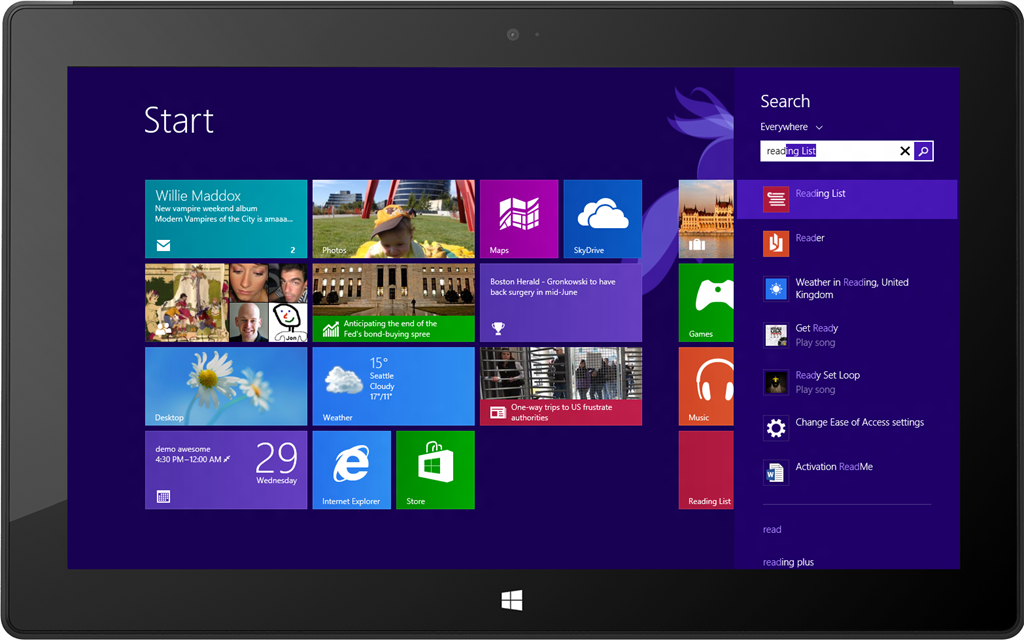
The upcoming release of Windows 8.1 has been the subject of countless column inches over recent weeks with the main focus being on the return of the Start button. But changes are also afoot for searching, with Bing being tightly integrated into the operating system to provide a rich and flexible search experience.
The Bing development team is working closely with the Windows team to produce a utility that can be used to search globally and locally. Windows' integrated search tool has evolved over the years into something that can be used to search not only files but also shortcuts.

Shazam app finally supports Windows Phone 8
On Thursday, music discovery service Shazam released an update for its Windows Phone app which introduces support for the latest version of the tiled operating system. In addition to finally playing well with Windows Phone 8, the app also comes with a refreshed user interface and a couple of new features and improvements.
"We are incredibly excited about this launch as it brings so many of Shazam's key features to Windows Phone 8 fans", says Shazam's Daniel Danker. "Windows Phone 8 users now have access to a great smartphone experience, from faster tagging and a new interactive map, where users can discover the music people are listening to around them. This is more than just the music that's already popular; these are often songs people are discovering for the first time".

Google Reader, I'll follow you to the very end
On July 1 Google pulls the plug on Reader and, like many other users, I have decided not to be caught unprepared by its rapidly-approaching demise. Shortly after the search giant revealed its execution plans I migrated all my RSS feeds to Feedly, telling myself "OK, now's the time to move on". Skip forward a couple of months and Reader is still open in a Chrome tab.
I can't really move on. The RSS feed aggregator holds a very special place in my heart as I rely on it every single day to write news stories and catch up on things that I'm passionate about. It's like the perfect relationship except for that one tiny detail (huge actually) -- the expiration date is near.

Spy on the world's web searches with a Google Trends screensaver
Google is all about searching. Well… not "all" about, but it's what the company is known for. Any firm that logs information about how customers are using its services are usually berated, but Google Trends can provide a fascinating insight into how the rest of the world is using the internet. This tool has been available for a while but there's now a sexy new full screen mode available -- and you can turn it into a screensaver.
If you've ever been curious about what people in other parts of the world are searching for, head over to the full screen visualization tool and you can find out. At the bottom of the screen you can choose from one of several countries, or opt to see an overview of global searches.
Box takes more strides towards IT acceptance
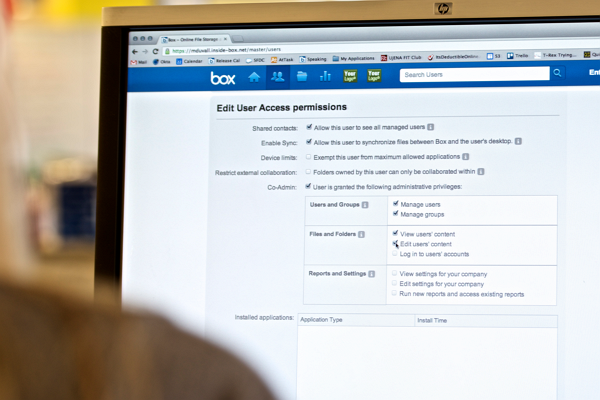
The cloud has become a battleground these days between heavyweight companies, and Box has remained in the fight. Today the company takes another step towards securing its location in the corporate future with three new features in the Box admin console designed to make the service easier to deploy.
An improved content manager, granular co-admin permission options, and the ability to prevent users from permanently deleting content are all heading the way of IT administrators.

Evernote adds Reminders for the absent minded
Evernote continues to evolve in its quest to keep up with (and even outpace) Microsoft's OneNote. The service is already available on all the major platforms, and today adds a new feature which a lot of users have been asking about for some time -- Reminders.
"For the millions and millions of people around the world that use Evernote everyday to achieve their goals, we’re excited to announce a new part of Evernote that will keep you on track every step of the way. Reminders are here", says Evernote's Andrew Sinkov.

iPad follows iPhone, gets the Mailbox treatment
On Thursday, following user demand, Mailbox released an update for its iOS mail app that introduces support for iPads. The service, which delivers more than 100 million messages each day, was previously available as an iPhone-only affair.
Mailbox boasts a better organized and easier to manage inbox, allowing its users to take advantage of swipe gestures to archive or trash messages. Similar to alarm clocks, the app also offers the option to snooze emails in order to receive them at a later date in the inbox.