
Want to get lei'd? Google Street View takes you to Hawaii
When people speak of romantic getaways or honeymoons, the conversation often turns to Hawaii. After all, it is literally a paradise, featuring beautiful beaches and awe-inspiring sunsets. However, there is one major downside -- the cost. Not only is airfare and accommodation very expensive, basic goods such as milk and bread have high prices too.
While you can close your eyes and imagine you are there, Google has a much better and high-tech idea. The search giant announces that it is bringing Street View to Hawaii. In other words, you can experience the 50th US state from your computer.

Google Maps Street View goes really down under -- into the sea
My knowledge of Australia is rather limited. I know of Crocodile Dundee, Outback Steakhouse and Rocko from Rocko's Modern Life. I'll admit, I need to learn more about the world. Luckily, the internet allows me to learn from the comfort of my computer chair.
Google is one of the great resources from which to learn, especially Google Maps. From my web browser, I can navigate to anywhere in the world. Even better, Street View allows me to experience the locations as if I was really there. Today, Google announces that it is bringing Street View down under, to Sydney, Australia. Well, the search-giant is going even further down under than that, into the sea!

Google Capital invests $50 million in real estate platform, Auction.com
The old saying about real estate is that the three most important things are location, location and location. In other words, if you buy a beautiful home next to a garbage dump or angry neighbors, you will be miserable. When it comes time to sell, you will be hindered by the horrible surroundings.
Well, it seems that Auction.com was in the right location at the right time today, as Google Capital invests $50 million dollars in the real estate website. If you aren't familiar, that is a Google-backed growth equity fund.
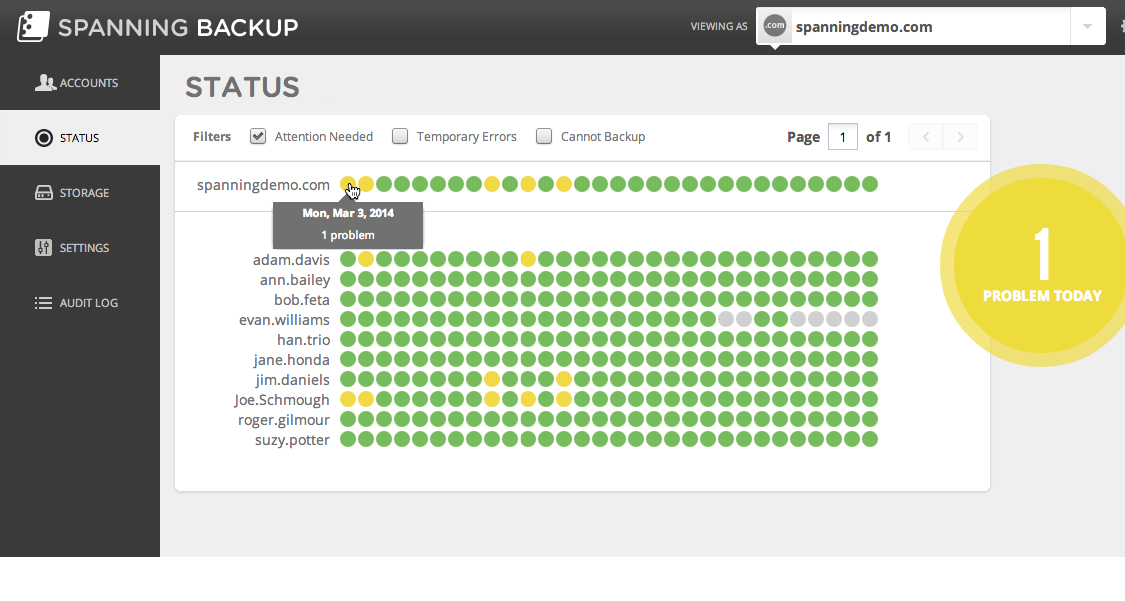
Spanning improves Google Apps Backup
We all know that backups are important and these days that applies to data stored on cloud services just as much as desktop PCs.
Cloud backup provider Spanning Cloud Apps has announced a major update to its Spanning Backup for Google Apps, offering improved reporting and proactive notifications.

Jelly Bean, KitKat continue their rise in Android distribution
Google's Android distribution charts give us a fresh look at adoption trends with each monthly update. In early-March, we see Jelly Bean and KitKat continuing their rise in popularity, while older iterations of the popular open source operating system are on their descending path.
Based on the number of devices accessing the Play store in the seven days ending March 3, KitKat is running on 2.5 percent of monitored Android handsets. Its distribution share is 38.88 percent higher compared to the previous month, when it accounted for 1.8 percent. KitKat will see a stronger uptake once smartphones like the new Samsung Galaxy S4 are released, and vendors upgrade their existing devices to the latest Android iteration.

Where have all the fanboys gone? Is brand loyalty dead and buried?
This is a personal account of the way I have noticed the technology markets changing over the years. It is not gospel, and you are welcome (encouraged, if you like) to disagree… It's not all that long ago that brand loyalty was a given; it was almost the default setting for many people. If you got into computing -- and it was something you "got into" rather than just having as part of your life -- you stuck loyally to whatever brand you chose at the start. We could go back to the 70s and look at the birth of personal computing, but as this is my personal account, we'll have to start in the 80s.
I did just manage to sneak into the 70s -- being born in 1979 puts me in the difficult-to-comprehend position of being 34 years old but having seen five decades -- but an interest in computing didn't emerge until some time in the late 80s. I remember there being several computing camps: BBC, Amstrad, Spectrum, Vic and Commodore to name a few. My decision was made for me at an early age when my dad decided to invest in a Commodore 16 Plus 4 (the Plus 4 referring to the fact that the OS featured four built-in applications including a spreadsheet tool, the absurd simplicity of which was not lost on me even at a young age).

Yahoo fumbles -- punts Facebook and Google from Fantasy Sports
I'll confess, I'm not a Yahoo user. Well, I do use one of its services -- Fantasy Sports. Yes, I am one of those guys that enjoys pretending I am a coach in the NFL, while sitting on my couch in my underwear, eating snacks.
However, I access Yahoo Fantasy sports with my Google credentials. The reason being, I am not a believer in Yahoo's security. After all, the recycling of email addresses is appalling. Today however, Yahoo informs me that it will no longer be allowing Google or Facebook accounts to be used to access Fantasy Sports. Instead, a Yahoo login is being forced on users.
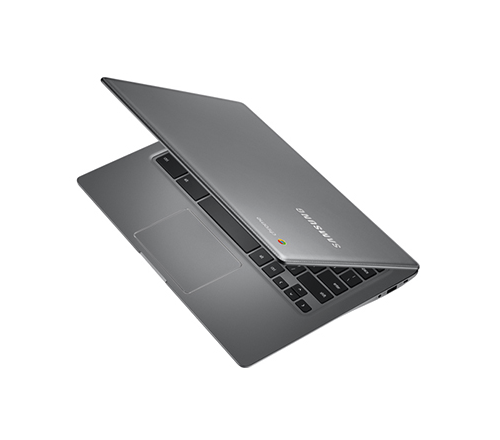
Samsung unveils ARM-based Chromebook 2 -- designed for home and school
My first-ever Chromebook was a Samsung. The 11.6-inch laptop was inexpensive and revolutionary. Heck, it looked like a plasticy Macbook Air -- very sexy. However, all that glitters is not gold. While my relationship with the laptop started strong, the dual-core ARM processor and paltry 2GB of ram proved underpowered. Pages would load slowly, and the lag could be extremely frustrating.
While many people think of Chrome OS as being just a web browser, remember, it is actually a Linux distribution running a web browser. The more RAM the better, with 4GB being the bare minimum for an enjoyable experience. Today, Samsung announces two new ARM-based Chromebooks to serve as a follow-up to the original. Not only is the RAM increased, but the CPU is supercharged too.
Chrome 34 Beta introduces hands-free Voice Search
After the underwhelming release of Google Chrome 33 FINAL last week, Google has unveiled a much more interesting update to its beta channel with the arrival of Google Chrome 34 Beta.
Chrome 34 comes with the promise of hands-free voice search, plus makes it possible for users to import "supervised" user profiles on to multiple devices. Also added are responsive images, and an unprefixed version of the Web Audio API.

The first Beta of Ubuntu GNOME 14.04 is here -- Linux fans, download it now
Linux is on a roll lately, as Android and Chromebooks continue to gain marketshare. While this should be a win for the open-source community, many purists do not consider Android or Chrome OS to truly be Linux. Of course this is not true, as both operating systems utilize the Linux kernel. However, I understand where Google detractors are coming from; a distribution like Ubuntu is more the traditional approach to using the kernel.
While I too love Ubuntu, I am not a fan of Unity. While I do not hate Canonical's environment, I simply prefer and adore GNOME 3. Today, the first Beta of Ubuntu GNOME 14.04 is here. It's time to brush off that DVD burner, and write that .ISO!

Top 10 Android battery-sucking vampire apps -- get your garlic and holy water
As smartphones and tablets evolve, they get faster and gain more features. However, there is one place where they are still lagging -- battery life. Many devices still require daily charging. Not only is this annoying, it is dangerous too. After all, you cannot call 911 from a dead phone.
While some newer devices such as the Droid Maxx and iPad Air are class-leading in battery longevity, people still want more. A good way to increase battery life is to avoid using apps that suck your battery like vampires. Today, KS Mobile announces its list of the top 10 Android vampire apps.
Google becomes the official voting platform for American Idol
Music is my biggest hobby and passion. Whether happy or sad, it helps enhance my moods. When I am feeling good, I may put on some Ben Folds Five and conversely, Radiohead when feeling blue. Believe it or not, I also like Hip-Hop and Country.
Even though I love music, I have never been a huge fan of American Idol. This is surprising, as it is a wildly popular singing competition. However, I am a fan of one aspect of the show -- the voting. I love being empowered to pick a winner, regardless of the competition. Today, Google announces a partnership with FOX and American Idol to make voting even easier.

Why Chromebook is good for students
Today, at ZDNET, James Kendrick's commentary "Chromebooks and students: Long term trouble for Microsoft" adds to a growing meme. With a few schools deploying Chromebooks (emphasis few) and rumors Microsoft has slashed Windows licensing fees (remember unconfirmed), recurring theme "2014 is year of the Chromebook and Windows is in deep dodo because of it" isn't surprising. But just because bloggers say something's true often enough, doesn't make it that way. Twenty fourteen isn't year of the Chromebook, nor is its utility to the education market guaranteed.
That said, Kendrick makes some good points about why Chromebook appeals to students. I won't recap them. This isn't an aggregated synopsis. You can read his fine points. My post adds to them, from experience. I am a long-time Chromebook user.

Microsoft now fighting the Windows 8.x war on two fronts -- can it win either battle?
According to reports, Microsoft is set to slash the price it charges OEMs for Windows 8.x. This doesn’t necessarily mean you’ll be able to pick up a copy of the tiled OS for any cheaper, but it does mean significant savings for (some) PC builders.
At the moment, Microsoft charges all OEMs $50 per copy of Windows 8. The price cut will see this license figure reduced by 70 percent to $15 per copy. However, there is a caveat -- it will only apply to devices that will be sold for $250 or less at retail. In other words, Microsoft is hoping to kick start a run of lower-priced PCs, in an effort to compete with Chromebooks.

Apple shouldn't be the next Microsoft
In a long, thoughtful post today, Mark Rogowsky writes for Forbes: "No, Apple Is Not Like Microsoft". He responds to arguments put forth by Barclays analyst Ben Reitzes, which Steven Russolillo summarizes in Wall Street Journal post "Four Reasons Apple is the New Microsoft".
I disagree with the original argument and its rebuttal. I encourage you to read both posts. The answer to why one stock soars while another sunders has little to do with market caps, P/E ratios, and other math metrics analysts crunch like gerbils with a new stick. People generally make decisions for emotional reasons -- what feels right to them. As I so often say, in business perception is everything.