

Post Deletion Stress Disorder: Is it real?
A recent study, which asked 1,000 UK consumers about their digital device habits, has revealed that more than half of them (56 percent) delete things from their devices to make room for something else, and then regret doing so.
The move is called Post Deletion Stress Disorder and, according to a press release from the study’s maker WD, is only set to continue.

Google's Accelerated Mobile Pages will speed up the web in 2016
It's now a few weeks since Google announced Accelerated Mobile Pages. When the project was unveiled, there were just 30 or so partners on board and no indication of when AMP would be made available to everyone. Today Google reveals that the acceleration program will start to roll out early next year.
There are now, according to Google, thousands of publishers who have expressed interest in AMP. With many of these representing a large number of newspapers, TV and radio stations, the range of content is looking promising. As this is Google, a focus on ads should be expected, and now Outbrain, AOL, OpenX, DoubleClick, and AdSense are adopting the AMP spec.
Five best practices for securing mobile devices and everything they touch
In the span of just one year from 2012 to 2013, smartphone thefts in the U.S. nearly doubled to 3.1 million, and another 1.4 million were lost, according to Consumer Reports. For businesses and other organizations, every one of those losses and thefts could enable multiple security breaches. That’s because confidential data stored on the phone isn’t the only asset that’s vulnerable. As a trusted device, that phone also has access to corporate networks and the data stored on them.
More than half of North American and European companies are developing a bring-your-own-device (BYOD) policy, Forrester Research says. These policies implicate security risks because, for example, employees are reluctant to give their IT departments the power to remotely erase their smartphone or tablet when it’s lost, stolen, or the employee separates from the company. Part of employees’ fear is that the device will be wiped by mistake, costing them irreplaceable personal data such as photos.

Convergence and security-- the main barriers to messaging app growth
There are lots of messaging apps on the market, which means that you can end up needing several if you have friends and contacts on different services. It would be a major breakthrough to have a universal standard for messaging, but is that ever likely to happen?
Telecom and web convergence company tyntec has carried out a survey among smartphone owners in the US and China to uncover trends in consumer messaging app usage and to evaluate the probability of OTT (over-the-top) messaging apps one day becoming a truly universal service that connects the world's population.

Mobile devices will account for 90 percent of all Internet traffic by 2020
YouTube and Netflix are responsible for the mobile data traffic increase of 65 percent year on year, while 5G mobile subscriptions will hit 150 million by 2021.
The Ericsson Mobility Report says that smartphones with larger screens, which are quite popular nowadays, together with more competitive prices for mobile data plans, have made it more comfortable for people to watch videos on the go.

Sprint and T-Mobile offer help in the wake of France terror attacks
The past couple of days have been an endless cycle of bad news with the terror attacks in Paris. Everyone feels bad for those caught up in the violence and we all wish we could help in some way. Some are in a position to do so and Sprint and T-Mobile fall into that category, and are planning to do their part during this crisis.
Both are offering free communication options so loved ones can check on friends and family. That's a key thing in any situation, be it a terror attack or natural disaster.
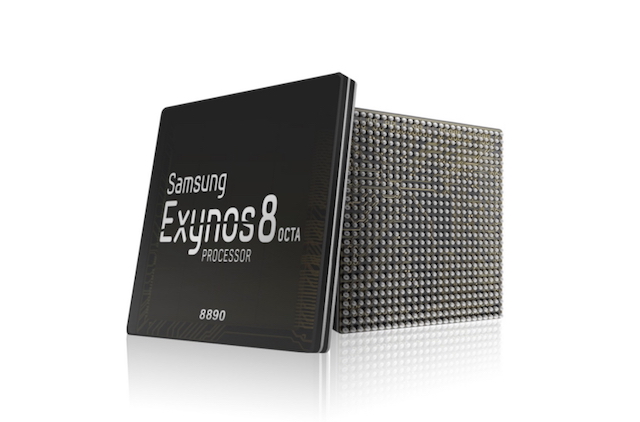
Exynos 8 Octa 8890 is Samsung's answer to Snapdragon 820
It looks like Samsung will continue to use its own Exynos chipsets in its next premium Android devices, as it has just announced a new flagship mobile processor. Called Exynos 8 Octa 8890, it is Samsung's answer to Qualcomm's mighty Snapdragon 820.
Samsung says that Exynos 8 Octa 8890 will go into production by the end of the year, so it is very likely that it will be used in Galaxy S6's successor -- likely called Galaxy S7 -- which will probably debut in the first quarter of 2016. Let's take a look and see what Exynos 8 Octa 8890 brings to the table.

Qualcomm takes the wraps off Snapdragon 820 -- here are the performance figures
Qualcomm has officially unveiled its new flagship mobile processor, Snapdragon 820. The new chip promises major improvements in performance across the board, like 40 percent faster graphics compared to Snapdragon 810, and supports new technologies, such as Wi-Fi 802.11 ad.
The CPU inside Snapdragon 820 has four cores running at up to 2.2 GHz, and is touted to offer twice the performance and efficiency of Snapdragon 810's CPU. This leads to a decrease of up to 30 percent in energy consumption compared to its predecessor, which has been reported to run a bit too hot.

The future for enterprise mobility [Q&A]
The shift towards mobile computing and BYOD has been the big story in enterprise IT over the past couple of years.
But has the trend towards mobile peaked? Can we expect BYOD to move into smaller organizations and what effect will legal and regulatory frameworks have? We spoke to Gary Greenbaum, CEO of BYOD billing specialist Syntonic to find out.

Addressing the mobile app trust gap
According to a new survey 80 percent of consumers would stop being a customer if there were a security breach in a company's mobile app. But app developers admit in the same study that many apps are not secure due to pressure to release them to market before they are ready.
These findings come from mobile security and analytics company Bluebox Security which talked to over 400 consumers and approximately 300 developers.

New solution helps track hybrid mobile app performance
Gartner predicts that by 2016 more than 50 percent of mobile apps will be hybrid, combining elements of both native and Web applications.
This allows apps to benefit from the portability of HTML5 Web apps along with a container that allows access to a device's native features. For businesses they offer faster development with easier updating and management.

New survey reveals what drives mobile shopping habits
Clean sites with low load times and fewer pages to navigate are more likely to get consumers to spend money according to new research.
The survey by Instart Logic of 2,000 US consumers also shows that consumer confidence in a brand is tied to their quality of experience while online shopping.
Mobile threats continue to grow with banking Trojans still a major concern
Security company Kaspersky Lab has released its latest quarterly threat evolution report for the third quarter of this year which shows over 300,000 new mobile malware programs detected, a 10.8 percent increase over Q2.
Displaying intrusive advertisements to consumers remained the main method of profiting from mobile threats. Mobile adware has continued to increase and accounts for more than half of all detected mobile threats in the quarter.

Vodafone customer accounts hit by hackers
UK customers of Vodafone are the latest victims of a hack attack. The telecoms company said that nearly 2,000 customer accounts had been accessed this week, exposing personal data including phone numbers and bank account details.
The security breach took place earlier this week, but it was only this weekend that Vodafone went public about it. A spokesperson said that the attack "was driven by criminals using email addresses and passwords acquired from an unknown source external to Vodafone". There is warning that the owners of the affected accounts could be subject to phishing attacks.
Mobile threats are on the rise and more than 40 percent of devices are at risk
Mobile threat defense specialist Skycure has released its Mobile Threat Intelligence Report, which finds a frightening increase in threats to both enterprise and personal mobile devices.
Using analysis of worldwide mobile data from Skycure and outside sources, the report found 41 percent of mobile devices are at medium to high risk on the Skycure risk scale. Nearly two in every hundred are high risk devices that were already compromised or were under attack.



