
Best Windows 8 apps this week
Twelfth in a series. It's slow week for new application releases for Windows 8. The number of new apps in the US Windows Store is 635, down from 961 the week before. While I would not - yet - say that this is a sign of things slowing down, it is definitely something that I'll pay attention on in the coming weeks.
The total number of apps in the US store this week is 25,384 of which 20,373 are free to install and 5,011 paid; that is a ratio of 4:1 in favor of free apps.

Turn a Raspberry Pi into the ultimate emulator
Raspberry Pi, the popular credit card-sized ARM GNU/Linux computer, is a real throwback to the past. It was conceived as a low-cost way of encouraging people to get back into programming, as they did in the 80s and 90s, and it’s even possible to program it using the venerable BBC basic.
RPI Chameleon, a great new project from Carles Oriol, enhances the Pi’s time machine like quality, by letting it run emulators for a whole batch of ancient hardware, including the IBM Personal Computer, Atari 2600, Apple II, ZX81, ZX Spectrum, Commodore 64, and Oric-1. It can even run MAME, the arcade emulator, and you can add additional emulators to its menu too.

It's easier to win the lottery than buy Google Nexus 4
The Nexus 4 was anything but a secret long before Google officially raised the curtain on October 29, last year. Impressive specs, affordable price, the promise of timely upgrades, all were compelling arguments as to why I must buy one when sales start. However, Google didn't care about my enthusiasm and had other plans in mind, offering the smartphone only to a limited number of markets. Lucky me, I'm not invited to join the party. So what can I do?
Like any passionate, but patient, enthusiast my first thought was to buy one from the German Play Store, the closest one to my location and with the lowest prices as well, instead of moving to another country or shelling out more than $500 or $600 on eBay. So I asked a colleague of mine to help me out. I would pay for the Nexus 4 and he would send it my way after receiving the package. Easier said than done, obviously, as I shortly found out that Google only accepts credit cards issued in Germany. That was Plan A, by the way. OK, but now what?

Kim Dotcom reveals Mega's royal flush -- 'generous' free cloud storage
Like it or not, the New Zealand-based entrepreneur Kim Dotcom continues to make headlines thanks to his latest project, Mega. The cloud storage service launches on January 20, and merely days before the big opening Dotcom revealed that Mega will indeed be mega in the storage department.
In a Twitter post, Kim Dotcom said that Mega will offer "generous limits for free [plan] users". But just how much is "generous"?, you may ask. The soon-to-be-introduced service will give users a whopping 50GB of free cloud storage, matching MediaFire's offer, and top established market competitors such as Box, Dropbox, Google's Drive and Microsoft's SkyDrive. Basically if there's a "box" or "drive" in the title, then it's not as "roomy".
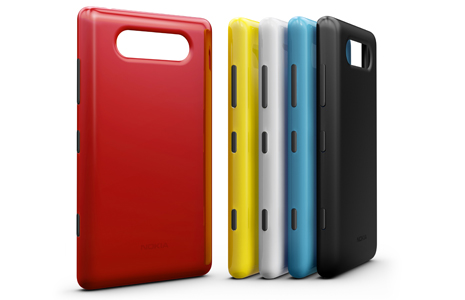
Make your own Nokia Lumia 820 back cover using 3D printing, but don't look at the price-tag
Whenever new and exciting products are launched, shortly after the big bang a plethora of accessories surface to match even the most peculiar of requirements. Some are a hit while others are a dreadful miss. But what if nothing on the market tickles your fancy? Well if you happen to have a Nokia Lumia 820 lying around you can create something yourself.
Nokia has released a 3D printing development kit comprised of 3D templates, case specs, recommended materials and a best practices guide to manufacturing customized back cases for the Lumia 820, using (the name of the development kit pretty much gives it away) 3D printers. Pricey is an understatement, but that said the Finnish manufacturer does at least offer a solution for those seeking the ultimate in smartphone customization.
Relive your wasted youth with Trikanoid, a remake of classic brick-breaking game Arkanoid
Arkanoid was an 80′s arcade classic, a great test of hand-eye coordination as you tried to clear a breakout-style pattern of blocks from the screen.
But if you missed the game the first time, that’s not a problem, because Trikanoid has bought it back to life for both PCs and Macs.
A third of all users have added a Start button and menu to Windows 8 (maybe)
Windows 8 users fall into two simple categories. There are those that miss the old way of working and don’t really care too much about the tiled Start screen, and those users who have embraced Microsoft’s new operating system and don’t understand why people are still wittering on about the Start button and menu.
The truth, however, is a large proportion of users do want the Start button and menu back, initially at least, and thanks to third party software they can fulfill that desire fairly easily. There’s no shortage of freeware solutions, ranging from my personal favorite hack, Ex7ForW8, to ViStart 8.0, and we’re now beginning to get an idea of just how popular they are.

To get ahead, Apple must leave Steve Jobs behind
Second in a series. My last column looked at Apple’s immediate challenges in the iPhone business, while this one looks at the company’s mid-to-long term prospects and how best to face them. The underlying question is whether Apple has peaked as a company, but I think the more proper way to put it is how must Apple change in order to continue to grow?
Even as some analysts are downgrading Apple based on reported cancellation of component orders, saner heads have been crunching the numbers and realized that Apple still has a heck of an iPhone business. So if you are a trader I think you can be sure Apple shares will shortly recover, making this a buying opportunity for the stock.

The PC is dying? My own customers prove just the contrary
There's an excellent debate raging on the front pages of BetaNews for the past few weeks, and it's a topic that I feel quite entrenched in. Seeing as my computer repair business FireLogic deals with customers of all types on a daily basis, I thought I should drop my own two cents in on the subject. Joe Wilcox has argued the death knell for the PC is just about here, while a few others, like Wayne Williams (and myself), dispute the notion with quite the vigor.
I think this topic deserves some definite attention because there seems to be a perception out there that the rise in mobile devices such as tablets, smartphones and the like will completely eradicate the traditional PC. It's a touchy topic for my colleagues in the computer repair industry, and something that is frequently debated on the forums of a website dedicated to "our kind" over at Technibble.com.
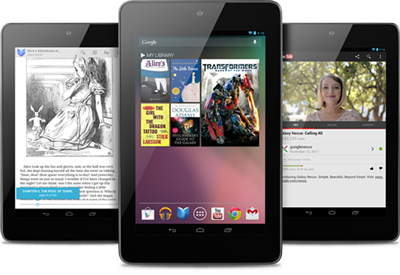
Nexus 7 HSPA+ now comes with T-Mobile SIM
What interesting timing. Earlier today, I wrote about my very good experience exchanging a defective Nexus 7 HSPA+ at Google Play. My unit came with an AT&T SIM, but I pointed out the device also supports T-Mobile's data network. Either I missed, or Google Play added later today, an option to get a T-Mo SIM, too. Price is same for both: $299 plus tax (if applicable) and shipping.
Nexus 7 by far is my favorite tablet, by just about every measure: Performance, comfort in the hand, portability and all-around usefulness for consuming content and communicating (my preferred device for email social networking).

The latest Facebook privacy flaw is a doozy
Over the past couple of years there has been no shortage of talk about privacy, particularly when it comes to social networks, and especially Facebook. In fact, the service recently made news when the site's privacy settings famously bit founder Mark Zuckerburg's own sister.
Facebook has worked to make its privacy settings easier to understand for everyday users, and to a certain extent has succeeded, but fatal flaws still seem to rear their ugly heads.
Sorry, Apple Store, Google Play device customer service rocks
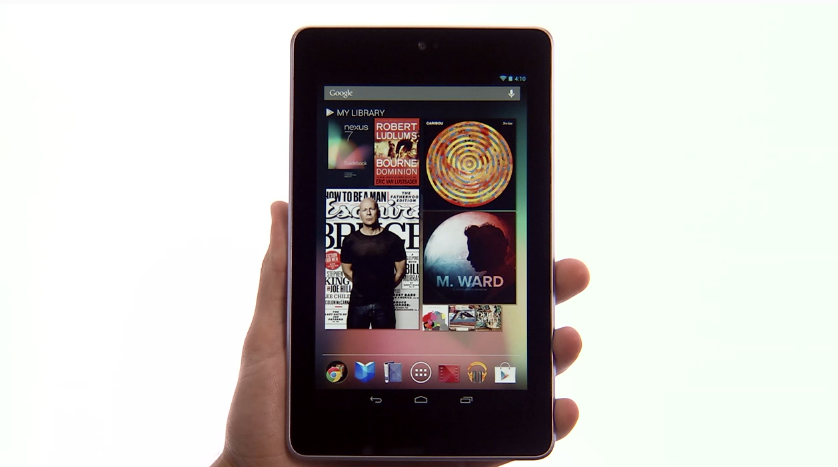
I often hear "Apple Store" stated as reason someone chooses iPad over another tablet. The Genius Bar is there for troubleshooting and even replacing defective products. Where do you take Android? It's a valid question, and I can personally attest to amazing Apple customer service. In 2008 and 2011, I had two different MacBook Airs fail. As in dead. I walked out of the local shop with brand new computer each time. That's hella good, eh?
That said, over the last decade, I've only ever exchanged Apple products -- no failures from any other manufacturer (there was fast battery discharge from a Samsung phone, but we kept it). Well, until last week. My 32GB Google Nexus 7 HSPA+ stopped working. No amount of troubleshooting or fancy pressed-key combinations could rivive it. I prepared for the worst, expecting that Google, operating on the Internet, could never give good retail customer service. Was I ever wrong. Apple couldn't have done better.
Is the Lenovo Chromebook right for education?
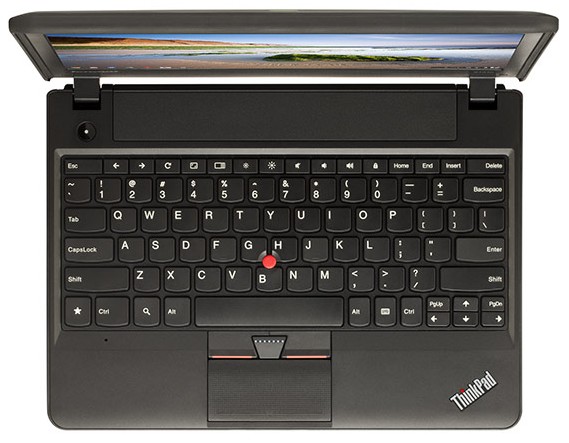
That's the question we're asking in the newsroom, and the consensus is "No", and that most certainly is my initial reaction. But on further examination, I'm at "depends", meaning for some schools but not for many others. Here size of school district matters, because Lenovo commits considerable extra IT-oriented resources to this newest ThinkPad that should appeal to people managing larger-scale deployments. But smaller schools, such as charter, private or small town, should consider spending less on another model.
Today the two companies announced the new computer, ThinkPad X131e Chromebook, which goes on sale February 26. Quick specs: 11.6-inch display with 1366 x 768 resolution; Intel Celeron processor; 16GB sold-state drive; webcam; Ethernet; dual-bad Wi-Fi N; 2 USB 3.0 ports; single (separate) ports for USB 2.0, HDMI and VGA; and Chrome OS. Lenovo doesn't state which processor or provide dimensions but does give weight as 1.8 kilograms (3.9 pounds). Price is $429, or $459 with recommended IT maintenance service.

Amazon launches a dedicated MP3 store for iPhone users
Amazon has created a mobile MP3 store optimized specifically for use on iPhones and iPod touches. Built on HTML5, the new store lets users browse the 22 million strong MP3 catalog, and buy tracks directly.
"Since the launch of the Amazon Cloud Player app for iPhone and iPod touch, a top request from customers has been the ability to buy music from Amazon right from their devices," Steve Boom, Vice President of Amazon Music said. "For the first time ever, iOS users have a way do that -- now they can access Amazon’s huge catalog of music, features like personalized recommendations, deals like albums for $5, songs for $0.69, and they can buy their music once and use it everywhere".
Patch in the hole! Security fix for Exynos exploit slowly surfaces
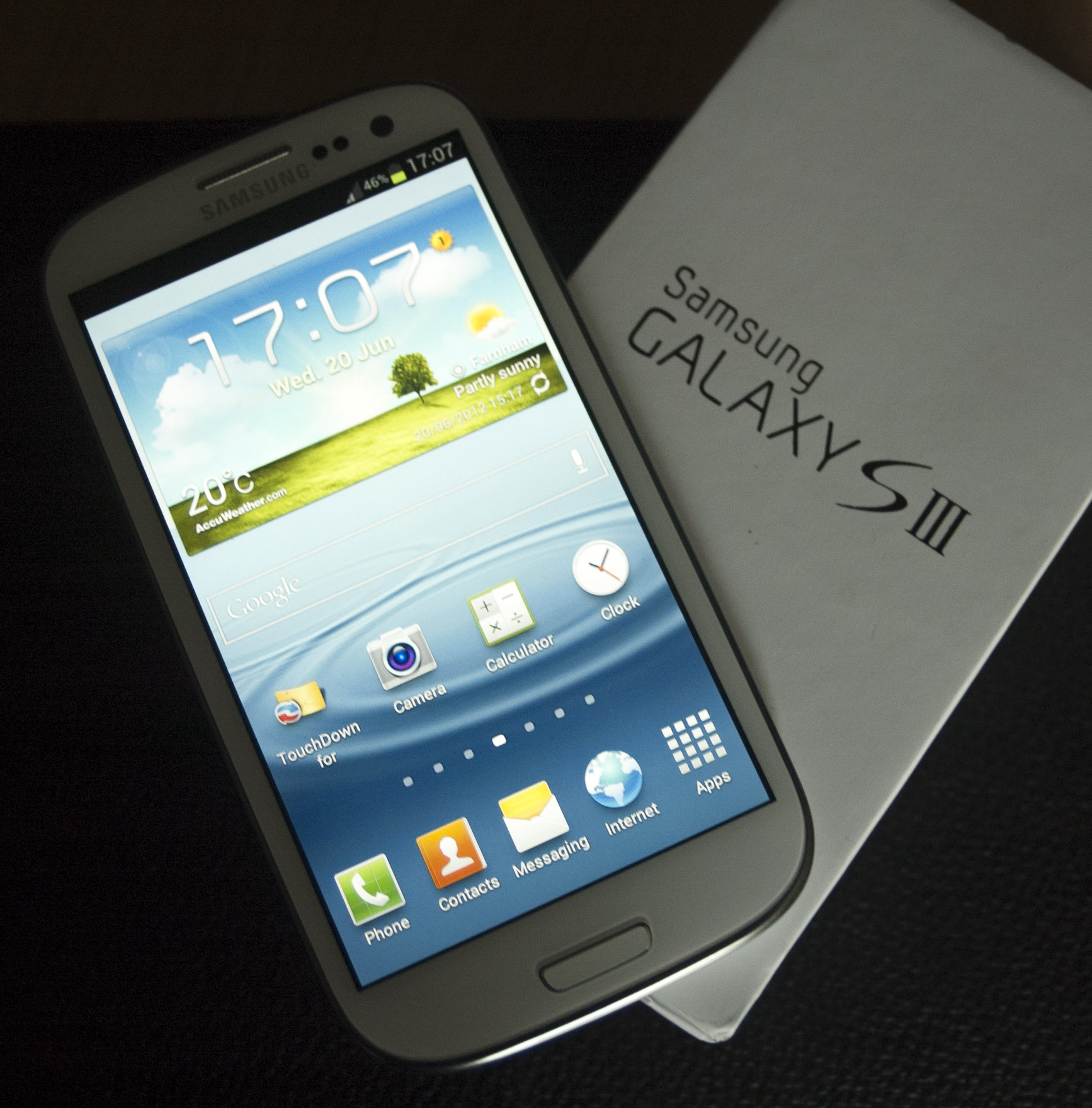
In mid-December, a developer uncovered an exploit at kernel level which affects a number of popular Exynos-based devices, such as the Samsung Galaxy S III and Galaxy Note II, among others. The creator of SuperSU promptly delivered a temporary fix, but it is not particularly suited for mainstream use as it may break the camera app. An official patch is, therefore, in order.
Since the issue is known to mostly affect Samsung devices the ball is actually in the South Korean manufacturer's court which, judging by a number of US carrier announcements, is taking the necessary steps to eliminate the security threat. Both Sprint and T-Mobile revealed software upgrades, touting security fixes related to the Exynos security exploit for two Samsung-branded smartphones.