
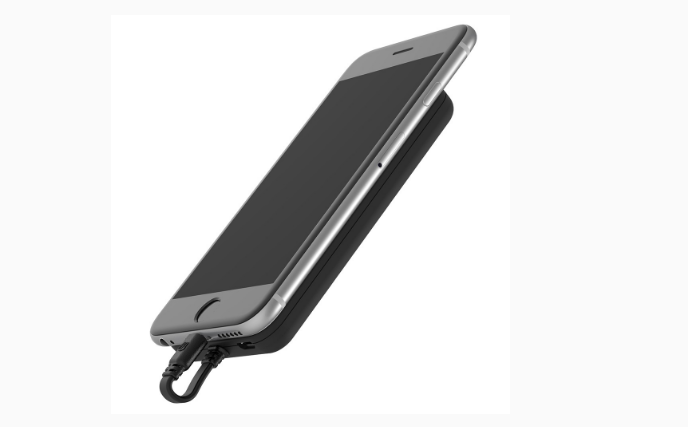
SCOSCHE unveils MagicMount PowerBank for Android and iPhone
Removable phone batteries used to be a very important thing to me. It is one of the reasons, at least initially, I shunned the iPhone for Android smartphones. Over time, however, this became less important, thanks to USB battery packs. Ultimately, I bought an iPhone and couldn't be happier.
The problem with these battery packs, however, is that the cable creates a bit of a mess; it looks unsightly to have a wire dangling from your pocket. Meanwhile, battery cases are often bulky, ruining the svelte nature of the phone. Now, SCOSCHE unveils its MagicMount PowerBank for Android and iPhone. By utilizing magnets, it can be easily affixed to the rear of the phone when needed, and removed when not. The super-short cable will prevent tangling too.
Marshmallow now runs on 7.5 percent of Android devices
In just two months, Marshmallow has more than doubled its usage share in the Android market, thanks to the introduction of new devices and the availability of more software updates for older but popular handsets.
According to Google's latest figures, which are based on data collected during the seven days ending March 7, 7.5 percent of Android devices now run Marshmallow. When I last covered the distribution numbers in March, its usage share was at just 2.3 percent and it looked like its rise towards the top would be a very slow one.

Having a 5-incher means you spend more time in apps
It seems that size really does matter -- at least when it comes to the size of the screen on your smartphone. New research shows that people spend more time in apps if they have a larger screen.
The study from mobile engagement platform Localytics shows that 5-inch devices show 23 percent more app engagement than smaller screens. They also show 3.53 percent higher average session length than 4-inch screens.

New platform uses machine learning to streamline mobile development
Businesses are under increasing pressure to create mobile apps, but often lack the resources to do so effectively. Workplace mobility specialist PowWow Mobile is launching a new platform that lets users build apps faster and with less code.
SmartUX Studio is designed to easily transform functional web-based or Windows business applications into intuitive, modern mobile app experiences.
After the death of @MagicRecs, Twitter Connect makes it easier to find people to follow
It was a sad day on Twitter when one of most useful accounts, the @MagicRecs bot, was closed down. The experimental service had been firing account recommendations at users based on who they follow, but the experiment came to an end.
As something of a replacement, Twitter is introducing a Connect tab to its iOS and Android clients. The company says it will make it easier to find people to follow, and will come up with recommendations based on who you already follow, how you use Twitter, and what's proving popular with other people.

Facebook Messenger to gain privacy-enhancing self-destructing messages
With the ongoing debate about privacy and encryption, the rollout of end-to-end encryption to Facebook-owned WhatsApp came as little surprise. Now Facebook Messenger is set to gain a couple of privacy-enhancing features including self-destructing messages.
Already found in other messaging tools such as SnapChat and Telegram, self-destructing messages have been unearthed in Messenger for iOS version 68.0. As you would expect, the feature makes it possible to place a time limit on how long messages are visible for, making it ideal for communicating sensitive information.
Microsoft makes Xamarin SDKs for Android, iOS and Mac open source
Microsoft's embracing of the open source movement grows ever tighter, and today the company announced that its Xamarin SDKs (available for Android, iOS and Mac) will be open sourced. It's not long since Microsoft bought Xamarin, and just weeks later the SDKs are being opened up.
Announced at the Xamarin Evolve 2016 event, the move sees Microsoft trying to encourage mobile developers. The company says it has already made great strides in this area: "we helped nearly 3.5 times more developers get started building great apps with Xamarin than ever in our history as a company".

Google antitrust: Getty Images files complaint against search giant for image scraping and piracy promotion
Google is already embroiled in one antitrust case in Europe where the company stands accused of abusing Android's dominance. Now photo agency Getty Images is accusing Google of promoting piracy and engaging in anticompetitive behavior by 'scraping' images from third party sites.
In a familiar-sounding complaint, Getty Images also says that Google skews search results in favor of its own services -- such as Google Images. The photo agency says that this directly impacts upon rival services, but perhaps the big charge is that a change made to Google Images provided access to copyrighted material and "promoted piracy, resulting in widespread copyright infringement".
BlackBerry Priv gets Android 6.0 Marshmallow
Android 6.0 launched over half a year ago, but even today there are still lots of devices that have yet to receive the software upgrade to Marshmallow. In fact, at the beginning of this month fewer than one in 20 were running Google's latest mobile operating system.
For BlackBerry Priv users though things are looking up. The Canadian maker has announced the Marshmallow rollout for its first Android smartphone, introducing improvements to the camera, battery, privacy, security, and more.
Even Microsoft's biggest fan doesn't want Windows 10 Mobile
Windows Phone has been dead for some time now. I knew it. The world knew it. Dogs knew it. The only people that were seemingly unaware were those that pledged allegiance to Microsoft. You know who they are -- those men and women that some call "fanboys".
Even the journalism community has them. Folks like Paul Thurrott and Mary Jo Foley are unapologetic fans of Microsoft. While Thurrott has long since abandoned the horrific Windows Phone platform, Foley has been one of the few holdouts. Today, she announces that she -- Microsoft's biggest fan -- is choosing the Linux-based Android instead. If this doesn't signal the death of Windows Phone/Windows 10 Mobile, I don't know what does.
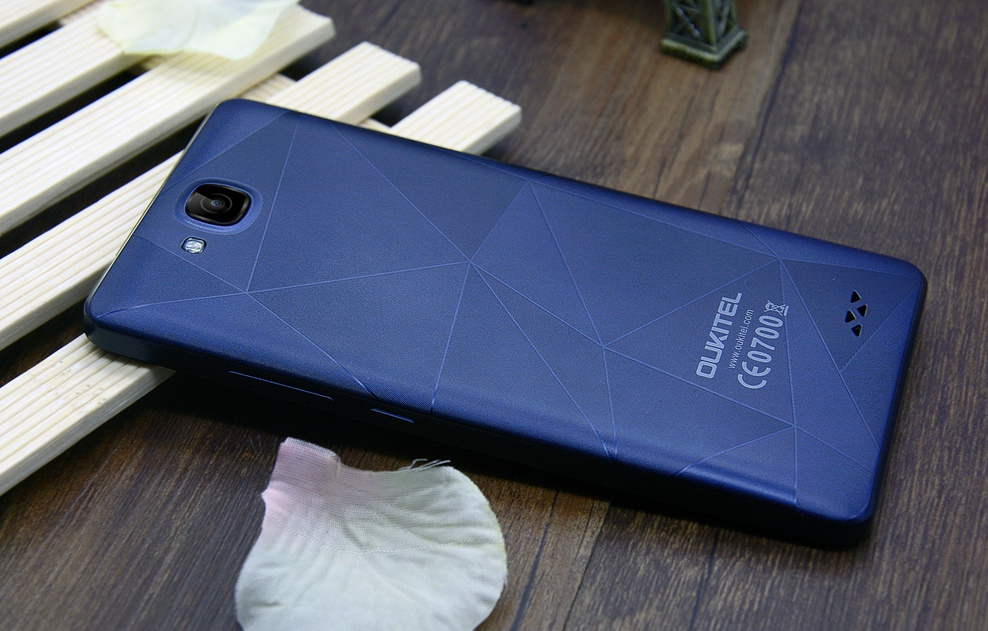
Oukitel aims to shake up the budget smartphone market with the sub-$50 C3
Not everyone wants or can afford a premium smartphone and Chinese makers have been busy carving out a niche at the lower end of the market with a whole raft of models that provide smartphone features at dumbphone prices.
Launching next week the Oukitel C3 is the latest entry into an increasingly crowded market. What makes it stand out is that unlike most cheaper phones which rely on older versions of Android, the C3 runs the latest 6.0 Marshmallow.

Deja Vu! Google's antitrust offenses are like Microsoft's (and the defense, too)
Once again, as it has done in the past, Google makes the classic monopolist defense for its competitive—or anticompetitive, depending on perspective—behavior with respect to Android. Today, the European Union's Competition Commission formerly charged Alphabet and its major subsidiary, which has 12 weeks to provide satisfactory legal response before the Commission issues corrective sanctions.
Simply stated, the EC finds that the company abused its dominant position, in part by contracts compelling Android licensees to preload Google apps and related services, including search. Microsoft ran into similar bundling headaches starting in the late 1990s with respect to Windows. Responding today, Kent Walker, Google general counsel, claims that licensees and consumers can choose to install third-party apps. Microsoft made like-claims during its antitrust defense here and in Europe; they fell flat.
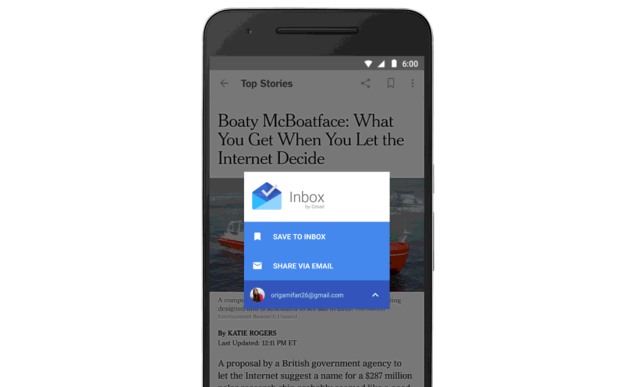
Google Inbox makes it easier to manage links, newsletters and calendar events
When it comes to email, Google is about more than just Gmail. With Inbox, Google has looked to simplify and automate email, and today the company announces three new features that take this further.
But Google doesn't think that 'features' is strong enough a word; instead these are 'experiences'. Specifically, there are new experiences that make it easier to keep track of calendar events, manage the links you email to yourself, and view all of the newsletters you subscribe to.

ITIF says Europe is 'misguided' in bringing antitrust allegations against Google
The EU may be bringing an antitrust case against Google in relation to its Android operating system, but the ITIF (Information Technology & Innovation Foundation) thinks that this is 'misguided'. Rather than Google harming customer choice, the institute says that it is the case against Google that should be in the spotlight.
Google has made much of the fact that Android is open source, and the ITIF says that "holding 'open' operating systems to higher standard only hurts consumer choice". Vice President Daniel Castro says that the Android ecosystem reduces costs for consumers, increases choice, and complains that the European Commission has failed to give details of precisely how consumers are being harmed by Google.
Google denies Android breaches EU antitrust rules
The European Union has charged Google with anticompetitive behaviour, saying that the company abused the dominance of Android in the mobile marketplace. Regulators have taken exception to Google's requirement on phone manufacturers to install Chrome and Google search, saying that this stifles innovation and limits user choice.
Unsurprisingly, Google disagrees and has hit back at the charges saying that "our business model keeps manufacturers' costs low and their flexibility high, while giving consumers unprecedented control of their mobile devices". More than this, Google says it prides itself on having built a sustainable ecosystem built on open source software. It also says that Android has been designed in such a way that is "good for competition and for consumers".



