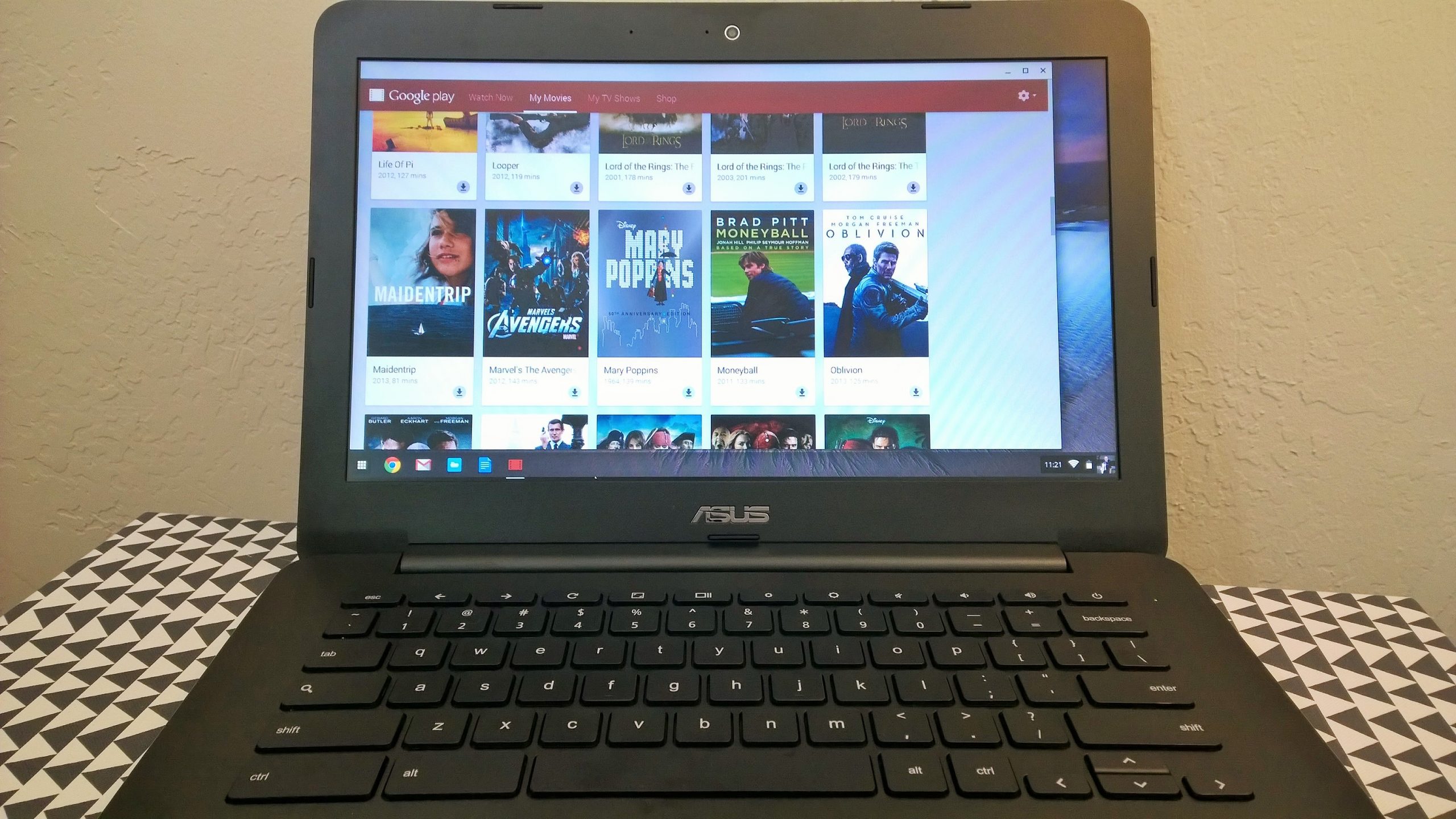
ASUS C300 Chromebook Review
This summer, I took a break from Chromebook, to conduct an experiment going "Microsoft All-In". After using the browser-based concept for about two years, I even gave up Google products and services for awhile. What terrible timing! There's a sudden shift in the winds, as Chromebook heads away from x86 and towards destination ARM and competing Intel processor Bay Trail. These lower-power consumption, lower-heat producing chips also illuminate new Chromebook form-factors: 13.3-inch displays. The first of these -- from Acer, ASUS, and Samsung -- started shipping in June, July, and August. I tested the ASUS C300.
Like the other two manufacturers, ASUS offers Chromebooks with 11.6-inch and 13.3-inch screens. I review the larger laptop. Both compete with the ARMs by adopting Intel’s Bay Trail processor, which offers similar benefits and performance pitfalls. There's nothing exceptional about the C300, which strangely is a benefit. The laptop's attributes are quite balanced -- design, performance, and price.

While you watch Apple, the Android Army marches forward
As the American tech press turns to San Francisco and Apple's developer conference, the real world looks to Taipei and Computex. There you see the Android Army's march against iOS. ASUS announces new Android tabs, HP takes the wraps off a laptop running the operating system, and Samsung serves up a phablet so large it crosses category boundaries. In literature, they would call this foreshadowing. Do you see how this story will unfold -- as Android manufacturers and Apple engage like factions from the Divergent series.
Android accounted for 39.7 percent of device shipments -- hybrids, PCs, phones, and tablets -- during 2013, according to Gartner. Apple's iOS and OS X: 10.4 percent. Forecast for this year puts Android at 47.2 percent and the fruit-logo platforms at 11.5 percent. That's context for today's announcements from the East and West. As I write, Apple's announcements dribble (iOS 8 and OS X 10.10) out of Worldwide Developer Conference 2014, so this post focuses on what the Android news means.
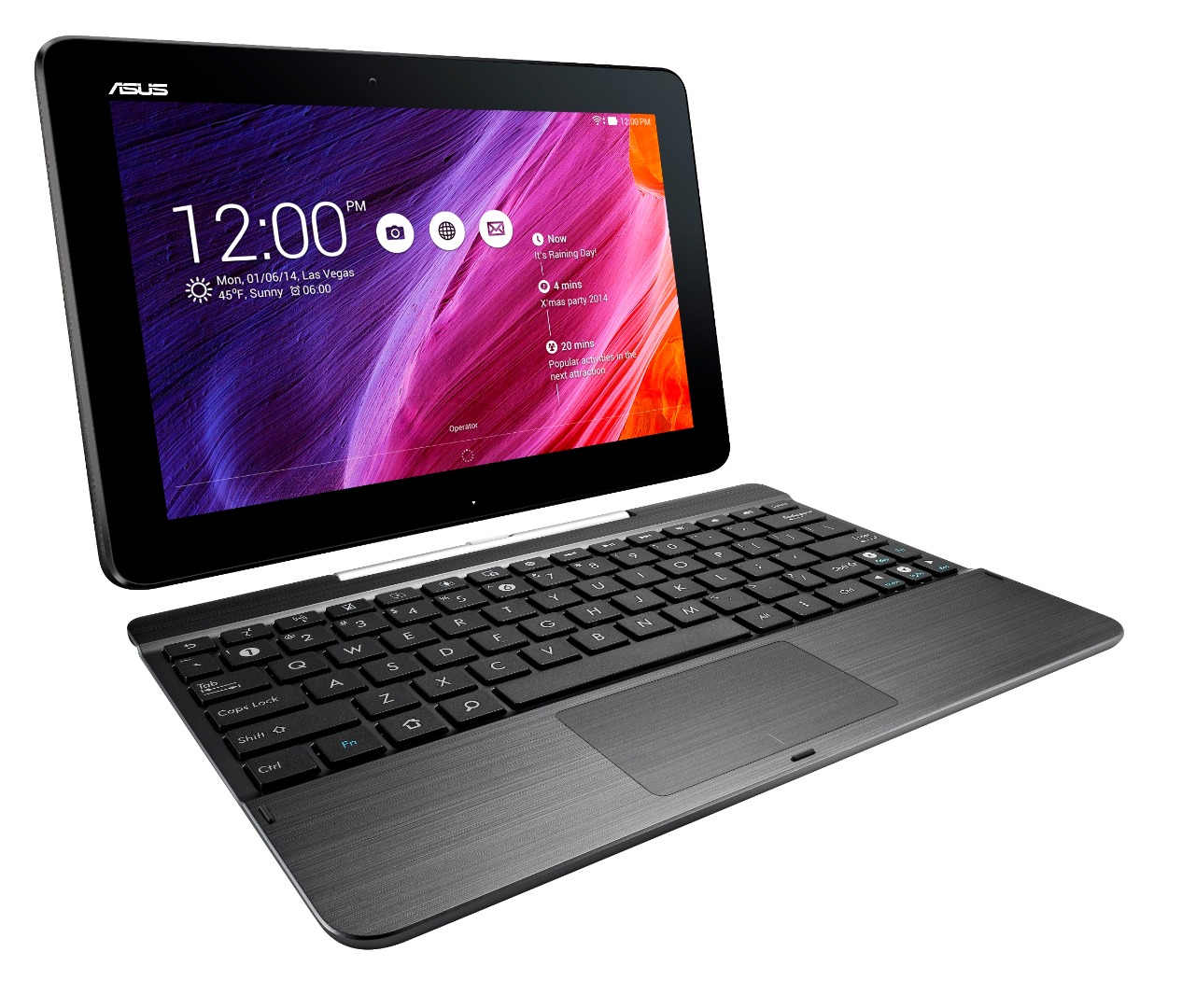
ASUS unveils a slew of Android tablets
You may not be aware of it, but technology fair Computex kicks off tomorrow, in Taiwan. And, as we have come to expect from companies attending such events, many products are already announced come opening day. Local player ASUS is among the early birds, as today it takes the wraps off a slew of Android slates, among other products like monitors and routers.
Perhaps the biggest news is that ASUS has made the jump to 64-bit processors across the new models, using the Intel Atom Z3745 in the MeMO Pad and Transformer Pad lineups, and the Atom Z3560 in the Fonepad series. Android 4.4 KitKat is the operating system of choice which runs on these slates.

ASUS unveils 'Strix' brand and devices -- R9 280, GTX 780 and Pro Gaming Headset
When it comes to computer building, Asus is one of the top brands; I am speaking from experience here. Building systems is one of my favorite hobbies and when selecting a motherboard or graphics card, Asus is always one of the brands at the top of my list. Of course, with great quality sometimes comes a high cost, but while Asus hardware sometimes costs more, I respect the adage of "you get what you pay for". I am willing to pay more for reliable, well-built components, whether it is Asus or other manufacturers.
Today however, Asus turns the volume up to 11 with a new gaming brand called Strix. What does "Strix" mean? The company says "taken from the ancient Roman and Greek word for owl, Strix means the keenest hearing and sharpest eyesight. Strix means feeling your environment so that you detect and react to the slightest movement. Strix means survival on the very edge of instinct. Strix is in your blood, as it is in ours". Deep stuff, bro. What does it mean to me? Kick-ass gaming hardware! Check this stuff out.
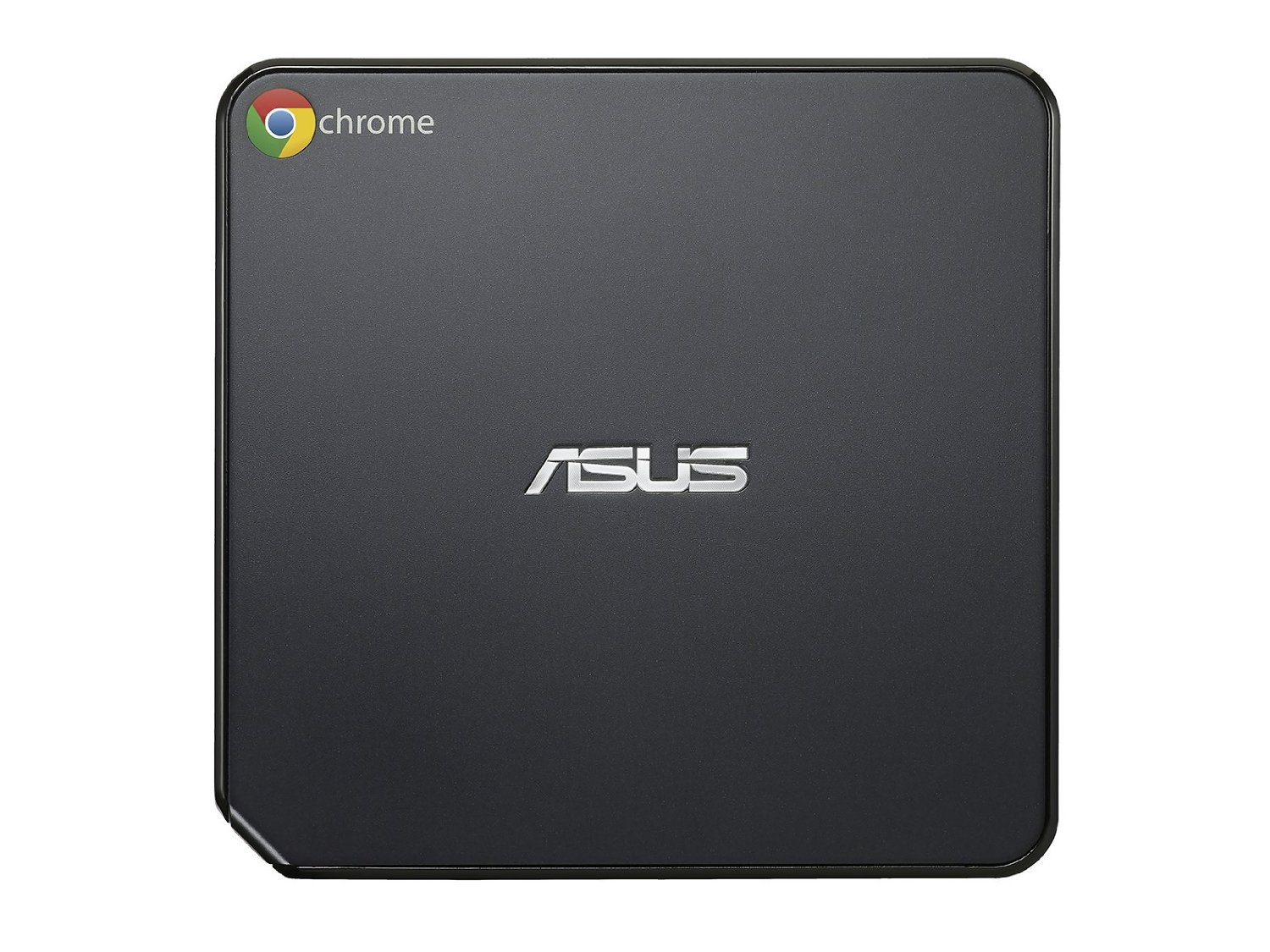
Asus Chromebox goes up for Amazon pre-order, get it for $179
It's already tough times in the Microsoft world, with Windows 8/8.1 under fire and the impending update coming under recent scrutiny for being, well, a mess, to put it much more politely than my colleague Mark Wilson worded things. If a bad time could go to worse then that would be rival Chrome OS invading the market.
While we largely think of these devices as low-priced notebooks, actual desktops are also getting into the game. Now the Asus Chromebox has hit pre-order in the US on the Amazon website.

Tablet vendors should focus more on hybrids
The tablet market is showing strong, continuous growth year-over-year. Research firm Gartner today announces that slate sales in 2013 increased by 68 percent compared to the year before. Android takes the market share crown after more than doubling its sales, iOS came second and Windows follows in third place.
Of the three, iOS was the only platform that did not post tremendous year-over-year growth. Android increased its sales, and lead over Apple's iPads, to 120.96 million units in 2013, up from the 53.34 million units sold in 2012. Meanwhile, Windows grew to 4 million units, which is, again, considerably higher than in the previous year when sales topped 1.16 million units. In contrast, iPad sales came in at 70.4 million units, marginally more than the 61.45 million units sold in the year before.
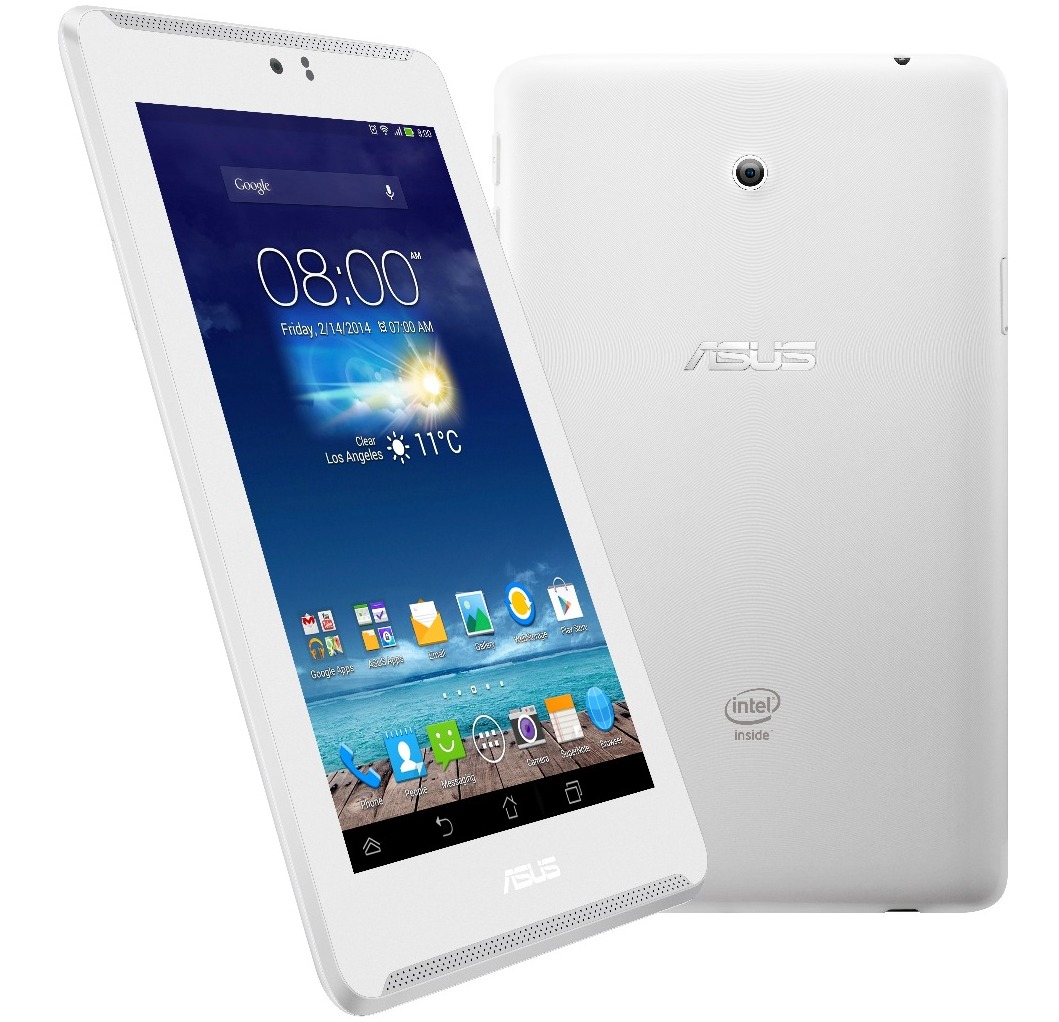
ASUS announces two Fonepad 7 Android tablets, with cellular connectivity on board
Tech companies are taking advantage of the MWC conference, held in Barcelona, to showcase their latest products. So far, we covered the announcements of Nokia's X Android smartphone series, Sony's Xperia Z2 smartphone and slate, and a couple of 64-bit mobile processors, that are aimed at Android devices, from Intel and Qualcomm.
ASUS is also among the many companies present at MWC 2014. Today, the Taiwanese maker announces two new Fonepad 7 tablets, adding to the number of Android devices that were just unveiled at the conference.

ASUS routers may be showing your personal files to EVERYONE
One of the main advantages to using a router is knowing that your personal information is kept away from the privy eyes of the Internet, unless you choose to make the data publicly available. A number of ASUS routers, however, are making files stored behind them visible to everyone, which basically renders them useless if security is of concern (which it usually is).
The behavior is present when the AiCloud feature is enabled. It allows users to remotely access files on the network, through a mobile app, including content stored on USB-connected hard drives. The last bit is what is available for the whole Internet to see. Why? Two vulnerabilities, which allow anonymous access to the built-in FTP server and the storing of user names and passwords in plain text, have not been fixed in due time by ASUS, after a security researcher reported their existence to the company in June of last year. Yeah, many months have passed since.
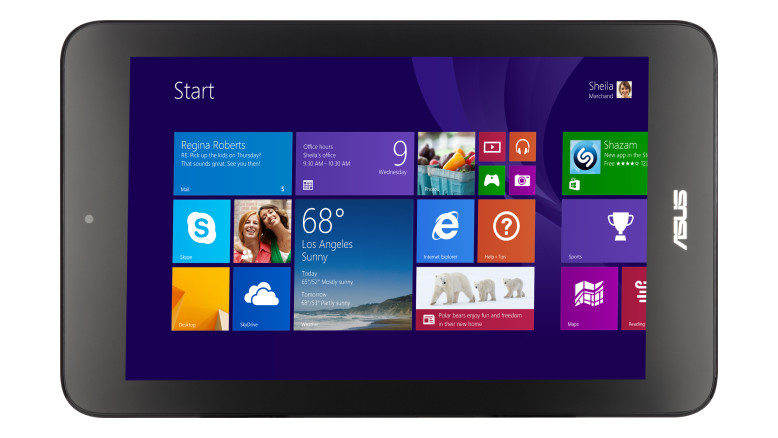
Microsoft Store now offers the ASUS VivoTab Note 8
Folks looking to purchase a small Windows 8.1 tablet now have one more option available to consider, as the ASUS VivoTab Note 8 just made its way to Microsoft's online store. The device can be had for $329 in the 32 GB storage trim, making it slightly more expensive compared to the $299 its maker had revealed it would cost at launch.
For the money, the VivoTab Note 8 packs an 8-inch IPS, five-point multi-touch display with a resolution of 1280 by 800. There is an Intel Atom Z3740 processor, running at 1.33 GHz (1.86 GHz on Turbo Boost), inside, backed by 2 GB of RAM and a one-cell battery that is rated at up to eight hours of use on a single charge.
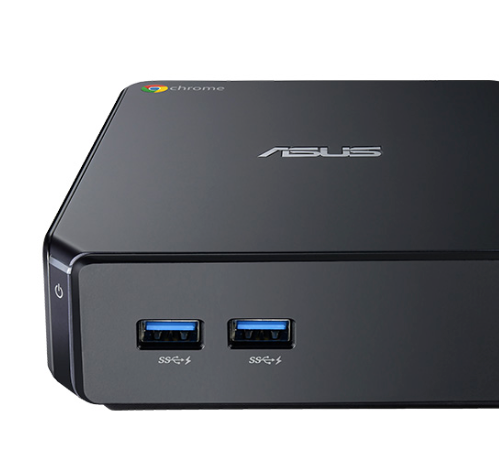
ASUS unveils the Chromebox -- sexy and inexpensive
The home computer landscape is constantly undergoing transformations. For a while, tablets were seen as the future, but Google's Chrome OS and associated Chromebooks threw a wrench into that idea. While tablets are still wildly popular and will continue to be, many people are finding them not ideal for content creation. I love my iPad Air with all my heart but given the option, a Chromebook would be my choice for writing.
However, when I am home, I still prefer my desktop computer. Maybe I am just stuck in my ways, but I like sitting at a desk with a very large monitor. With that said I have longed for a quality Chrome OS desktop. While the Chrome desktop concept, called Chromeboxes, were previously realized by other manufacturers, those models never really rung my bell. Well, ding, ding, today my bell is ringing as Asus announces its new Chromebox and it is sexy.
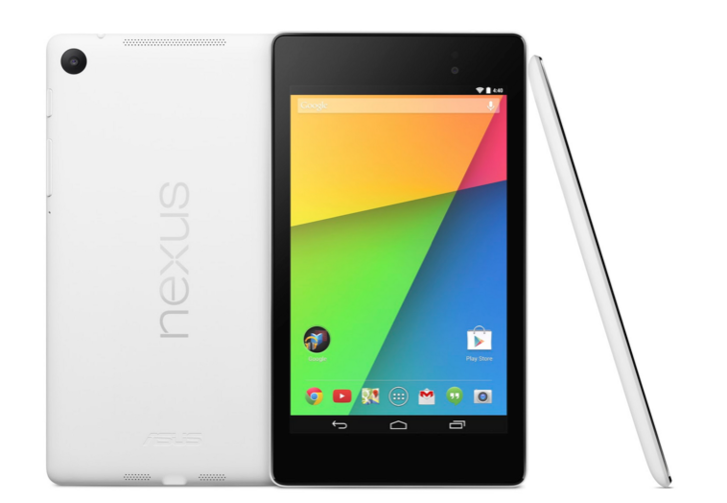
White Nexus 7 appears in Play store, only one model to choose from
Without much fanfare, Google has added a new member to its Nexus family, but it's not what you think. For weeks now we have waited, not entirely patiently, for an updated version of the Nexus 10 tablet, enduring endless rumored release dates that have come and gone.
The new addition, however, is a white version of the Nexus 7 that was unveiled back in June at a breakfast event with Android chief Sundar Pichai. The tablet sports a white back and edges, while the face still has the familiar black bezel.
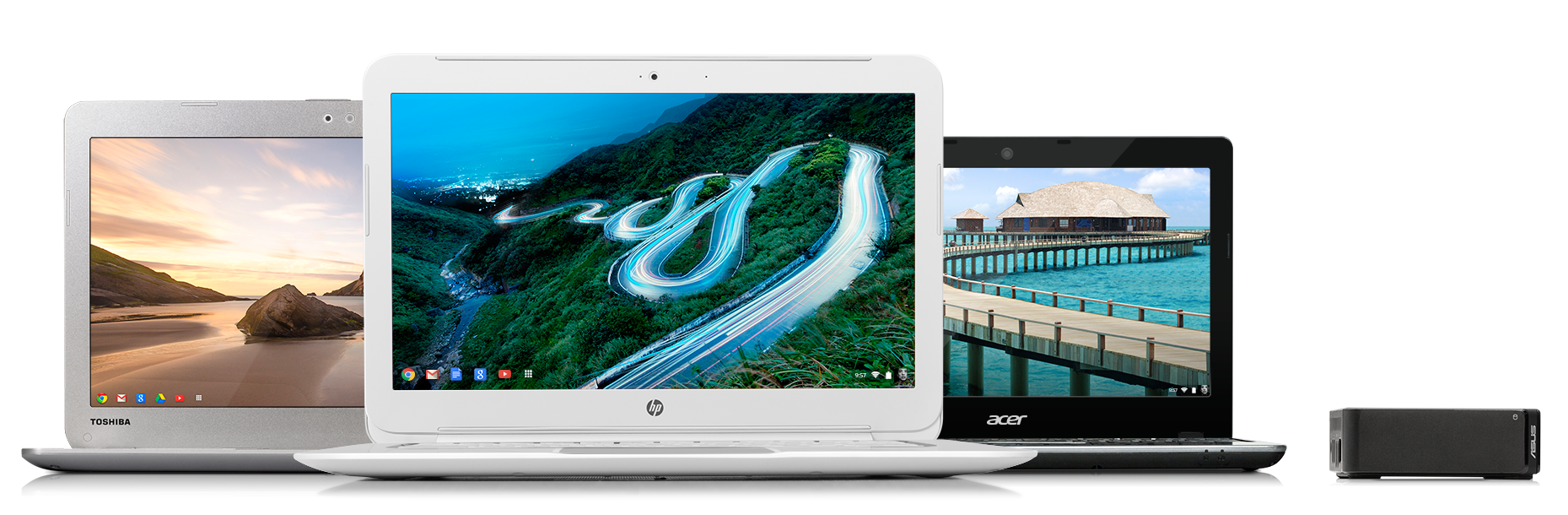
Chromebook goes Haswell
Today, at the Intel Developer Forum, Google and OEM partners unveiled plans to release new Chromebooks using Haswell chips. That means long battery life, on the order of MacBook Air, for a fraction of the price. Six top OEMs will produce Chromebooks, which isn't the best news for Microsoft and Windows 8.1. ASUS and Toshiba join Acer, HP, Lenovo and Samsung.
"Intel’s latest processors consume less power to improve battery life by more than 2X over previous generations, while offering increased performance", Caesar Sengupta, Google's Chromebook product manager, claims. "This means these new Chromebooks can last all day so you can focus on getting things done".

ASUS showcases its new uber-cool Zenbook UX301 ultrabook
I have a bit of a confession to make: I rarely get excited by new tech products. It's not because they are bad (well, in most cases they are not), but rather due to their inability to make me see myself using them. A handset can't really get my heart racing when it looks almost exactly as every other similar device on the market (and, no, I'm not taking a stab at the iPhone here), no matter how hard I try to see the light.
There is, however, a genre which appeals to me -- ultrabooks. Why? Well, manufacturers are so desperate to get people's attention away from the traditional product in this segment -- Apple's MacBook Air -- that they go to great lengths to make their products stand out from the crowd, like a color arc in a rainbow. And that is a good thing. Just look at Acer and its dazzling Aspire S7 or ASUS and its striking Zenbook lineup, the latest member of which is the UX301 that was just teased at IFA. (They're appealing and inviting.)
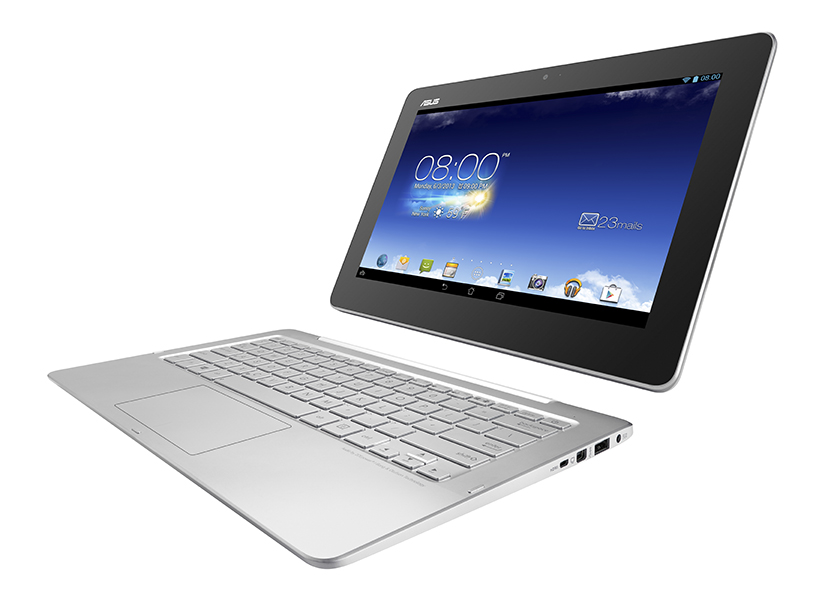
Asus unveils Transformer Book Trio -- a Windows 8 and Android hybrid
At Computex 2013, Asus unveiled the Transformer Book Trio or what it calls "a three-in-one mobile device" that can be a Windows 8 notebook when connected to the keyboard, a Windows 8 desktop PC, or a standalone Android tablet.
The Transformer Book Trio runs two operating systems -- Android (Jelly Bean) and Windows 8 -- and is designed to switch between the two seamlessly, giving users access to over 700,000 apps from Google Play and Windows Store.
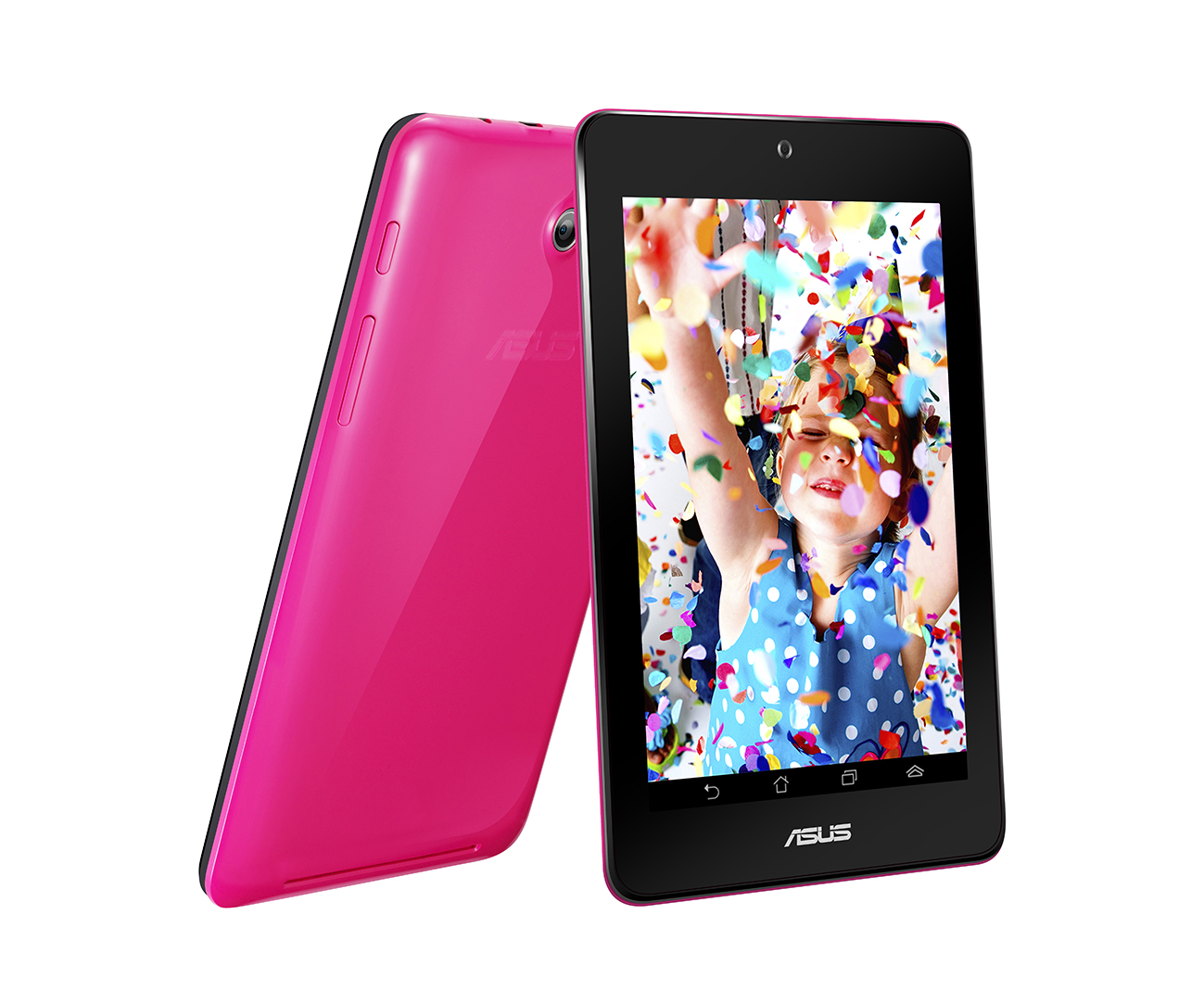
Asus announces MeMO Pad HD 7
Today at Computex in Taiwan, Asus announced a lot of new products, including a new MeMO Pad HD 7 tablet.
The Android device is 10.8mm thick and weighs just 302g. It packs a 7-inch 1280 by 800 IPS display with 170-degree wide viewing angle. The device is powered by a Qualcomm quad-core processor, has 1GB of RAM, and features a 1.2 megapixel front facing camera and an optional 5 megapixel rear facing camera.