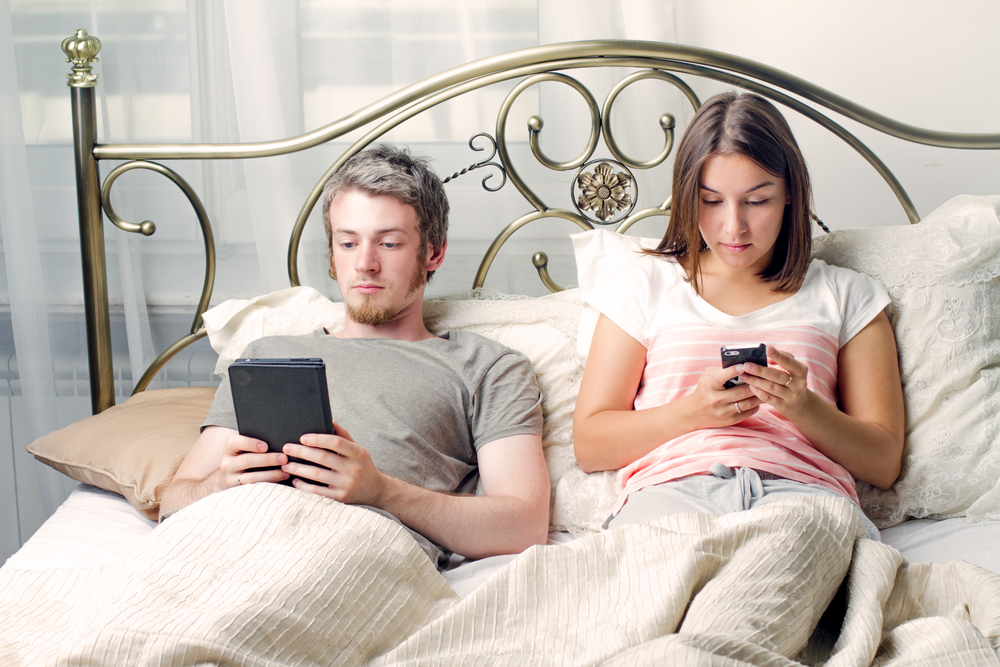
RE: Was it good for you? -- 8 percent of people check emails after sex
Email is often cited as the killer app which popularized the internet. You might think that by now we'd have moved on but a new survey of 1,000 US email users from mail app provider My.com suggests we're just as in love with our inboxes as ever.
There are currently around 3.9 billion email accounts worldwide and the number is expected to increase by around 27 percent this year. We're also spending more time on our email these days with 46 percent of users admitting to spending an hour or more a day reading their messages.

Win! Win! Win! Get your hands on a 5-port USB charger
Hitting the road means luggage, and luggage is a pain -- all that… stuff… to carry from place to place. Traveling light can help to make the journey less of a chore, but there are some things that simply have to be packed: no self-respecting technology fan would go on vacation without taking a raft of devices with them. But devices need power, and this means chargers are needed. iPhones, MP3 players, Android tablets, iPads, digital cameras, Chromebooks, and countless other devices all need power -- and that means a lot of chargers.
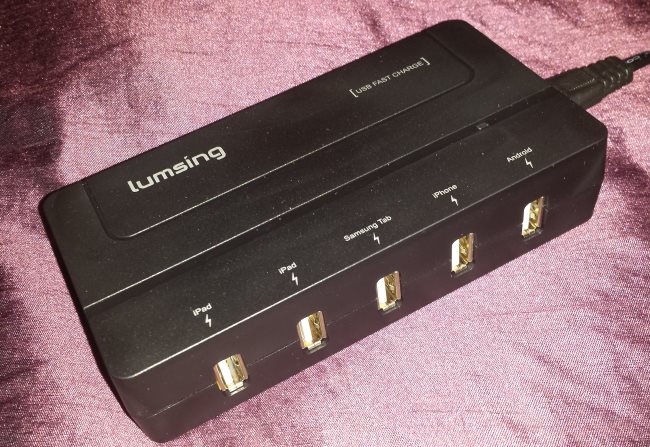
We just took a look at the Lumsing DCH-5U 5-Port USB Travel Wall Charger which enables you to leave the chargers at home and charge up to five devices simultaneously from a single power point. And we have one to give away!
Lumsing DCH-5U 5-Port USB Travel Wall Charger [Review]
A few weeks ago I took a look at Lumsing's harmonica battery pack. Now from the same stables comes the lengthily titled DCH-5U 5-Port USB Travel Wall Charger. This is a slightly different twist on the idea of providing power to travellers' devices -- this is a wall charger rather than a portable battery pack. If you're going on vacation, taking a trip, or even just hitting the office, there are your devices to consider. Your phone, tablet, MP3 player, and other bits and pieces all need power, all need their own charger.
Except they don’t. Leave all of your chargers at home, and just take a selection of USB cables -- this 5-port hub allows for up to five USB devices (obviously) to be charged from a single wall power point. The 31W/6.2A unit has two 5V 1A ports for phones, and three 5V 2A ports for tablets and devices with higher power demands. Oddly, the ports are labelled, left to right, iPad, iPad, Samsung Tab, iPhone, and Android. It would have made more sense to simply indicate which of the five were the high-powered ports, but this is a minor niggle in the grand scheme of things.
Mobile Identity Connect provides secure single sign-on for enterprises
One of the biggest concerns that businesses have about the increasing use of mobiles and BYOD is how to keep their data secure. Traditional security tools were built to cope with desktop devices rather than the on/off existence of mobile connections.
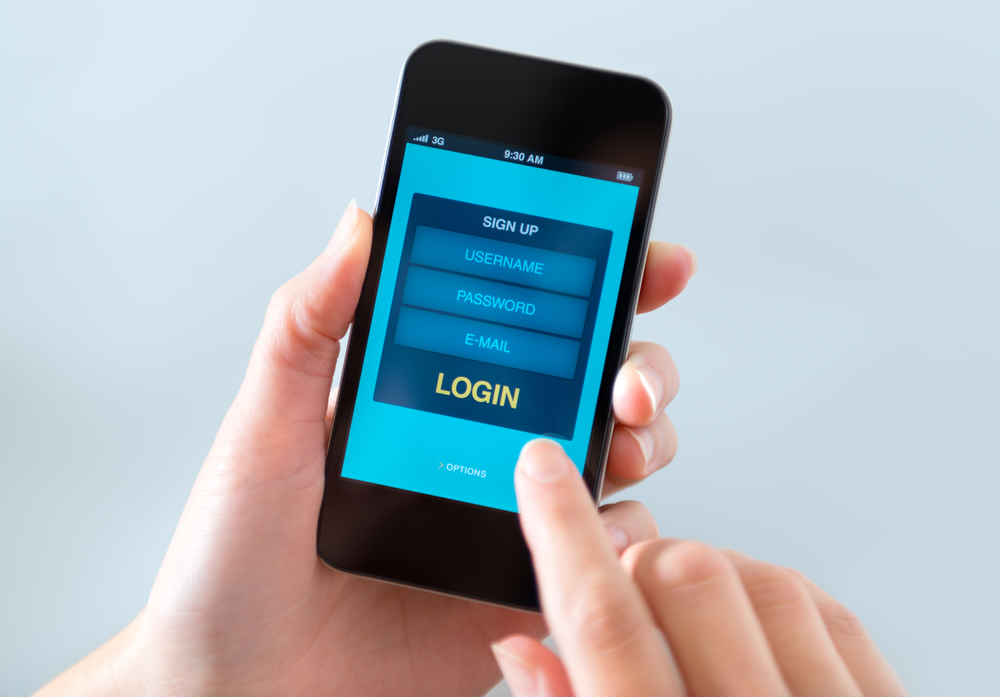
Mobile platform specialist Kinvey aims to help mobile developers to seamlessly secure mobile, tablet, and responsive Web apps with its newly-launched Mobile Identity Connect product.
With Surface Pro 3 as mediator, Windows and I reconcile our differences
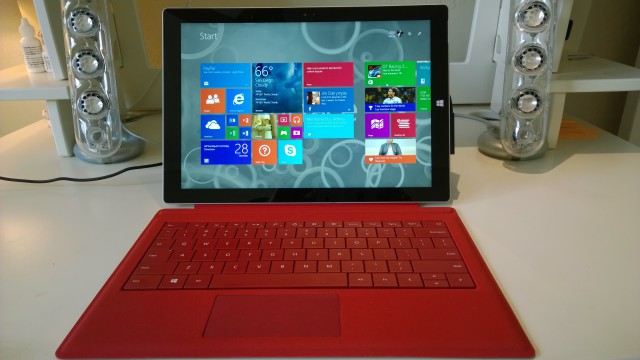
Fourth in a series. Before adopting the Chromie lifestyle and declaring independence from Apple two summers ago, I primarily was a Mac user. I wrote most of the so-called anti-Apple stories (so some commentary say) on the company's laptops. Chromebook still warms my heart, but for the summer -- and likely longer -- we part ways. On June 20, I walked out of Microsoft Store San Diego with a free Surface Pro 3. But I am accidental thief; that story later.
In April, I wrote about "My two years with Chromebook", giving loads of praise. I might still use Chrome OS as my primary platform today, but I'm a bifocal reader now and wanted to reduce eye-strain. I purchased a refurbished Surface RT preinstalled with Windows 8.1, because of the free Word, which will ease ebook publishing. I really enjoyed the user experience, much more than the Surface Pro reviewed in February 2013. Updated operating system is major reason. Also, Microsoft's ClearType improved my reading ability. Windows' terrific graphics -- on the tablet and Nokia Lumia Icon smartphone -- are good for the aging eyes, too.

Smart consumers will be Android Wear wary
I find the whole smartwatch craze rather amusing, even more so now that Google has officially announced Android Wear, with two models, made by LG and Samsung, shipping next month. One-day battery life? Bwaaahaha. Do they never learn? Microsoft-powered smartwatches got better than that a decade ago, and short battery life still turned out to be one of the main reasons the timepieces failed.
In product design you can never ignore existing behavior. A watch is a set-it, and forget-it device. I suppose some gadget geeks accustomed to daily smartphone charges (or less) will be dumb enough to buy. But smart consumers will be Android Wear wary. Just ask Microsoft about the road to ruin, which is paved with the best intentions, the right manufacturing partners, and concept seemingly smart that isn't.
27 percent of websites aren't configured for smartphone searches
A new report from SEO and content marketing specialist BrightEdge reveals that although almost 60 percent of American adults own smartphones and 40 percent own tablets, more than a quarter of websites aren’t mobile friendly.
This leads to a massive loss of potential traffic and if marketers rectify this misconfiguration, the report discovered they stand to boost smartphone traffic by 200 percent.
ID stealing cloned banking app found on Play Store
A cloned banking app which steals user login credentials has been discovered on the Play Store this week. Mobile security company Lookout discovered the app and informed Google which immediately removed it.
The malware, called BankMirage, targets the customers of an Israeli bank called Mizrahi Bank -- the fourth largest in the country. The authors of the app placed a wrapper around the bank's legitimate app and redistributed it on the Google Play store, pretending to be the financial institution.
Survey highlights need for wireless security to keep pace with today's mobile technology
Inhance Technology commissioned iReach Insights to conduct a comparative survey of 2,000 mobile users in the US and UK; the surprise was not so much the differences but similarities in attitudes.
The headline story is that US users (27 percent) are more worried than 12 months ago than their UK counterparts (21 percent) about being mugged for their device. However, from a mobile security perspective, the more interesting data is contained in the body of the research.
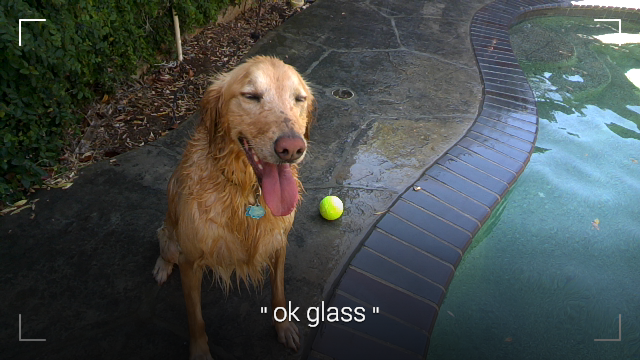
Google announces better Glass, new Glassware
Following feedback received from early adopters (known as Explorers), Google has announced a significantly revised Glass wearable. But, unlike prior iterations, it looks like this one will not be available as a free-of-charge upgrade for current users, who will now have to pay full price to get the latest and greatest.
The improved Google Glass is touted to offer better performance courtesy of a RAM capacity increase to 2 GB, which is 1 GB more than before (prior versions only allowed 682 MB of RAM to be effectively used, making the difference quite substantial). There are also more Google Now cards available, which will display extra information like shipping delivery estimates and car location.
Mobile threats can prove overwhelming for organizations
Mobile device usage and BYOD offers many advantages for business, but it also results in more entry points for cybercriminals looking to attack corporate networks.
A new report by research specialist GigaOm and incident resolution company AccessData highlights the need for organizations to be prepared and incorporate mobile devices into their overall security planning.
Kaspersky Lab uncovers new Android and iOS spying tools
Security company Kaspersky Lab has published a new report uncovering previously undiscovered Remote Control System (RCS) Trojans that work on both Android and iOS. It's also mapped their massive international command and control network.
The Trojans are part of the allegedly 'legal' spyware tool, RCS, also known as Galileo, developed by the Italian company, HackingTeam. Kaspersky's researchers were able to map the presence of more than 320 RCS command and control servers in over 40 countries. The majority of the servers being found in the United States, Kazakhstan, Ecuador, the United Kingdom and Canada.
Digital payments set to reach $4.7 trillion by 2019
A new report from research specialists Juniper shows that the annual transaction value of online, mobile and contactless payments is just over $2.5 trillion this year and is set to reach $4.7 trillion by 2019.
The largest increase in spend will occur through remote physical goods purchases, buying things online in other words. This is partly due to increased activity in emerging markets such as China, with the online retailer Alibaba accounting for 20 percent of global B2C (business to consumer) and C2C (consumer to consumer) online retailing worldwide in 2013.

Microsoft is cooler than Apple
Third in a series. In business perception is everything. Many companies succeed or fail not because their products are great but their brands are perceived to be that way. Apple is a remarkable perception manager. Consider iPhone 5s, which features and benefits fall far behind many competing devices. Rather than innovate, the fruit-logo launches an evocative marketing campaign -- "You're more powerful than you think" -- that makes the smartphone look better. Improved. The ads are compelling because they communicate: Your life will be better, you shall achieve your dreams, by buying iPhone 5s.
Meanwhile, competitors like Microsoft truly innovate and take the kind of risks that once defined Apple. Last year I asked: "Will 2013 be another year of Apple iteration masquerading as innovation?" Yes, and halfway into another year, little is changed. The answer is the same. Last month I explained "Why Apple no longer innovates". OS X Yosemite and iOS X 8 are prettier, but so what? Meanwhile, Windows 8/8.1 is a radical rethinking of the platform -- as is Surface, which delivers refreshing change to computing. What's that long-forgotten Yellow Pages tagline? Let your fingers do the walking. They do on Surface.

Parallels Access 2.0 lets you control your PC or Mac remotely using iPad, iPhone or Android device
Looking for a way to access programs on your desktop or laptop from your mobile? You could go down the route of installing something like TeamViewer, but with the best will in the world, trying to control your entire Windows or Mac desktop from your mobile is a fiddly experience at best.
A more practical solution can be found by going down the Parallels Access route, and it’s one that’s just been made even better with the release of version 2.0.