
Has Microsoft lost the tablet war before it begins?
Asus' Windows 8 tablet roadmap leaked a few days ago, revealing the company's intention to launch three tablets powered by Microsoft's soon to be released Windows 8 operating system. Bloggers and journalists have used the roadmap to argue that the pricing is too high to compete effectively against Apple iPads and Android tablets. Taken aside that the pricing may not be final, it seems like they are right, if you only compare price and nothing else.
Asus' entry model, the Vivo Tab RT, for instance, lists with a starting price of $599. That's $100 more than Apple's cheapest new iPad model, and $300 more than Google's Nexus 7 tablet. But can you really make that comparison?
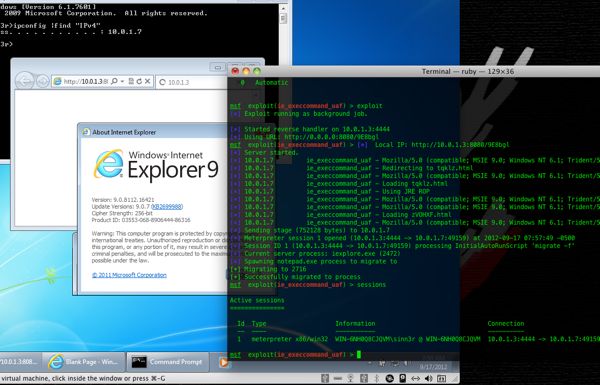
Internet Explorer zero-day exploit threatens huge chunk of IE users
Security researchers this week uncovered a bug in Microsoft's Internet Explorer that is actively being exploited in targeted attacks and remote code execution. Microsoft responded by launching its own investigation of the vulnerability, but has no solution yet.
The vulnerability has been observed in Internet Explorer 6 through Internet Explorer 9 on Windows XP SP3, Vista, and Windows 7, and users can be infected simply by visiting a malicious website.

Friendly advice to a fellow post-PC traveller
You do even better! That's what I'd say to fellow BetaNews contributor Mihaita Bamburic if I ran into him in a hallway somewhere. As I watch with amusement, his "existential struggle" with the post-PC question, I have to chuckle a bit at his naïveté. Like most PC veterans, Mihaita tries to squeeze a square peg (tablet) into a round hole (desktop-centric thinking). He'll need to leave those preconceptions behind if he ever hopes to do more than scratch the post-PC surface.
For starters, reset your purchasing criteria. You need to forget about those expensive "clamshell" tablet/dock combos and start off with a simple, cheap Android tab. I picked up a dozen Acer Iconia A200s on eBay for use at the new school my wife and I are building. Prices ranged from $170-200 for refurbished units with 8GB or 16GB of onboard SD storage. At that price point, you can pretty much experiment to your heart's content without worrying about trashing some "transforming" device that costs more than a decent laptop.
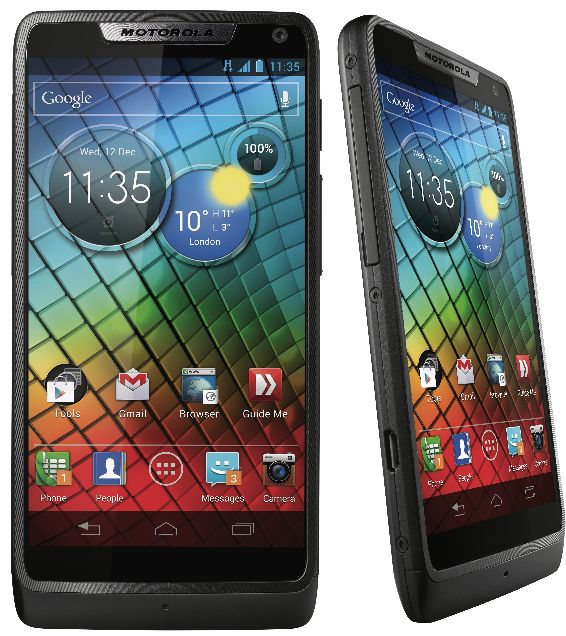
Intel and Motorola deliver the first 2GHz smartphone with Android-powered RAZR i
Motorola, which recently announced the Droid Razr HD smartphones as well as the Droid Razr HD Developer Edition, added a new smartphone to its line up -- the Razr i. In two color designs -- white and black, it bears an uncanny resemblance to the well-received Droid Razr M.
Unexpectedly, the star of the show is not the device itself, but rather Intel's Atom processor which makes it the first commercially available smartphone clocked at 2GHz. Just like the Droid Razr M, it comes with a 4.3-inch Super AMOLED Advanced display and, according to Motorola, a battery that is 40 percent more powerful than the competition. By competition, Motorola is referring to the year-old Apple iPhone 4S. On the back, there is an 8MP camera with an illuminated sensor and HDR (High Dynamic Range) capability, that can load in less than a second and can take 10 pictures using multi-shot mode, again, in less than a second as long as the display is not off.

TuneUp Utilities 2013 will get your PC in ship shape
TuneUp Utilities 2013, the latest edition of the supercharged PC cleanup and maintenance suite, is now available.
And while the new build doesn’t include any revolutionary additions, the suite has become significantly more powerful in a few areas, in particular with regard to hard drive cleaning.

MAGIX Music Maker 2013 mini-review
Programs that aim to simplify complex processes are often doomed to failure. You would think that any software designed to bring music making to the masses -- music making being something that people dedicate their lives to -- would fall at the first hurdle. But MAGIX is a company that has produced accessible software for many years, and the Music Maker range is one of its flagship products.
MAGIX Music Maker 2013 picks up form where its predecessor left off, but whether you are someone who has used a previous version of the program or you are new to the range, there is a lot to explore in this surprisingly power music creation software. The latest incarnation of the program is very much an evolution of an established product, and while it has little major in the way of new features, it feels like a natural progression.

What Office 2013 pricing means to you
Simply stated: Microsoft wants to end any pretense you own the software, while curbing software piracy in the process. Oh yeah, expect to pay more for Office than you do today. For many households or small businesses, that's lots more, particularly if they buy into the Office 365 subscription paradigm.
Office 2013 is all about subscription pricing, something Microsoft has attempted several times over the years in pilot form but never really brought to the mass market -- certainly not broadly. The company will continue selling boxed software but the big push is about subscriptions. Hell, I had to dig deep to find retail pricing. Today's pricing announcement pushed Office 365 versions instead. Right, the new subscription bundles.

AOKP Jelly Bean Build 2 is available
There's an encore to Jelly Bean Build 1. Android Open Kang Project team has announced the availability of the second release named Jelly Bean Build 2 that should be even more impressive that the first.
So what's new? AOKP Jelly Bean Build 2 is based on Android 4.1.1 , build number JRO03L and adds stability improvements, improved functionality and larger supported devices list, that now includes Samsung Galaxy Note and Galaxy S III for Verizon Wireless and even the venerable Samsung Galaxy S. As a nice bonus for Google Nexus 7 (grouper) owners, 720p video recording is enabled for the front-facing camera.
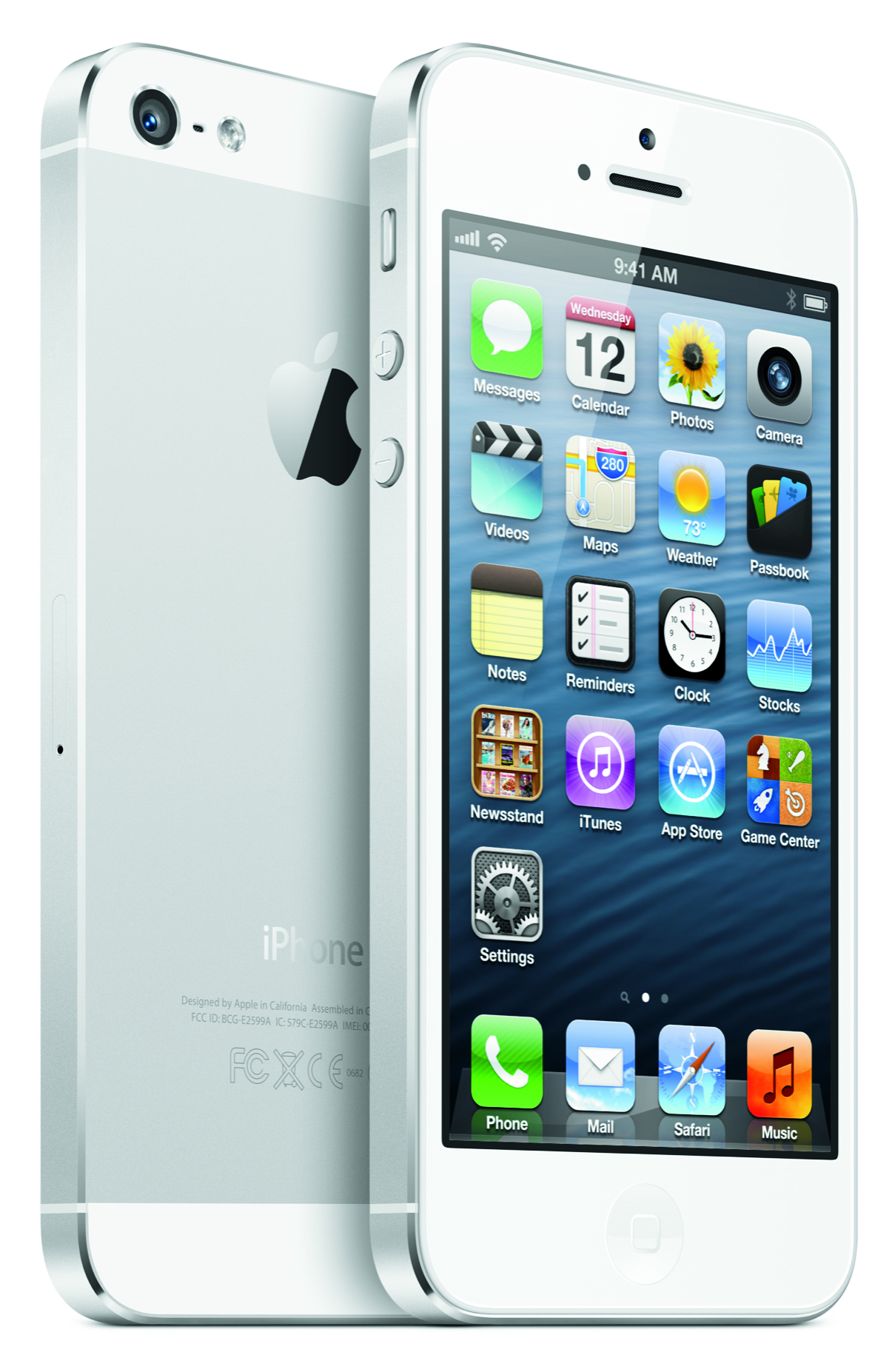
Who will buy iPhone 5? Not you
Last week, I asked: "Will you buy iPhone 5?" -- and more than 1,000 of you responded. Whoa, are you so not interested in this handset: 74.55 percent answered no. Now compare that to the poll about iPhone 4S, following its announcement: 39.6 percent "no". Well, well, perhaps Stephen Baker, NPD's veep of industry analysis, is right in his pre-launch prediction that US iPhone 5 sales won't be as big as many people predict.
Juxtapose that against early sales -- 2 million preorders in the first 24 hours, which sure would seem to indicate big, big success ahead. That's double the number during the same time period a year ago. Well, hell, how do those reconcile? Broader distribution is easy answer -- nine rather than seven countries -- and many more retail outlets in each. Then there's the obvious: The poll reflects a select audience of techno-oriented readers whose buying priorities are different. Even so, when comparing to last year's poll, a startling buying trend emerges, and it's not good.
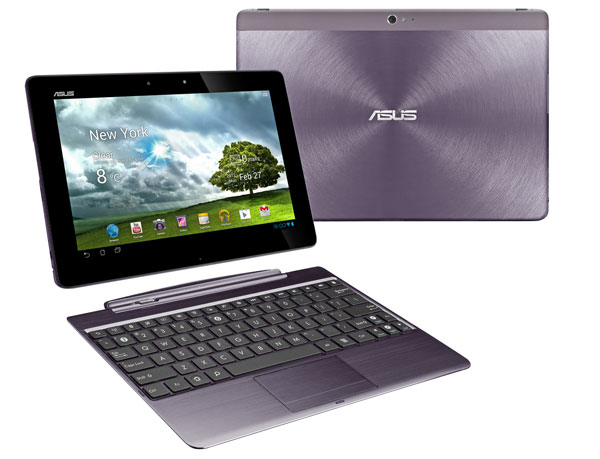
Existential crisis: A tablet with a keyboard dock is just a PC, right?
Post-PC is a lifestyle I do not strive toward and I have very good reasons for that. Yet after buying my Galaxy Nexus, I started toying with the idea that maybe a tablet is not such a bad idea after all. I will not concede to the concept of a tablet being suited for all tasks, yet I can accept it for what it is -- a toy. I have not self-medicated, nor did I happen to change overnight, but there is a logic to my madness.
I am the type of person that gets easily bored by using the same thing over and over again, be it software or hardware, and it would only be a logical step to assume that a new device could put an end to my unconscious --or most likely conscious-- quest to find the perfect anti-boredom device. My needs are rather specific, and I struggle to find the reason why I would rationally want to make the switch to an all-purpose tablet, and there isn't one.

Incumbent mentality drives the wireless communications industry to the crisis point
It's been almost three years since the Federal Communications Commission began warning us that we are consuming more wireless bandwidth than the airwaves can support, and in those three years, relatively little has changed to fix the situation. Lightsquared attempted to cleverly utilize satellite-band spectrum to build a ground-based 4G network, but those attempts were squashed by the GPS lobby, and could take another five years to come back.
The FCC is still on its quest to free up a total of 300 MHz of wireless spectrum by 2015 for mobile broadband data services, but time is rapidly running out on that promise. Last Wednesday, FCC Chairman Julius Genachowski announced the commission would be updating its wireless spectrum policies by the end of the year to help free up about 100MHz worth of spectrum in the 3.5 GHz band.

Google+ signups top 400M, but only 100M active users
On September 20, 2011, Google+ opened to the public, after nearly three months of closed beta. To mark the year anniversary, today the search giant released new data that initially bodes well for the first year while raising questions about the service's real success.
"This week we also hit an important milestone--over 400,000,000 people have upgraded to Google+", senior vice president of engineering boasts. "Here too, I’m happy to report that we have just crossed 100,000,000 monthly active users on Google+ (plus.google.com and mobile app)". What? Only one in four are active?

Google, Acer and the joke that is the Open Handset Alliance
Google is the center of a controversy about Acer's cancelled Aliyun OS phone launch, and there is seemingly no end to punditry about the search giant applying pressure, possibly even making threats. At the end of the day the whole mess has very little to do with whether or not Google is tightening its leash or if the issues at hand are all about piracy, as Google Android chief Andy Rubin claims.
Acer openly violated rules set forth by the Open Handset Alliance, and Google made the device manufacturer aware of the consequences. Unfortunately, Google being the one to speak shines a spotlight on a much deeper issue with the Open Handset Alliance.

Don't have Windows 8? Use WinCDE to muount disc images
Windows 8 has many interesting new features, and one small but particularly welcome example will see the system able to mount ISO images for easier browsing.
Sounds good to us. If you don’t plan on upgrading any time soon, though, you could achieve something very similar just by installing a copy of the open-source WinCDEmu.

Aliens zapped my toaster, or why you should care about space weather
The launch of the iPhone 5, and the fuss that’s being made over it (wow, 2 million sales in 24 hours) shows once again how far IT is embedded in every part of our lives. How lost would we be without any of the electronic kit and systems we so depend on? Even your toaster likely has a microprocessor embedded in it. And all of that makes us very vulnerable in ways that were almost totally unknown to our grandfathers. It’s not the natural world that has changed. It’s us.
You may remember that a few weeks ago there were widely publicized warnings of a solar storm which, in the end, had limited effects. And no doubt this caused many people to think that solar storms are never what you might call a real and serious problem. But consider this: 153 years ago, beginning on August 28th 1859, a super space storm occurred of such proportions as to make Hurricane Katrina look like a minor inconvenience.