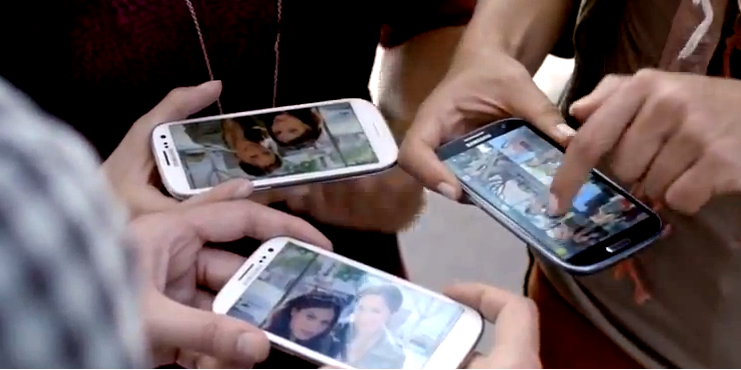
Samsung surges as US consumers pull back from iPhone
ChangeWave has new data out today showing an expected, but dramatic, decline in iPhone buying intentions over the next 90 days and unexpected jump for Samsung smartphones -- two models particularly: Galaxy S III and Note II. One-half of US consumers say they'll buy Apple's handset, but that's down from 71 percent three months earlier. Interest in the South Korean manufacturer's devices surged to 21 percent from 13 percent during the same time frame.
"Consumer buying intent for Samsung smartphones has been extraordinary to start the year", Paul Carton, ChangeWave's vice president of research, says. "Considering the Galaxy S III has been out for several months we'd normally expect a slowdown by now, but it’s still red hot. We’re also seeing strong interest in Samsung’s large-screen phone -- the Galaxy Note II. Super-sized smartphones are taking the industry by storm in 2013". Among those planning to buy a Samsung smartphone, 69 percent say Galaxy S3 and 23 percent Note II.
Will 2013 be another year of Apple iteration masquerading as innovation?
Apple ended 2012, Tim Cook's first full year as CEO, with a whimper. Analyst, blogger, reporter and social commentator puppy-love adoration gave way to persistent angst-questions about what's next and why the stock, which soared in September, soured through most of fourth quarter. Shares closed at $549.03, 22 percent down from the 52-week high. I can only describe 2012 as Apple's year of iteration and wonder where will be innovation this year. After all, the bitten-fruit logo company has a reputation to live up to.
By the financials, the Cupertino, Calif.-based company is the golden child. Starting in 2010, money poured in faster than the US Mint could print greenbacks. Apple takes in more cash than any other tech company ($156.51 billion during fiscal 2012), commands the largest market cap ($516.47 billion) and sits on a cash horde of at least $120 billion. But these capital gains come from past strategic investments, lucky timing (transition to the so-called post-PC era) and brilliant brand revival marketing and product execution. For the long haul, I predict that 2012 will be remembered as the year Apple stumbled -- as companies often do at the height of success -- and in this case following the tragic loss of its visionary cofounder.

Apple products top the list of ‘unwanted’ Christmas gifts
According to UK credit score agency Experian, Apple topped online searches for "returns policy" on Christmas Day, suggesting that the tech firm was responsible for the most unwanted gifts this past holiday season.
James Murray, digital insight manager for Experian Marketing Services, said that the clamor to return the technology giant's products was likely down to buying confusion: "This is probably a case of parents and grandparents confusing the various models of iPads and iPods available, as although an iPad Mini and an iPod Nano might sound similar, they are clearly very different products," he said.
[Mihaita] The tech I used most in 2012
If there's one word that best describes my personal tech use for 2012, change is definitely it. For the most part of the year I "cheated" one platform with another, with no particular personal favorite to get me through (almost) 365 days. Each piece of software and hardware is used for a particular scenario, something that I find rather soothing for my personal early adopter endeavors as well as my sanity. I just can't stand tinkering with the same bit of tech for longer periods of time, although there still is a dear old friend in my life...
My colleagues Alan Buckingham and Wayne Williams already wrote about their personal tech choices in 2012, and now it's my turn. Without further ado here is what I used most throughout the year, starting with my trusty dear old friend.
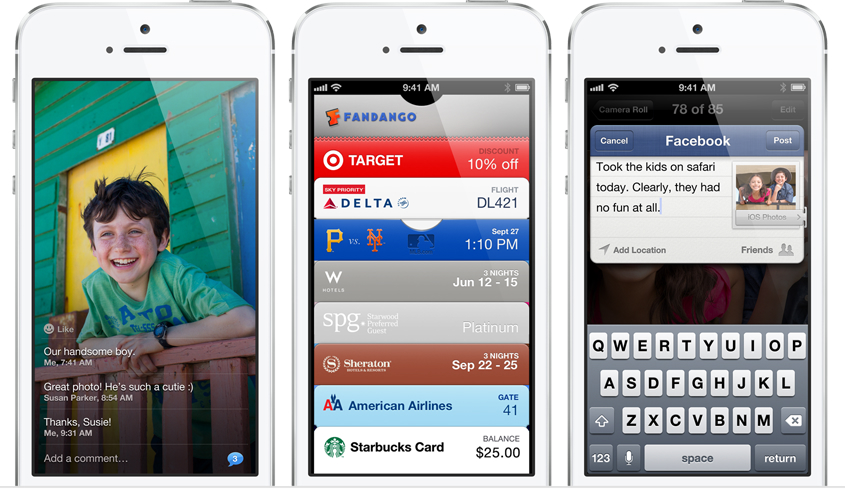
What I learned buying my daughter iPhone 5 for Christmas
In June, I boycotted Apple and completely declared independence in July. But my disdain is personal, I respect other people's fruity tastes. Thus, I found myself inside Apple Store on December 23 ready to buy my daughter her big surprise Christmas gift: white iPhone 5. But I ended up purchasing from AT&T, which experience taught valuable lessons about iPhone gifting and what the carrier can and will do that Apple Store won't or can't.
Simply stated: I wanted iPhone 5 to be a surprise. That meant purchasing the device without activating to her phone number beforehand, thus walking out of the store with an unopened box, which seal she could break on Christmas morning. At Apple Store, one of the red shirts said no way. The phone couldn't leave the premises without being activated. "You could buy an Apple gift card for the same amount", he suggested. What's the surprise in that? Would you rather get the phone or the promise of one? Geez Louise.
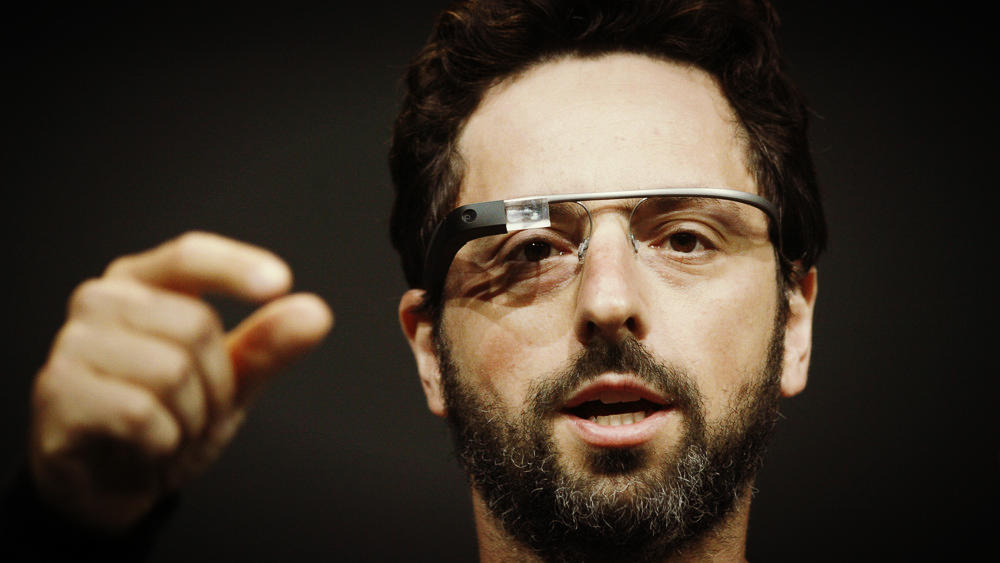
An Apple Christmas Carol
Tim Cook smiled as he pulled up the blankets and shook his toes against the cool sheets. Christmas Eve had come and the last Apple Store closed. Preliminary sales were gangbusters. Wall Street analysts betrayed him with lowered share price targets and projections iPad and iPhone sales slowed. But he knew! Cook laughed and kicked his legs under the covers. The best fourth quarter for sure! Occasional giggles broke the silence until at last -- long last -- sleep became him.
But briefly, for rattling chains startled Apple's CEO from slumber. Chunk. Chunk. Chunk. The clanking grew louder and an ominous dragging sound with it. A frightening wail followed. Pain. Great pain! Then through the wall pushed out an apparition. Ghastly yellow eyes squinted behind a face sullen, sunken and seemingly familiar. Tattered black turtle neck and blue jeans -- the uniform worn by his predecessor and mentor. Realization pierced Cook, and he felt a burning hot fire in his solar plexus. Steve Jobs!

Apple's perception problem is HUGE
For more than a decade I've quipped: "In business perception is everything". For some brands, this axiom is truer than for others. Apple leads the list, much to its determent. For more than a month now, I've read speculative stories from all quarters trying to figure out why the company's stock tailspins. Some people blame the fiscal cliff, others taxes. Meanwhile, the anti-Apple crowd delights in rumors iPhone sales are slowing and the mini cannibalizes iPad 4 sales. There's an aura of doom that I can only describe as the anti-reality distortion field.
Earlier today, Apple shares briefly dipped below $500, a low not seen since around Valentine's Day. Bloggers are beside themselves posting about this catastrophe -- or so they see it. I laugh, because they are a large part of the company's falling stock price problem. All these stories contribute to negative perceptions that feed the frenzy. That's one part of the answer to how someone nicked an artery and Apple bled about $200 per share, or 27 percent decline, from September's $705.07 record high. These bloggers were, and still are, detached from reality -- like analysts covering the company. Just two months ago, the Apple Fan Club gloated about projections of $1,000 a share. Now they run around like street people holding signs "The World Ends Dec. 21!" as shares slip and analyst cut back projections.

iPhone 5 first-weekend China sales top 2 million
Apple started selling its newest smartphone in the People's Republic of China on December 14. Late tonight, the company claims 2 million sales for Friday and the weekend. The announcement comes as rumors mount about slowing sales.
"Customer response to iPhone 5 in China has been incredible, setting a new record with the best first weekend sales ever in China", Tim Cook, Apple CEO, says. "China is a very important market for us", which is quite the understatement. During fiscal fourth quarter China revenue reached $5.7 billion, up 26 percent year over year. iPhone rose 38 percent, Macs 44 percent and iPad 45 percent. For the fiscal year, China generated $23.38 billion revenue, or 15 percent for all Apple. China accounted for more than three-quarters of Asia-Pacific revenue.
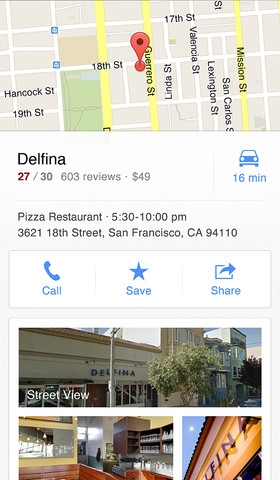
Google Maps gives iPhone much needed direction
What Apple takes away, Google gives back. Early this morning, Google Maps arrived for iPhone, replacing the app removed by Apple with release of iOS 6. The company's homegrown product proved nothing short of disastrous, for the fruit-logo brand and customers using the app/service. Earlier this week, law enforcement in Australia warned against using Apple Maps, after motorists were misdirected and their lives put at risk.
Reviews rightly have been scathing, while iPhone users cried not to Apple but Google for direction. Now that it's here, irony comes along. Android's developer may do more for current iOS than its maker. A surprising number of people held back iOS 6 upgrades or iPhone 5 purchases, not wanting to give up Google Maps or take on Apple's replacement.
Six years into iPhone's life, T-Mobile USA finally signs deal with Apple
T-Mobile USA's parent company Deutsche Telekom announced on Thursday that T-Mobile has finally entered into an agreement to carry Apple products. The announcement did not say if this agreement covered iPhone or iPad products.
The agreement was tacked onto the end of an investor announcement today which discussed a Deutsche Telecom dividend and growth plans for 2013 through 2015. It said: "In addition, T-Mobile USA has entered into an agreement with Apple to bring products to market together in 2013."

YouTube gets big makeover for iPad
Google unveiled two major iOS app updates with the release of Gmail -- email from Google 2.0 and YouTube for iOS 1.1.0. Gmail 2.0 is completely rebuilt from the ground up, debuting a brand new look and feel, the promise of better performance and a number of major new features.
YouTube for iOS adds native support for both iPhone 5 and iPad, plus the capability of streaming videos via Apple’s AirPlay wireless technology.
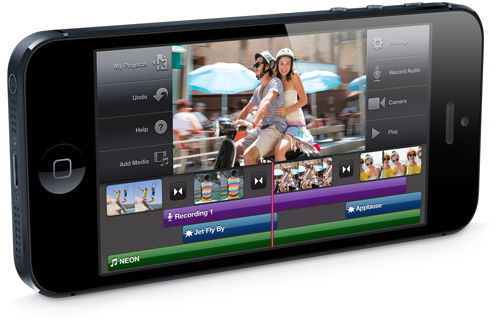
iPhone 5 is now available off-contract
Well that was fast. Little more than two months after Apple launched the iPhone 5 in nine countries, the Cupertino, Calif.-based software corporation offers its latest smartphone free of any carrier obligations. Pricing starts at $649 for the 16GB model and tops $849 for the 64GB version.
The models that Apple offers are actually unlocked GSM units, meaning that using either of the three available versions on a CDMA network such as Verizon Wireless is not possible. For the advantage of owning a carrier-free iPhone 5 prospective buyers have to shell out an additional $450 for the equivalent version available at major US carriers such as AT&T, Sprint or Verizon.
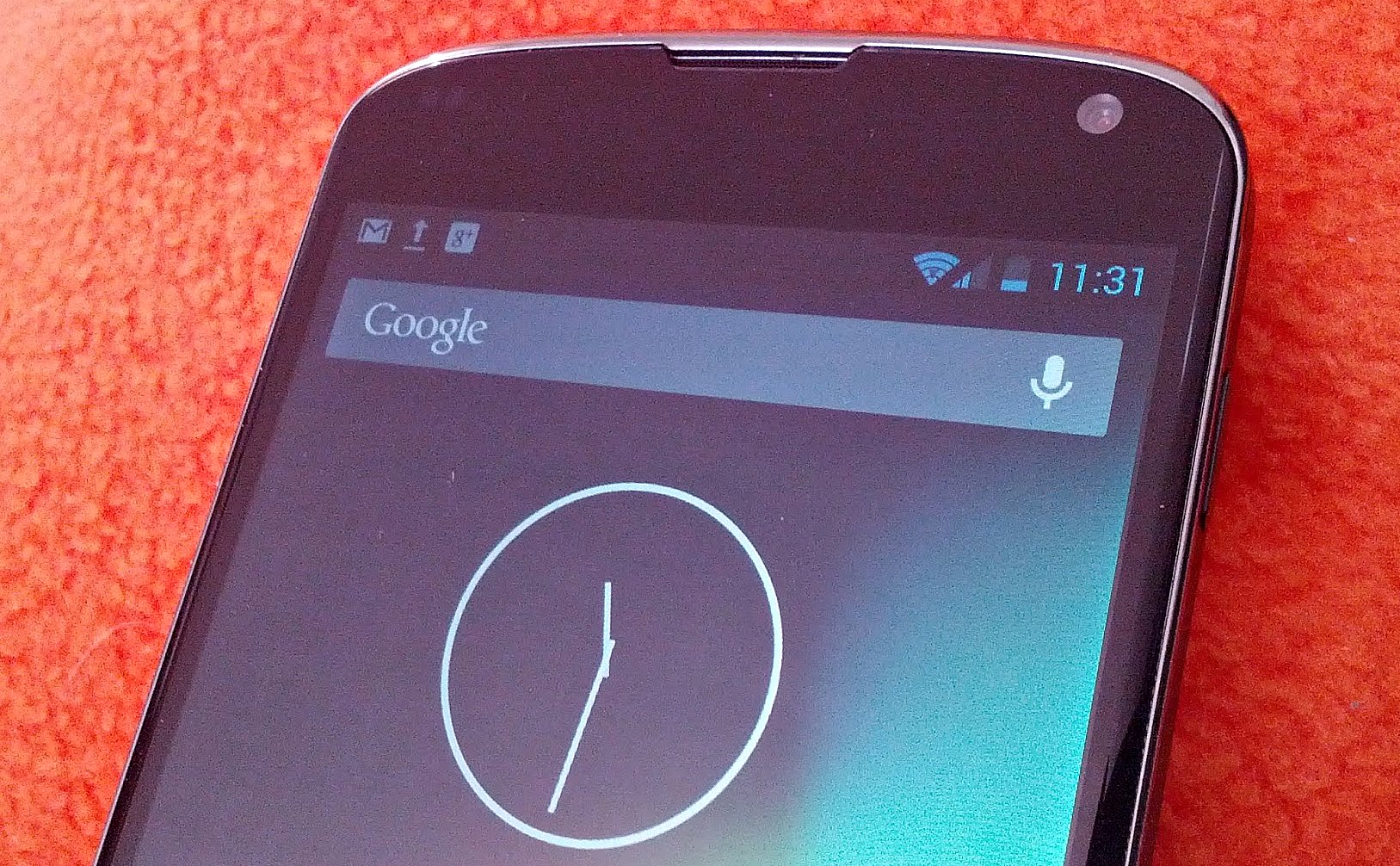
You can have iPhone 5, I'll take Google Nexus 4
I can see only one good reason to choose iPhone 5 over Nexus 4: The LG-manufactured mobile is sold out, and you can't wait. For the patient, Google's fourth-generation stock Android delivers rewarding experience. The new Nexus is the smartphone to buy this holiday season -- if you can find one.
Two reasons stand in iPhone 5's favor, neither is good, just necessary for some people: Your carrier -- for example, Sprint and Verizon in the United States -- isn't supported (Nexus 4 is GSM/HSPA+), or you bought heap loads of apps from Apple and don't want to lose your investment. I feel your pain, but offer no pity. Nexus 4 is exceptional.
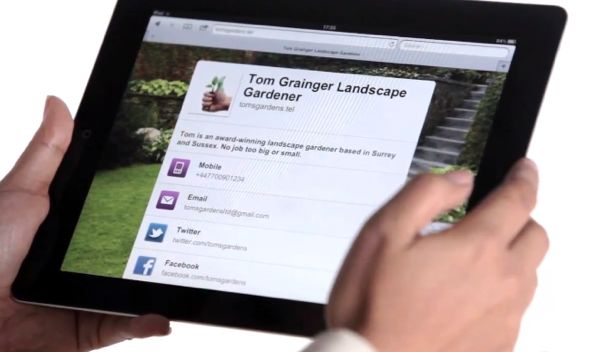
Creating mobile sites for small businesses is now as simple as buying an iPhone app
Mobile app stores and in-app purchasing functionality have revolutionized the video game industry by shrinking content into tiny doses and making their purchase and consumption effortless. Today, UK-based company Telnames announced it has taken that idea and applied it to mobile website design. With a mobile application, small businesses can buy domain names and build a mobile website in a matter of minutes without having to worry about registrars and hosting agreements. It might sound crazy at first, but it's kind of brilliant.
The idea behind Telnames Mobile Website Builder app is that it strips out all the steps that make website creation a hassle for businesses that don't have a Web developer on staff. Telnames says this is more common than you might think. More than half of all small businesses in the United States don't even have a website to speak of, much less one that is optimized for mobile devices.

Edible iPhone 5 cases now on sale in Japan
Most phone cases are designed to protect your handset from being dropped, or accidentally scratched. The Survival Senbei iPhone 5 Case is designed to stave off hunger pains should you find yourself miles from anywhere and unable to dial for a pizza.
The hand-crafted cases, now on sale in Japan, are made entirely from lightweight brown rice and salt and baked into a senbei rice cracker that fits perfectly around your iPhone 5. They do take anywhere up to a month to be delivered though, as the creator, a middle-aged Japanese woman called Mariko, can only usually manage to make three good ones a day.