
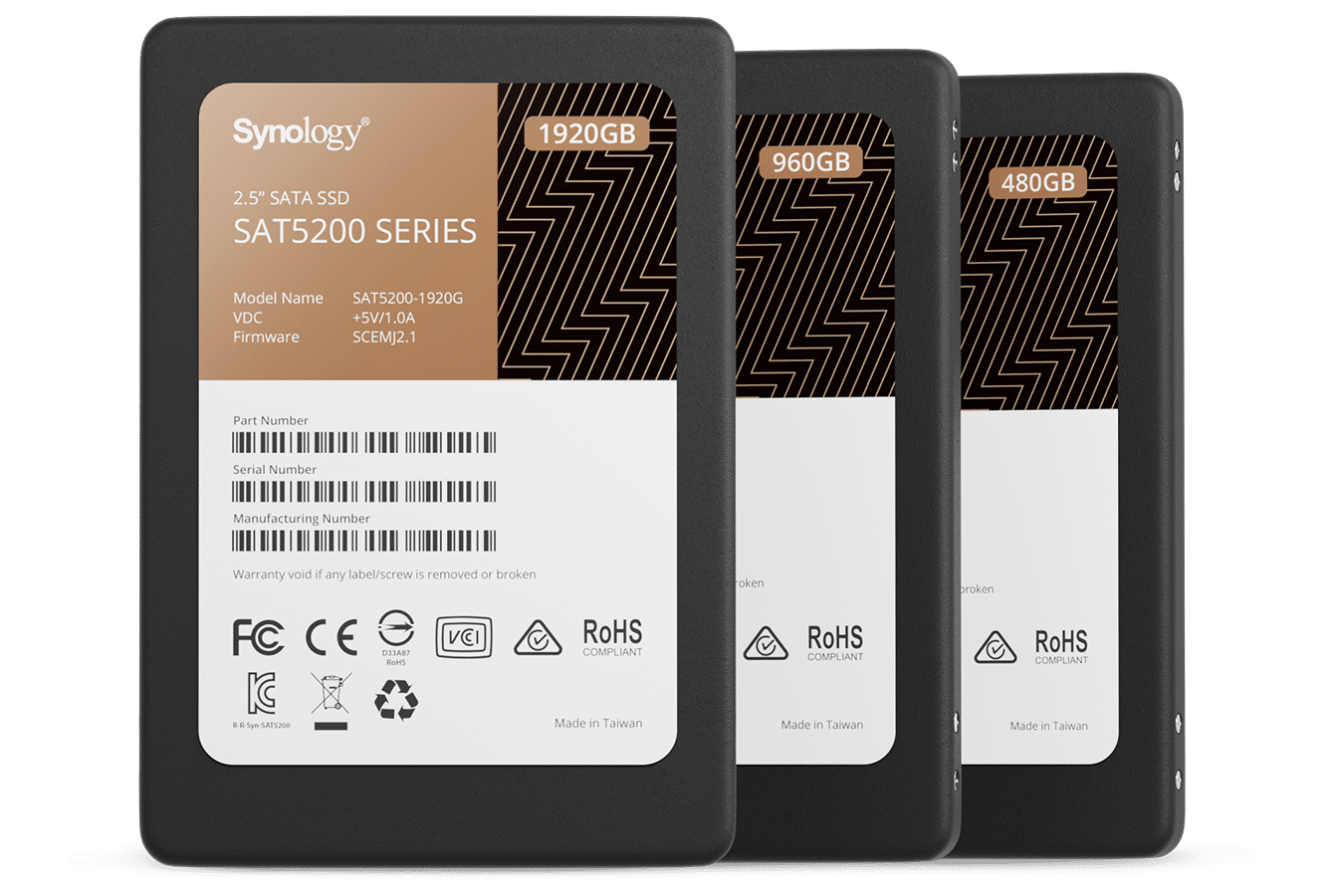
Synology selling its own SSDs for some reason
Synology makes some great network-attached storage (NAS) enclosures. Whether for home or business, its devices can be filled with storage disks to set up collaborative file-sharing over a network. Synology's offerings are fast and dependable, making them smart choices for consumers. There's a reason so many people trust the brand.
The company's NAS products can work with any brand of storage disk, but still, Synology has decided to begin selling its own solid state drives for some reason. Yeah, it is kind of odd to see drives with Synology branding, but here we are. I suppose the company saw a money-making opportunity, so who can blame it for trying to increase profits. The company isn't just offering 2.5-inch SATA SSDs either, but M.2 PCIe-based drives too. Nice.
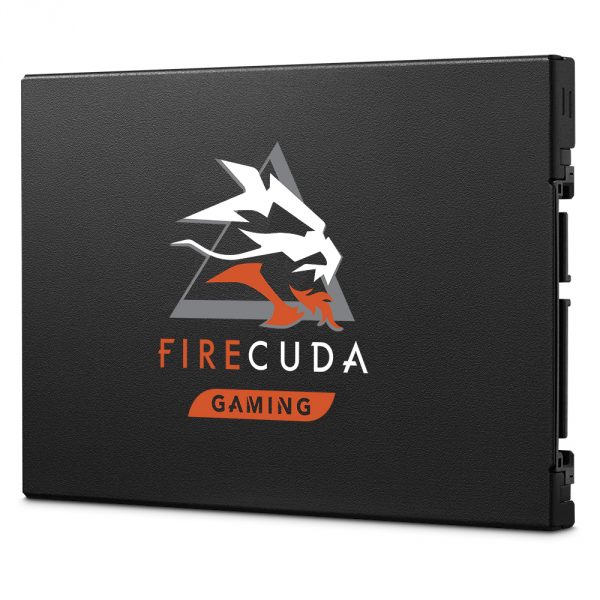
Seagate releases FireCuda 120 SATA SSD for gaming
Seagate is today releasing a gaming SSD, and I’m sure you’re wondering if that is just a marketing gimmick. The answer, dear reader, is yes it is. Nothing really makes a drive better for gaming. But while it is just marketing speak, the truth is Seagate is a trusted name in storage, so you should consider it for gaming and other uses too.
The "FireCuda 120," as it is called, isn’t even remarkably fast -- it is a SATA SSD and not the faster PCIe type. But that is fine, particularly for gaming, as impact between SATA and PCIe with gameplay would be negligible. With a capacity up to 4TB, however, you will have plenty of room to store your PC games.
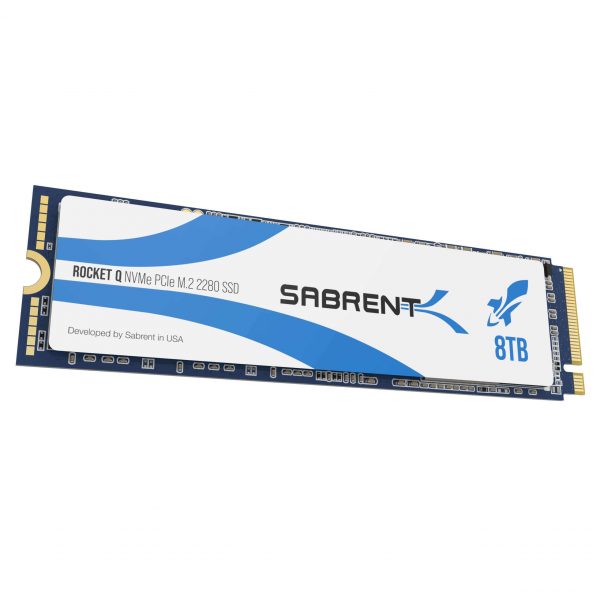
Sabrent unveils record-breaking 8TB Rocket Q NVMe PCIe M.2 2280 SSD
We recently told you about an exciting new drive by OWC -- the 4TB Aura P12 M.2 NVMe solid state drive. What made that SSD so interesting was its massive 4TB capacity, which was pushing the boundaries of what is possible with an M.2 drive.
Well, folks, a 4TB PCIe M.2 SSD is now "old hat." You see, Sabrent has a new drive that doubles that capacity! Yes, the company's Rocket Q NVMe PCIe M.2 2280 SSD will soon be available in a mind-blowing 8TB -- the first ever such consumer PCIe M.2 SSD to achieve that capacity.
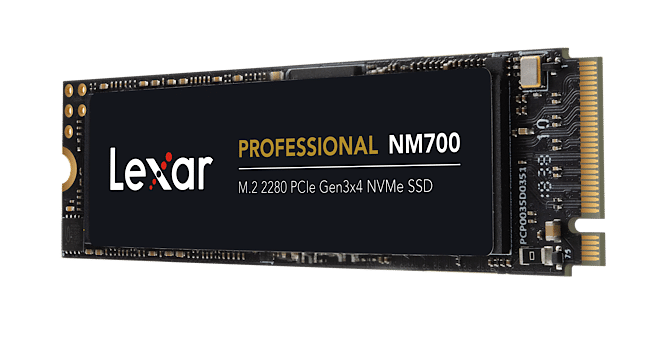
Lexar unveils Professional NM700 M.2 2280 PCIe Gen3x4 NVMe SSD
There is no shortage of news about solid state drives these days, with many new models being announced from popular manufacturers like ADATA, Samsung, and Kingston, to name a few. This includes both SATA and PCIe-based internal SSDs, plus external models that interface by USB and Thunderbolt 3.
Today, Lexar unveils an all-new solid state drive for professionals, although home consumers can obviously use it as well. Called “NM700,” it is an M.2 2280 PCIe Gen3x4 NVMe SSD with impressive performance.
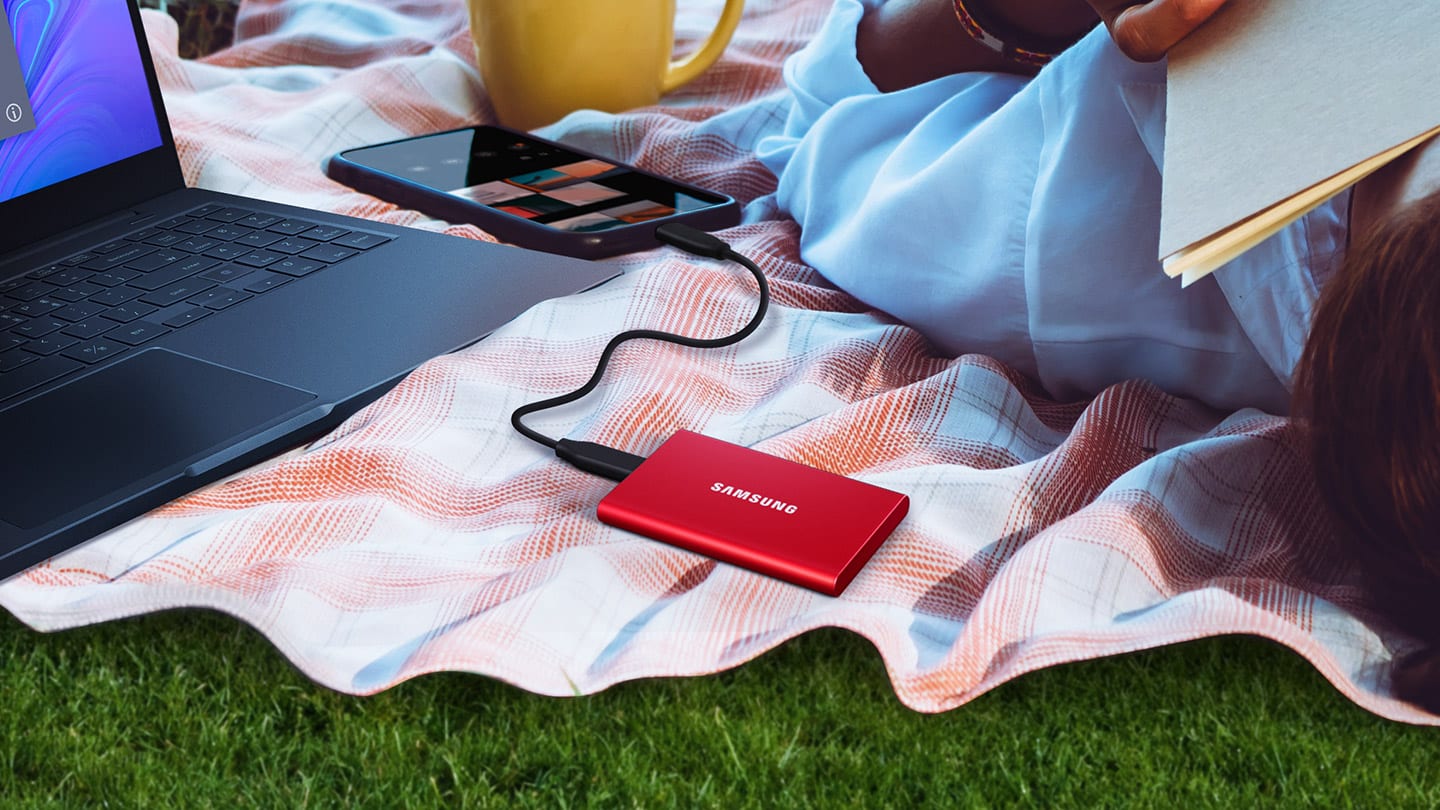
Samsung T7 USB-C SSD is finally here
Back in January, we told you about the Samsung T7 USB-C SSD — a fast and svelte portable storage drive. There are two variants of the drive — a “T7 Touch” model which has a fingerprint reader for decryption, and a non-touch “T7” model that uses a password for the same thing.
While the touch model has been available for purchase for some time, Samsung promised the non-touch variant would hit stores in Q2 of 2020, meaning April, May, or June. Well, the T7 USB-C SSD is thankfully meeting that promised deadline, as it is available beginning today!
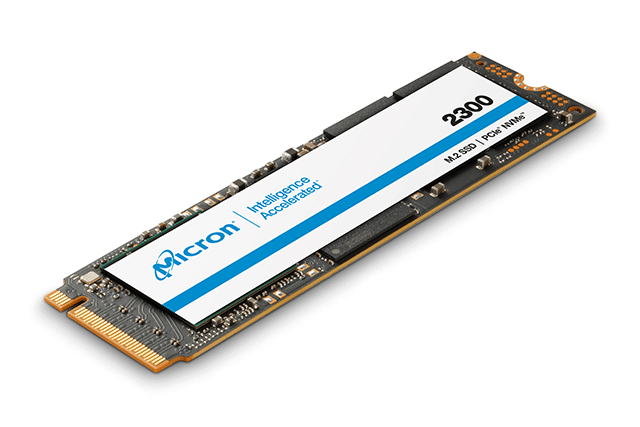
Micron launches 2210 and 2300 M.2 NVMe PCIe consumer solid state drives
Solid state drives are exploding in popularity thanks to their performance benefits and ever-increasing affordability. If you are still using a mechanical hard disk drive, there is probably no better upgrade you can make than moving to an SSD. You won't only see a boost in artificial benchmarks, but in actual usage too -- it is an upgrade you can truly feel.
Micron has two new solid state drives that are aimed towards consumers. Called "2210" and "2300," the former uses QLC flash, while the latter uses TLC. So while both are M.2 NVMe PCIe SSDs, the 2300 will be faster, while the 2210 should be cheaper. Both can be had in capacities of 512GB, 1TB, and 2TB, but the 2210 is also offered in 256GB.
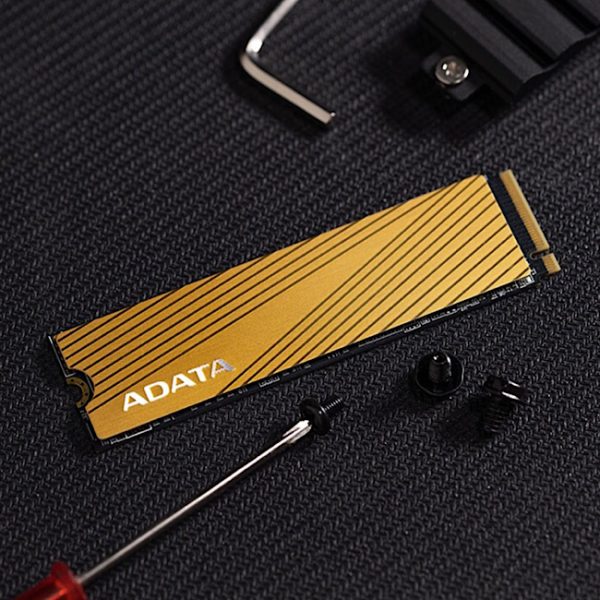
ADATA Falcon M.2 2280 NVMe PCIe Gen3x4 SSD has a golden heatsink
M.2 solid state drives often look the same. This shouldn’t be surprising, as there really aren’t many ways to customize them. You are pretty much limited to offering a unique heatsink to make the drive stand out.
ADATA has a new such drive that looks pretty cool and even has a neat name. Called “Falcon,” this PCIe Gen3x4 M.2 SSD has a golden heatsink, making it look quite attractive and unique. Hell, you could probably bring it to a jeweler, have it mounted to a chain, and then wear it around your neck — like a boss! Best of all, it is very fast too, with up to 3,100MB/s read and up to 1,500MB/s write.
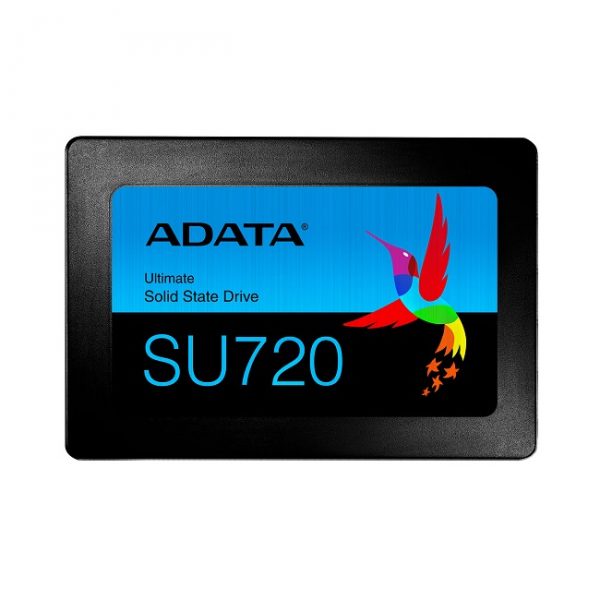
ADATA SU720 SATA SSD is a drop-in upgrade for all you maniacs still using hard disk drives
If you are still using a mechanical hard disk drive as your operating system boot drive, what the hell is wrong with you? No, really -- why are you like this? Look, I can understand using a HDD for data storage in 2020, but for your OS, you need to be using a solid state drive. Seriously, folks, the performance difference is "night and day" -- an SSD is significantly faster. Long gone is the excuse that SSDs are too expensive -- they are dirt cheap now. This is particularly true for the 2.5-inch SATA solid state drives, which are extremely affordable these days. Whether you have a desktop or laptop, an SSD should be in your computer.
ADATA has a new such 2.5-inch SATA SSD that should serve as a good drop-in upgrade for all you maniacs still using hard disk drives. Called "SU720," it is very unremarkable, but that is by design. Despite inexplicably having the word "ultimate" on the label, this SSD isn't meant to make enthusiasts drool or win any awards. Instead, it will offer a nice boost in performance to those still booting from a woefully deficient 2.5-inch or 3.5-inch SATA mechanical hard drive. And hopefully, it should be easy on the wallet too.
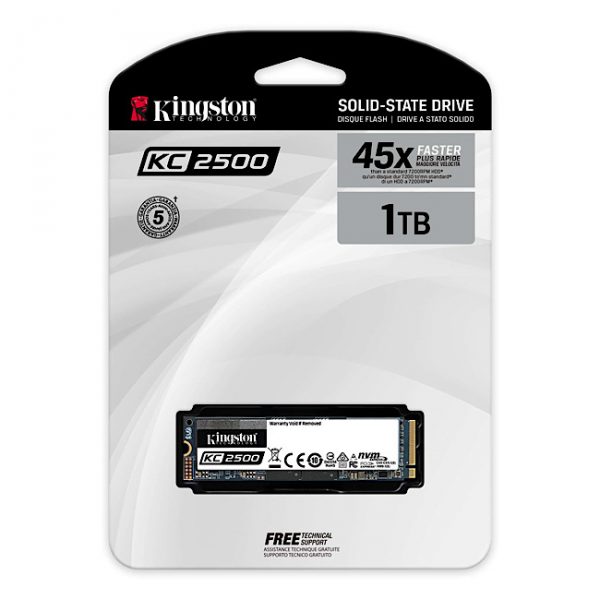
Kingston launches KC2500 M.2 2280 NVMe PCIe Gen3x4 SSD
There are some really great things happening in the solid state storage market lately. For instance, OWC just launched a 4TB M.2 drive, while Silicon Power released a very thin external SSD. KINGMAX even announced a super-fast NVMe PCIe Gen4x4 SSD. What a time to be alive!
Today, Kingston unveils a solid state drive that isn’t revolutionary, but it is still quite cool. Called “KC2500,” it is an M.2 2280 NVMe PCIe Gen3x4 SSD. Best of all, it is quite affordable, with pricing starting below $74.
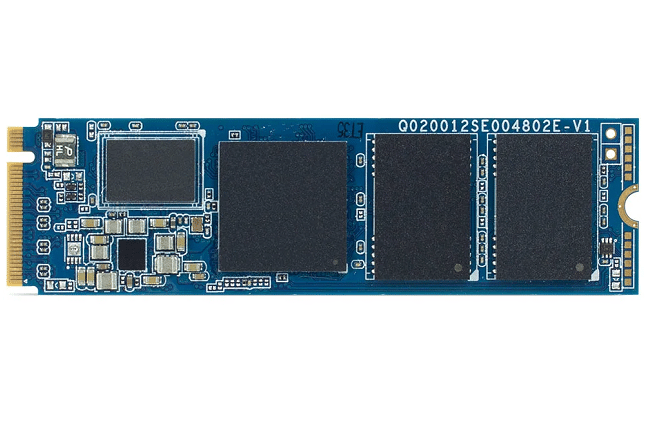
OWC launches 4TB Aura P12 M.2 NVMe SSD
Other World Computing (also known as OWC) is a very Apple-centric company. Its products are typically designed for Mac computers, such as the iMac, Mac Pro, and MacBook to name a few. Hell, the company's website is MacSales.com -- what does that tell you? Despite primarily focusing on Apple products, its offerings aren't exclusive to Mac. Many of its storage, memory, and docking products are compatible with Windows and Linux computers too.
OWC's latest storage product is sure to be cross-platform, as it is merely a solid state drive. The SSD is a very fast M.2 PCIe 3.0 x4 NVMe variant, but that isn't what makes it so exciting. Actually, it is the capacity -- an insane 4TB! And yes, as you can expect, the 4TB Aura P12 M.2 NVMe SSD (S3DN3P2T40) is quite expensive.
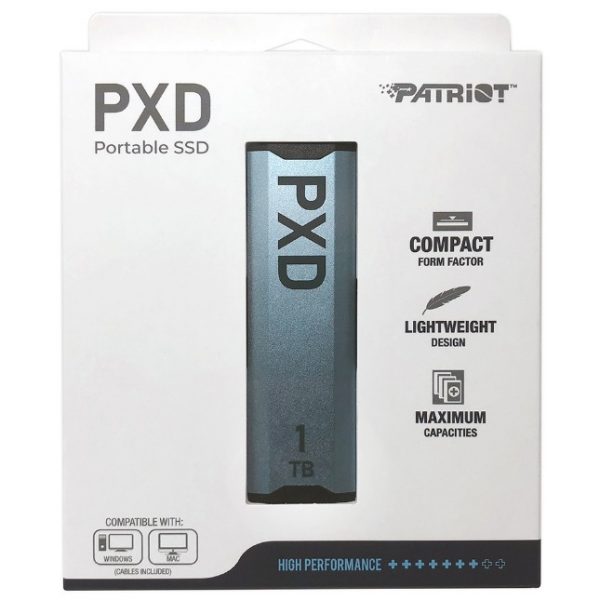
PATRIOT PXD is a PCIe USB-C SSD
Back in the day, external storage drives were great for portability, but were typically very slow compared to internal storage drives. Nowadays, however, thanks to PCIe solid state drives that interface with either USB 3.2 or Thunderbolt 3, the convenience of external storage doesn’t mean having to sacrifice performance. There are some very fast portable SSDs out there, and they are typically quite small too.
Today, Patriot launches its latest external SSD, and it is a fast little beast. It is essentially an internal M.2 PCIe NVMe drive housed in a sleek enclosure. The diminutive drive connects via USB-C and provides both read and write performance up to 1,000MB/s. Its aluminum body doesn't just look good, but should lend to extra durability too. It even comes with both USB-C to USB-C and USB-C to USB-A cables in the box.
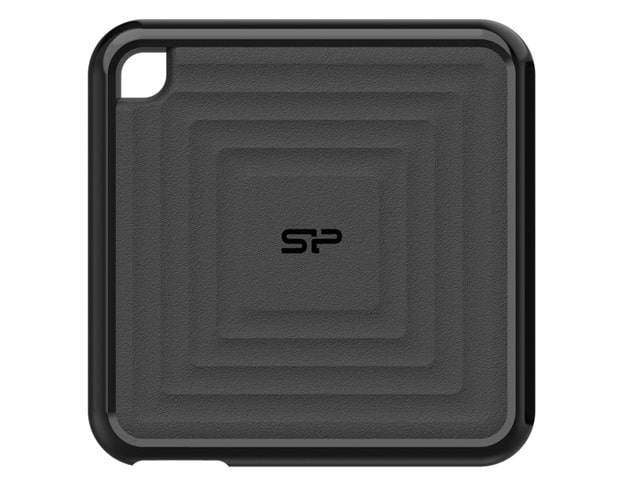
Silicon Power PC60 portable USB-C SSD is thin, fast, and beautiful
Solid State Drives are great for many reasons, two of which are speed and durability. They are much faster than mechanical hard drives, and since they have no moving parts, they are less likely to become damaged from bumps, drops, or excessive vibration. Another great thing about SSDs are their size. With portable solid state drives in particular, they can be quite diminutive -- much better for tossing into a bag or sliding into a pocket.
Today, Silicon Power unveils a new such drive that is not only very svelte, but quite fast too. The "PC60," as it is called, is a mere 11mm thin and just 80mm around. The squarish drive uses USB-C for connectivity and the ultra-fast USB 3.2 Gen 2 interface. It is thin, small, and fast, but also, quite attractive too. It even has a hole for attaching a carabiner, lanyard, or keychain.
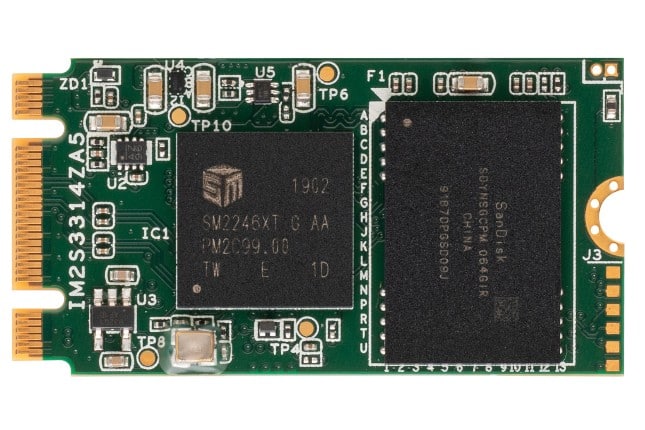
ADATA IM2S3314 is an industrial-grade M.2 2242 SATA SSD
Solid state drives are great for home consumers and PC enthusiasts, but that is not the extent of their usefulness. Actually, the improved performance of SSDs over mechanical hard disk drives is beneficial for business use too. In particular, industrial applications can benefit from the fact that SSDs have no moving parts, making them less likely to fail from hardcore vibration or excessive jostling.
Today, ADATA launches an all-new industrial-grade SSD. Called "IM2S3314," it uses the diminutive M.2 2242 form factor and the SATA 3 interface. The drive can be had in several capacities ranging from 16GB to 256GB, with two memory types -- MLC (multi-level cell) and A+ SLC (single-level cell). But wait, what is this "A+" variant of SLC? ADATA explains that its proprietary A+ SLC technology, "utilizes custom NAND Flash firmware with an A+ sorting algorithm to emulate SLC performance." And now you know!
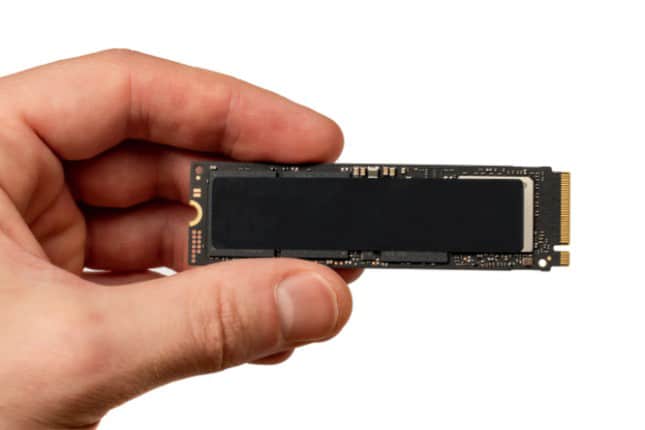
KINGMAX unveils insanely fast PX4480 M.2 2280 NVMe PCIe Gen4x4 SSD
All solid state drives are fast -- when compared to a mechanical hard drive, at least. With that said, not all SSDs are created equally. SATA based SSDs are the slowest of the bunch, with PCIe-based drives being the fastest. Of course, there are different generations of PCIe that have gotten continually faster. Currently, consumers have access to some computers and motherboards with PCIe Gen 4.0.
If you have a newer computer with PCIe Gen 4.0, congratulations -- you have a nice rig. If your SSD isn't PCIe Gen 4.0, however, you might be missing out on some potential speed. There aren't many of those drives on the market, but today, one more is unveiled. Called "PX4480," this new SSD from KINGMAX is insanely fast, making SATA SSDs look like straight trash!
Hewlett Packard Enterprise warns of SSD flaw that kills drives after precisely 40,000 Hours
Stop us if you think you've heard this one before, but Hewlett Packard Enterprise (HPE) is warning customers to install a critical patch to stop certain SSD models from dying after 40,000 hours of use.
With echoes of a flaw that was revealed in November that caused drives to fail after 32,768 hours, HPE advises its customers to install a critical firmware upgrade if they use one of several SAS Solid State Drive models. The firm predicts that no drives should fail until October 2020 -- so there's plenty of time to act -- but it is still important to take action.



