Google teams up with Ray-Ban to gain some cool for Glass


After trying to drum up more interest in Glass by dispelling some myths believed to have built up around the wearable tech, Google is looking to push things even further, gaining a little cool cred by teaming up with Luxottica the group behind well-known names such as Ray-Ban and Vogue. Teaming up with such a premium brand could be key to the success or failure of Glass, and Google is keen to push Glass as being the next step in the gradual evolution of eyewear.
At the moment, there are more than forty different looks for Glass (once the various frames, colors and styles are factored in), but it is hoped that the new partnership will result in even more designs. Love them or not, Ray-Ban and Vogue are names you will be quite familiar with, and it seems as though this is something that Google is keen to latch on to -- although it is, of course, a household name in its own right. "Luxottica understands how to build, distribute and sell great products that their clients and consumers love -- something we care deeply about at Glass, too," purrs Google on its Google+ page.
Smartwatches -- the harsh truth is that no one cares
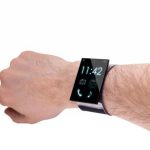
OK, maybe that's a slight exaggeration. But wearable devices are really struggling to get off the ground, at least in the UK. All of the excitement that surrounds smartwatches that can be used to read email, VPN into a home computer, check vital stats, set off The Bomb, or tell the time (imagine!) -- maybe a couple of these are a little far-fetched -- seems to be little more than manufacturers' fluff and guff. The wheels of the marketing machine have been whirring away furiously, but it has had very little effect. With a population of approaching 65 million people, only a very tiny proportion of the nation has seen the need to invest in a smartwatch -- below 1 percent in fact.
Figures from Kantar World Panel show that a lowly 0.9 percent of UK consumers have put their hard-earned money towards a smartwatch. Other statistics to come from the research are of little surprise. Almost three quarters (72 percent) of smartwatch owners are male, and 56 percent are aged under 35. There are a small number of names associated with smartwatches, and the spread is fairly evenly distributed. At the top of the heap is Samsung with a 32 percent share, followed by Sony with 21 percent and Pebble with 18 percent. There is obviously a leader, but with the numbers being so low, percentages are very easily swayed.
Can the Internet of Things live up to its hype?


The Internet of Things has the potential to offer significant benefits to both businesses and consumers. Realizing those benefits though relies on identifying problems that the IoT can address.
Technology research specialist IDTechEx's event in Berlin at the beginning of April is set to explore the prospects offered by the IoT and look at how it can be used to make a difference in the real world.
CeBIT: UK Prime Minister backs development of insane-speed 5G networks

Mobile users are just getting around to upgrading their handsets to take advantage of 4G networks, but this simply is not fast enough. UK Prime Minister, David Cameron, spoke at CeBIT announcing that the country will join forces with Germany to develop the successor to 4G -- the uninspiringly-named 5G. The PM announced a deal with Germany which will help to push forward with the development of a mobile broadband network that will offer download speeds up to 1,000 times those currently available on 4G.
To put this kind of speed in perspective, as the Prime Minister explained, an 800MB movie (or any other type of file for that matter) could be download in a single second. One second. For the best part of a gig of data. On a mobile device. Who is going to say no to that? Ultimately, the adoption rate will be determined by the costs involved -- mobile tariffs, suitable handsets, data charges, and coverage -- but before any of this becomes an issue, 5G needs to be, well, invented really.
Tablet growth forecast slows as markets mature

Market intelligence specialist IDC has released the latest results from its quarterly tablet tracker. It predicts that the sales growth of tablets (including 2-in-1 devices) will be 19.4 percent in 2014, down from 51.6 percent last year.
There are a number of reasons for this predicted reduction, partly the number of new releases has slowed, and in mature markets the sales pattern will switch to replacement of older devices rather than first time buys.
XP upgrades will slow the PC's decline, not spark a recovery


According to International Data Corporation (IDC) Worldwide Quarterly PC Tracker, global PC shipments fell by 9.8 percent in 2013, the most severe contraction on record, but the future looks slightly brighter going forward. And by "slightly brighter" I mean things thankfully shouldn’t be anywhere near as bad as they were last year.
IDC had been anticipating a decline of 10.1 percent by the end of 2013, so the actual results were slightly more positive than had been expected in mature markets (which includes the US, Western Europe, Japan, and Canada). Part of the reason for this is, IDC believes, down to short-term factors like the rise in people purchasing XP replacements, but it doesn’t expect this bump to last for very long. XP still accounts for a third of the desktop OS market share, and there’s currently no signs of a trickle of users migrating to Windows 8.1, let alone the flood of users Microsoft would like to see.
More people spend via their phones as the world goes "mobile first"

Mobile advertising company InMobi has announced the results of its 2014 Mobile Media Consumption Report.
Based on research covering over 14,000 respondents in 14 countries, the findings show that we’re increasingly living in a "mobile first" world with 60 percent now using a mobile as their primary or only means of going online.
Sony sells VAIO, cuts 5,000 jobs and exits PC manufacturing
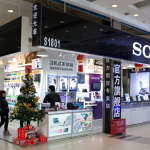
Sony is pulling out of the PC business and is selling the VAIO brand to Japanese investment fund Japan Industrial Partners (JIP). The announcement came after industry speculation about what might be happening in Sony's future after the company responded to rumors that it was in talks with Lenovo about a possible sale by saying that it was looking to "address various options for the PC business". No details about the fees involved have yet been revealed, but it is hoped that an agreement will be reached by the end of March.
Citing "drastic changes in the global PC industry", Sony's announcement came as the company revealed its financial results for Q3 2013. Analysis of the results showed that the "target of returning the TV and PC businesses to profitability will not be achieved within the fiscal year ending March 31, 2014", hence the need for reform. This means that Sony will now concentrate "its mobile product lineup on smartphones and tablets". An estimated 5,000 jobs will be lost.
Google's Motorola sale is more about Nest than Samsung


Like lots of other people, overnight I pondered Google's surprise sale of Motorola to Lenovo. The timing sure seems odd. Conspiracy theories abound. Among tech bloggers, Samsung ranks as top reason, given the timing, just days after the American and South Korean companies cut a lofty cross-patent deal that also turns way down the extent of Android customization. Certainly the latter agreement is important to Google, for reasons I laid out two years ago in post "Google has lost control of Android".
Some conspiracy theorists contend that Google always planned to sell Motorola and rebuilt the brand only to gain leverage against Samsung, which arguably exercises more direct influence over Android than does Google -- at least from a user experience perspective. But I disagree. The Motorola unloading is a lot more about the search and information giant's acquisition of Nest than anything Samsung does. My reasoning follows.
Dell puts cloud access in your pocket
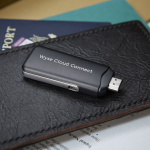
PC and server specialist Dell is launching a new mobile cloud access device that delivers a full HD user experience on any HDMI or MHL enabled display.
The company claims that Dell Wyse Cloud Connect is a completely new end-user device category, bridging thin clients and mobile devices to promote BYOD.
PC and Mac games revenue to top $24 billion by 2017

We've been focusing a lot on the decline of the PC hardware market of late, but the software spend still looks strong. The latest survey from market intelligence specialist IDC predicts that PC and Mac gamer spending will grow to over $24 billion by 2017.
It also finds that while global PC/Mac games revenue is set to grow at around four percent a year the US market will start to slip.
Final 2014 prediction: the end of the PC as we knew it


We’re generally a Macintosh shop here in Santa Rosa. I have Windows and Linux PCs, too, but most of the heavy lifting is done on Macs. Next Wednesday I’m expecting a delivery from B&H Photo (no tax and free shipping!) of four new iMacs plus some software totaling $5,407. I fully expect these to be the last personal computers I will ever buy.
How’s that for a 2014 prediction?
Lenovo takes the lead in (still) shrinking PC market

For most of the last year it seems that we've been reporting the decline of the PC market. At the beginning of December we even had IDC saying that shipments had seen their greatest decline ever.
No surprise then that on the figures for the final quarter of 2013 both IDC and Gartner are saying that shipments have declined again. The good news though is that there are signs of the decline bottoming out.
Surface had a good Christmas, appears to be selling well

Three days ago I wrote about Flurry’s findings regarding tablet activations on Christmas day. As was expected, Amazon enjoyed a massive 24x bump, and Apple and Samsung activations, while far less spectacular, both doubled. Flurry only covered those three firms and Acer, so there was no way of knowing how well other manufacturers had fared.
Today online advertising network Chitika releases its report, the result of examining post-Christmas changes in North American web traffic share, and this shows usage gains from Amazon, a minor drop from Apple, and -- perhaps most surprisingly -- strong gains for Microsoft’s Surface range.
Tablet activations surge over Christmas, but it's not all good news

Unsurprisingly tablets proved to be a very popular gift this Christmas. According to mobile measurement firm Flurry, device activations were up by 63 percent on Christmas day, compared to any other average day in December.
Flurry’s activation figures cover Amazon, Apple, Acer, and Samsung and reveal an interesting trend. While all four tech firms enjoyed a major bump on the day, activations were much lower this year than in the previous two years.
Recent Headlines
Most Commented Stories
© 1998-2025 BetaNews, Inc. All Rights Reserved. About Us - Privacy Policy - Cookie Policy - Sitemap.