
Scan pages directly to PDF with STP
Converting a printed document to PDF can sometimes be a complicated process, where you must import the pages into a graphics tool, clean them up, then pass the results on to something else to generate the final document.
It doesn’t have to be that way, though. Creating PDFs from scanned images can be quick and easy, and it certainly doesn’t require heavyweight applications: a tiny portable tool could provide everything you need.

Recuva adds support for non-GUID drives, Linux file systems
Piriform Software has released Recuva 1.51 and Recuva Portable 1.51, new versions of its popular Windows freeware data-recovery tool.
Version 1.51 widens its file system support to cover Linux-formatted volumes, plus makes it possible to recover data from drives with no partition table data. It also includes numerous improvements and optimizations.

Create contact sheets of your videos with Thumbnail me
Thumbnail me is an open source Windows and Linux tool which extracts frames from a video, then presents them as a single image, a quick and easy way to preview the movie’s contents.
The program imports most common video types: AVI, MP4, MPG, VOB, MOV, MKV, TS/ M2TS, FLV, 3GP, OGG, SWF and more.

Best iOS apps this week
Eleventh in a series. Apple rolled out a cheaper 8GB version of its iPhone 5c this week (in selected territories) and also replaced the aging budget iPad 2 with the newer, 4th gen iPad with Retina Display. The replacement iPad, which is available everywhere, is priced the same as the iPad mini giving potential buyers an interesting purchasing dilemma.
Featured apps this week include one of the best looking games yet released for iOS, an app which claims to boost your fitness in just four minutes a day, one which will help you avoid people you don’t want to see, and a game which could help find a cure for cancer.
Smartwatches -- the harsh truth is that no one cares
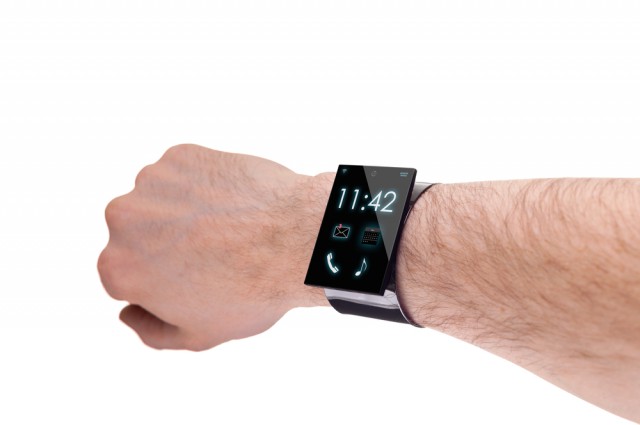
OK, maybe that's a slight exaggeration. But wearable devices are really struggling to get off the ground, at least in the UK. All of the excitement that surrounds smartwatches that can be used to read email, VPN into a home computer, check vital stats, set off The Bomb, or tell the time (imagine!) -- maybe a couple of these are a little far-fetched -- seems to be little more than manufacturers' fluff and guff. The wheels of the marketing machine have been whirring away furiously, but it has had very little effect. With a population of approaching 65 million people, only a very tiny proportion of the nation has seen the need to invest in a smartwatch -- below 1 percent in fact.
Figures from Kantar World Panel show that a lowly 0.9 percent of UK consumers have put their hard-earned money towards a smartwatch. Other statistics to come from the research are of little surprise. Almost three quarters (72 percent) of smartwatch owners are male, and 56 percent are aged under 35. There are a small number of names associated with smartwatches, and the spread is fairly evenly distributed. At the top of the heap is Samsung with a 32 percent share, followed by Sony with 21 percent and Pebble with 18 percent. There is obviously a leader, but with the numbers being so low, percentages are very easily swayed.

Macrium Reflect boosts performance, gains GRUB2 support
Paramount Software has updated Macrium Reflect to 5.2.6504, and despite the very minor-sounding version number, it actually includes several important changes.
The company claims that backup performance has been improved by an impressive 30 percent or more.
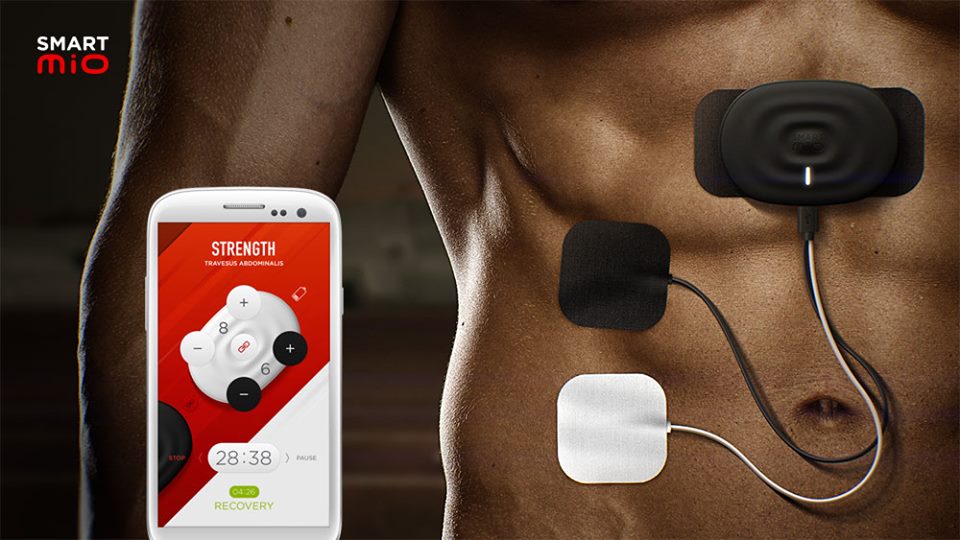
SmartMio Q&A: Electronic muscle stimulation in the wearables era
Wearables make up for an exciting market which offers huge opportunities for innovation and turning otherwise bland devices into modern gadgets. We have smartwatches which augment smartphones, activity trackers which monitor our sleeping habits and physical activity, and glasses which let us take photos and receive navigation directions at the blink of an eye.
Part of the wearable wave are also electronic muscle stimulators, like SmartMio. It works like a traditional EMS, but instead of controlling it manually through physical toggles and buttons, users have a much more powerful mobile app at their disposal. I chatted with the CEO of the company behind SmartMio, Alex Pisarev, to learn more about its wearable strategy and future plans, how the device works and what benefits users have.

Microsoft: Going through your 'private' emails is like searching 'ourselves'
Microsoft has admitted to going through one of its own users' personal emails (a blogger who has leaked pre-release Windows builds and, allegedly, intended to sell the software giant's IP) without asking for a court order, as this practice is covered by its permissive privacy policy.
To assuage concerns that it may, in the future, not go through its own users' emails without justification, Microsoft has issued a statement which details the steps the company will have to complete, and the obstacles it sets for itself, for such things to happen again. This reminds me of the for-the-sake-of-doing-it surveillance reform that US President Barack Obama unveiled to minimize the controversial NSA mass surveillance practices, that also has similar measures in place to prevent abuse. Neither promise is reassuring.
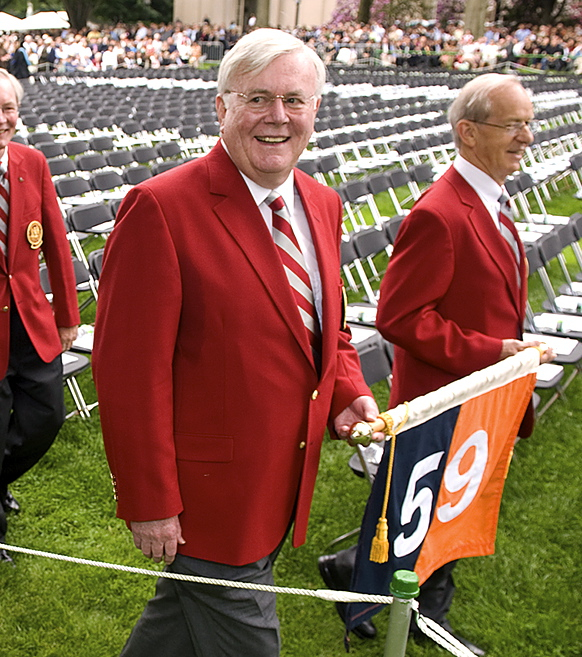
So Pat McGovern comes into a bar…
Pat McGovern died this week at 76 in Palo Alto, totally surprising me because I didn’t even know he had been ill. Uncle Pat, as we called him, was the founder of Computerworld back in 1967 and the year before that research firm International Data Corp., started in his suburban Boston kitchen. Pat helped turn the computer business into an industry and employed a lot of people along the way including me. He was an exceptional person and I’d like to tell you why.
Pat ran a company that published about 200 computer magazines all over the world. Each December he traveled the globe to give holiday bonuses to every employee he could find. The bonuses were a meaningful amount of crisp cash money in an envelope that Pat would hold in his hand until he’d finished his little speech about how much he appreciated your work. And here’s the amazing part: he knew what we did. He read the magazine, whichever one it was, and knew your contribution to it. You’d get a smile and a handshake and 3-4 sentences about something you had written or done and then would come the envelope and Pat would be on to the next cube.

Sorry Netflix, but you should pay 'tolls' to ISPs
Money doesn't grow on trees and neither does bandwidth. For internet providers, there is a cost for providing the service. For the most part, with broadband connections such as cable, bandwidth is shared between users. And so, if too many users abuse the service -- torrents, ftp servers, media streaming -- it can slow things down for others.
Entire companies are run from the backs of ISPs. One such company is Netflix. If you aren't familiar, the company provides streaming videos for a monthly fee. However, the videos are streamed over third-party internet providers. In other words, Netflix is profiting by using the providers' bandwidth and is sharing none of the money.

NSA lawyer says data collection occurred with tech firms' 'full knowledge and assistance'
The NSA story isn't new. Scratch that. It's not really a story; it's a saga. Just when it seems safe to feel that there can't possibly be any more revelations to knock us sideways... oops... there's another little surprise for you! Just a week ago, I argued that Google's encryption of Chinese web searches amounts to little more than a PR exercise, designed to try to get the disgruntled user back on its side. This is not something that is related to the NSA revelations. When we found out that the likes of Facebook, Microsoft, Google and Yahoo (to name but a few) had been handing data over to the US government, all of these companies were falling over themselves to appear to be doing everything they could legally do to let their customers know what had been happening with their data.
Of course, it's not just the UK that has this problem, although that’s certainly where the attention has been focused -- the UK had (or possibly has) its own Optic Nerve program which was used to spy on webcam chats. The story we have heard time and time again is that these companies did not know what was going on. That the government had been collecting data without their knowledge. There were concessions that in some cases, FISA requests had been received but there were limitations on what could be publically revealed. Each company tried to outdo the others by appearing to reveal as much data as it could as quickly as humanly possible.

Opera-powered smart TVs from RCA set for US launch
The home theater environment continues to evolve. We have set-top boxes from the likes of Google, Apple and Roku, along with gaming consoles, Blu-ray players, DVRs and Smart TVs. All are capable, in one way or another, of getting more media into the home. But a move to consolidate through the TV would be welcome, at least to me.
One of the biggest forces behind-the-scenes in the Smart TV world is now Opera, which is frequently thought of in the web browser world. But the company has a thriving app store system for this, and it now announces adoption by RCA to release panels to the US market.

Google makes Gmail HTTPS-only in a bid to thwart NSA snoopers
Gmail has always supported HTTPS, and even made the communications protocol the default option in 2010. Today Google announces it will always use an encrypted HTTPS connection when you check or send email.
"Today's change means that no one can listen in on your messages as they go back and forth between you and Gmail’s servers -- no matter if you're using public Wi-Fi or logging in from your computer, phone or tablet", Nicolas Lidzborski, Gmail Security Engineering Lead says.

ToneFone turns using your iPhone into a workout
Apple’s iPhone has been getting lighter (and thinner) with each iteration, and while most of us view that as a good thing, UK based healthy living brand Desirablebody.co.uk has a different opinion, believing much, much heavier phones could help us get fitter.
"In the 80s carrying around a mobile phone meant carrying some serious weight -- and that could sometimes be a mini workout all by itself," Fitness Manager, James Finlayson states. So Desirablebody.co.uk has introduced a case that takes mobile phones back to their roots and transforms the iPhone into a dumbbell. No, seriously.

Happy 8th Birthday Twitter! Celebrate by reliving your first Tweet
Social media has become so entrenched in modern society, that it is hard to remember life without it. It almost feels as if services like Facebook have always been with us. Remember though, these networks are still relatively new phenomenons.
That said, Twitter is surprisingly rather long in the tooth. Even though it feels like a newcomer to the social media scene, it will be 8 years old tomorrow. Rather than celebrate with cake or presents, the company has decided to give users a new "First-Tweets" tool.