
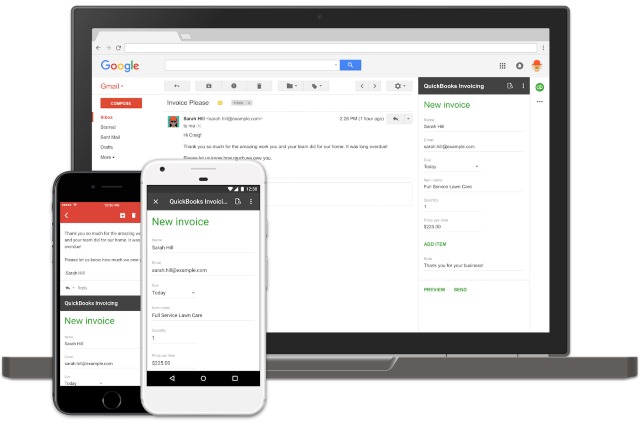
Google is bringing add-ons to Gmail
It's something that Gmail users have been asking for for ages now -- the ability to use third-party add-ons to extend the capabilities of the email service. Today at its Cloud Next conference in San Francisco, Google announced that plugins that can integrate with Gmail are on their way.
While "add-ons" are already around, they exist in the form of browser extensions. What Google is talking about now is native add-ins that are not dependant on Chrome extensions, and will therefore work online in any browser, on just about any device -- including iOS and Android.
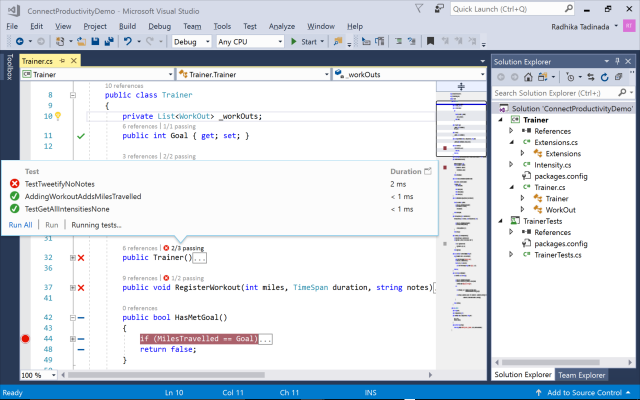
Microsoft releases Visual Studio 2017, Visual Studio for Mac Preview 4
Microsoft today releases Visual Studio 2017 and the fourth preview of Visual Studio for Mac. The latest official version of its longstanding IDE for Windows adds improvements related to productivity, performance, mobile apps, cloud development, DevOps and the ecosystem surrounding Visual Studio.
Visual Studio 2017, according to Microsoft's blog post announcing the release, features an improved startup and project load times, better navigation, the ability to edit files without having to open a project or solution, CMake support and Linux support for C++, Xamarin Forms Previewer, a new Connected Services experience, the ability to build .NET Core 1.0 and .NET Core 1.1 apps, support for Azure App Service and more.

Ubuntu Core Linux comes to i.MX6-powered IoT-friendly TS-4900 Computer On Module
One of the best things about the Linux kernel (and associated operating systems) is the ability to work on various hardware types, including ARM. Microsoft's operating systems, by comparison, are far more narrow. True, there is the lightweight Windows 10 IoT for ARM boards, but it is hardly a factor nowadays.
Today, Ubuntu Core comes to the i.MX6-based and ARM-powered TS-4900 Computer on Module. While Android and other Linux options were already available for the IoT-friendly CoM, Ubuntu Core is still a major win. Canonical's revolutionary snap packages should work beautifully here.

5 things mobile developers need to consider in 2017
Android or iOS? Or both? It’s a question anyone who’s been involved in building a mobile app will have asked. Android is still the major player in the development world, due to the simple fact of the size of the market, but it’s foolish to write anything that’s grown from Apple off.
As with just about every trend in technology, it appears that flexibility and fluidity is the choice route. Here are five things developers will need to consider to stay relevant in 2017 and beyond.

Enterprise change management goals are out of sync with strategy
The results of a new study to be released tomorrow, but seen exclusively by BetaNews, reveal a severe misalignment between the way IT leaders talk about change management and the strategies they have in place to execute these initiatives.
The survey of more than 320 IT leaders by document productivity company Nitro shows that change management strategies vary between organizations, but many fall short.

The problems facing the app development industry
The app development business is being plagued by long development times, skills gaps and large backlogs according to a new report.
The study from low-code development platform supplier OutSystems identifies the critical issues that the industry needs to address if it’s to avoid missed opportunities and lost revenue.

Microsoft announces open source GVFS (Git Virtual File System) with support for much larger repos
Git is a widely used version control system, but it's one that does not cope well with scaling up. As projects and codebases grow, performance can suffer massively, with common tasks taking hours to perform. Today, Microsoft comes up with an answer: GVFS.
Git Virtual File System has come into being partly because of the problems Microsoft itself has encountered with Git. The sheer size of the Windows codebase means that a simple operation such as checkout can take three or more hours. As the V in GVFS, the solution is a virtualization system that works at file system level to make it appear as though all of the files in a repo are present, saving lots of downloading.

Security is more important than availability in app development
Security is now the top priority for app development, surpassing availability, a new report by F5 Networks states. The State of Application Delivery report is based on a poll of more than 2,000 IT, networking, application, and security professionals worldwide.
Looking at how they are deploying and managing their applications in a rapidly evolving landscape, the report also says that organizations in the EMEA region (Europe, Middle East, Africa), expect more than three quarters (76 percent) of their apps in the cloud this year.

Apple to allow developers to respond to App Store reviews
For far too many years the process of providing feedback in the App Store has been a one-way dialog. At long last Apple is opening things up so developers will be able to respond to reviews that are left by customers.
References to the new option is to be found in the documentation for iOS 10.3 beta, and Apple says that it will be available to developers when the final version of iOS 10.3 is released; it will also be available in the Mac App Store. Importantly, just as with Google Play, responses that are left will be visible to all and a new API will make it possible to leave feedback from within apps.

Google starts live testing of Android Instant Apps
A key obstacle that mobile users encounter is clicking a link only to be greeted by the offer to install an app. The relatively slow process of visiting Google Play to download and install an app means that many people simply don't bother -- and this is something that Instant Apps should help with.
The Instant Apps feature was announced last year at Google I/O, and there was much excitement at the prospect of 'streaming' apps on demand. Now Google has started live tests of Instant Apps for Android so you can try out the feature with the likes of BuzzFeed, Wish, Periscope and Viki.

How DevOps became mainstream in the enterprise
2016 was the year that DevOps became part of IT organizations’ everyday language. While forward thinking, agile businesses have embraced DevOps from the outset, what we’re seeing now is what, in the technology adoption lifecycle are known as "the late majority" shifting towards new DevOps practices.
Bringing development and operations together to deliver what a business needs, quickly, reliably, flexibly defines the DevOps approach. It can transform how an organization works, breaking down traditional barriers between IT teams and the business. It’s the opposite of the siloing and segmentation that limit so many businesses. And, as more people realize its benefits, more IT leaders are demanding it. Yet while it redefines what is possible for a business, it can require challenging changes. Ones that seemingly more organizations were finally ready to take on in 2016.

Google makes Fastboot and ADB available as separate downloads for Windows, Mac and Linux
Answering the pleas of many Android users, Google has finally made ADB and Fastboot available as separate downloads.
Previously only available as part of the large and intimidating Android SDK or Android Studio, the change of heart means that it is now quicker and easier than ever to jump on the handset flashing and sideloading bandwagon.

Apple paid $20 billion to developers in 2016
Apple users tend to spend a lot of money on apps. That much is obvious by looking at how much App Store developers earned last year. Apple puts the figure at a massive $20 billion, which, after taking into account the fact that it takes a 30 percent cut, would mean that the App Store generated -- at least -- $28.5 billion in revenue in 2016.
The actual revenue is likely to be higher -- though not by much -- because Apple also makes money in other ways, like through ads shown in the App Store's search results or Developer Program subscriptions. It just goes to show why so many major developers like it.
DevOps brings together the best elements of your IT team
Teamwork, agility and communication set apart the most successful IT teams from the rest. It should come as no surprise: developments in technology and IT are the driving force behind many of the changes in our fast-paced world.
The demands on the IT team have never been greater. There is pressure to deliver new features and software to users, added to vast data growth, budget constraints and the ever-present need to do more with less. To get ahead, IT teams have to rethink and reshape application development and IT operations as they need to be able to work together, understand each other and be adaptable and flexible. The DevOps approach is grounded in the belief that development and operations teams work as one, adapting to one another, and learning about the other’s work in order to better grasp the demands of their own role.
Tips for adopting a DevOps approach
Today businesses are working in more agile and digitally connected ways. What’s more in the case of new software development projects, DevOps is a buzzword that chimes with this sentiment. But what does it mean and how should we view it? Is it a job role? Is it a team? A product? A vision?
Quite simply, DevOps is a mind-set. When companies choose to expand development across the organization they are driving collaboration. This adds powerful value back to enterprise leaders, who have the interests of the customer at heart. What makes it a mind-set is that its success depends on a combination of people and behavior changes.



