

Google says ta-ta to Oracle's Java APIs -- will embrace OpenJDK in future Android releases
Lawsuits in the technology world are so friggin' tiring. Yes, patents and copyrights are generally a positive, as it protects inventors from having their ideas and intellectual property stolen. Sadly nowadays, trolls have largely ruined the sanctity of the original intent. I'm not calling Oracle a troll per se, but suing Google over the use of Java APIs in Android seemed a bit silly to me. A jury and a judge agreed with my feeling on the matter, but their stances were later reversed. Ultimately, Oracle beat Google using the judicial system.
Today, Google announces that it will embrace OpenJDK in future Android releases. While this should avoid infringement against Oracle technologies, it is not clear if that is the motivator here. In other words, this could have been planned prior to the judgement against the search giant, or it could be related.

Now that Google Glass is enterprise-only, it is more appealing than ever
The first generation of Google Glass spectacularly failed to get off the ground despite a long beta period. The second generation is on the cards, and it has an enterprise focus which serves only to make the hardware even more appealing. There's no release date, or even a vague schedule for release, yet, but images of the next version of Google Glass have appeared online.
A new filing with the FCC shows just what we can expect from the next version of Google Glass, and it's extremely promising. While there's no suggestion of a consumer model being released, what we learn about the enterprise edition will serve only to make it more appealing to the masses -- great looks, a foldable design, and a larger display. Will Google bow to the pressure that's almost certain to mount and try again with a consumer version?

Google+ is too much ghost town for me
As the New Year approaches, and I contemplate 2016, my online social space surely will change; my like-affair with Google+ draws close to an end. Nearly six weeks ago, the service "reimagined", as a "fully redesigned Google+ that puts Communities and Collections front and center".
Since then, my Google+ engagement has dropped by more than 90 percent. I don't find as many posts to Plus-one, to share with others, or on which to comment. Similarly, I see shocking decline in the number of responses to my posts—not something I actively seek so much as by which to judge interest in what I write and also to interact with other Plusers. After years of misguided critics calling Google+ a ghost town, the tumbleweeds roll.

Ford and Google team up to make autonomous vehicles
Google and Ford have decided to join forces to build self-driving vehicles by forming a joint venture. Google’s technology will enable the cars to drive autonomously, while Ford will design and manufacture the vehicles being used.
The partnership between Google and Ford will be announced by Ford at this year’s Consumer Electronics Show in January. This joint venture will take the pressure of designing its own vehicles off of Google while helping Ford gain valuable knowledge and insight into self-driving software development.
Google ready to embrace AI for new messaging tool to take on Slack
The battle arena for messaging apps has become increasingly busy in recent years, with the likes of Facebook Messenger, WhatsApp and countless others all vying for attention. In the workplace, Slack is the current favorite thanks in part to its smart capabilities, programmability, and bot.
Not wanting to miss out on the action, Facebook recently unveiled Facebook M, a virtual assistant bolt on for Messenger. Looking to compete directly with this, Google is working on a new AI-powered messaging service of its own according to a report from the Wall Street Journal.
Google tests password-free logins on iOS and Android
Online security concerns mean that we have become reliant on passwords to access so many different services. The sensible and secure route to take is to use a unique password for every site and service you access, but unless you have a record-breaking memory, this can prove tricky. Google has a solution: ditch the password entirely.
While this may be seen as a step down from the two-factor authentication that so many companies have been pushing for in recent years, it is actually quite similar in many respects. Google's method focuses on speed and convenience, and still requires the use of a smartphone.

Google announces new Chromecast-enabled games for the holidays
Christmas is just a few days away. While I generally enjoy spending time with family, dealing with different personalities and opinions can be quite the annoying ordeal. Disagreements and heated arguments over topical issues, such as the 2016 election, can lead to a stressful holiday. One crazy uncle supporting Donald Trump could lead to a disaster.
Ideally, you want to come prepared with ways to change the subject, while creating an atmosphere of fun too. While in prior years, this may have been a deck of cards or a board game, 2015 is all about tech. If you bring a Chromecast to your host's house this year, you can enjoy playing some fun games together -- on the TV screen -- including newly-compatible games, which Google announced earlier today.
If you installed this game from Google's Play Store, your Android phone may be infected!
While many detractors of iOS point to Apple's strict access to the App Store, others -- like me -- applaud it. While it might be harder to get an app approved for download in Apple's store, it is arguably more secure. Conversely, Google's Play Store can sometimes feel like the wild west. Sure, Apple's process is not infallible either, but many consider it to be the gold standard. Apple's stronger and more stringent screening process not only helps to block malicious apps, but weeds out low-quality offerings too. Overall, neither process is perfect.
Today, a startling discovery was made in the Google Play Store for Android. You see, a malicious app masquerading as a game made it past Google's security screeners, putting millions of users at risk. Had anti-malware company Lookout not discovered it, there is no telling how many Android users could have installed it.
Google dedicates $1 million to independent research for Drive security
Google is placing an increased importance on security in 2016. The company has set aside $1 million to fund independent research into the security of its Drive cloud storage service, and will continue to offer a bug bounty program.
Acknowledging that "keeping files safe in Google Drive is super important", Google says that next year it will make the money available to independent security researchers. The money comes in addition to the funds that are used to employ hundreds of security experts at the company, with independence bringing an extra level of scrutiny.
Google expands Android Pay with more stores and countries
Google launched Android Pay to compete in an increasingly busy market that contains the likes of Apple, Samsung and now Walmart. Android Pay is already accepted at over one million locations, but Google is only just getting started. Anyone with an Android device likely has the app as Google helpfully installed it for you, or at least on some devices such as Nexus.
Now the search giant is looking to expand its footprint, branching out to new locations. First up is Android for in-app purchases. The company is trying to make this easier. Just a couple of taps and you'll be done, no wallet involved.

Google Classroom earns 'extra credit' with new features
One of the most important -- yet thankless -- jobs in the world is being a teacher. Many educators are underpaid and under-appreciated. In some underfunded districts, teachers are forced to make do without essentials, like books and pencils -- a really sad state of affairs.
Luckily, technology is constantly improving and evolving, which translates to new solutions and tools for educators. One such brilliant solution is Google Classroom. The search-giant's education-focused organizational tool can make a teacher's life much easier -- especially when paired with a Chromebook and Google Docs. Today, Classroom is earning some extra credit in the eyes of educators with all new features that make it even better.

Twitter will notify users of government-backed hacker attacks
Twitter is joining the Google - Facebook bandwagon, as it has started warning its users that they may be potential targets for "state-sponsored" hack attacks.
Canadian non-profit organization Coldhak has tweeted a copy of an email it has received from Twitter, warning it about a possible cyber-attack.

How fast is Google's quantum computer compared to a PC?
Even Google’s artificial intelligence research labs can sometimes find that they just don’t have enough computing power available to them. This is despite Google owning powerful computers that just about any country in the world.
As a result of finding some problems in the AI field too difficult to solve using conventional computers, Google has turned its interest to quantum computers. These systems can solve problems that traditional PC computers just cannot handle. This is because quantum systems tap into the mystic world of quantum mechanics.
Yahoo Mail app adds support for Gmail, Google Apps accounts
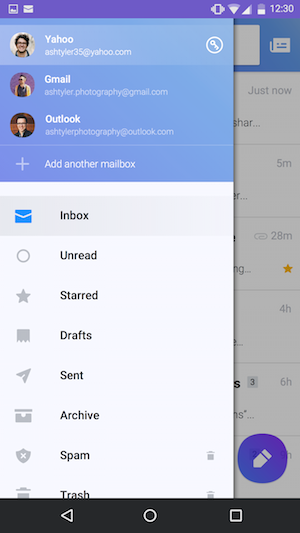
If an email app doesn't support multiple providers, chances are lots of potential users will not bother with it. Or they will seek alternative offerings that do. So, unsurprisingly, major players like Microsoft and Google now welcome those who have embraced rival services to Outlook and Gmail, respectively, even though they would much rather prefer they switch to their own products.
Yahoo has followed suit, adding AOL Mail, Hotmail and Outlook.com to the list of email providers supported in its Yahoo Mail app for Android and iOS. But, as you can probably tell, there was one major service missing from the list -- Gmail. Now, there is an update that rectifies this.
Google adds data loss prevention tool to Gmail
Google is striving to improve the security protection for its business product Google for Work by introducing data loss prevention for its popular services such as Gmail.
DLP is an enterprise technology that aims to reduce the data leakage of confidential and valuable data from the business. The common ways that data leakage occurs is through emails and storing files to employee’s personal cloud storage services.



