
Value of personal data increases 1,800 percent in 20 years
If you use the internet it's almost impossible to avoid exposing at least some of your personal information to the sites you use. What you may not be aware of is just how valuable this personal data is to businesses.
New research from marketing specialist MIQ Digital shows that in 2001 an average user generated around $1.97 (£1.45) worth of Google Ads revenue, in 2021 this is up to $35.40 (£26), an 1,800 percent increase.
Security: 2FA adoption is incredibly low with Twitter users
In a recently published transparency report, Twitter has revealed figures that show a disappointing adoption of 2FA (two-factor authentication) by users.
While the number of users choosing to secure their account with 2FA is on the increase, it "remains relatively low", says Twitter. And we are talking low numbers here -- a mere 2.3 percent of the Twitter userbase is concerned enough about security to enable two-factor authentication.
Twitter is experimenting with a downvote option on tweets... but don't call it a Dislike button
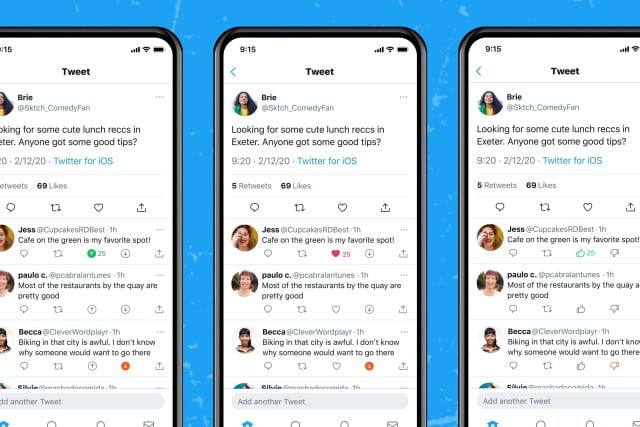
Twitter is experimenting with tweaking the Like button on tweets. In a test the company is running at the moment, some users are seeing Upvote and Downvote options in place of the more familiar heart icon for liking a tweet.
Different styles of button are currently being tested, but it seems that the experiment is more for the benefit of Twitter than Twitter users. The experimental feature is not the tweet editing option so many people have been begging for for so long, and nor is it -- Twitter is at pains to emphasize -- a "dislike" button.
Twitter will let you know why you're not worthy (of being verified)
Twitter may delight and infuriate in just about equal measure, but if there's one thing that the majority of users can agree on it is that it would be great to have a tick of verification. For many people, getting verified on Twitter has been a goal for a long time, and the company only recently re-opened applications after a lengthy period of suspension.
Being able to apply for Twitter verification is, of course, absolutely no guarantee of being verified, and huge number of people have been disappointed to be rejected. Unhelpfully, Twitter has -- until now -- failed to make it clear why a request for a blue badge has been denied. But now the company says it will be providing more detail.
How attackers can manipulate social media recommendations
Recommendations based on AI are something we encounter all the time. From shopping sites, streaming services and social media we're constantly shown stuff that the AI thinks we'll like.
But how easy would it be for an attacker to manipulate these recommendations to promote conspiracy theories or spread disinformation?
Twitter is testing the ability to edit tweets -- sort of
Since Twitter launched, one of the most requested features (apart from easy, instant, unquestioned account verification) is the ability to edit tweets. People asked for tweet editing; Twitter changed how the timeline is ordered. People asked for tweet editing; Twitter introduced longer tweets.
People asked for tweet editing; Twitter introduced Moments. People asked for tweet editing; Twitter launched a subscription service. But now, after years of people begging, Twitter is finally testing a tweet editing option. But it's probably not what you're expecting or hoping for.
Instagram now lets you proudly display your preferred pronouns such as ve, xyr, and zir
Sex and gender are two different things. For many people, these match. Using myself as an example, I was born biologically male and identify my gender as such. I prefer to be called "him" and "he." For some other people, however, their gender does not match their sex. And yes, despite what some ignorant people may think, this is absolutely factual -- sex is biology while gender is a social construct.
This is why you really can't assume someone's gender or pronouns. Just because someone looks to you like they are biologically female, for instance, that doesn't mean the person wants to be referred to as "she" or "her." Heck, some people identify as a gender that is neither male or female. In theory, there are infinite genders -- and infinite pronouns.
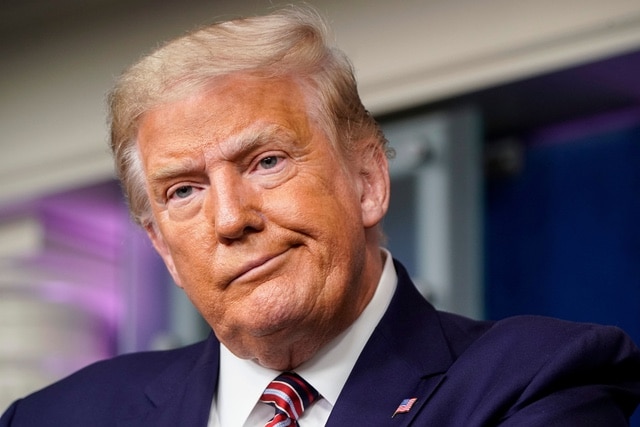
Trump's tweets will not be brought back to Twitter by the National Archives
When Donald Trump was removed from social media networks like Facebook and Twitter, the only real surprise was that it hadn't happened sooner. With the former president apparently planning to create his own social platforms, the story is far from over, and he sems likely to maintain an online presence.
But there is also the question about what to do with Trump's previous online content. One thing is certain – his tweets will not be appearing in the National Archives after Twitter denied NARA permission to resurrect deleted content from the suspended account.

Why the nostalgia social media trend is one to watch in 2021
During 2020 and 2021, we've seen nostalgia everywhere. It makes sense, right? There's no better time to pine for the past and relive happy memories than when we're stuck at home during lockdown. Nostalgia has made its way into every walk of life, from our wardrobes to our Instagram feeds.
According to GlobalWebIndex, nostalgia can make humans more optimistic and have a positive influence on their actions. The research also unveiled that nostalgia was a highly common emotion. Results show that 8 in 10 say that they experience feelings of nostalgia at least occasionally and 4 in 10 say that they do so often.

A KYC rule for social media: What social networks can learn from banks
Banks around the world abide by know-your-customer (KYC) rules to block crime. When it comes to finances, governments agree that it’s appropriate to capture clear identification on a person, in order to hold them accountable for their actions. But when it comes to crimes against social infrastructure, there are no checks in place and malicious actors around the globe leverage social media platforms to justify human rights abuses, steal elections, or simply to create division.
Ever since the Mueller investigation proved that Russia used its Internet Research Agency to conduct disinformation in the United States in order to sow social discord around the 2016 presidential election, more nefarious groups seem to be taking advantage of the opportunity to cause disruption. And with 1 in 5 Americans getting their news only from social media, the impact is huge. The reason social media is such a powerful medium for this illicit activity is that perpetrators are able to hide behind fake accounts, creating ties to communities and causes in a seemingly legitimate manner.
Executives' social media accounts put enterprises at risk
Information security often focuses on what's going on within the enterprise perimeter, but as businesses invest more in executive communication programs, there are risks which are sometimes overlooked.
According to a new survey from SafeGuard Cyber oversight of executive social media use is lacking, record-keeping is often manual, and the responsibility for risk management isn't clear.

Twitter confirms that Donald Trump will never tweet again
Twitter has confirmed that, even if he is re-elected as US president in 2024, Donald Trump will not be allowed to use the platform ever again.
The former president was unceremoniously kicked off Twitter towards the end of his leadership after concerns that his tweets were an incitement to violence. The company hit Trump with permanent suspension back in January, and has now made it clear that permanent really does mean permanent.
Facebook apologizes after Plymouth Hoe falls victim to Scunthorpe problem
Facebook has issued an apology after posts relating to Plymouth Hoe were erroneously flagged up for containing offensive language.
Plymouth Hoe is an area of the South Western English city of Plymouth, and it caused the same problems as places such as Cockermouth, Scunthorpe and Devil's Dyke for obscenity filters. The social network not only removed posts for using the word 'Hoe', but also closed down groups relating to the area.

2021 Prediction #2: Peak Facebook as Zuckerberg runs out of role models
If 2020 was a Trump- and Covid-inspired year of social media excess, 2021 can’t help but see some reversion. But it’s more than that, with big Internet companies coming under greater regulatory scrutiny worldwide, especially Facebook and Google. This year is going to be a tough one for Mark Zuckerberg, especially. And while I don’t expect Zuckerberg to abandon his CEO job this year, he eventually will, simply because it isn’t as much fun as it used to be and there will come a point (maybe in 2022) when leaving the top job will help Facebook’s stock.
At this moment there’s reportedly a bot operating on Telegram selling for $20 or less the personal info including phone numbers of 500 million individual Facebook users. What’s the logical corporate response to a gambit like that? Nobody knows because nobody has been in Facebook’s particular position before.

Users flock to decentralized social media platforms in the wake of Trump ban
The fallout from Donald Trump's ban from Twitter and suspension from Facebook, and Amazon's de-platforming of Parler continues as large numbers of users have been signing up to alternative social networks.
Many of these like Gab and Mastodon are decentralized in that they run on their own servers rather than relying on the public cloud so they are not at the mercy of larger businesses.



