
Dear Linux, I'm leaving you -- for Windows 8
Microsoft Windows 8 is the best desktop operating system. Period. No Linux distribution or OS X can compare. I say this as a Linux user and lover.
When it comes to computing, I have always had a soft spot in my heart for Microsoft Windows. Windows 95 was the operating system of my first-ever computer -- we could not afford a computer before then. As time marched on, I found myself dual-booting Windows and Linux on my future computers, with most of my time being spent in Linux. That is, until a few years ago when I exclusively ran various Linux distributions as the sole OS on my computer.
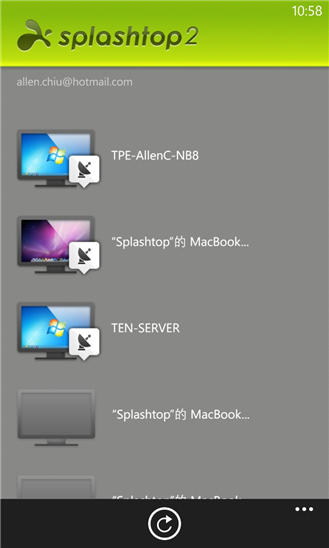
Remotely access your PC with Splashtop 2 for Windows Phone 8
Remote control apps are increasingly versatile, allowing smartphone and tablet users to access and manage computers from the workplace, a holiday resort or the couch in my case. For Windows Phone 8 users the most popular choice is PC Remote but, late-yesterday, another app hit the Store.
"Many Windows Phone users have asked for Splashtop", says Splashtop CEO Mark Lee. "We are excited to partner with Nokia and Microsoft to optimize and deliver the best-in-class Splashtop experience for Windows Phone 8". The app allows folks to remotely access Linux, OS X and Windows-based computers straight from the tiled operating system. Let's take a look at the features.

Pass the champagne! Windows Phone pips BlackBerry to third place
Change the rules of the game and you change the hierarchy. Two days ago research company Gartner released its latest report on the state of smartphone market which, based on sales, places Windows Phone in fourth place, just behind BlackBerry in terms of share. Today, IDC also released its latest report for Q1 2013, that measures shipments, and the two smartphone operating systems trade places -- Windows Phone now surpasses BlackBerry for the third spot in the charts.
That switch means Microsoft and Nokia have a reason to celebrate, in spite of numerous barbs coming from pundits. "Windows Phone claiming the third spot is a first and helps validate the direction taken by Microsoft and key partner Nokia", says IDC's Kevin Restivo. But the research company suggests that the operating system still has a long way to go: "Given the relatively low volume generated, the Windows Phone camp will need to show further gains to solidify its status as an alternative to Android or iOS".
Is it time to give Linux another look?
With recent stories highlighting Windows 8’s comparative lack of sales success it's understandable that people start to think about other operating systems. Assuming you don’t want to throw away your old hardware and sell your soul to Apple then the obvious alternative has always been Linux.
The International Space Station likes it, yet Linux still has only a tiny share of the desktop market -- 1.2 percent as of April 2013 according to analytics company Net Applications.

Cinnarch is dead -- long live Antergos!
Arch Linux is considered by many to be the Linux expert's OS of choice. As you may or may not know, Arch Linux is a very robust rolling-release OS with bleeding edge (yet stable) packages. Arch has a really large and knowledgeable community. However, there is a price to pay to join this elite club of Linux users -- a terrifyingly hard command line installer.
Truth be told, Arch is not that difficult too install (even though it has that reputation), as long as you print out detailed instructions and follow them step by step. Unfortunately, many people do not have the time and patience for such a project. Some advanced Linux users (such as myself) just want an easy to install distro because we simply do not have the time. However, we also want to enjoy the benefits of Arch. Cinnarch was a Linux distro born to solve this dilemma.
openSUSE Education says 'get a Li-f-e'
If Linux is good enough for the International Space Station, why not your school computers? The developers over at openSUSE must think so, today releasing Li-f-e (Linux for Education) 12.3-1.
I confess to not being familiar enough with Linux (go ahead, beat me with a stick -- or with words in comments). But a reader complained this week about BetaNews' rather absent coverage of the open-source operating system. He's absolutely right about that. Reporters here tend to write about what they use, and we don't have a Linux lover currently on staff. Please pardon my light treatment of the news, in place of someone more qualified.

Tough luck Windows 8, the international space station is going Linux
Some critics (and, oh, there are many) claim Windows 8 is out of this world -- or not meant for it. That Microsoft reached for the stars but fell to earth. How right they may be. The operating system won't achieve escape velocity anytime soon, and an older version is about to burn up on reentry.
The International Space Station, better known as the ISS, runs on Windows, but that is changing. Launched in 1998, the orbiting home, which circles the earth at an altitude of just over 400 kilometers (it varies), is home to a team of astronauts who depend on, not only supplies from home, but also a computer system that keeps everything running smoothly. That computer system is moving to Linux.
Ubuntu 13.04 'Raring Ringtail' gives some, takes some
It’s no secret that Ubuntu is heading for desktop/ mobile convergence, with a runs-everywhere build expected within a year. But while 13.04 (“Raring Ringtail”) shows some signs of movement in that direction, the new release isn’t exactly packed with new features: in fact, it’s taken one or two away.
Of course there’s no harm in consolidating your code base occasionally, and Canonical appear to have done that to good effect. They claim that it’s the fastest Ubuntu experience to date, with an updated kernel delivering “dramatic graphical performance enhancements”, reduced RAM requirements and more. And while this might be aimed at helping the system run on mobile devices, it’s also very welcome for regular desktop users.

Microsoft announces general availability of IaaS support for Windows Azure
Microsoft has announced the general availability of Infrastructure as a Service (IaaS) support for Windows Azure. The software giant also unveiled a couple of new features for IaaS meant to beef up the company's cloud platform. Timing is interesting --Amazon's AWS (Amazon Web Services) Summit kicks off in New York tomorrow.
Windows Azure's IaaS support introduces the Virtual Machine and Virtual Network features, and "is now live in production, backed by an enterprise SLA, supported by Microsoft Support, and is ready to use for production apps", according to Microsoft's Scott Guthrie.
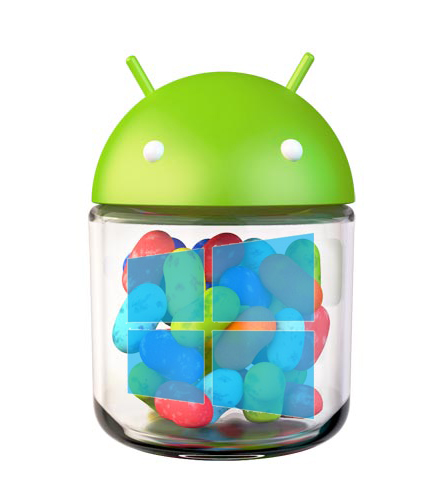
Intel brings Android 4.2.2 Jelly Bean alongside Windows 8
Intel Open Source Technology Center has released an Android 4.2.2 Jelly Bean developer preview build of "pre-alpha quality", which is also "buggy and not highly optimized", albeit one that has a major trick up its sleeve. Unlike the common version of the green droid operating system, which mostly runs solely on the ARM architecture, the aforementioned developer preview build -- dubbed Android-IA -- is designed to work on Intel's x86 processor architecture used on Windows-compatible devices.
So what would you need to run this "buggy and not highly optimized" Android 4.2.2 build? Intel says that Android-IA can only boot with UEFI mode enabled within the BIOS, which straight off the bat narrows down the list of compatible devices and therefore the ability to run this green droid build, and includes support for dual-boot alongside Windows 8. The chip maker also warns that even if your device is theoretically compatible, in order to dual-boot with Windows 8 onboard there are certain aspects to be considered beforehand.
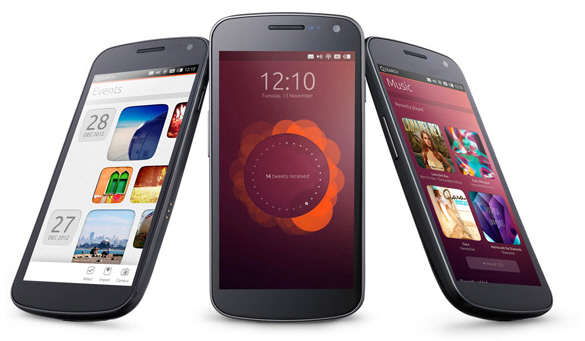
Developer preview for Ubuntu Phone due this week
Canonical says it will be publishing images and open source code for the Touch Developer Preview of Ubuntu for Galaxy Nexus and Nexus 4 on Thursday 21 February. So if you have a spare compatible handset -- or you don’t mind converting your existing phone -- you can try out the fledgling mobile OS in time for the weekend.
The aim is to encourage developers to create apps for the new operating system, but enthusiasts are welcome to take it for a spin too. According to Canonical, tools that manage the flashing of the Galaxy Nexus and Nexus 4 will be available on the same day as the images, along with detailed installation instructions.

Valve launches Steam for Linux and announces a celebration sale
After two months of public beta testing, the Linux version of Valve’s popular multiplayer gaming ecosystem has been officially released and is available to download for free from the Ubuntu Software Center.
To celebrate the release, Valve is cutting the price of 50 Linux titles by between 50-80 percent in a week long sale that will end on Thursday, 21 February at 10 AM PST. Games currently on sale include Bastion, Trine 2, Counter Strike Source, Serious Sam 3, and Darwinia.
Windows Azure now features VM Depot integration
Microsoft Open Technologies unveiled the VM Depot public preview early last month, and the software giant has just announced that its community-driven open-source virtual machine image catalog is now integrated into the company's cloud platform, Windows Azure.
The new feature is available through the Windows Azure management portal and is designed to ease the handling of virtual machine images from VM Depot. The cloud platform's users can take advantage of open-source stacks, "based on supported Linux distributions, made available by members of the community and directly provision the files as personal images straight from the Windows Azure portal".
Get Linux: the perfect way to find and download the distro you want
If you’re an old hand at Linux then downloading a specific distribution won’t be a problem. You’ll probably have your preferred distro bookmarked already, if not a quick search will turn up the necessary links and you’ll be downloading the appropriate files in a few seconds.
If you’re a total Linux newbie, though, it’s a very different story, and just figuring out which variations might best suit your needs may seem like a major challenge. But fortunately help is at hand in the shape of a small Windows tool called Get Linux.
Want to learn Android programming? The Linux Foundation can help
Android, the popular mobile operating system, is based on Linux and there are a number of good reasons to learn how to program for it. Number one is the vast audience that will be at your disposal if you can make it into the Google Play store or Amazon's Appstore for Android.
The Linux Foundation has launched a new initiative to help interested parties learn basic Android programming. So far, Juliet Kemp has only posted part one of Android Programming for Beginners and it just covers the basics to get you started, but more advanced tutorials are promised in the future. The two-part intro to Android coding will show you how to get a basic timer app up and running, and teach you about the Android API. It assumes some basic familiarity with Java, XML, and programming concepts, but is easy enough to follow.



