

Facebook expands AI research program
Mark Zuckerberg's Facebook is more usually associated with social networking, but the company has its fingers in plenty of other pies as well -- including Internet.org. Now the company is expanding its Facebook AI Research (FAIR) program to help with the automatic sorting and analysis of pictures, videos, text, and other data.
Facebook already has research teams looking into artificial intelligence in Menlo Park and New York, and the expansion sees the creation of a new team in Paris. The aim is create system that make it easier to manage the ever-growing quantities of data that are generated day in, day out by Facebook users.
Facebook adds support for OpenPGP email encryption
Facebook can send out quite a lot of emails to its users in the course of an average day. Notifications can fly in thick and fast letting you know about friend requests, replies to your posts, messages from contacts, and the like, and it's possible -- nay likely -- that these will contain delicate personal information.
To help calm the fear of those with privacy concerns ("why are they using Facebook?", you might well ask) Facebook today announces the introduction of OpenPGP encryption support. This gives users the opportunity to protect communication from Facebook by encrypting it so it cannot be read by unauthorized parties.

Strange things happening during Lyft, Uber rides
An average Lyft or Uber passenger can come across some really strange and hilariously twisted things, and for some of us reading these experiences is quite entertaining.
That’s why I would like to personally thank Hilary Mason for creating Twitter bots that retweet when someone includes the words "my uber driver" or "my lyft driver".
Facebook ups the ante with new Security Checkup tool
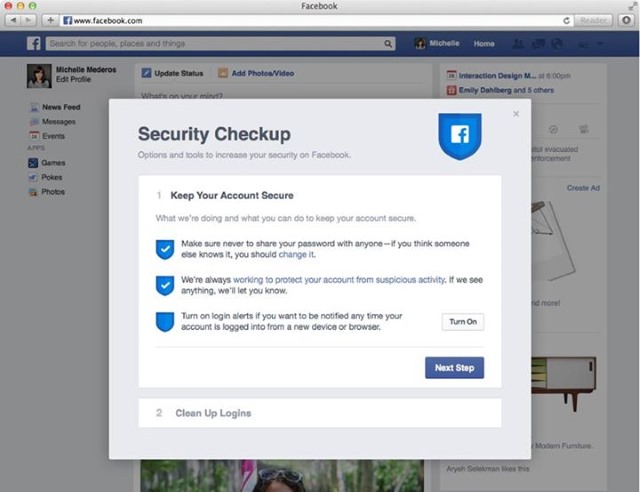
Security and Facebook are not words that generally sit well together. This is something that the social network is only too aware of, and in recent years has taken various steps to try to improve the security and privacy of individuals' accounts. The latest tool in its arsenal is the new Security Checkup.
At the moment the tool is not being made available to everyone, but those who have been chosen to test drive it will be able to use simple on-screen prompts to change their password, turn on login alerts, and clean up login sessions, all from one handy location.
Google starts to show tweets in search results
Twitter has become more than just a soundboard for those looking to voice an opinion -- although obviously it is still that. It has morphed into a valuable resource for delivering information in real time. This is particularly useful when it comes to keeping up to date with breaking news.
Starting today Google will tap into this wealth of information for its search results. The feature is starting life in Google apps on iOS and Android mobile devices, but will spread its way around the world and to the desktop soon.
Facebook rides roughshod over privacy laws
Facebook and privacy are not words that generally belong in the same sentence, but a Belgian watchdog has expressed surprise at just how little regard for European law the social network shows. The Privacy Protection Commission says "Facebook tramples on European and Belgian privacy laws", and warns users to take action.
Mark Zuckerberg's site is accused to tracking users even if they are not logged into a Facebook account, and sidestepping questions from European regulators. Although the Privacy Protection Commission is not able to impose fines for failure to abide by European law, it is in a position to offer advice -- and the advice to people is to use software to block Facebook's tracking regardless of whether they use the site or not.
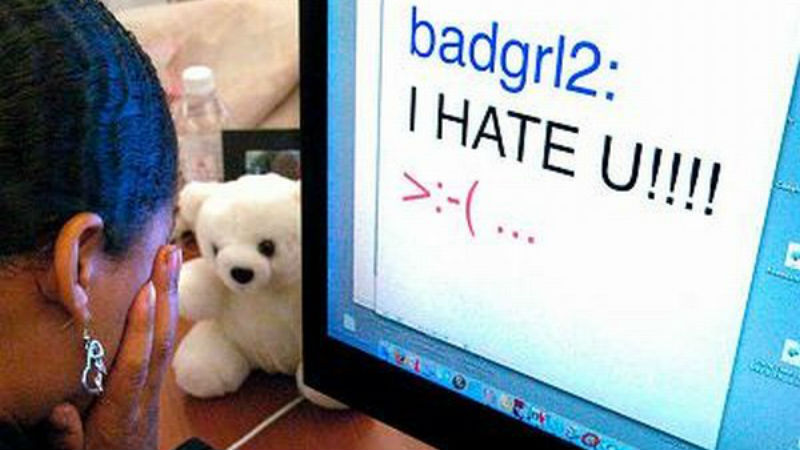
How to protect your children from cyber-bullies and other online dangers
The research claiming that depression and anxiety among teenagers is higher than other generations fueled by sexting and online bullying clearly indicates the dangers facing young people in today’s digital world.
Yet the true extent of the problem is likely to be even worse as more and more children start engaging online from a younger age.

Google+ Collections lets users curate posts, Pinterest-style
Google+ is one of the more maligned social networks, but it's clear that Google is not going to give up on it any time soon; far from it. Today the search giant unveils a new feature that is more than a little inspired by Pinterest -- Collections.
The new feature lets users group posts together into collections. This is not just something that makes it easy to manage photos, videos and other content, but also provides a new way to create groups about any given topic. With the option of making collections public, private, or shared with a limited number of people, Collections feel like a natural extension to the way Google+ posts currently work.

'You don't post pictures of us on Facebook -- I want a divorce!'
According to a new survey of 2,000 people in the UK, one in seven say they've contemplated divorce because of their partner's activity on social media.
Nearly a quarter also say they have at least one row a week with their partner because of social media use and 17 percent say they argue every day because of it.

Google and Facebook offer support after Nepal earthquake
When disaster strikes, technology can often be put to good use. Following the devastating earthquake that struck Nepal this week, Google and Facebook are among the companies helping those in the area, as well as people looking for friends and relatives.
Google's People Finder does very much what it says on the tin. It's a very simple website that enables people to publish requests for information about loved ones, as well as giving those with information somewhere to share it. Facebook's Nepal Earthquake Safety Check provides a similar feature.
How CEOs are failing to exploit social media
Social media is a large part of many people's lives these days but it seems that people at the top of enterprises and large organizations are more reluctant to engage.
Management education advice site MBA Central has produced an infographic looking at how CEOs are lagging behind in their use of social media despite the benefits it can bring to their personal and professional reputation.
Facebook revamps your newsfeed yet again
Facebook is, once again, making changes to the algorithm that controls what appears in newsfeeds. If you had ever been under the impression that you were going to see a chronological list of status updates from your friends in your newsfeed, numerous changes over the years will have put paid to that notion.
It has been a source of many a social networking grumble, and now Facebook is taking steps to address the issue. Depending on how you use Facebook, you may be connected to not only real-world friends, but also companies, celebrities and even TV shows. Your newsfeed has likely turned into less of a collection of bon mots from your mates and more of a stream of updates from entities you're only vaguely interested in. Now your friends will be given greater priority.
Twitter moves non-US accounts to Ireland away from the NSA
Twitter has updated its privacy policy, creating a two-lane service that treats US and non-US users differently. If you live in the US, your account is controlled by San Francisco-based Twitter Inc, but if you're elsewhere in the world (anywhere else) it's handled by Twitter International Company in Dublin, Ireland. The changes also affect Periscope.
What's the significance of this? Twitter Inc is governed by US law, it is obliged to comply with NSA-driven court requests for data. Data stored in Ireland is not subject to the same obligation. Twitter is not alone in using Dublin as a base for non-US operations; Facebook is another company that has adopted the same tactic. The move could also have implications for how advertising is handled in the future.

Zuckerberg says Internet.org is not anti-net neutrality... but it is
A few days ago Mark Zuckerberg conducted a Q&A on Facebook. Despite tens of thousands of comments, very little of interest came out of the session -- he works 50-60 hours a week, likes Oculus (surprise, surprise), and he stands behind his Internet.org project which is providing internet access to people all over the world, including those in remote and developing locations. As is to be expected from a Q&A session, Zuckerberg also found that he had criticism levelled at him in addition to questions, including criticisms of his beloved Internet.org.
Some people pointed out that even in the US there is still a digital divide, while others complained that Internet.org goes against the principles of net neutrality. This obviously struck a nerve because the Facebook founder felt the need to defend the program and express his support for net neutrality. My colleague Manish Singh wrote about this, but is Zuckerberg right? Can Internet.org and net neutrality really live happily side by side?

Instagram is OK with a little nudity, preferably at a distance
Photo-sharing site Instagram has updated its community guidelines to make it clear what sort of images are acceptable. If you were hoping to use your account to supply your followers with a stream of pornography pics, you're out of luck, sadly. Nudity is -- for the most part -- out (we don’t allow nudity on Instagram), including "close-ups of fully nude buttocks"; distant shot of butts are, seemingly OK, as are close-ups of partially clothed cheeks.
Whether we're talking about Twitter, Facebook, Instagram or any of the other countless social networks out there, users frequently fall foul of acceptable content guidelines. Images of nudity and violence are frequently complained about and Instagram's latest guidelines now make it abundantly clear what’s OK and what's not.



