Microsoft stops Kinect for Windows production... because it's so popular

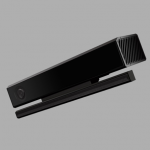
Yes, you did read that headline correctly. Microsoft has announced that due to the popularity of Kinect for Windows, the sensor will no longer be produced. While an increase in demand would normally lead to an increase in production, Microsoft is taking something of a different approach.
Rather than maintaining two Kinect product lines -- a model for Xbox One and a model for Windows -- the company will instead sell an adapter that allows the console sensor to be connected to a PC. Microsoft says that this will help to keep things simple and create consistency for developers.
Doctors at UCSD are using Kinect for Windows as part of their medical tools

Kinect started off for Xbox 360, but it's morphed since then to adapt to the newer Xbox One as well as Microsoft's operating system. There seems to be no end to the uses the device can be utilized for. However, the medical field is one of the most specialized industries around and adoption of new technology can be hard to find, with the rigorous requirements involved.
Now the doctors at the University of California at San Diego have managed to find a way to incorporate Kinect for Windows into their job. "The project, called Lab-in-a-Box, is the brainchild of UCSD researcher Nadir Weibel and his colleagues at the San Diego Veterans Affairs (VA) Medical Center", the Kinect team explains.
Microsoft technology invites non-human nurses into your home -- will you let it in?


Technology is increasingly changing our lives. It seems like every day, a new technological advance is revealed that impacts humanity. Virtual reality masks like Oculus, Samsung Gear VR and Google Cardboard, for example, are changing the way we look at the world. You can travel anywhere by simply looking through a face-mask -- you can take a vacation without leaving your living room.
As the world's population lives longer, and continues to engage in self-destructive behavior, healthcare is one of the few industries guaranteed to never slow down. Unfortunately, as more and more people become insured by Obamacare, getting an appointment with a healthcare professional is getting increasingly difficult. If we can't produce more doctors and nurses, we could have a crisis. What if, however, nurses and doctors didn't have to be human? What if a non-human could come into your home and examine you? A popular Microsoft technology is making this a reality.
Recovery Rapids video game uses Microsoft Kinect to provide therapy to stroke victims

If you or a family member suffers a stroke, it can be a life-changing event. While some people do not have lasting effects, many face paralysis and weakness in different parts of their body. In other words, someone who is very active and mobile, can be relegated to a more sedentary lifestyle. This change can have psychological impacts too.
Luckily, there are therapies for victims of stroke, that can return the patient's strength and mobility. While this therapy is normally a boring affair, the Ohio State University has devised a new technique that is beneficial to recovery, while also being fun too. You see, it uses Microsoft's Kinect device.
Microsoft is fighting Ebola and other diseases with Kinect and Windows 8.1
While the hype of Ebola is no longer the focus of the mainstream media, it remains a threat nonetheless. With that said, it is not a danger to the United States, as we are far removed from it. Even when it did come here, it did not cause pandemonium. Why? Because it is not easily spread; especially when safety precautions are followed.
All human beings deserve to be healthy, regardless of the country in which they reside. In other words, even though a horrible disease isn't in your neighborhood, you should still care. Microsoft, an American company, is indirectly helping to fight Ebola globally, thanks to an unlikely tool -- Kinect. Yes, the same camera accessory for the Xbox One (and Windows developers) is also a tool in the fight against a virus.
Intel-GE Care Innovations uses Microsoft's Kinect to prevent injuries to the elderly

As health care continues to improve, people are living longer and longer nowadays. While this is a great thing, it can be problematic, as a need for elder care increases. No one wants to see the elderly get hurt, but not everyone has family to take care of them.
Luckily, the needs of the elderly are not being ignored, as not only is caring for them noble, but a potential money-maker too. Today, Microsoft shares that a new solution has been created by Intel-GE Care Innovations; a joint venture between the two massive companies. What makes it particularly cool is that it utilizes the Kinect sensor, which is commonly used with the Xbox One.
Kinect apps come to the Windows Store, Kinect SDK 2.0 and adaptor kit launch
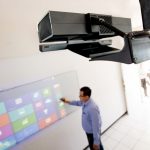
Kinect has moved on. Once a peripheral that encouraged gamers to dance manically in front of their consoles, it has now evolved into something rather more sophisticated. As part of Kinect's on-going development Microsoft today released Kinect SDK 2.0 following the developer preview program from last November. Developers not only have scores of improvements to enjoy, but they now have the ability to deploy Kinect apps to the Windows Store.
This news goes hand in hand with the release of a new Kinect adaptor. The adaptor makes it possible to take an Xbox One Kinect and connect it to a PC or tablet. There's no need to choose between a Kinect for Windows v2 and Kinect for Xbox One as they both now perform identically.
Microsoft's Kinect technology powers university library
Microsoft has made Kinect a big part of its latest gaming console, Xbox One, though customers can now buy the box without that technology tied to it. However, the device can be used for more than just gaming and entertainment.
Liberty University is now using Kinect to power a media wall in the library. The college is located in Lynchburg, Virginia, and is home to some 12,000 students, and around 90,000 more who study through an online program.
In the Xbox One and Kinect divorce, everyone stands to lose something


As you probably noticed, earlier this week Microsoft announced that the Xbox One would be made available without Kinect, instead of forcing the motion sensor on consumers as a compulsory part of the Xbox package. This was a move analysts predicted would happen next year, but it's happening now.
So yes, cue much cheering and cries of "finally" and general applause for a victory for consumer choice. And yes, this is a good thing in terms of consumer choice -- no one would doubt that. But amidst all the buzz, fireworks and party poppers going off, many folks seem to have overlooked the fact that there are downsides to this move. And it's these negative aspects I'm going to look at here.
Microsoft divorces Xbox One from Kinect, removes Live Gold requirement for entertainment apps
The Xbox One and PlayStation 4 are both wonderful consoles. However, from a sales perspective, the PS4 is kicking the Xbox One's butt. While we can argue the "why" all day, one of the causes is likely that Sony's offering has a less expensive starting point.
On paper, the PS4 is $399 and the Xbox One is $499, but that is deceiving. Microsoft's console includes the awesome Kinect camera, while Sony users must purchase a similar accessory separately. Of course, if you do not require the Kinect, it can feel like you are paying for something you do not want. I understand that and apparently many users have made that same opinion known to Microsoft. Today the company announces that it is divorcing the Xbox One from the Kinect in an all-new purchase option.
Microsoft empowers people in new Super Bowl commercial
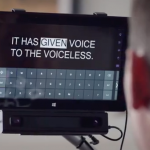
Super Bowl Sunday is a big day for Americans. While baseball may be the national pastime, football has captured the hearts and minds of many people with fantasy leagues and tailgating. Yes, for many, football is not about watching the actual game, but instead eating food, partying and watching commercials.
While it seems most Super Bowl commercials are about comedy, sometimes they tug at the heartstrings too. Last year, I damn-near cried when Budweiser showed a friendship between a man and a horse. This year, in an early unveiling, Microsoft has me both inspired and teary-eyed with its new Super Bowl commercial, simply titled "Empowering".
Microsoft offers Xbox One voice and gesture commands cheatsheet
Despite the small number of problems reported by customers of the new Xbox One, Microsoft is still heavily pushing the new generation of its gaming console. The latest version comes with a learning curve, though not a steep one. Still, for the average user, it will take some getting used to.
Now, Larry Hryb, better known as Major Nelson, wants to help out new users in finding their way around. To do so, the Xbox Live chief has released a cheatsheet to teach everyone a bit about controlling the Kinect with voice and gesture commands. "I tweeted images of a Kinect voice and gesture 'cheat sheet' earlier today, but I was able to get my hands on the high resolution PDF of them both as one file that will print out at a much higher quality", Hryb states.
My next-gen Xbox wishlist


Xbox is due for a refresh this year and it's a good time to write my wishlist. I’ve been accused of being a Windows fanboy, which I’m not. I’ve also been accused of being a Windows Phone fanboy. No again. But I’ve never been accused of being an Xbox fanboy, which I absolutely am.
With the Xbox, Microsoft has a stellar platform on its hands. The console has gone from a third place alsoran to a major player in the console wars: a strategy Microsoft desperately needs to adapt to Windows Phone, but that’s a different article. As the world of computing shifts to mobile, so is gaming, allowing companies like Apple to get into the business. What do vendors that build consoles need to do to adjust their strategy? I can’t say much for Sony or Nintendo because I don’t use those platforms anymore. For Microsoft, here’s my wish list for the next Xbox platform update that I think will allow it to remain a major gaming industry player despite the shift to mobile computing.
New Kinect for Windows SDK coming March 18
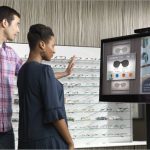
Yesterday at the Engadget Expand conference Microsoft's Bob Heddle, the director of Kinect for Windows, announced a new software developer kit is coming very soon -- tomorrow, in fact. Version 1.7 will be made available March 18, and Heddle promised it will be the "most significant update to the SDK since we released the first version a little over a year ago".
Version 1.7 promises new interaction, including push-to-press buttons, grip-to-pan capabilities, and support for smart ways to accommodate multiple users and two-person interactions. Heddle explains that "we wanted to save businesses and developers hours of development time while making it easier for them to create gesture-based experiences that are highly consistent from application to application and utterly simple for end users".
10,000 more free Leap Motion 3D controllers for devs, brand new SDK released

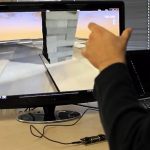
It took only one week for San Francisco motion control startup Leap Motion to attract 26,000 developers in 143 countries to its pocket-sized 3D space motion controller for PCs. Now, that number has climbed to more than 40,000.
Today, the company provided some big announcements on the progress of Leap Motion, including a new exclusive game demo, an updated SDK, and a round of 10,000 more free developer units.
Recent Headlines
© 1998-2024 BetaNews, Inc. All Rights Reserved. Privacy Policy - Cookie Policy.