Was the PC's death fake news? More consumers want laptops than smartphones on Black Friday 2017


Next week is one of my favorite holidays -- Thanksgiving! I'm not gonna lie, I like to eat, and since this is a day dedicated to chowing down on some good food, I am beyond excited! Oh yeah, it is also a day in which we spend time with family and reflect on all the things for which we are thankful.
Once the eating is done, the shopping begins. What used to just be "Black Friday" now begins the night before on Thanksgiving -- sacrilege to some. Yeah, while still digesting turkey and stuffing, consumers will queue up in front of stores such as Best Buy, Target, and Kohl's to take advantage of some deep discounts. Surprisingly, according to a new survey, technology devices are not the most wanted products. Actually, clothing seems to be what many people want most. Make no mistake, however -- products like televisions, laptops, and smartphones will be very popular on Black Friday too.
Ockel Sirius A is the world's most versatile mini Windows 10 PC

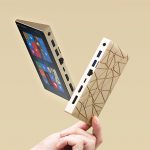
If you have a phone running Windows 10 Mobile, you can use it as a mini PC, connecting it to a TV or monitor. However, this functionality -- Continuum for phones -- is only available on certain devices.
If you want a more powerful pocket PC, then Ockel Sirius A is a promising solution. It’s a full Windows 10 PC in a tiny, mobile-sized device that will fit comfortably in your pocket.
IDC: Windows 10 is hurting -- not helping -- the PC market

It’s not news that the PC market is in serious decline. We’ve been talking about the death of the PC here for more years than I care to remember, and the latest forecasts from IDC’s Worldwide Quarterly PC Tracker don’t provide any relief either.
According to the analyst firm, worldwide PC shipments are forecast to decline by 7.3 percent year over year in 2016, with Windows 10 cited as one of the reasons behind the drop.
9.7-inch iPad Pro Preview


The more I use Apple's smaller Pro tablet, the less likely I am to reach for the larger one. I have tested the 9.7-inch and 12.9-inch tabs side-by-side since March 31st—and the bigger one is my primary PC (most days). Unquestionably, the behemoth is capable of replacing a laptop, as Apple CEO Tim Cook asserts. The smaller-size model is a fine notebook companion, and certainly can substitute sometimes. But more than two weeks using this surprisingly satisfying kit, I can't yet (and may never) recommend it as your next PC.
The 9.7-inch iPad Pro, which screen measures like all its forebears, falls into a category I griped about in September 2015: Apple products without purpose—or none that's easily obvious to majority of shoppers. Don't misunderstand. The technology under the hood is quite innovative, and I really, really, really enjoy using this tablet. But I'm not most people, and looking at the broader consumer marketplace, I see the device as being more for the few than appealing to the many; that is until the next release cycle, when current prices decrease. Now, putting aside these caveats, 9.7-inch iPad Pro is the device I most often grab first. Many of the benefits have purpose that is subtle. The question: Are they good enough for you?
There's something you should know about 12.9-inch iPad Pro [seventh in a series]

April 3, 2016 marks the first day that I truly could use Apple's over-sized tablet to replace my laptop. But I had to spend another $84, before California tax, to do it. Gadget reviewers who say that iPad Pro cannot be your computer are wrong. The apps, performance, and utility are there. Anyone creating content should consider this device as compliment to, or replacement for, an existing PC. The problem with 12.9-inch iPad Pro isn't what it can do but how much it costs to assemble what you need. This kit is far from budget-friendly, which also can be said of Microsoft's competing Surface Pro 4.
I started my iPad Pro sojourn on Groundhog Day, planning to use the device as my primary PC for 30 days. The objective: Apple CEO Tim Cook says the big-ass tablet can replace a personal computer, I want to see if he is right. The experiment isn't my first journey like this. I tried something similar during summer 2011 with one of the first Chromebooks. The path was a dead end. But Spring 2012, when new commercial models released, I started down the path again and never looked back. Google's Chromebook Pixel LS was my main computer before adopting the iPad lifestyle.
An Apple 40th birthday reflection

Summer 1984, Chapel Hill, N.C., I learned something about prejudice and discrimination in America and saw my first Macintosh. Strangely, looking back at Apple, which celebrates its 40th birthday today, the two things connect.
As I reflected in Jan. 18, 2004, personal post: "Racism and Naiveté", I never thought much about skin color growing up in a region of America where most everyone is Caucasian. Northern Maine is a white wonderland for more than abundant snowfall. Strangely, though, my best friends had last names like Chung and Zivic. The local Air Force base, Loring, added color to the populace, and when it came to people I was decidedly colorblind.
Is Apple iPad Pro too big? [second in a series]

"Look up, waaaaaay up" is a phrase familiar to Canadians of a certain age, who watched "The Friendly Giant". The kids program aired from 1958 to 1985 on CBC, which our TV antenna grabbed from the local affiliate across the border in New Brunswick (I'm from Northern Maine). There's something about iPad Pro's enormity that makes it feel more like something the Giant would use.
My question this fine Friday: Is iPad Pro too big? For the majority of potential buyers, my answer is unequivocally yes. I don't see a product made for the majority. Whatever Apple's post-PC ambitions, iPad Pro is more a proof-of-concept for future laptop replacement. However, for the few -- creators looking for larger digital canvas -- iPad Pro offers much. For the many, the first version will work out the kinks, such as getting the app platform placed, for mass-market successors. Warning: Embracing the expansive tablet may make switching to something smaller nearly impossible. Size matters, and sometimes larger is better.
Personal computers approach retirement age


My birthday was this past week. When I came to Silicon Valley in 1977 I was 24 years old. Thirty-nine years later I am 63 and a lot changed around me in those four decades. I went from young to old. The personal computer industry, of which I consider myself to be a part, went from being two years old to 41 -- an even greater change than I have experienced.
And the point of this column is to write a bit about how personal computers have matured and where they are going, because I am pretty sure the PC is going away. And I have figured out why.
IDC: Forget tablets, the PC could be set for a comeback in 2016

It used to be that a new version of Windows would be a major shot in the arm for PC sales, but that’s no longer the case. According to IDC’s Worldwide Quarterly Tracker, shipments are expected to fall 10 percent in the fourth quarter of 2015, bringing the overall decline for the year down by 10.3 percent.
As a result, IDC has revised its forecast for next year, but it does see things stabilizing by the end of 2016, and even predicts some growth.
Microsoft is back!
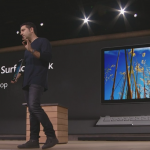
That grinding against wood and dirt you hear is the sound of Steve Jobs rolling over in his grave. Microsoft is back! And badass! Today's Surface event in New York City outclasses Apple by every measure that matters: Aspiration, innovation, presentation, and promotional marketing. Microsoft proves that it can build end-to-end solutions—hardware, software, and services—as good as, and better than, the company cofounded by Jobs. Even more importantly: Present the new wares well. Today's event was exceptional.
But there is a shadow looming in the brightness that will matter to some Microsoft customers and not to others: Cost. Surface Book, for all its seeming greatness, is a budget-busting laptop for the majority of potential buyers. The low-cost config, at $1,499, comes with 6th-gen Intel Core i5 processor, 8GB RAM, and 128GB storage. To get the discreet graphics demoed today, with i7 chip, 8GB memory, and 256 SSD, you will spend $2,099. Doubling RAM and storage raises the price to $2,699.
Windows 10 won't save the falling PC market: Report

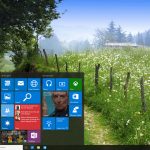
It's no secret that PC shipments have plummeted over the years. OEMs are betting big on Windows 10, hoping to attract users to upgrade to a new machine. But they might end up being disappointed. According to ABI Research, despite the release of a new desktop operating system, the shipments will continue to fall.
The marketing research firm says that about 165 million units of portable computers will ship in 2015, a figure that is actually less than 2014's shipment number. So what went wrong?
The difference between Apple Watch and Android Wear
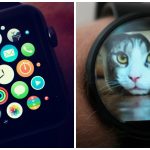
This week, I had opportunity to use Apple Watch, making it third of the modern smart variety that I have experienced (the others being LG Urbane and Moto 360). The differences between the platforms are quite startling and worth highlighting. They begin with diverging design ethics derived from the fruit-logo company's app-centric heritage and Google's place in the cloud.
For people who use either Android handset or iPhone, existing device really determines what watch platform you choose, if any—that is for now. Down the path you go. But where it leads is somewhere else, not the same destination. One platform is more responsive to you in varying contextual situations. The other requires more direct interaction, but gives other benefits.
Your smartphone is too big

I love my Nexus 6. This morning, while waking to the rush of caffeine from steaming coffee, I read headlines on the device. "I’m Phed Up With Phablets: They're too big to prevail" caught my attention. The short commentary, by Brian Rubin for ReadWrite, rails against the bigger-is-better-smartphone trend. Screen on my cellular is massive: 6 inches, and I forever promised myself to never use a phone so large -- until I did and converted. Much as I enjoy using the N6, for which I can still manage many operations one-handed, smaller would be my preference. Perhaps yours, too.
Here at BetaNews, we first raised doubts about ever-expanding screens four years ago. I still remember the discussion about the story, and more importantly the headline, before Ed Oswald wrote "Is that the Samsung Galaxy S II in your pocket, or are you just happy to see me?" In 2015, what seemed large then -- a 4.3-inch screen -- is puny. Even iPhones are bigger. Rubin rightly raises alarm about choice: "The real problem isn’t so much that there are too many phablets, but that there aren’t enough non-phablets these days -- at least none that are truly interesting".
My definition of 'modern' computing

Late yesterday I posted my review of Chromebook Pixel LS, which Google released in early March. The write-up is purposely rah-rah to impose the importance of embracing contextual cloud computing and to shakeup preconceptions about Macs being the tools of the creative elite. I also call "dumb" developers who may receive free Pixels during Google I/O later this month only to then sell them online.
One reader comment, from SmallSherm caught my attention, for accusing me of calling him (or her) stupid and for insulting other readers. After writing my response, I wondered how few people would ever see the interaction, which I regard as being quite valuable. So in the interest of fostering further discussion, I present our two comments for your Tuesday thought train.
Blame the dollar: PC prices rise, as features fall

Gartner predicts that currency devaluation will compel major computer manufacturers to reverse a longstanding trend. "PC vendors selling to Europe and Japan, where local currencies have fallen up to 20 percent since the start of 2015, have little choice than to raise prices to preserve profits" -- by as much as 10 percent, Ranjit Atwal, Gartner Research director, says in a statement earlier today.
Higher prices mean more consumers will do with leaner configurations, and many businesses will push back upgrades. All the while, PC makers will give customers less for more money. Atwal anticipates fewer features in new computers in affected markets and increased sales emphasis in "regions least affected by these currency effects".
© 1998-2025 BetaNews, Inc. All Rights Reserved. About Us - Privacy Policy - Cookie Policy - Sitemap.