

The iOS 8 features Apple didn’t mention at WWDC
Tim Cook took to the stage at Apple’s Worldwide Developer Conference yesterday, to announce iOS 8, the next iteration of the company’s mobile operating system. As expected, the forthcoming release builds on the foundations laid down by its predecessor, refining elements and introducing some new features.
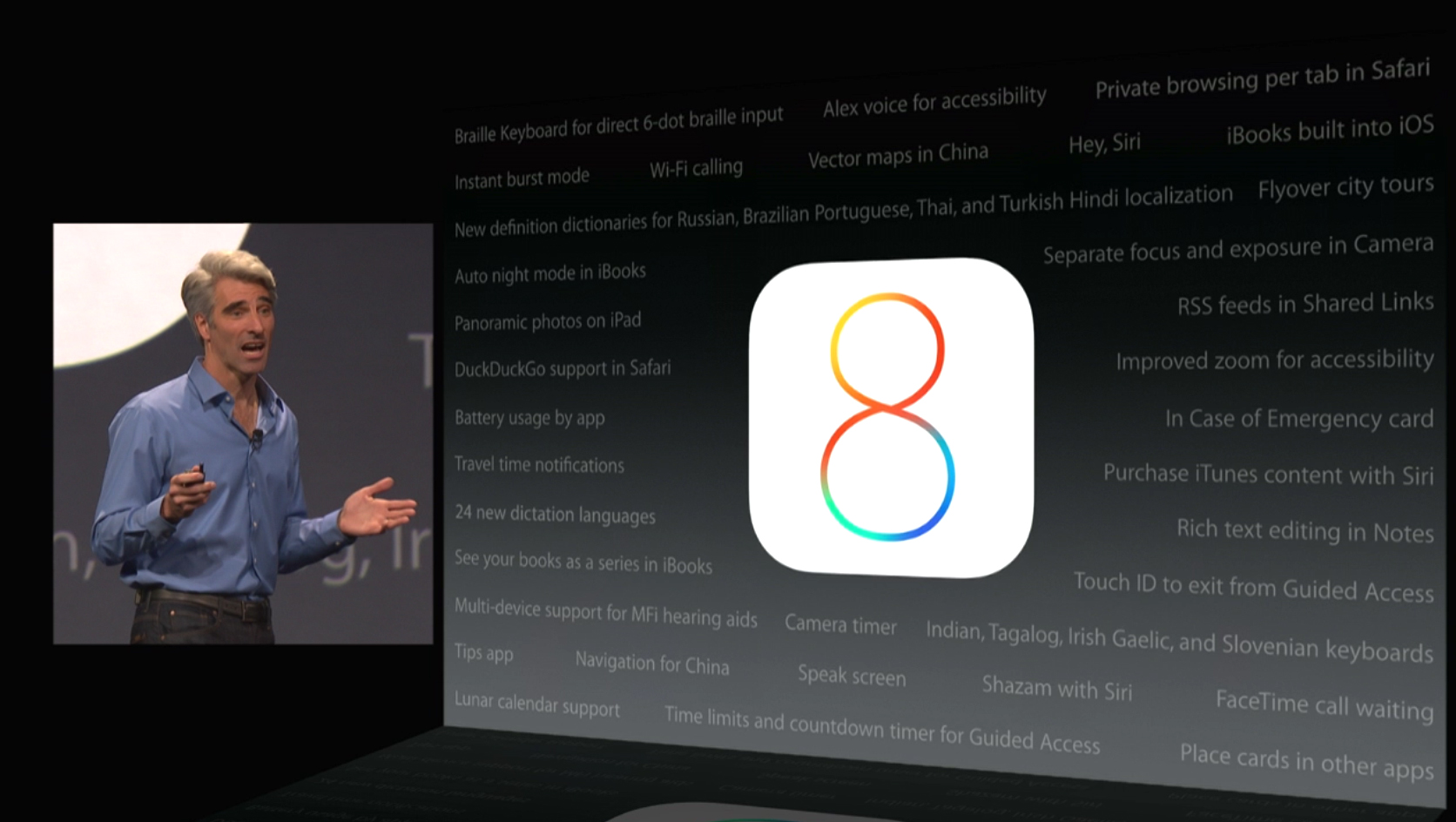
Craig Federighi, SVP of Software Engineering, ran through a lot of the changes yesterday, including interactive notifications, HealthKit, Family Sharing, Spotlight Suggestions, iCloud Drive, Continuity, Photos with iCloud, and context sensitive predictive text. But there were loads of features that Federighi didn’t mention.

Apple walks OS X 10.10 'Yosemite' down the catwalk to show off the pretty new clothes
Many people are loyal to a specific operating system. While I mostly use the wonderful Windows 8.1, I also use Linux and OS X too. Apple's operating system works and looks very well, but from a productivity standpoint, Windows still has it beat. Don't get me wrong, OS X is fun to use and rewarding, but it can't even do window-snapping on the edges of the screen. Don't even get me started on the horrible native email client.
Today, Apple showed-off the latest version of OS X (10.10), dubbed "Yosemite". The fruit-logo company has slapped a new coat of paint on the operating system, making it resemble the flatness of iOS 7. However, the appearance is only part of the story. It not only has a new look, but new features and improvements too. In other words, Yosemite looks to be an important update for Mac users.

HP Chromebook 11 without Google is less appealing
Let me start by thanking HP public relations for quickly responding to my information request, even after my warning the story would likely be ugly -- and it is. Today, the company unveiled a new Chromebook 11 model that is less than the original. As widely-rumored last month, the beautiful, 300-nit, IPS display with wide viewing angles is gone. "It’s an 11.6-inch screen with standard display technology", according to HP. That means dimmer and duller.
HP designed the first Chromebook 11 "With Google", which is branding appearing on the computer's underside. The laptop without Google matches the look of the 14-inch model, adopts similar fantastic keyboard, reduces display quality, and keeps the same aged ARM chip and puny 2GB of memory. The panel and processor choices perplex. If I had to choose between the original, which I reviewed in October, and its successor the choice is simple: Last year's model, which debuted at $279 and is available from Amazon for $225. The newer Chromebook 11 lists for $279 and sales start next month. Even if priced the same, I would choose the original.
Google launches Chromebooks in nine more nations
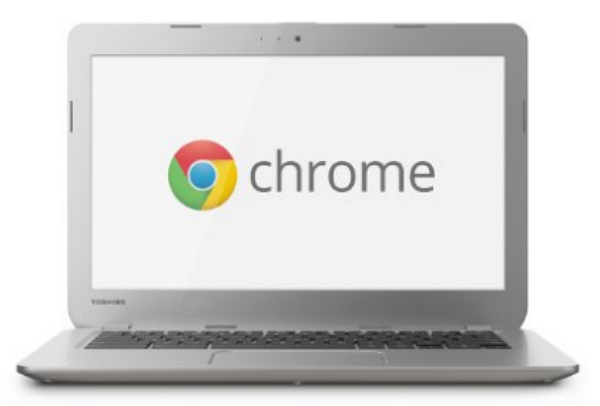
Last week I mentioned that I've been working from a Chromebook recently, in this case an HP 11. However, folks in other nations are not all so fortunate, as the platform is not yet available everywhere. That's something that Google would like to change, for both the benefit of itself and consumers.
Today nine more regions were checked off the list with a poetic announcement from Google's David Shapiro, who is director of Chromebook marketing.
Apple announces iOS 8 -- interactive notifications, HealthKit, Family Sharing, and more
On stage at Apple WWDC, CEO Tim Cook has just announced the latest iteration of its mobile operating system. He began, as you’d expect, with some impressive statistics. 800 million iOS devices have been sold to date, a figure made up of 100 million iPod touches, 200 million iPads and 500 million iPhones. He also noted 130 million customers were new to Apple in the last year, and many were switchers from Android.
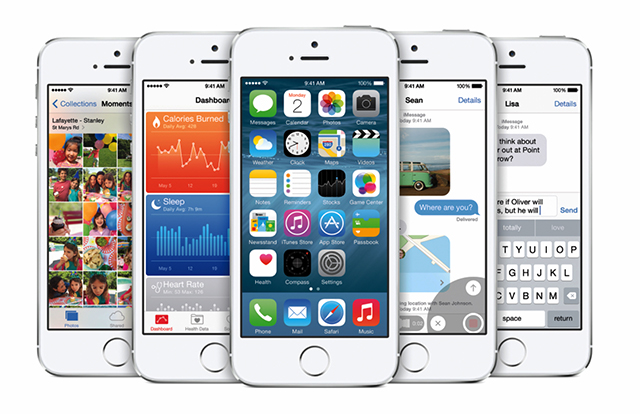
To the surprise of no one, iOS 8 builds on the design of iOS 7. Following Cook on stage, Senior Vice President of Software Engineering, Craig Federighi walked through the improvements and new features and apps. These are some of the highlights:

While you watch Apple, the Android Army marches forward
As the American tech press turns to San Francisco and Apple's developer conference, the real world looks to Taipei and Computex. There you see the Android Army's march against iOS. ASUS announces new Android tabs, HP takes the wraps off a laptop running the operating system, and Samsung serves up a phablet so large it crosses category boundaries. In literature, they would call this foreshadowing. Do you see how this story will unfold -- as Android manufacturers and Apple engage like factions from the Divergent series.
Android accounted for 39.7 percent of device shipments -- hybrids, PCs, phones, and tablets -- during 2013, according to Gartner. Apple's iOS and OS X: 10.4 percent. Forecast for this year puts Android at 47.2 percent and the fruit-logo platforms at 11.5 percent. That's context for today's announcements from the East and West. As I write, Apple's announcements dribble (iOS 8 and OS X 10.10) out of Worldwide Developer Conference 2014, so this post focuses on what the Android news means.
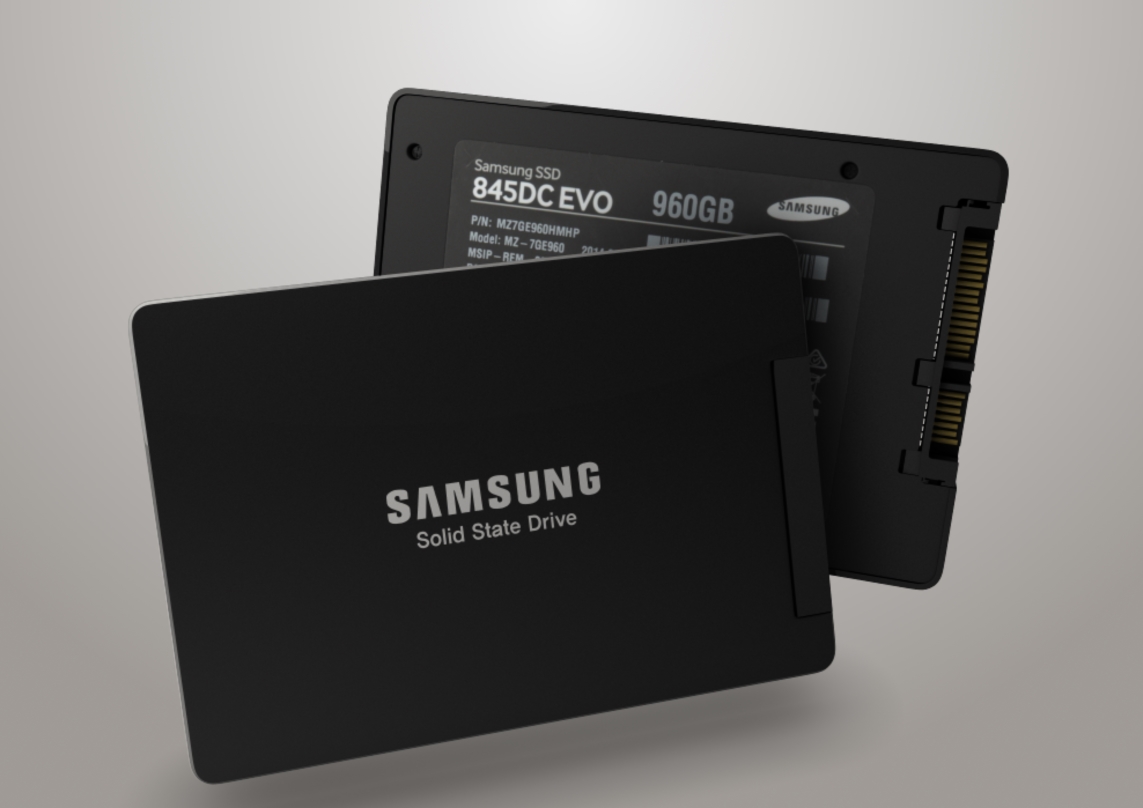
Samsung unveils the 845DC EVO -- an SSD built for data centers
Solid State Drives (SSD) are all the rage nowadays and for good reason. They are very much faster than their HDD counterparts and use less energy too. However, the benefits come at a cost -- higher prices per gigabyte and smaller storage sizes. Plus, SSDs are relatively unproven for longevity. Over time, they lose speed and, even worse, can potentially fail faster than a HDD.
It is for those reasons that historically SSDs are not widely used in data centers. Instead, HDDs still reign supreme for their lower cost and perceived life span. Samsung is aiming to change this, with the all-new 845DC EVO -- a SSD that the company hopes can supercharge data centers.

XXCopy is a backup, sync and cloning tool -- for the command line?
XCopy is one of the most useful Windows command line tools, an easy way to copy files, folders, folder trees and more. There’s support for copying only files which have changed, and if a network connection fails then XCopy can even resume later, just where it left off.
The program is still a little basic, but if you need more power then there’s always XXCopy, a free-for-personal-use tool which supports all the usual XCopy features, and then adds a whole lot more.

Rejoice! UK legalizes digital media copying
Back at the end of March we reported that ripping your CDs and DVDs for personal use was about to be made legal in the UK.
Well, today's the day. You're now free to make backup copies of your discs and digital media such as MP3s, upload them to a personal cloud service like Amazon Cloud Player, or put material onto a portable player without fear that the authorities are about to come knocking. Welcome to the twenty-first century.
Strip metadata from your photos with JPEG & PNG Stripper
Digital photos often include metadata, hidden tags which hold more information about them: camera name, model, date taken, maybe the place (if the camera was GPS-enabled), the flash mode, ISO speed, image thumbnail and more. Add others – title, author, comments -- and these can be a great help when organizing and searching for photos later.
These tags also increase your image size, of course (if only by a few bytes), and can include personal information. If you’re thinking of sharing any photos with others then it could make sense to remove them with JPEG & PNG Stripper, first.

Big Blue is watching you -- IBM patent aims to help stamp out fraud
Proving who you are online is usually a matter of entering passwords or other codes. Which means if your information falls into the wrong hands someone else would have no problem pretending to be you.
IBM has been working on this problem and has patented a technique that analyzes online behaviour to work out if you really are who you say you are.

Reset the Net shows a groundswell of opposition to the NSA
Internet heavyweights such as Reddit, Imgur, BoingBoing and the WikiLeaks Party are joining forces to encourage internet users to take control of their privacy. Reset The Net is a campaign that flips the virtual bird at the NSA by inviting people to make use of privacy and encryption tools to keep themselves protected online. Also involved are such names as Greenpeace, Amnesty International and the Electronic Frontier Foundation, and the campaign is gathering momentum as internet citizens find themselves increasingly disillusioned by the post-Snowden world.
We have already seen an upsurge in the use of online encryption, but this has been largely employed by those who are more technically minded. The Reset the Net website asks web users to make a pledge: "On June 5, I will take strong steps to protect my freedom from government mass surveillance. I expect the services I use to do the same". Reset the Net is not an end in itself, but more of an awareness-raising campaign that aims to educate people as much as send a message to the NSA and its ilk.
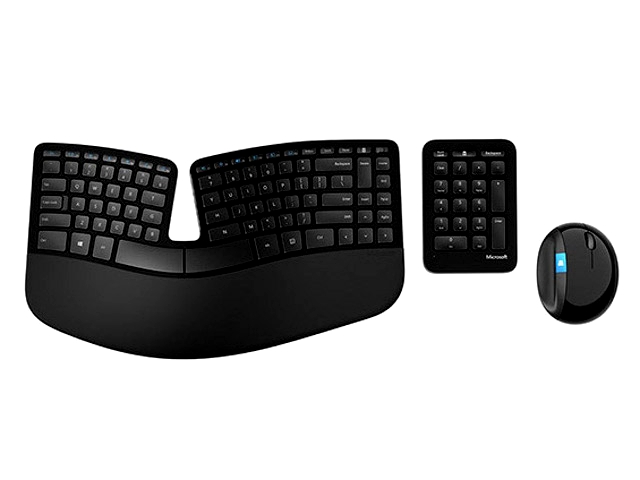
How to avoid getting RSI when using your computer
There are certainly hazards to bear in mind when it comes to a computer desk job. Okay, so maybe those dangers aren't on the scale that an oil rig roughneck faces, or a lion tamer -- but they're still there. Computer workstation hazards include the likes of eyestrain, a sedentary lifestyle and general lack of fitness therein, and of course repetitive strain injury (RSI). It's the latter we're examining here, and coping strategies to help avoid the dangers of RSI.
RSI is a blanket term that describes pain, aches or general discomfort experienced in muscles, nerves, or tendons in the human body; it's an umbrella term that covers a lot of specific conditions, for example carpal tunnel syndrome. As the name states, a repetitive strain injury is caused by repeatedly carrying out the same task over and over again, day in, day out.
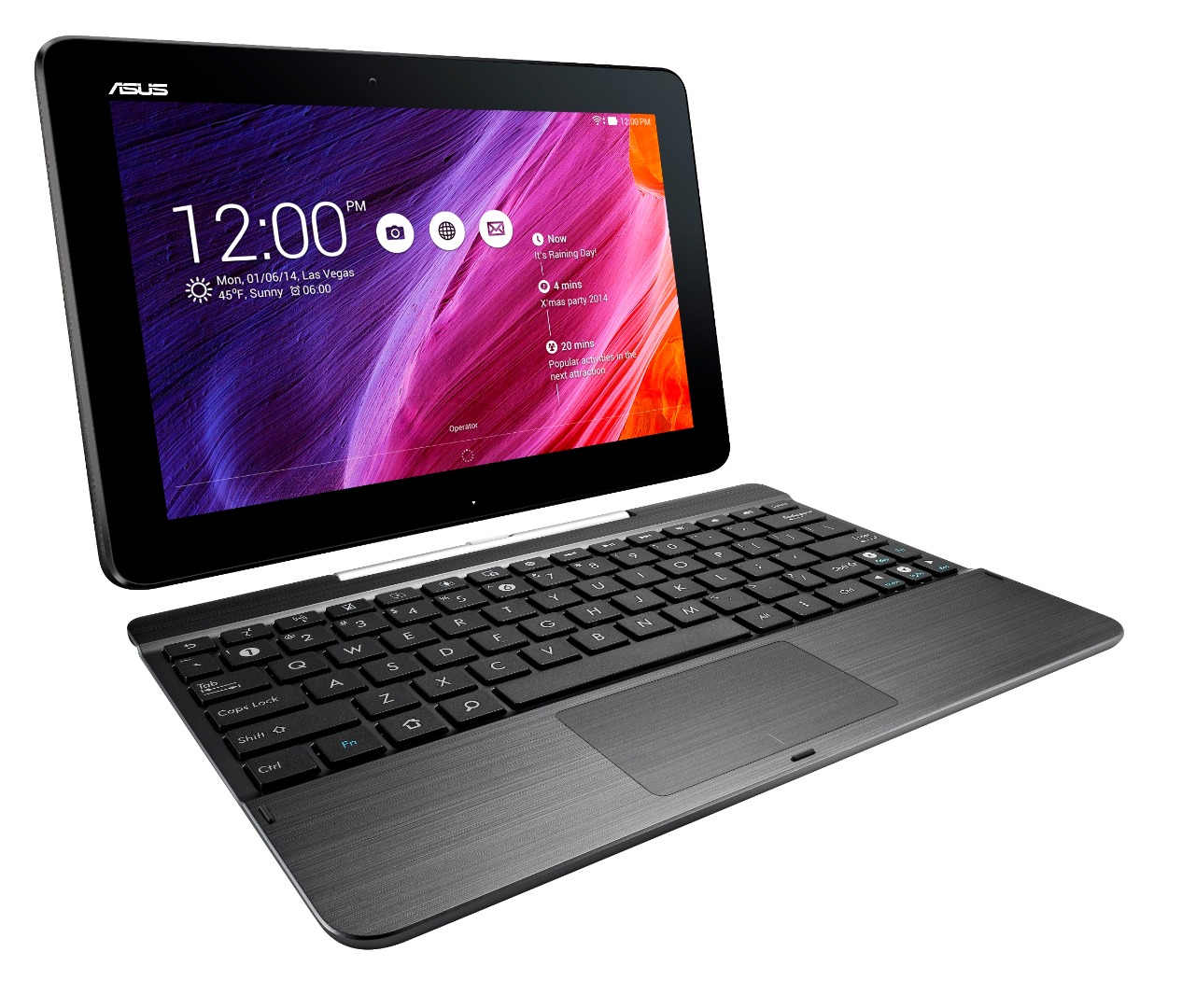
ASUS unveils a slew of Android tablets
You may not be aware of it, but technology fair Computex kicks off tomorrow, in Taiwan. And, as we have come to expect from companies attending such events, many products are already announced come opening day. Local player ASUS is among the early birds, as today it takes the wraps off a slew of Android slates, among other products like monitors and routers.
Perhaps the biggest news is that ASUS has made the jump to 64-bit processors across the new models, using the Intel Atom Z3745 in the MeMO Pad and Transformer Pad lineups, and the Atom Z3560 in the Fonepad series. Android 4.4 KitKat is the operating system of choice which runs on these slates.

New partnership brings easy-to-use encryption to Microsoft email users
The best way to keep data from emails and attachments from falling into the wrong hands is to use some form of encryption. But it needs to be easy to use if it's going to be effective.
Systems integrator and network consultancy BrightPlanIT has announced a partnership with DataMotion that will see it reselling cloud-based solutions for secure email, file transfer, customer contact and forms processing.